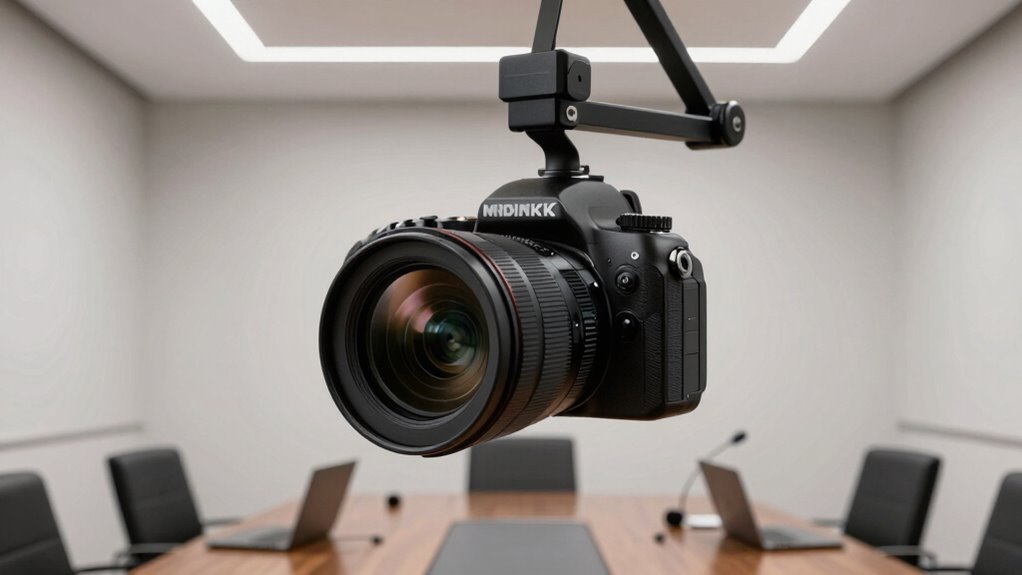
For a 4K conference camera with auto framing, I’d start with the Yealink UVC34 for a polished room system, compare it with the j5create 4K 360° AI Conference Camera for shared-table visibility, and look at the TONGVEO 3-in-1 if you want a camera, speaker, and microphones together. The main choice is between a fixed wide view, framing that follows speakers, and a more complete audio-video setup. Room size, seating layout, and how much control you want over tracking can matter more than the 4K label alone. Some cameras are simpler to set up, while others offer more coverage or accessories with added complexity. Read on for the full breakdown and guidance on matching each design to your meetings.

Get business pricing on office and shipping supplies
- Business-only prices and quantity discounts
- Tax-exempt purchasing
- Multiple users, one account, clear invoices
Complete the kit

Key Takeaways
- The Yealink UVC34 is the strongest overall room-system candidate for buyers who value an integrated, meeting-ready design over a camera-only setup.
- The j5create 360° model is the lineup’s distinct fit for shared tables, where seeing participants around the camera matters more than a conventional forward-facing view.
- All-in-one bundles make setup simpler but can limit flexibility; the TONGVEO and Bluetooth speakerphone system combine more meeting hardware than standalone webcams.
- Dual-lens and PTZ designs prioritize coverage and tracking, but buyers should check how those features behave in their room before choosing them over a fixed camera.
- 4K resolution alone does not decide the ranking: field of view, microphone and speaker needs, controls, and room layout separate these options more clearly.
| 4K AI Conference Webcam with Microphones and 120° Field of View |  | Best for Small Meeting Rooms | Resolution: 4K | Field of view: 120° | AI features: Group auto framing and presenter tracking | VIEW ON AMAZON | See Our Full Breakdown |
| j5create 4K 360° AI Conference Camera |  | Best for Flexible Meeting Views | Video resolution: Up to 4K | Capture: 360° video | HDR: Supported | VIEW ON AMAZON | See Our Full Breakdown |
| AV Access BizEye 90 4K Conference Room Camera with Gesture Control |  | Best for Presenter Control | Sensor: 1/1.8-inch CMOS | Video resolution: 4K at 30 fps | Field of view: 120° | VIEW ON AMAZON | See Our Full Breakdown |
| TONGVEO 3-in-1 4K Webcam with AI Auto-Framing, Voice Tracking, Microphones, Speaker, and Remote |  | Best All-in-One Value | Video resolution: Up to 3840 × 2160 at 30 fps | Sensor: 1/2.8-inch CMOS, 8.29 MP | Field of view: 118°, 100°, and 88° | VIEW ON AMAZON | See Our Full Breakdown |
| Yealink UVC34 4K Video Conference Camera System |  | Best for Room Audio and Privacy | Resolution: 4K UHD | Camera sensor: 8 MP, 1/2.8-inch CMOS | Field of view: 120° | VIEW ON AMAZON | See Our Full Breakdown |
| NUROUM C46 4K Conference Webcam with Microphone and AI Auto Framing |  | Best for Wide Room Coverage | Resolution: 4K UHD | Image sensor: 8 MP CMOS | Field of view: 120° | VIEW ON AMAZON | See Our Full Breakdown |
| TOALLIN Aione-Pro 4K All-in-One Conference Webcam |  | Best for Tracking Speakers | Resolution: Up to 3840 × 2160 at 30 fps | Sensor: 1/3-inch CMOS | Microphones: Two omnidirectional noise-canceling microphones | VIEW ON AMAZON | See Our Full Breakdown |
| RayBit SeeUp 4H 4K Conference Camera with Remote |  | Best for Remote-Control Convenience | Video resolution: 4K | Field of view: 94° | Zoom: 5× digital | VIEW ON AMAZON | See Our Full Breakdown |
| BizEye Dual-Lens PTZ Conference Camera with 4K Video and AI Tracking |  | Best for Flexible Room and Speaker Views | PTZ lens: 4K, 8 MP, 3× optical zoom, 5× digital zoom, 110° DFOV | Panoramic lens: 1080p, 120° DFOV | Video output: 4K at 30 fps via USB 3.0 | VIEW ON AMAZON | See Our Full Breakdown |
| All-in-One Conference System with 4K Dual-Lens Webcam and Bluetooth Speakerphone |  | Best for Wireless Speakerphone Flexibility | Camera resolution: 4K PTZ camera and 1080p panoramic lens | Camera field of view: 110° PTZ lens; 120° panoramic lens | Zoom: 3× optical; 5× digital | VIEW ON AMAZON | See Our Full Breakdown |
| 4k conference cameras with auto framing | Connectivity | Field of view | Microphones |
|---|---|---|---|
| 4K AI Conference Webcam with M | USB | 120° | Dual AI noise-canceling |
| j5create 4K 360° AI Conference | USB | — | — |
| AV Access BizEye 90 4K Confere | USB | 120° | — |
| TONGVEO 3-in-1 4K Webcam with | USB 2.0/3.0 | 118°, 100°, and 88° | Dual omnidirectional microphones with noise cancellation |
| Yealink UVC34 4K Video Confere | USB-B to USB-A; 7 m cable | 120° | 8-microphone array |
| NUROUM C46 4K Conference Webca | — | 120° | 4-element omnidirectional array |
| TOALLIN Aione-Pro 4K All-in-On | — | Up to 94° | Two omnidirectional noise-canceling microphones |
| RayBit SeeUp 4H 4K Conference | USB | 94° | — |
| BizEye Dual-Lens PTZ Conferenc | USB UVC 1.1; LAN control via Web UI and Telnet | — | — |
| All-in-One Conference System w | USB (UVC/UAC) and Bluetooth | — | — |
More Details on Our Top Picks
4K AI Conference Webcam with Microphones and 120° Field of View
For a compact room where everyone needs to fit in frame, this webcam pairs 4K video with a 120° field of view and group auto framing. Presenter tracking adds a useful option when one person leads the discussion. Compared with the Yealink UVC34, it offers a similar stated camera angle and microphone pickup distance, but the Yealink has an eight-microphone array and an automatic privacy shutter. This model instead keeps the setup straightforward with USB and a physical lens cover. Its dual noise-canceling microphones are specified for pickup up to 5 meters, though the product is designed for small meeting rooms; buyers with larger spaces should look for broader room coverage. I’d choose it when framing a small group is the priority, and skip it if you need a more capable room audio system.
Pros:- 4K video with a wide 120° field of view
- Group auto framing and presenter tracking
- Dual noise-canceling microphones rated for pickup up to 5 meters
- Physical lens cover for manual privacy
Cons:- Designed specifically for small meeting rooms
- Does not list the Yealink UVC34’s eight-microphone array or automatic privacy shutter
Best for: Small teams meeting over USB who want group framing and presenter tracking in one webcam.
Not ideal for: Larger conference rooms or buyers who need an eight-microphone array and an automatic privacy shutter.
- Resolution:4K
- Field of view:120°
- AI features:Group auto framing and presenter tracking
- Microphones:Dual AI noise-canceling
- Microphone pickup range:Up to 5 m
- Connectivity:USB
- Compatible platforms:Zoom, Teams, Webex
- Privacy feature:Physical lens cover
Our verdict“Choose this for a small room where wide group framing and simple USB setup matter more than expanded room audio features.”
j5create 4K 360° AI Conference Camera
The j5create gives meeting organizers more ways to present a room than a conventional wide-angle webcam: its 360° capture, HDR, and six display modes include host framing, speaker tracking, and picture-in-picture. That flexibility suits hybrid meetings where the useful view changes between a full-room view and a closer speaker view. Compared with the 4K AI Conference Webcam with Microphones and 120° Field of View, the j5create can show the full space, while the other camera offers a simpler fixed wide-angle approach. The main tradeoff is significant for this roundup: AI features are unavailable in 4K 360° mode, so buyers must choose between that capture mode and AI assistance. I’d favor it for configurable room views, but not for teams that require 360° 4K and automatic tracking at the same time.
Pros:- Captures 360° video in up to 4K with HDR support
- Six display modes for different meeting layouts
- AI auto framing and people detection in supported modes
- Echo cancellation and noise reduction support clearer audio
Cons:- AI functions are unavailable in 4K 360° mode
- Digital zoom is specified, with no optical zoom listed
Best for: Hybrid meeting hosts who want several room and speaker layouts and can choose a mode that fits each call.
Not ideal for: Teams that require AI framing while recording or displaying in 4K 360° mode.
- Video resolution:Up to 4K
- Capture:360° video
- HDR:Supported
- Display modes:Six, including host framing, speaker tracking, and picture-in-picture
- AI limitation:AI features unavailable in 4K 360° mode
- Focus:Autofocus
- Connectivity:USB
- Compatibility:Windows 10/11, macOS 10.14 or later, Chrome OS
Our verdict“Pick the j5create when flexible room layouts matter most and you can work around the AI limitation in 4K 360° mode.”
AV Access BizEye 90 4K Conference Room Camera with Gesture Control
The BizEye 90 combines 4K at 30 fps with a 1/1.8-inch sensor, auto framing, presenter tracking, and individual gallery mode. Gesture controls and ePTZ give presenters hands-free ways to adjust the view, while 5× digital zoom can bring a distant subject closer. Compared with the TONGVEO 3-in-1 4K Webcam, it lists more meeting-focused views, including individual gallery mode, but its microphone pickup is rated for only 3 meters rather than TONGVEO’s 16.4 feet. Fixed focus also means the camera does not offer the autofocus listed for the j5create 4K 360° AI Conference Camera. Digital zoom can reduce detail as the view tightens, so I’d use it for a presenter-led room where gestures and framing controls matter, not for frequent close-ups or far-field audio.
Pros:- 4K at 30 fps with a 1/1.8-inch CMOS sensor
- AI auto framing, presenter tracking, and individual gallery mode
- Gesture controls and ePTZ camera control
- 120° field of view with 5× digital zoom
Cons:- Digital zoom may reduce image quality when zoomed in
- Microphone pickup range is limited to up to 3 meters
- Fixed focus rather than autofocus
Best for: Presenters who want gesture controls, presenter tracking, and gallery views in a USB conference camera.
Not ideal for: Rooms where participants sit more than 3 meters from the camera microphone or where autofocus is preferred.
- Sensor:1/1.8-inch CMOS
- Video resolution:4K at 30 fps
- Field of view:120°
- Zoom:5× digital
- Camera control:ePTZ
- AI features:Auto framing, presenter tracking, individual gallery mode, gesture controls
- Microphone range:Up to 3 meters
- Focus:Fixed focus
- Connectivity:USB
Our verdict“Choose the BizEye 90 for presenter control and meeting views, provided the built-in microphone can reach everyone in the room.”
TONGVEO 3-in-1 4K Webcam with AI Auto-Framing, Voice Tracking, Microphones, Speaker, and Remote
TONGVEO bundles the pieces that can otherwise require separate desk or room hardware: 4K video, dual microphones, a 3 W speaker, and a remote. Its AI auto framing and voice tracking follow group or speaker changes, while the remote switches among three fields of view and controls 5× digital zoom. Compared with the AV Access BizEye 90, TONGVEO includes a built-in speaker and lists a longer microphone pickup range; the BizEye adds individual gallery mode and gesture controls. The tradeoff is that TONGVEO relies on digital zoom, and its manual-and-auto focus may need adjustment. Its listed pickup range of up to 16.4 feet makes it a more flexible fit for a modest room than the BizEye’s 3-meter microphone range, but larger spaces may still call for dedicated audio equipment.
Pros:- 4K video capture up to 30 fps
- AI auto framing and voice tracking
- Built-in dual microphones and 3 W speaker
- Remote adjusts zoom and switches among three fields of view
Cons:- 5× zoom is digital rather than optical
- Manual-and-auto focus may require adjustment
Best for: Small offices, online teachers, and presenters who want a camera, speaker, microphones, and remote in one USB setup.
Not ideal for: Buyers who need optical zoom, consistently hands-off focus, or dedicated audio coverage for a large room.
- Video resolution:Up to 3840 × 2160 at 30 fps
- Sensor:1/2.8-inch CMOS, 8.29 MP
- Field of view:118°, 100°, and 88°
- Digital zoom:5×
- Microphones:Dual omnidirectional microphones with noise cancellation
- Microphone pickup range:Up to 16.4 ft
- Speaker:Built-in 3 W
- Connectivity:USB 2.0/3.0
- Additional features:AI auto framing, voice tracking, remote control, privacy cover
Our verdict“TONGVEO suits buyers seeking a bundled camera and call audio setup with remote framing controls.”
Yealink UVC34 4K Video Conference Camera System
The Yealink UVC34 is the most room-oriented pick here: its eight-microphone array is rated for 5-meter pickup, and an automatic privacy shutter closes when meetings end. AI auto framing and speaker tracking work alongside a 120° field of view, with face enhancement intended to improve how participants appear on calls. Compared with the 4K AI Conference Webcam with Microphones and 120° Field of View, it has a larger listed microphone array and automatic rather than manual privacy coverage. It also has a 7-meter USB cable, though the wired connection limits placement flexibility compared with a wireless system. At 1,620 g, it is a substantial all-in-one unit, and its built-in privacy feature may be more useful to managed meeting rooms than to a solo desk setup. I’d pick it for shared rooms where call audio and automatic privacy matter.
Pros:- 4K UHD video with a 120° field of view
- AI auto framing and speaker tracking
- Eight-microphone array rated for pickup up to 5 meters
- Automatic privacy shutter and face enhancement
Cons:- Requires a wired USB connection
- Weighs 1,620 g, making it less suited to frequent travel
Best for: Teams outfitting a shared Windows or macOS meeting room that need group framing, multi-microphone pickup, and automatic privacy.
Not ideal for: Individual users seeking a lightweight portable webcam or a wireless camera connection.
- Resolution:4K UHD
- Camera sensor:8 MP, 1/2.8-inch CMOS
- Field of view:120°
- Microphones:8-microphone array
- Microphone pickup range:5 m (16.4 ft)
- Connectivity:USB-B to USB-A; 7 m cable
- Compatibility:Windows, macOS, Microsoft Teams, Zoom
- Features:Automatic privacy shutter, AI auto framing, speaker tracking, face enhancement
- Weight:1,620 g
Our verdict“Choose the UVC34 for a shared meeting room where its microphone array and automatic privacy shutter justify a larger wired system.”
NUROUM C46 4K Conference Webcam with Microphone and AI Auto Framing
The NUROUM C46 is a strong fit when one fixed camera needs to cover a spread-out group: its 120° field of view is wider than the 94° view on the TOALLIN Aione-Pro. AI auto framing can adjust the composition as people join or shift, while the remote-controlled 5× zoom gives a way to bring details closer. Its built-in speaker and four-microphone array also make it more self-contained than a camera-only setup, with noise reduction and echo cancellation for calls. The tradeoff is that zoom is digital, and speaker volume may benefit from a power adapter. Buyers who want to change image settings also need the NearSync application. Choose it for broad coverage and integrated audio; skip it if you need the more flexible dual-lens views of the BizEye Dual-Lens PTZ.
Pros:- 120° field of view covers more of a room than the TOALLIN Aione-Pro’s 94° view.
- AI auto framing and remote-controlled 5× zoom offer framing flexibility.
- Four microphones and a built-in speaker combine video and audio in one unit.
- USB connection supports Windows, macOS, Linux, and ChromeOS.
Cons:- The 5× zoom is digital rather than optical.
- A power adapter is recommended for increased speaker volume.
- Image settings customization requires the NearSync application.
Best for: Small teams meeting around a wide table who want a single USB-connected camera and audio device.
Not ideal for: Buyers who need optical zoom, dual-lens room and speaker views, or image customization without an app.
- Resolution:4K UHD
- Image sensor:8 MP CMOS
- Field of view:120°
- Zoom:Up to 5×
- Microphones:4-element omnidirectional array
- Audio range:Up to 16 ft
- Participant capacity:Up to 15
- Connection:USB
- Compatibility:Windows, macOS, Linux, ChromeOS
Our verdict“Choose the NUROUM C46 for wide group coverage and built-in audio in a single USB device, provided digital zoom and app-based settings suit your setup.”
TOALLIN Aione-Pro 4K All-in-One Conference Webcam
The TOALLIN Aione-Pro earns its place for meetings where the active speaker matters as much as the group shot. Its AI auto-framing and speaker tracking can follow the conversation, while the camera, two noise-canceling microphones, and Hi-Fi speaker keep the setup compact. The 94° field of view is narrower than the NUROUM C46’s 120°, so it suits a more focused table view better than a wide room layout. Its 5× digital zoom has a clear limitation: it is available only at 1080p and below, so users must give up 4K output to zoom in. The mirror and flip controls add flexibility for streaming and unusual mounting. Pick it for speaker-led calls; the RayBit SeeUp 4H may suit buyers who want remote-accessible presets and audio controls.
Pros:- AI auto-framing and speaker tracking help keep active participants in view.
- Camera, two noise-canceling microphones, and speaker share one device.
- Horizontal and vertical flip controls support varied mounting and streaming setups.
Cons:- 5× digital zoom is available only at 1080p and below.
- Its 94° field of view is narrower than the NUROUM C46’s 120°.
Best for: Small meeting groups and presenters who want the camera to follow the active speaker in an all-in-one setup.
Not ideal for: Teams needing 5× zoom while keeping 4K output, or rooms that require a very wide camera view.
- Resolution:Up to 3840 × 2160 at 30 fps
- Sensor:1/3-inch CMOS
- Microphones:Two omnidirectional noise-canceling microphones
- Field of view:Up to 94°
- Digital zoom:Up to 5× at 1080p and below
- Compatibility:Windows 7 and above, macOS, Android
- Meeting apps:Zoom, Skype, Webex, GoToMeeting, Microsoft Teams
Our verdict“Choose the Aione-Pro when automatic speaker tracking and flexible image orientation matter more than wide coverage or zoom at 4K.”
RayBit SeeUp 4H 4K Conference Camera with Remote
The RayBit SeeUp 4H stands out for putting everyday meeting adjustments on a remote: users can change 5× digital zoom, camera presets, microphone controls, and speaker volume without reaching for the computer. AI auto framing and speaker tracking handle composition as the meeting changes, and autofocus plus the built-in audio system keep the device self-contained. Its 94° field of view is narrower than the NUROUM C46’s 120°, making it a better match for a compact group than a wide table. Like the TOALLIN Aione-Pro, it uses digital zoom, so it does not offer the 3× optical zoom specified for the BizEye Dual-Lens PTZ. The stated TV compatibility also has a limit: direct connection requires a TV running Windows. Choose this for hands-on camera and audio controls from across the room.
Pros:- Remote controls zoom, presets, microphone, and speaker volume.
- AI auto framing and speaker tracking adjust the view during meetings.
- Autofocus and built-in speaker and microphone array create an all-in-one setup.
- USB connection supports common computer setups.
Cons:- The 5× zoom is digital rather than optical.
- The 94° field of view is narrower than the NUROUM C46’s 120°.
- Direct TV connection requires a TV running Windows.
Best for: Small-room meeting hosts who want to adjust framing, presets, microphone, and volume from a remote.
Not ideal for: Buyers seeking optical zoom, a wide 120° view, or direct connection to a non-Windows smart TV.
- Video resolution:4K
- Field of view:94°
- Zoom:5× digital
- Sensor:1/3-inch CMOS
- Focus:Autofocus
- Audio:Built-in noise-canceling microphone array and speaker
- Connectivity:USB
- Warranty:1-year replacement warranty
Our verdict“Choose the SeeUp 4H if remote-operated presets and audio controls are a priority and a 94° digital-zoom camera fits your room.”
BizEye Dual-Lens PTZ Conference Camera with 4K Video and AI Tracking
The BizEye Dual-Lens PTZ is the most adaptable camera in this group for meetings that alternate between showing the whole room and focusing on a presenter. Its 4K PTZ lens has 3× optical zoom, while a separate 1080p panoramic lens captures a 120° room view; picture-in-picture can keep both perspectives available. That setup offers more framing options than the single-lens RayBit SeeUp 4H, whose zoom is digital. Auto Framing, Presenter Tracking, and Individuals Gallery View also serve distinct meeting styles, though Gallery View supports up to four people. The camera has up to nine presets, but remote control over LAN uses a Web UI or Telnet, which may take extra setup. Choose it when camera positioning and multiple views matter more than an all-in-one speakerphone.
Pros:- Separate 4K PTZ and 1080p panoramic lenses provide room and speaker views.
- 3× optical zoom can bring speakers closer without relying only on digital zoom.
- Auto framing, presenter tracking, and picture-in-picture suit different meeting formats.
- Up to nine presets support repeatable camera positions.
Cons:- Individuals Gallery View supports up to four people.
- LAN remote control through Web UI or Telnet may require extra configuration.
- The listed specifications do not include a built-in microphone or speaker.
Best for: Training rooms and presentation teams that need both a room overview and closer shots of speakers.
Not ideal for: Buyers who want built-in microphones and a speakerphone, or a camera with very simple network controls.
- PTZ lens:4K, 8 MP, 3× optical zoom, 5× digital zoom, 110° DFOV
- Panoramic lens:1080p, 120° DFOV
- Video output:4K at 30 fps via USB 3.0
- Pan and tilt:±75° pan, ±35° tilt
- AI modes:Auto Framing, Presenter Tracking, Individuals Gallery View
- Gallery capacity:Up to 4 people
- Presets:Up to 9
- Connectivity:USB UVC 1.1; LAN control via Web UI and Telnet
Our verdict“Choose the BizEye Dual-Lens PTZ when separate room and speaker views and optical zoom outweigh the convenience of built-in audio.”
All-in-One Conference System with 4K Dual-Lens Webcam and Bluetooth Speakerphone
This dual-lens conference system pairs a 4K PTZ camera and 1080p panoramic lens with a separate Bluetooth speakerphone, making it the clearest pick here for teams that want flexible audio placement. The speakerphone’s four omnidirectional microphones cover up to 5 m, and its battery supports up to 10 hours of wireless use. Auto Framing, Presenter Tracking, and Gallery View offer more meeting modes than the TOALLIN Aione-Pro, which centers on a single camera view and built-in audio. Optical zoom is 3×, with digital zoom up to 5×; that is more limited for close-ups than a dedicated high-zoom system. It is specified for small to medium rooms with four to eight participants, so larger groups may need another setup. Choose it when movable audio and dual views are more useful than an integrated camera-only unit.
Pros:- Pairs a 4K PTZ camera and 1080p panoramic lens with a Bluetooth speakerphone.
- Four omnidirectional microphones offer pickup up to 5 m.
- AI framing, presenter tracking, and gallery modes support different meeting formats.
- USB and Bluetooth connectivity provide wired and wireless setup choices.
Cons:- Digital zoom is limited to 5×.
- Speakerphone battery life is up to 10 hours.
- Recommended for small to medium rooms with four to eight participants.
Best for: Small and medium teams of four to eight who want a movable wireless speakerphone alongside dual camera views.
Not ideal for: Large meeting rooms, users needing zoom beyond 5×, or teams that prefer a single integrated camera and audio bar.
- Camera resolution:4K PTZ camera and 1080p panoramic lens
- Camera field of view:110° PTZ lens; 120° panoramic lens
- Zoom:3× optical; 5× digital
- AI modes:Auto Framing, Presenter Tracking, Gallery View
- Speakerphone microphones:4 omnidirectional microphones
- Audio pickup range:Up to 5 m
- Speakerphone battery life:Up to 10 hours
- Connectivity:USB (UVC/UAC) and Bluetooth
- Recommended room size:Small to medium rooms; 4–8 participants
Our verdict“Choose this system for a movable Bluetooth speakerphone and dual camera views in a small or medium meeting room.”

How We Picked
I compared the ten cameras around the needs implied by 4K video and auto framing: whether the framing approach suits a group meeting, how easily the camera fits into a room, and whether audio or control features reduce setup work. I also weighed field of view, integrated microphones and speakers, remote or gesture controls, and the practical tradeoff between an all-in-one system and a camera that can be paired with separate equipment.
The order favors products whose described design appears to cover a clear meeting need while keeping the setup understandable. The Yealink UVC34 leads as a room-oriented system, while the j5create 360° earns a distinct place for table coverage. Models with tracking, dual lenses, or bundled audio can suit more specific rooms, but feature names alone do not establish how well framing works in every layout; buyers should check compatibility, camera placement, and the manufacturer’s details for their intended use.
| 4k conference cameras with auto framing | Connectivity |
|---|---|
| 4K AI Conference Webcam with M | USB |
| j5create 4K 360° AI Conference | USB |
| AV Access BizEye 90 4K Confere | USB |
| TONGVEO 3-in-1 4K Webcam with | USB 2.0/3.0 |
| Yealink UVC34 4K Video Confere | USB-B to USB-A; 7 m cable |
| NUROUM C46 4K Conference Webca | — |
| TOALLIN Aione-Pro 4K All-in-On | — |
| RayBit SeeUp 4H 4K Conference | USB |
| BizEye Dual-Lens PTZ Conferenc | USB UVC 1.1; LAN control via Web UI and Telnet |
| All-in-One Conference System w | USB (UVC/UAC) and Bluetooth |
Factors to Consider When Choosing 4k Conference Cameras With Auto Framing
Choosing among 4K conference cameras with auto framing starts with the meeting space, not the resolution badge. I’d map the room, the people who need to be seen, and the audio setup before comparing tracking modes or bundled accessories.
Match the Framing Style to the Seating Layout
A forward-facing camera makes sense when everyone sits on one side of a table and looks toward a screen. A 360-degree design addresses a different problem: participants may sit around the camera and need to remain visible from multiple directions. Tracking and PTZ options can adjust the view as speakers change, but their usefulness depends on whether participants move around or stay seated. A common mistake is choosing the widest or most elaborate view without checking what the far-end meeting sees. Sketch the seating positions and camera location before deciding. If the room layout changes often, favor a setup that can adapt without repeated repositioning.
Treat Auto Framing as a Behavior, Not a Label
Auto framing can refer to keeping a group in view, following an active speaker, or moving a camera to adjust the shot. Those behaviors solve different meeting problems, so the feature name alone does not tell you what will happen on a call. For a seated group, steady framing may feel less distracting than frequent camera movement. For a presentation with a moving speaker, tracking may be more useful. Check the product documentation for available modes and how users switch between them. If meetings include both presentations and group discussions, a remote or other simple control can help staff choose the right view.
Plan for the Room’s Audio Before Buying an All-in-One
Built-in microphones and speakers can reduce the number of devices on a table, which helps in small rooms and quick setups. They may be less suited to large spaces, long tables, or rooms where people sit far from the camera. Camera framing does not improve speech pickup, so treat video coverage and audio coverage as separate questions. Check the microphone pickup guidance, speaker arrangement, and connection options for the exact model. A bundled system may simplify installation, while separate audio hardware can give you more choice as the room changes. Avoid assuming that an all-in-one device will meet every room’s sound needs simply because it includes a speakerphone.
Check Compatibility and Connection Needs
Before choosing a camera, confirm how it connects to the computers or meeting-room system you already use. A USB camera may fit a laptop-led setup, while a dedicated room system can involve different installation and management needs. Verify the supported operating systems, video meeting applications, cables, and any power requirements in the manufacturer’s documentation. Also check whether remote, gesture, or tracking controls work with your intended setup. A feature that depends on a specific connection or software mode may not be available in every room. Write down the connection path from camera to display and meeting computer to spot missing adapters before installation.
Decide Whether 4K Helps in Your Actual Calls
Higher resolution can preserve detail in a wide room view, but the call may not deliver that detail if the meeting platform, network, or computer limits video quality. Auto framing also changes how much of the image viewers see, so placement and composition remain important. If participants join through mixed devices or bandwidth conditions, consistent framing may matter more than the camera’s maximum resolution. Ask whether your meetings benefit from close visual detail, a broad group view, or both. Confirm the camera’s supported output modes and the requirements for using them. This keeps the 4K specification in context with the full video path.
Weigh Convenience Against Room-by-Room Flexibility
An integrated camera and audio system can reduce setup steps and make a room easier for occasional users. A camera-only option leaves more freedom to select microphones, speakers, and controls for a particular space. The tradeoff becomes more noticeable when one device needs to serve different room sizes or meeting styles. Consider who will set up the room and whether they need to change camera modes during a call. Simpler controls may matter more than extra tracking functions for a shared office. For a permanent conference room, a more involved system can make sense when its features match the room’s regular use.
Frequently Asked Questions
Will a 4K conference camera improve every video call?
No. A 4K camera can capture more detail, but the meeting application, computer, and network affect the video people receive. Some calls may use a lower resolution based on settings or connection conditions. Auto framing and careful camera placement can still improve how participants appear in the shot. I’d check the full setup’s supported video modes before treating 4K as a guarantee of sharper calls.
Should I choose a 360-degree camera or an auto-tracking camera for a conference table?
Choose based on where people sit and how the meeting moves. A 360-degree camera is designed to show participants around the device, while tracking models can adjust their view toward people or speakers. For a fixed group around a table, broad coverage may be the priority; for a presenter who moves, tracking may be more useful. Check how each model handles simultaneous participants and speaker changes. The room layout is a better guide than the feature label by itself.
Are built-in microphones and speakers enough for a medium-sized room?
That depends on room dimensions, seating distance, background noise, and how many people need to speak. Integrated audio can make a compact setup easier, but a camera’s video coverage says little about its ability to capture voices across a larger room. Review the manufacturer’s guidance for microphone pickup and speaker use, then compare it with your seating plan. If participants sit far from the device, separate or additional audio equipment may be a better fit. Test the intended arrangement before relying on it for important meetings.
What should I check before buying an auto-framing camera for a shared office?
Check whether the camera can switch between group framing and speaker-focused views in a way that suits different meeting styles. Confirm that the controls are clear to people who did not install the system, and verify compatibility with the office’s computers and meeting software. Placement matters too: a camera blocked by a display or set at an awkward height may frame people poorly. Consider whether the room needs a remote, gesture control, or a fixed mode that staff can leave alone. These details often shape day-to-day usability more than extra camera modes.
When is a bundled conference system a better choice than a standalone webcam?
A bundle can be a better choice when you want the camera and meeting audio in one coordinated setup, especially in a small room with limited space. It can also reduce the number of separate devices users need to connect. A standalone camera offers more freedom to pair it with audio equipment suited to the room. Compare the bundle’s connections, audio coverage, and control method with the equipment you already own. The right choice depends on whether convenience or room-by-room flexibility matters more to your team.
Conclusion
For most buyers seeking a capable room setup, I’d begin with the Yealink UVC34 as the best overall pick in this lineup. The best value direction is a simpler camera that covers your room without adding audio or tracking features you will not use; compare the NUROUM C46 and RayBit SeeUp 4H against that need and confirm their connection details. For a best premium or larger-room fit, examine the dual-lens BizEye and the all-in-one Bluetooth speakerphone system, with room coverage and audio needs guiding the choice. Beginners may find a bundled option such as the TONGVEO 3-in-1 easier to set up, while teams seated around a shared table should shortlist the j5create 360° model. If gesture control or a specific tracking setup matters, compare the AV Access BizEye 90 and TOALLIN Aione-Pro against the room’s layout before deciding.
Halloween Picks
halloween
As an affiliate, we earn on qualifying purchases.