

To keep your small team organized and consistent, use a simple, centralized brand asset library. Choose tools like content management systems that help you control access, manage permissions, and keep files up-to-date. An efficient system prevents chaos by making logos, images, and templates easy to find and share securely. It also guarantees everyone uses the latest assets, maintaining your brand’s visual integrity. Stick around to discover effective strategies that keep your brand assets in check and working smoothly.
Listen free for 30 days with Audible
Thousands of audiobooks and originals — cancel anytime.
As an affiliate, we earn on qualifying purchases.
Key Takeaways
- Use centralized digital platforms like Google Drive or Dropbox for easy access and organization of brand assets.
- Implement role-based permissions to control editing and viewing rights, ensuring brand consistency.
- Maintain a clear, version-controlled library to prevent outdated or incorrect assets from being used.
- Organize assets with folders and naming conventions for quick retrieval and streamlined workflow.
- Regularly update and review assets to keep the library current and aligned with branding standards.
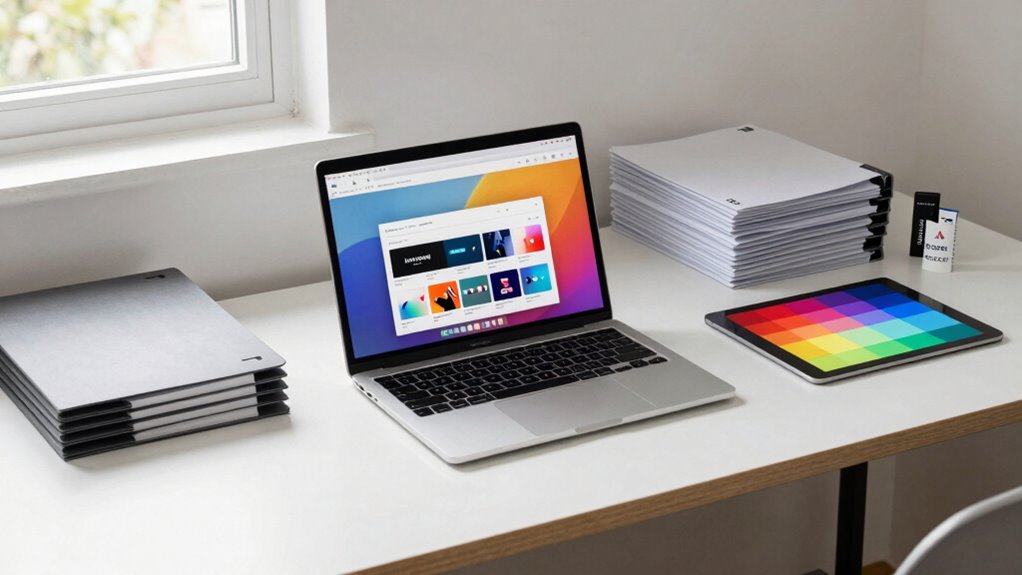
For small teams, managing brand assets can quickly become chaotic without the right system in place. When you’re juggling multiple files—logos, images, templates—it’s easy for assets to get lost or misused. That’s where a well-structured brand asset library comes in. It helps you maintain visual consistency across all channels by guaranteeing everyone has access to the correct logos, color palettes, and style guides. With a centralized system, you don’t have to chase down files or worry about outdated versions. Instead, you can quickly find what you need, confidently share assets, and keep your brand cohesive.
A key benefit of a good brand asset library is access management. You want to control who can see, edit, or download sensitive brand materials. For small teams, this means setting permissions that suit your workflow—perhaps allowing designers to modify templates but restricting general staff to view-only access. Proper access management prevents accidental edits or misuse of assets, which can dilute your brand’s identity. It also ensures that confidential or proprietary materials remain secure. By assigning roles and permissions, you streamline collaboration while maintaining control, so everyone works with the most current and approved assets. Additionally, content management systems can help organize and automate these permissions, making it easier to scale your library as your team grows. Incorporating role-based access further enhances security and simplifies permissions management.
Visual consistency is another major reason to invest in a dedicated brand asset library. When your team uses the same logo, fonts, and color schemes, your brand appears professional and trustworthy. Without a centralized system, different team members might use slightly different versions of your logo or rely on outdated visuals, creating a disjointed appearance. A brand library enforces standards by providing easy access to approved assets, making it simple for everyone to stay aligned. This consistency strengthens your brand recognition and makes your messaging instantly recognizable to your audience. Additionally, version control ensures that everyone is using the most recent files, reducing confusion and errors. Implementing a content management system can further facilitate organization and efficiency, especially as your library grows.
Google Drive folder organization tools
As an affiliate, we earn on qualifying purchases.
As an affiliate, we earn on qualifying purchases.
Frequently Asked Questions
How Do I Choose the Right Platform for My Small Team?
To choose the right platform, focus on how well it offers visual organization and user access controls. You want a system that keeps assets easy to find with clear folders or tags, so your team can work efficiently. Also, make sure it allows you to easily manage user access, giving permissions where needed. Test a few options to see which platform best fits your team’s size, workflow, and ease of use.
What Are the Common Pitfalls When Setting up a Brand Asset Library?
You might struggle with asset organization, making it hard to find files quickly, or face issues with version control, leading to outdated or duplicate assets. To avoid these pitfalls, establish clear folder structures and naming conventions. Regularly update and review assets, and use version control features to track changes. This keeps everything organized, current, and easy for your team to access, saving time and reducing confusion.
How Often Should Brand Assets Be Updated?
You should update your brand assets regularly, ideally whenever there’s a significant change in your branding, like new logos or color schemes. Use asset versioning to keep track of updates and make certain everyone accesses the latest files. Regular updates help maintain creative consistency across all channels, preventing outdated or incorrect assets from being used. Set a schedule or review process to stay proactive, guaranteeing your brand stays fresh and cohesive.
Can Brand Asset Libraries Integrate With Other Tools?
You might find it surprising, but brand asset libraries often seamlessly integrate with other tools, despite initial integration challenges. When you choose systems with strong tool compatibility, you minimize issues like data silos or version confusion. Coincidentally, this compatibility makes workflows smoother, letting your team access and update assets effortlessly across platforms. So, investing in compatible solutions guarantees your brand assets stay current and accessible, boosting overall efficiency.
How Do I Train My Team to Use the Library Effectively?
To train your team effectively, start by explaining how the brand asset library supports collaborative workflows, emphasizing its benefits. Show them how to navigate the system, access different user levels, and locate files efficiently. Encourage hands-on practice and provide clear guidelines for updating assets. Regularly review usage, answer questions, and gather feedback to guarantee everyone understands how to maximize the library’s features and maintain consistency in branding.
Conclusion
Don’t let the fear of complexity hold you back—building a simple brand asset library is easier than you think. With straightforward systems in place, your small team can stay organized, save time, and maintain brand consistency effortlessly. Sure, it might seem like a lot at first, but starting small and refining as you go makes it manageable. Trust me, the payoff is worth it—your team will thank you for the clarity and efficiency.
Flea & tick season Picks
flea and tick prevention
As an affiliate, we earn on qualifying purchases.