Choosing the right office fan can make a significant difference in your comfort during busy workdays. The Honeywell TurboForce Air Circulator stands out as the best overall for its powerful airflow and compact size. For quieter operation, the Honeywell QuietSet Personal Fan is ideal, especially in shared spaces. Meanwhile, the Pelonis Tower Fan offers a sleek design with multiple speeds, perfect for larger rooms. Every option involves tradeoffs between noise, size, airflow, and price. Keep reading to see how each model compares and find the perfect fit for your workspace.

Get business pricing on office and shipping supplies
- Business-only prices and quantity discounts
- Tax-exempt purchasing
- Multiple users, one account, clear invoices
Key Takeaways
- Top-performing fans balance airflow power with noise levels to maintain a comfortable workspace.
- Compact table fans excel in small desks but often lack the airflow needed for larger offices.
- Tower fans provide better coverage and quieter operation but tend to be pricier and less portable.
- Remote controls and timers add convenience, especially for users who want hands-free operation.
- Price varies widely; investing in a more expensive model can deliver better durability and quieter performance.


More Details on Our Top Picks
Honeywell TurboForce Air Circulator Small Tabletop Fan, 3 Speeds, 90° Pivoting Head, Black
The Honeywell TurboForce Air Circulator stands out for its combination of power and quiet operation, making it ideal for small to medium-sized offices or bedrooms. Its aerodynamic turbo design delivers strong airflow without creating noise disturbances, outperforming many similar compact fans like the Amazon Basics Desk Fan, which can struggle with airflow in slightly larger spaces. The 90° pivoting head offers flexible direction adjustment, but it lacks remote control and timer features, which could limit convenience for some users. Compared to larger tower fans, this model sacrifices some airflow volume for portability and quietness, making it perfect for personal use rather than whole-room cooling. Tradeoffs include limited coverage and no remote control, but its energy-efficient operation and adjustable airflow make it a top pick for desk or bedside use.
Pros:- Quiet operation ideal for work or sleep
- Flexible 90° pivoting head for directed airflow
- Energy-efficient turbo design for powerful circulation
Cons:- Limited to small and medium-sized rooms
- No remote or timer features for added convenience
Best for: Individuals who need a quiet, space-efficient fan for personal use in small offices or bedrooms.
Not ideal for: Large open-plan offices or rooms needing extensive airflow, as its coverage is limited.
- Type:Tabletop Fan
- Color:Black
- Speeds:3
- Pivoting Head:90 degrees
- Noise Level:25% quieter than comparable fans
- Power:Not specified
Our verdict“This fan offers a balanced mix of power and quietness, making it suitable for personal spaces where minimal disturbance matters.”
Amazon Basics Air Circulator Desk Fan for Bedroom, Home, and Office, 90-Degree Tilt Head, 3 Speed Settings, Black, 11.1″W x 6.3″D x 10.9″H
The Amazon Basics Desk Fan offers a compact, lightweight option that excels in small spaces like dorm rooms or offices where portability is key. Its 90° tilt allows for precise directional airflow, but unlike the Pelonis tower fan, it doesn’t oscillate, limiting its coverage to a focused area. Its simple control interface makes it accessible for casual users, but the motor may need occasional rest periods, especially in prolonged use, which is less of an issue with larger tower fans that often feature auto shutoff. Compared to the DREO Tower Fan, it lacks modes like sleep or natural breeze, making it less versatile but more straightforward for basic cooling needs. It’s a strong choice for budget-conscious buyers prioritizing portability over advanced features.
Pros:- Lightweight and highly portable
- Adjustable tilt for personalized airflow
- Simple, easy-to-use controls
Cons:- Limited to small spaces
- Basic control interface
- Motor may need rest periods during extended use
Best for: Students or small home offices needing an affordable, portable fan with adjustable tilt.
Not ideal for: Large rooms requiring extensive airflow or advanced features like modes and timers.
- Dimensions:11.1″W x 6.3″D x 10.9″H
- Power:35 Watts
- Weight:3 pounds
- Blade Size:7 inches
- Tilt:90-degree adjustable
- Speed Settings:3
Our verdict“This compact fan provides practical cooling for small areas at an affordable price, with portability as its main advantage.”
Pelonis 30 Inch Tower Fan for Bedroom, Quiet Oscillating Standing Fan with 3 Speeds, Auto-off Timer, Black
The Pelonis tower fan provides a balanced mix of coverage and quiet operation, with its 90° oscillation and three speed settings. Its tall, slender profile makes it a good fit for bedrooms or small offices, offering broader air distribution than the smaller Honeywell or Amazon Basics fans. The auto-off timer adds convenience, though it’s limited to 120 minutes, which might be restrictive for all-day cooling. While it doesn’t include a remote, the mechanical controls are straightforward, but compared with the DREO Tower Fan, it offers less in terms of modes and custom airflow patterns. This model suits users seeking reliable, broad airflow without complex features.
Pros:- Wide-angle oscillation for even cooling
- Tall, space-efficient design
- Auto-off timer for convenience
Cons:- Limited to 120-minute timer
- No remote control
- Basic mechanical controls
Best for: Users wanting an affordable tower fan with good coverage for small rooms or bedrooms.
Not ideal for: Those needing advanced features like multiple modes or longer timers for all-day use.
- Size:27.8″H x 9.4″D x 9.4″W
- Power:35W
- Speeds:3
- Oscillation:60 degrees
- Timer:up to 120 minutes
- Control Type:Mechanical
Our verdict“This tower fan balances effective airflow and quiet operation, ideal for small rooms needing broad coverage.”
Amazon Basics 28-Inch 60-Degree Oscillating Tower Fan
The Amazon Basics Tower Fan offers robust airflow with its 28-inch height and 60° oscillation, making it a reliable choice for larger bedrooms or small offices. Its three adjustable speeds give users some control, but the mechanical controls lack the fine precision found in digital models like the DREO. While it’s more powerful than the Amazon Basics Desk Fan, it doesn’t feature modes like sleep or natural, limiting customization. Compared to the Pelonis tower fan, it provides similar coverage but with a simpler control setup. This model makes sense for those who prioritize airflow strength and mechanical simplicity over advanced features.
Pros:- Powerful airflow for effective cooling
- Adjustable speed settings
- Simple mechanical controls
Cons:- Limited to three speeds
- No remote control
- Less feature-rich than digital models
Best for: Anyone needing a powerful, straightforward tower fan for medium-sized spaces.
Not ideal for: Buyers seeking modes like sleep or natural breeze, or remote control features.
- Size:27.8″H x 9.4″D x 9.4″W
- Power:35W
- Speeds:3
- Oscillation:60 degrees
- Control Type:Mechanical
Our verdict“This tower fan provides reliable, strong airflow with simple controls, suitable for those who prefer mechanical operation.”
DREO Tower Fan for Bedroom, 26 ft/s Velocity, 90° Oscillating, 8H Timer, 4 Speeds, 3 Modes, Quiet Standing Fan with Remote, Black
The DREO Tower Fan is distinguished by its high airflow velocity of 26 ft/s and four speeds, offering more granular control than many competitors like the Amazon Basics Tower. It also includes three modes—Normal, Sleep, and Natural—tailoring airflow to different comfort needs. Its quiet operation at 28dB makes it suitable for bedrooms and workspaces, while the remote control enhances convenience. The 8-hour timer and adjustable height add flexibility, but the higher price point might be a barrier for budget-conscious buyers. Compared to the Pelonis fan, it provides more modes and better control options, but with a potentially larger footprint. This model is best for users who prioritize advanced features, quiet operation, and customizable airflow.
Pros:- High airflow velocity for quick cooling
- Multiple modes for tailored comfort
- Quiet operation with remote control
Cons:- Higher price point
- No adjustable tilt or height
- Potentially larger footprint
Best for: Tech-savvy users or those requiring a quiet, feature-rich fan for multi-use spaces.
Not ideal for: Casual users or those on a strict budget, as it offers more features than necessary for basic cooling.
- Air Speed:26 ft/s
- Oscillation:90°
- Timer:8 hours
- Speeds:4
- Modes:3 (Normal, Sleep, Natural)
- Noise Level:28dB
Our verdict“This fan excels in delivering customizable, quiet airflow with remote convenience for demanding users.”
Honeywell QuietSet Personal Table Fan, Oscillating Desk Fan for Bedroom, Black
This Honeywell QuietSet 13-inch fan excels in delivering whisper-quiet operation ideal for bedrooms and focused work environments, making it a strong choice for those who prioritize silence. Unlike larger oscillating fans like the DREO model, its compact size and adjustable sound levels help create a peaceful space without sacrificing airflow. However, the smaller size limits its effectiveness in larger rooms or open offices, and it lacks tilt or height adjustment, which could restrict positioning flexibility. The four sound and power levels allow for customizable comfort, while its portability makes it easy to move between spaces. Still, users needing robust airflow for bigger areas may find it underpowered. This pick makes the most sense for individuals seeking a quiet, personal cooling solution without the bulk of larger fans.Pros:- Quiet operation suitable for bedrooms and offices
- Multiple sound and power settings for customization
- Compact and portable design
Cons:- Limited to small spaces, not suitable for large rooms
- No adjustable height or tilt
Best for: Individuals who need a quiet, space-efficient fan for personal use, especially in bedrooms or small offices.
Not ideal for: People requiring powerful airflow for large rooms or those who want adjustable tilt or height features.
- Size:13 inches
- Color:Black
- Features:Oscillating, 4 sound/power levels, auto shut-off timer, quiet operation
Our verdict“This fan is perfect for users seeking a quiet, space-saving option for personal cooling in small areas.”
Personal Tower Fan for Bedroom, 4-Speed Oscillating Standing Fan with Remote, 12H Timer, Quiet Operation
This tower fan offers advanced convenience features like remote control, 12-hour timer, and adjustable oscillation angles up to 110°, making it ideal for those who value ease of use and precise airflow control. Compared with the Honeywell QuietSet, it provides more control options and a sleeker profile, fitting neatly into modern bedrooms or offices. Its noise level at 25dB remains quiet but slightly louder than the QuietSet, which might matter for extremely sensitive sleepers. The fan’s four speeds and modes (including ‘Nature’) provide versatility; however, the lack of height adjustment limits positioning flexibility. Moreover, its limited to four speeds, which may be insufficient for very large or hot spaces. It’s best suited for users who want a quiet, programmable fan with remote access.Pros:- Quiet operation at 25dB
- Remote control and 12-hour timer for convenience
- Adjustable oscillation angles for even airflow
Cons:- Limited to 4 fan speeds
- No adjustable height
Best for: Users who prefer remote-controlled operation and adjustable airflow in bedrooms or small offices.
Not ideal for: Those needing high-powered airflow for large or very hot spaces, or adjustable height for optimal positioning.
- Noise Level:25dB
- Speeds:4
- Oscillation Angles:60° & 110°
- Timer:12 hours
- Control:Remote and LED display
- Modes:Normal, Nature
Our verdict“This fan is ideal for users seeking a quiet, remote-controlled cooling experience in small to medium-sized rooms.”
DREO Fan for Bedroom, Upgraded 2026 Model, 90ft Airflow, Quiet Oscillating Standing Fan with DC Motor, 8+ Speeds, 3 Modes, Adjustable Height 38-42 inches, 8H Timer, 105° Vertical Pivot
This upgraded DREO standing fan stands out for its exceptional airflow, capable of circulating air up to 90 feet, making it suitable for large rooms or open spaces. Its multiple speeds, modes, and adjustable height offer significant customization, surpassing the more basic models like Honeywell QuietSet or the tower fan in airflow capacity. The inclusion of a DC motor ensures quiet operation despite the powerful airflow, but its complex setup and higher price point could deter casual users or those seeking simple plug-and-play solutions. The remote control adds convenience, and the vertical pivot provides flexible directional airflow. However, its advanced features and size mean it might be overkill for small rooms or users who prefer minimal setup effort. This model best suits those needing robust airflow combined with quiet operation, willing to invest in a premium product.Pros:- Powerful airflow covering up to 90 feet
- Quiet operation with DC motor technology
- Multiple speeds, modes, and adjustable height
Cons:- Complex setup required for optimal use
- Higher price compared to basic models
Best for: Large room owners or those who need powerful, customizable airflow with quiet operation in a premium standing fan.
Not ideal for: Casual users or small-room dwellers who prefer straightforward, budget-friendly fans without complex setup.
- Airflow Range:90 ft
- Airflow Capacity:1000 CFM
- Height Range:38-42 inches
- Oscillation:90° horizontal, 105° vertical
- Speeds:8+
- Modes:3
- Timer:8 hours
- Motor:DC motor
Our verdict“This fan is designed for those who need high-capacity airflow, adjustable features, and quiet operation in large spaces willing to invest in premium quality.”
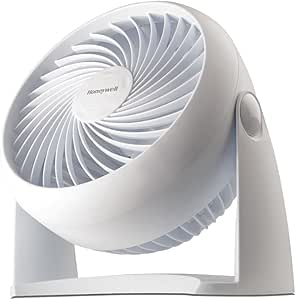
Honeywell TurboForce Air Circulator Small Tabletop Fan, White, HT-904
This Honeywell TurboForce circulator earns its spot as the best compact tabletop fan, offering powerful airflow from a small footprint, especially with its aerodynamic turbo design that maximizes air output. Its 90° pivoting head allows precise direction, making it more flexible than fixed-head fans like the Amazon Basics model. Compared with larger oscillating fans, it excels in confined spaces like desks or small rooms where space is limited. While its energy-efficient design helps save on costs, it’s limited to small and medium-sized rooms, and it lacks remote or timer features, which might inconvenience users seeking more automation. Its quiet operation—25% quieter than comparable fans—makes it suitable for work or sleep environments. Overall, this fan is a smart choice for those who need effective, space-saving cooling without fuss.Pros:- Quiet operation, 25% quieter than comparable fans
- Adjustable 90° pivoting head for directional airflow
- Powerful airflow in a small size
Cons:- Limited to small and medium-sized rooms
- No remote or timer features
Best for: Individuals needing a compact, energy-efficient fan for desks, small rooms, or wall mounting.
Not ideal for: Large room owners or those seeking remote control or automated timers for convenience.
- Size:Small
- Color:White
- Model:HT-904
- Speeds:3
- Pivoting Head:90°
Our verdict“This fan suits users who want a quiet, space-efficient cooling solution for small to medium rooms or desks.”

How We Picked
In selecting these office fans, I prioritized factors that directly impact user experience in work environments. Performance was evaluated based on airflow strength and coverage, while noise levels were critical for maintaining concentration. Build quality and ease of use, including features like remote controls and timers, played a key role. Value was assessed by balancing price against performance and durability. The ranking reflects a blend of these criteria, aiming to recommend models suitable for different workspace sizes, noise sensitivities, and budget considerations.Factors to Consider When Choosing Office Fan
When choosing an office fan, it’s important to consider how the fan’s features align with your workspace needs. Beyond basic airflow, factors like noise level, size, and additional features can significantly affect usability and comfort. Making the right choice involves weighing tradeoffs, such as power versus noise, portability versus coverage, and cost versus longevity. This guide explores key considerations to help you find a fan that enhances your workspace without unnecessary compromises.Performance and Airflow
Effective airflow is essential for cooling your workspace, but bigger fans aren’t always better if noise and size are concerns. Look for fans with adjustable speeds to tailor airflow to your comfort level. For small desks, compact fans that deliver focused airflow may suffice, while larger rooms benefit from tower fans that distribute air more evenly. Consider the fan’s maximum airflow capacity (measured in CFM) to ensure it can handle your space without requiring excessive noise or power.
Noise Levels
Quiet operation is often a priority in office settings. Fans with multiple speed options usually allow you to balance airflow with noise, but some models are inherently quieter due to design features like brushless motors or sound-dampening casings. If you work in a shared space or need concentration, look for fans explicitly rated for low noise levels. Keep in mind that larger, more powerful fans can sometimes be louder, so check user reviews for real-world noise performance.
Size and Portability
Choosing the right size depends on your desk space and whether you need a portable option. Smaller table fans are easy to move and fit in tight spaces, but they may lack the airflow for larger rooms. Tower fans tend to be taller and more stable, offering better coverage with a slender profile. Consider whether you want a fan that you can easily relocate or one that stays put, and match that to your workspace dimensions and mobility needs.
Features and Convenience
Features like remote controls, timers, oscillation, and multiple modes add convenience and customization. Remote controls are handy for adjusting settings without interrupting work, while timers help conserve energy and reduce noise when the fan isn’t needed. Oscillation widens the airflow coverage, ideal for shared spaces. Be mindful that extra features can add to the price, so prioritize those that genuinely improve your comfort and usability.
Price and Durability
Price ranges widely from budget models to premium fans with advanced features. Cheaper fans may lack durability or run louder over time, whereas investing in a higher-quality model often yields quieter operation and longer lifespan. Think about how often you’ll use the fan and whether it’s worth paying more upfront for a model with better build quality. Remember, a well-made fan can save money in the long run through increased reliability and efficiency.
Frequently Asked Questions
How quiet should an office fan be?
For office use, a fan should ideally operate below 50 decibels, which is roughly as loud as a quiet conversation. Fans with sound ratings in this range won’t distract you or your coworkers, especially during meetings or focused work sessions. Many modern fans incorporate noise-reduction features, making them suitable for shared or quiet environments. Always check user reviews for real-world noise levels, as specifications can sometimes be misleading.
Is a larger fan better for an office?
Not necessarily. Larger fans like tower models can provide broader airflow coverage and tend to operate more quietly, but they may take up more space and be less portable. Smaller table fans are easier to position on your desk but may struggle to cool larger areas effectively. The best choice depends on your workspace size and how much airflow you need to stay comfortable without creating excess noise or clutter.
Should I prioritize features like remote control or manual controls?
Remote controls and timers add significant convenience, especially if you prefer to adjust settings without interrupting your work. They are particularly useful in larger or shared offices where you might not want to reach for the fan manually. However, these features can increase the cost slightly and may add complexity. Consider how often you’ll use these extras before making a decision, balancing convenience against budget.
How important is energy efficiency in an office fan?
Energy efficiency becomes more important if you plan to run the fan for long periods. Fans with energy-saving motors or lower wattage can reduce electricity bills and environmental impact. Look for models with Energy Star ratings or specific power-saving features if you expect frequent use. While energy-efficient fans might cost more initially, they often save money over time through lower operating costs.
Are tower fans better than desk fans for a small office?
Tower fans generally offer better coverage and operate more quietly than small desk fans, making them a good choice for small offices or shared spaces. They take up less desk space and can be positioned to cool a wider area. However, they tend to be more expensive and less portable. For very small desks, a compact desk fan might be more practical, but for broader coverage, a tower fan is often the better pick.
Conclusion
For those who need a versatile and reliable all-around option, the Honeywell TurboForce Air Circulator makes a strong case as the best overall. If quiet operation is your top priority, especially in shared workspaces, the Honeywell QuietSet Personal Fan is the best choice. Budget-conscious buyers should consider the Amazon Basics Desk Fan for decent performance at an affordable price. For larger offices or those seeking sleek design and coverage, the Pelonis Tower Fan offers a premium experience. Ultimately, your ideal office fan depends on your workspace size, noise sensitivity, and feature preferences.
Halloween Picks
halloween
As an affiliate, we earn on qualifying purchases.