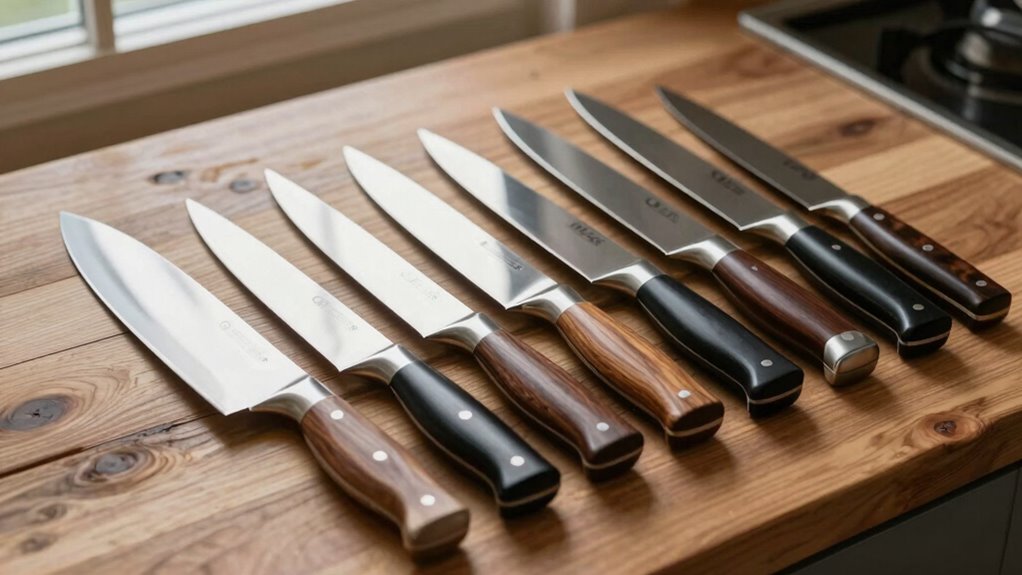

The best overall gyuto knife in this roundup is the Shun Premier 8-inch Chef’s Knife, a strong choice for cooks who want a recognizable Japanese-style profile and a refined finish. For a harder-steel alternative, the Kawahiro 8.27-inch hand-forged VG10 stands out for precise cutting, while the Kai Seki Magoroku Akane may suit buyers who value dishwasher-safe convenience. The main tradeoffs are cutting feel versus toughness, sharper edges versus easier upkeep, and premium construction versus practical everyday value. Several picks use layered steel or VG10-type cores, but those labels alone do not tell you how a knife will feel or how carefully it needs to be maintained. Read on for the full breakdown of all 15 gyuto knives and guidance on matching one to your cooking habits.

Get business pricing on office and shipping supplies
- Business-only prices and quantity discounts
- Tax-exempt purchasing
- Multiple users, one account, clear invoices
Key Takeaways
- The Shun Premier is the roundup’s best overall choice for buyers seeking a polished, established option; it is not the automatic pick for cooks who want low-maintenance care.
- The two Kawahiro VG10 knives are precision-oriented alternatives, but their similar names and steel descriptions make careful model identification worthwhile before buying.
- The Kai Seki Magoroku Akane stands apart for dishwasher-safe convenience, a useful distinction for buyers who prioritize easier cleanup over a traditional hand-wash routine.
- Several knives use layered steel or high-carbon steel claims; these features may appeal visually, but edge geometry, balance, and care requirements matter more to daily use.
- The lineup includes both approachable stainless options and harder, more specialized choices, so beginners should prioritize comfortable handling and forgiving maintenance over the most elaborate steel description.
| Imarku Japanese Chef Knife – 8 Inch High-Carbon Stainless Steel Kitchen Knife |  | Best for Everyday Versatility | Blade length: 8 inches | Blade material: High-carbon stainless steel | Handle material: Pakkawood | VIEW ON AMAZON | See Our Full Breakdown |
| Kanngou VG10 Damascus Chef Knife, 8.27 Inch Gyuto Knife |  | Best for Damascus Styling | Blade length: 8.27 inches | Blade material: 67-layer Damascus; description names a VG10 core, while specs list AUS-10, alloy steel, and stainless steel | Handle material: Ebony and rosewood | VIEW ON AMAZON | See Our Full Breakdown |
| Kimura 8-inch Japanese Chef Knife – High Carbon Molybdenum Stainless Steel Gyuto with Ergonomic Handle |  | Best for a Sturdy, Familiar Grip | Blade length: 8 inches | Blade material: High-carbon chrome molybdenum stainless steel | Handle material: POM resin | VIEW ON AMAZON | See Our Full Breakdown |
| Yonida 8-Inch Japanese Chef Knife, 67-Layer Damascus Steel with AUS-10 Core |  | Best for Edge-Retention Claims and Gift Presentation | Blade length: 8 inches | Blade material: 67-layer Damascus steel with AUS-10 core | Hardness: 60 HRC | VIEW ON AMAZON | See Our Full Breakdown |
| HOSHANHO 8 Inch Gyuto Chef Knife, Ultra Sharp Japanese Kitchen Knife |  | Best for a Forged Carbon-Steel Feel | Blade length: 8 inches | Blade material: High-carbon steel | Handle material: Rosewood | VIEW ON AMAZON | See Our Full Breakdown |
| Kawahiro 8.27-Inch Japanese Chef Knife, Hand-Forged VG10 for Precise Cuts |  | Best for a Traditional Wa Handle | Blade length: 8.27 inches | Blade steel: VG10 core | Weight: 6.7 oz | VIEW ON AMAZON | See Our Full Breakdown |
| Ignited Cutlery 8-Inch Professional Gyuto Chef Knife |  | Best for Stainless-Steel Handle Fans | Blade length: 8 inches | Blade steel: German 1.4116 high-carbon stainless steel | Edge angle: 13° per side | VIEW ON AMAZON | See Our Full Breakdown |
| KAWAHIRO Japanese Chef Knife 8.27″ – Hand Forged VG10 Damascus Kitchen Knife |  | Best for Damascus Craftsmanship | Blade length: 8.27 inches (210 mm) | Blade steel: VG10 core with 67-layer Damascus steel | Hardness: 60–62 HRC | VIEW ON AMAZON | See Our Full Breakdown |
| SHAN ZU 8 Inch Japanese Chef Knife, 9-Layer 10Cr15MoV High Carbon Steel |  | Best for a Firm, High-Hardness Edge | Blade length: 8 inches | Blade steel: Japanese 10Cr15MoV | Construction: 9-layer forged, full tang | VIEW ON AMAZON | See Our Full Breakdown |
| Shun Premier 8″ Chef’s Knife |  | Best Premium All-Rounder | Blade length: 8 inches | Blade steel: VG-MAX core with Damascus cladding | Cladding: 68 layers | VIEW ON AMAZON | See Our Full Breakdown |
| HOSHANHO 8-inch Japanese High Carbon Steel Chef’s Knife |  | Best for Straightforward Everyday Use | Blade length: 8 inches | Blade material: Japanese high carbon steel 10Cr15CoMoV | Blade hardness: 60 HRC | VIEW ON AMAZON | See Our Full Breakdown |
| MITSUMOTO SAKARI 8-Inch Japanese Gyuto Chef Knife, 3-Layer 9Cr18MoV |  | Best for Traditional Craft and Presentation | Blade length: 8.6 inches | Blade material: High carbon steel, 9Cr18MoV | Construction: 3-layer San-Mai | VIEW ON AMAZON | See Our Full Breakdown |
| Kai Gyuto Knife Seki Magoroku Akane 8.3 inches (210 mm), Made in Japan, Dishwasher Safe |  | Best Low-Maintenance Pick | Blade length: 8.3 inches (210 mm) | Blade material: Molybdenum vanadium stainless steel | Handle material: Polyacetal and nylon | VIEW ON AMAZON | See Our Full Breakdown |
| 8-Inch Japanese Chef Knife – Hand-Forged Gyuto, 9-Layer Steel |  | Best for a Fine, Acute Edge | Blade length: 8 inches | Overall length: 14 inches | Weight: 4 ounces | VIEW ON AMAZON | See Our Full Breakdown |
| HOSHANHO 8″ Chef Knife with 9-Layer 10CR15MOV High Carbon Steel and Rosewood Handle |  | Best Layered-Steel Alternative | Blade length: 8 inches | Material: High carbon steel, 10CR15MOV | Blade construction: 9-layer | VIEW ON AMAZON | See Our Full Breakdown |
| gyuto knife | Blade length | Weight | Handle material | Blade material |
|---|---|---|---|---|
| Imarku Japanese Chef Knife | 8 inches | 6.56 ounces | Pakkawood | High-carbon stainless steel |
| Kanngou VG10 Damascus Chef Kni | 8.27 inches | 230 g | Ebony and rosewood | 67-layer Damascus; description names a VG10 core, while specs list AUS-10, alloy steel, and stainless steel |
| Kimura 8-inch Japanese Chef Kn | 8 inches | 175 g | POM resin | High-carbon chrome molybdenum stainless steel |
| Yonida 8-Inch Japanese Chef Kn | 8 inches | — | Resin | 67-layer Damascus steel with AUS-10 core |
| HOSHANHO 8 Inch Gyuto Chef Kni | 8 inches | 221 g | Rosewood | High-carbon steel |
| Kawahiro 8.27-Inch Japanese Ch | 8.27 inches | 6.7 oz | — | — |
| Ignited Cutlery 8-Inch Profess | 8 inches | 4.8 oz | — | — |
| KAWAHIRO Japanese Chef Knife 8 | 8.27 inches (210 mm) | 180 g | — | — |
| SHAN ZU 8 Inch Japanese Chef K | 8 inches | 272 g | — | — |
| Shun Premier 8" Chef’s Knife | 8 inches | 214 g | — | — |
| HOSHANHO 8-inch Japanese High | 8 inches | — | Wood | Japanese high carbon steel 10Cr15CoMoV |
| MITSUMOTO SAKARI 8-Inch Japane | 8.6 inches | 279 g | Rosewood | High carbon steel, 9Cr18MoV |
| Kai Gyuto Knife Seki Magoroku | 8.3 inches (210 mm) | Approx. 5 oz | Polyacetal and nylon | Molybdenum vanadium stainless steel |
| 8-Inch Japanese Chef Knife | 8 inches | 4 ounces | G10 front, rosewood back with brass pin | 9-layer high carbon 10CR15MOV steel |
| HOSHANHO 8" Chef Knife with 9- | 8 inches | 218 g | Rosewood and G10 | — |
More Details on Our Top Picks
Imarku Japanese Chef Knife – 8 Inch High-Carbon Stainless Steel Kitchen Knife
The Imarku is the straightforward all-purpose pick here: its 8-inch stainless blade is sized for everyday slicing, dicing, and chopping, while corrosion resistance makes routine kitchen care less demanding than with the higher-carbon HOSHANHO. Its Pakkawood handle offers a comfortable, stable grip, and the listed 6.56-ounce weight should feel manageable for many home cooks. Compared with the more specialized-looking Kanngou VG10 Damascus Gyuto, this knife puts less emphasis on layered-steel construction and more on practical, general-purpose use. The tradeoff is that the broad 8-inch blade may feel cumbersome for small, precise jobs, and the handle calls for careful upkeep. I’d choose it for a familiar Western-style chef-knife role, not for buyers seeking a distinctly documented Japanese steel profile or a compact prep knife.
Pros:- 8-inch blade handles a broad range of daily prep tasks
- Corrosion-resistant stainless steel is suited to routine kitchen use
- Pakkawood handle is designed for a comfortable, stable grip
- Listed weight of 6.56 ounces keeps it relatively light
Cons:- Full-size blade may feel unwieldy for precise work on small ingredients
- Pakkawood handle needs careful maintenance
- Product details do not specify a steel grade or hardness
Best for: Home cooks who want one corrosion-resistant, full-size knife for routine vegetable, meat, and fruit prep.
Not ideal for: Cooks who often make small, intricate cuts or want a documented Japanese steel core and construction details.
- Blade length:8 inches
- Blade material:High-carbon stainless steel
- Handle material:Pakkawood
- Weight:6.56 ounces
- Item length:13 inches
- Blade color:Silver
- Features:Ultra-sharp edge, corrosion-resistant construction, ergonomic handle
Our verdict“Choose the Imarku for a light, general-purpose 8-inch knife with stainless-steel convenience, but skip it if fine control is your priority.”
Kanngou VG10 Damascus Chef Knife, 8.27 Inch Gyuto Knife
The Kanngou stands out for shoppers who want a named VG10 core paired with a 67-layer Damascus exterior and an octagonal handle made from ebony and rosewood. Its 8.27-inch length gives it slightly more reach than the 8-inch Kimura, a small difference that may suit cooks who make longer slicing cuts. The forged construction and hand-sharpened plain edge point toward a more specialized gyuto presentation than the Imarku’s simpler stainless-steel brief. That detail and material focus comes with a maintenance tradeoff: a sharp edge needs ongoing care, and the listing’s material descriptions are not fully consistent, naming VG10 in the description but AUS-10, alloy steel, and stainless steel in the specs. I’d favor this over the Kimura for Damascus appearance and handle character, but not for a buyer who wants the clearest steel specification.
Pros:- 67-layer Damascus construction with a VG10 core described in the product copy
- 8.27-inch blade offers a little more length than the 8-inch options
- Octagonal ebony and rosewood handle gives a distinctive grip profile
- Forged construction and plain edge suit general slicing, dicing, and chopping
Cons:- Steel descriptions conflict between the VG10 claim and the listed AUS-10/alloy/stainless materials
- Hand-sharpened edge requires ongoing sharpening and care
- Hardwood handle may be less suited to buyers seeking low-maintenance materials
Best for: Cooks who value a Damascus finish, an octagonal hardwood handle, and a slightly longer gyuto blade for varied prep.
Not ideal for: Buyers who prioritize unambiguous steel specifications, minimal upkeep, or a simple everyday handle.
- Blade length:8.27 inches
- Blade material:67-layer Damascus; description names a VG10 core, while specs list AUS-10, alloy steel, and stainless steel
- Handle material:Ebony and rosewood
- Weight:230 g
- Item length:13.4 inches
- Edge:Plain
- Construction:Forged
- Layer count:67
Our verdict“Pick the Kanngou for its Damascus look, hardwood handle, and longer blade, but verify the steel details if core composition is a deciding factor.”
Kimura 8-inch Japanese Chef Knife – High Carbon Molybdenum Stainless Steel Gyuto with Ergonomic Handle
The Kimura is the more reassuringly specified workhorse among these five: it pairs Japanese-made chrome molybdenum stainless steel with a full tang, triple rivets, a bolster, and a double-bevel edge. That construction gives it a familiar, sturdy feel compared with the Kanngou’s octagonal hardwood handle and layered presentation. At 175 g, it is also lighter than the 230 g Kanngou, which may appeal to cooks who prefer less weight during repeated prep. Its POM resin handle trades natural wood character for a practical, durable material. The compromise is a more conventional build rather than a Damascus finish, and the double bevel may not suit someone seeking a single-bevel profile. The listing mentions a lifetime warranty, though the exact terms are not provided. I’d choose it for dependable everyday use, not decorative impact.
Pros:- Japanese-made high-carbon chrome molybdenum stainless steel
- Full tang, triple rivets, and bolster provide a substantial, familiar construction
- Double-bevel edge suits common left- and right-handed cutting styles
- POM resin handle avoids the wood-care concerns of the Kanngou and HOSHANHO
Cons:- Conventional appearance lacks the layered Damascus styling of the Kanngou or Yonida
- Stainless steel still needs sharpening to maintain cutting performance
- Bolster may not appeal to cooks who prefer an uninterrupted blade-to-handle profile
Best for: Home cooks or working cooks who want a Japanese-made, double-bevel gyuto with a sturdy, familiar handle construction.
Not ideal for: Knife enthusiasts seeking a Damascus finish, a traditional single-bevel edge, or a natural wood handle.
- Blade length:8 inches
- Blade material:High-carbon chrome molybdenum stainless steel
- Handle material:POM resin
- Weight:175 g
- Construction:Full tang, triple riveted, bolstered
- Blade edge:Double bevel
- Made in:Japan
- Warranty:Lifetime warranty listed
Our verdict“Choose the Kimura for a sturdy Japanese-made, double-bevel daily knife with a low-fuss resin handle rather than a showpiece finish.”
Yonida 8-Inch Japanese Chef Knife, 67-Layer Damascus Steel with AUS-10 Core
Yonida’s strongest selling point is a clearly stated AUS-10 core at 60 HRC, wrapped in 67-layer Damascus steel. That gives buyers more specific hardness information than the Imarku listing, while its 8-inch length keeps it closer to the familiar everyday format than the longer Kanngou. The resin handle also avoids the wood-care requirements attached to the Kanngou and HOSHANHO, though the product details do not identify its shape or exact balance. Yonida is positioned as a sharper, more edge-focused option, but the higher hardness and high-carbon construction call for attentive care to reduce corrosion risk. The Damascus appearance and included gift box add presentation value, not cutting capability. I’d pick it for someone who wants a detailed steel specification and polished gifting, but not for carefree handling or dishwasher use.
Pros:- AUS-10 core and 60 HRC hardness are specified
- 67-layer Damascus construction offers a distinctive finish
- Forged construction and plain edge are suited to general kitchen prep
- Resin handle and included luxury gift box
Cons:- High-carbon construction calls for prompt cleaning and careful drying
- Handle shape and weight are not specified in the supplied details
- Hardness and edge-retention claims do not remove the need for sharpening
Best for: Knife enthusiasts or gift buyers who want an 8-inch Damascus gyuto with a stated AUS-10 core and 60 HRC hardness.
Not ideal for: Cooks who want minimal maintenance, use a knife carelessly around moisture, or prefer a documented handle shape and balance.
- Blade length:8 inches
- Blade material:67-layer Damascus steel with AUS-10 core
- Hardness:60 HRC
- Handle material:Resin
- Construction:Forged, composite
- Blade edge:Plain
- Included components:Chef knife, luxury gift box
- Model number:YN-CK-8in
Our verdict“Choose the Yonida for its specified AUS-10 core, Damascus finish, and gift presentation if you are comfortable with more attentive blade care.”
HOSHANHO 8 Inch Gyuto Chef Knife, Ultra Sharp Japanese Kitchen Knife
HOSHANHO is the pick for cooks drawn to a high-carbon steel core and a hand-forged presentation, without the 67-layer Damascus emphasis of the Kanngou or Yonida. Its 9-layer construction and rosewood handle give it a more traditional-looking profile than the resin-handled Kimura, while the 8-inch blade stays in a practical everyday range. At 221 g, it is heavier than the Kimura’s 175 g, so buyers should expect a more substantial feel rather than the lightest option in this group. The product details do not name the steel grade or hardness, making its composition less specific than Yonida’s AUS-10 and 60 HRC listing. High-carbon steel and a wooden handle also ask for more care than the Imarku’s corrosion-resistant stainless construction. Choose it for the material style, not low-maintenance convenience.
Pros:- High-carbon steel core is paired with 9-layer construction
- Forged build and rosewood handle offer a traditional material profile
- 8-inch blade suits a wide range of kitchen prep
- Listed weight provides a substantial feel compared with the lighter Kimura
Cons:- Steel grade and hardness are not specified
- High-carbon steel needs prompt cleaning and drying
- Rosewood handle requires care to preserve its appearance
Best for: Cooks who want an 8-inch forged gyuto with a high-carbon core, layered construction, and rosewood handle.
Not ideal for: Busy kitchens seeking corrosion-resistant, low-care steel or buyers who need a specified steel grade and hardness.
- Blade length:8 inches
- Blade material:High-carbon steel
- Handle material:Rosewood
- Weight:221 g
- Item length:14.2 inches
- Blade edge:Plain
- Construction:Forged
- Layer count:9
Our verdict“Choose HOSHANHO if you want a forged, rosewood-handled carbon-steel gyuto and are willing to trade stainless-steel convenience for more upkeep.”
Kawahiro 8.27-Inch Japanese Chef Knife, Hand-Forged VG10 for Precise Cuts
I’d put this Kawahiro on the shortlist for cooks who want a longer-than-8-inch gyuto with an octagonal wooden handle. Its VG10 core, hand-sharpened edge, and distal taper are aimed at controlled slicing and lower cutting resistance, while the 6.7-ounce weight keeps it relatively light for an 8.27-inch blade. Compared with the Damascus-clad KAWAHIRO KH-6701, this KH-6601 has a simpler stated steel construction and lacks a listed hardness rating, so buyers get fewer specifics about edge retention. The tradeoff is care: the maker advises hand washing and avoiding bones and frozen food, making this a poor match for rough prep or a dishwasher routine. I see its distinct appeal in the handle and precise, careful cutting, not in low-maintenance versatility.
Pros:- VG10 core and hand-sharpened edge are suited to precise slicing and chopping.
- Distal taper is designed to reduce resistance as the blade moves through food.
- Octagonal wood handle offers a traditional grip and balanced feel.
- 8.27-inch blade provides extra reach compared with standard 8-inch options.
Cons:- Requires hand washing and careful upkeep.
- Not intended for bones or frozen foods.
- The supplied specs do not state the blade hardness or handle wood details.
Best for: Home cooks who prefer an octagonal wooden Wa-style handle and regularly make precise cuts through vegetables, fish, and boneless meat.
Not ideal for: Cooks who want a dishwasher-safe, abuse-tolerant knife or often cut through bones and frozen ingredients.
- Blade length:8.27 inches
- Blade steel:VG10 core
- Weight:6.7 oz
- Handle:Octagonal wood with ebony, turquoise, and ruby accents
- Model:KH-6601
- Included components:Knife, certificate of authenticity, manual, and wipe cloth
Our verdict“Choose this Kawahiro if a light, longer gyuto with a traditional octagonal handle matters more to you than easy-care toughness.”
Ignited Cutlery 8-Inch Professional Gyuto Chef Knife
The Ignited Cutlery takes a more utilitarian route than the wood-handled Kawahiro KH-6601: it pairs an 8-inch German 1.4116 stainless-steel blade with an all-steel handle. Its 13-degree-per-side edge is narrow for a gyuto and geared toward fine slicing, while the 4.8-ounce weight makes it the lightest-feeling option by listed weight among these five. Stainless construction and the stated corrosion resistance suit cooks who want less concern about staining than with the harder, high-carbon SHAN ZU. There are tradeoffs: 1.4116 is a different steel class from the VG10 and VG-MAX cores elsewhere in this group, and the all-metal handle may feel cold or slippery to cooks who prefer a textured wood grip. I’d choose it for a pared-back, light knife, not for a warm-handled traditional feel.
Pros:- 13-degree-per-side edge is suited to fine, precise slicing.
- German 1.4116 stainless steel is described as corrosion resistant.
- 4.8-ounce weight makes it relatively light to maneuver.
- Forged construction and plain edge suit everyday slicing and chopping.
Cons:- All-steel handle can feel cold and may not suit cooks who want a grippy, warm surface.
- The supplied data does not specify hardness or a handle texture.
- Its steel specification offers less detail about edge retention than the VG10 and 10Cr15MoV options.
Best for: Cooks who prefer an all-metal handle, want a lightweight 8-inch gyuto, and value corrosion resistance for regular kitchen use.
Not ideal for: Buyers who want a traditional Japanese Wa handle, a warmer grip, or the stated high hardness of the SHAN ZU and KAWAHIRO Damascus models.
- Blade length:8 inches
- Blade steel:German 1.4116 high-carbon stainless steel
- Edge angle:13° per side
- Blade thickness:2.5 mm
- Handle:Stainless steel
- Weight:4.8 oz
- Construction:Forged
- Included components:Knife and gift box
Our verdict“Pick this Ignited Cutlery gyuto if a light, stainless-steel-handled knife appeals more than a traditional wood grip or a harder specialty-steel blade.”
KAWAHIRO Japanese Chef Knife 8.27″ – Hand Forged VG10 Damascus Kitchen Knife
This KAWAHIRO KH-6701 is the more specification-rich choice for buyers drawn to the brand’s longer gyuto format: it lists a VG10 core, 67-layer Damascus cladding, and 60–62 HRC hardness. At 180 grams, it is also light for an 8.27-inch blade, a useful fit for cooks who want reach without a heavy feel. The octagonal ebony Wa handle with turquoise accents sets it apart from the all-steel Ignited Cutlery, which offers a more modern grip but not this traditional handle shape. Compared with the Shun Premier, the KAWAHIRO supplies explicit hardness and layer-count details, while Shun specifies its VG-MAX core and hammered finish. The KAWAHIRO’s harder edge calls for careful handling and maintenance, and the handmade finish may vary from knife to knife. I’d favor it for a deliberate, detail-focused prep style.
Pros:- VG10 core with stated 60–62 HRC hardness is designed for sharpness and edge retention.
- 67-layer Damascus cladding and Kurouchi finish give the blade a distinctive appearance.
- 180-gram weight and octagonal Wa handle are suited to controlled, extended prep.
- 8.27-inch blade offers extra length compared with standard 8-inch gyutos.
Cons:- Harder steel calls for careful use and upkeep.
- Hand-forged finish can vary between individual knives.
- The listing does not specify an edge angle.
Best for: Culinary enthusiasts who want a lightweight, longer gyuto with a Wa handle, visible Damascus cladding, and stated hardness.
Not ideal for: Cooks who prefer a low-maintenance workhorse, need a knife for bones or frozen food, or want identical cosmetic details on every knife.
- Blade length:8.27 inches (210 mm)
- Blade steel:VG10 core with 67-layer Damascus steel
- Hardness:60–62 HRC
- Weight:180 g
- Handle:Ebony wood with turquoise accents
- Handle style:Octagonal Wa handle
- Finish:Kurouchi forged
- Model:KH-6701
Our verdict“Choose the KH-6701 if you want a light, long VG10 gyuto with pronounced Damascus character and are comfortable maintaining a hard edge.”
SHAN ZU 8 Inch Japanese Chef Knife, 9-Layer 10Cr15MoV High Carbon Steel
The SHAN ZU is the firm-edged option in this group, with a 10Cr15MoV core hardened to 62 HRC and a listed 12-degree blade angle. That combination is aimed at keen slicing performance, while its 8-inch length is more familiar than the 8.27-inch KAWAHIRO models. The full-tang build and octagonal red sandalwood Pakkawood handle offer a different balance from the Shun Premier’s contoured Pakkawood grip; buyers choosing between them are weighing a specified narrow edge and high hardness against Shun’s hammered finish and VG-MAX core. The SHAN ZU is also substantially heavier on paper than the 180-gram KAWAHIRO. Its harder steel needs attentive care, and maintaining the stated 12-degree angle may call for appropriate sharpening tools. I’d pick it for controlled, precise prep rather than careless or rough kitchen work.
Pros:- 10Cr15MoV core and 62 HRC hardness are specified for edge retention.
- 12-degree blade angle supports a keen slicing edge.
- Full-tang construction and octagonal handle provide a substantial, controlled grip.
- Matte finish is described as helping limit fingerprints and food residue.
Cons:- High-hardness steel needs careful handling and maintenance to reduce corrosion risk.
- Maintaining the narrow 12-degree edge may require suitable sharpening technique.
- At 272 g, it weighs more than the 180 g KAWAHIRO KH-6701.
Best for: Experienced home cooks who want an 8-inch gyuto with a narrow stated edge angle, high hardness, and an octagonal handle.
Not ideal for: Beginners seeking forgiving sharpening or cooks who routinely leave knives wet, use a dishwasher, or cut hard foods roughly.
- Blade length:8 inches
- Blade steel:Japanese 10Cr15MoV
- Construction:9-layer forged, full tang
- Hardness:62 HRC
- Blade angle:12°
- Handle:Natural red sandalwood (Pakkawood), octagonal
- Weight:272 g
- Overall length:14.96 inches
Our verdict“Choose the SHAN ZU if you want a firm, high-hardness 8-inch gyuto and are prepared to maintain its narrow edge and steel.”
Shun Premier 8″ Chef’s Knife
The Shun Premier earns the premium all-rounder role through a combination that goes beyond steel: a VG-MAX core, 68 layers of Damascus cladding, and hammered tsuchime finish. That hammered surface is intended to reduce drag and food sticking, which can make repetitive vegetable prep feel smoother than with the matte SHAN ZU. Its contoured Pakkawood handle is designed for either hand, while the SHAN ZU instead offers an octagonal grip and a narrower listed 12-degree angle. Shun’s 16-degree edge specification points to a less acute geometry than that of the SHAN ZU, so I’d choose it for a balanced general-purpose feel rather than the most narrowly specified edge. The tradeoff is upkeep: this forged blade needs careful care, and the supplied description does not state its hardness. It suits cooks who value finish, ergonomics, and sharpening support.
Pros:- VG-MAX core with Damascus cladding is designed for sharpness and edge life.
- Hammered tsuchime finish is intended to reduce drag and food sticking.
- Contoured Pakkawood handle is described as suitable for left- and right-handed users.
- Lifetime warranty and listed sharpening and honing services add support.
Cons:- Requires careful maintenance to protect the edge and cladding.
- The supplied specs do not state blade hardness.
- Its 16-degree edge is less acute than the SHAN ZU’s listed 12-degree angle.
Best for: Frequent home cooks who want a refined Japanese 8-inch gyuto-style chef’s knife, a two-handed-friendly grip, and access to sharpening and honing services.
Not ideal for: Budget-conscious buyers, cooks who want a stated hardness rating, or anyone seeking a dishwasher-friendly knife that can be used roughly.
- Blade length:8 inches
- Blade steel:VG-MAX core with Damascus cladding
- Cladding:68 layers
- Edge angle:16 degrees
- Handle:Pakkawood
- Weight:214 g
- Construction:Forged
- Origin:Japan
- Warranty:Lifetime
Our verdict“Choose the Shun Premier if you want a polished, broadly useful Japanese gyuto-style knife with a hammered blade and ongoing sharpening support.”
HOSHANHO 8-inch Japanese High Carbon Steel Chef’s Knife
I’d choose this HOSHANHO when I want a simple 8-inch gyuto-style workhorse rather than a knife built around layered decoration or an especially acute edge. Its 10Cr15CoMoV steel and 60 HRC hardness are aimed at sharp, durable cutting, while the matte finish keeps the look understated. Compared with the SANMEIHO 9-layer gyuto, this knife has less elaborate construction and a less extreme stated edge angle, which may suit cooks who prefer a more conventional everyday profile. The wooden handle offers a natural grip, but it needs more care than the Kai Akane’s resin handle. I’d skip it if low-maintenance cleanup is the priority, and the product data gives no weight or edge-angle specification to help buyers judge balance and cutting feel.
Pros:- 10Cr15CoMoV steel is specified for sharp, durable cutting.
- 60 HRC hardness supports edge retention.
- Eight-inch blade suits a range of everyday prep tasks.
- Wooden handle and matte blade offer a traditional, restrained appearance.
Cons:- Wooden handle needs more careful care than the Kai Akane’s synthetic handle.
- No weight or edge-angle specification is provided to help predict handling and sharpening needs.
Best for: Home cooks seeking an 8-inch gyuto-style knife with Japanese high-carbon steel and a traditional wooden handle.
Not ideal for: Cooks who want dishwasher-safe convenience or need detailed weight and edge-angle specifications before choosing.
- Blade length:8 inches
- Blade material:Japanese high carbon steel 10Cr15CoMoV
- Blade hardness:60 HRC
- Handle material:Wood
- Blade finish:Matte
- Intended tasks:Chopping, slicing, and dicing
Our verdict“Choose this HOSHANHO for a conventional 8-inch gyuto-style knife with high-carbon steel, but skip it if easy-care materials are your priority.”
MITSUMOTO SAKARI 8-Inch Japanese Gyuto Chef Knife, 3-Layer 9Cr18MoV
The MITSUMOTO SAKARI makes the most sense for cooks who value San-Mai construction and a rosewood handle as much as a practical gyuto profile. Its three-layer build is intended to pair a hard cutting core with protective outer layers, and the hammered finish gives the blade a visibly traditional character. At 279 g, it is a more substantial option than the listed 4-ounce SANMEIHO, a difference buyers may notice during extended prep. The 8.6-inch blade also runs longer than the 8-inch HOSHANHO, offering extra reach but asking for more room on the board. In return for its crafted presentation, this knife calls for wooden-handle care and weighs more than some alternatives. I’d pass if I wanted a light, compact, low-maintenance kitchen knife.
Pros:- Three-layer San-Mai construction pairs a steel core with layered cladding.
- 8.6-inch blade offers more reach than the 8-inch HOSHANHO.
- Rosewood handle and hammered finish create a traditional look.
- Sandalwood storage box provides a dedicated storage option.
Cons:- At 279 g, it is heavier than the listed 4-ounce SANMEIHO.
- Rosewood needs care to help prevent drying or cracking.
- The longer blade may be less convenient on a compact cutting board.
Best for: Cooks who want a traditionally styled gyuto with a rosewood handle, layered construction, and a substantial feel.
Not ideal for: Small-kitchen cooks or anyone prioritizing a lightweight knife and minimal handle maintenance.
- Blade length:8.6 inches
- Blade material:High carbon steel, 9Cr18MoV
- Construction:3-layer San-Mai
- Hardness:HRC 60±2
- Handle material:Rosewood
- Weight:279 g
- Item length:14.05 inches
- Included storage:Sandalwood box
Our verdict“Pick the MITSUMOTO SAKARI if traditional materials and a substantial San-Mai gyuto appeal more than light weight and easy care.”
Kai Gyuto Knife Seki Magoroku Akane 8.3 inches (210 mm), Made in Japan, Dishwasher Safe
I’d rank the Kai Akane for buyers who want gyuto-style cutting without a wood-handle care routine. Its molybdenum vanadium stainless blade and polyacetal-and-nylon handle are described as dishwasher safe, making it easier to live with than the rosewood-handled MITSUMOTO SAKARI or the wooden-handled HOSHANHO. The 8.3-inch blade is close to a standard 8-inch chef’s knife, while its approximate 5-ounce weight gives it a notably light listed weight. That favors nimble prep, though cooks who prefer a heavier, more planted feel may prefer the 279 g MITSUMOTO SAKARI. The tradeoff is a right-handed design, so left-handed users should look elsewhere. The product data also says proper drying helps prevent rust, so dishwasher-safe should not be read as a reason to leave it wet.
Pros:- Polyacetal-and-nylon handle is designed for easy care and dishwasher use.
- Approximately 5-ounce weight favors light, nimble handling.
- Molybdenum vanadium stainless steel provides a lower-maintenance blade option than the high-carbon HOSHANHO.
- 8.3-inch blade gives a little more length than a standard 8-inch blade.
Cons:- Designed for right-handed users only.
- Blade still needs proper drying to help prevent rust.
- Light weight may not suit cooks who prefer the more substantial feel of the MITSUMOTO SAKARI.
Best for: Right-handed home cooks who want a light, easy-care gyuto-style knife with a synthetic handle.
Not ideal for: Left-handed cooks, or buyers seeking a heavier knife or a traditional wooden handle.
- Blade length:8.3 inches (210 mm)
- Blade material:Molybdenum vanadium stainless steel
- Handle material:Polyacetal and nylon
- Weight:Approx. 5 oz
- Dimensions:1.7 x 13.0 x 0.7 inches
- Handle care:Heat-resistant; described as dishwasher safe
- Country of manufacture:Japan
Our verdict“Choose the Kai Akane for a light, practical gyuto-style knife and easy-care handle, provided you are right-handed and still dry the blade after washing.”
8-Inch Japanese Chef Knife – Hand-Forged Gyuto, 9-Layer Steel
The SANMEIHO is the pick here for cooks drawn to a fine 12° edge and hard, layered blade. Its 62 HRC steel and 9-layer construction set it apart from the 60 HRC HOSHANHO and MITSUMOTO SAKARI: this spec profile favors keen slicing, but it asks for more careful edge care. The 4-ounce listed weight makes it much lighter than the 279 g MITSUMOTO SAKARI, a useful distinction for cooks who prefer a nimble knife during repeated prep. Its G10-and-rosewood handle combines a synthetic front with a natural-material back, rather than the all-wood feel of the HOSHANHO. The tradeoffs are an 8-inch limit for larger tasks and the need to protect a hard, acute edge. I’d avoid it if rough handling or forgiving maintenance matters more than precision.
Pros:- 12° edge is designed for precise, fine cutting.
- 62 HRC hardness and 9-layer construction distinguish it from the 60 HRC options.
- Listed 4-ounce weight is much lower than the MITSUMOTO SAKARI’s 279 g.
- G10 and rosewood handle combines synthetic and natural materials.
Cons:- Hardness and acute edge call for careful use and regular maintenance.
- Eight-inch blade may feel short when preparing large ingredients.
- Rosewood portion of the handle needs more care than the Kai Akane’s synthetic handle.
Best for: Careful home cooks who favor precise slicing, a very acute edge, and a lightweight 8-inch gyuto.
Not ideal for: Cooks who use rough cutting techniques, want a more forgiving edge, or need a longer blade for large ingredients.
- Blade length:8 inches
- Overall length:14 inches
- Weight:4 ounces
- Blade material:9-layer high carbon 10CR15MOV steel
- Handle material:G10 front, rosewood back with brass pin
- Edge angle:12°
- Hardness:62 HRC
- Construction:Full tang
Our verdict“Choose the SANMEIHO if you want a light gyuto with a fine 12° edge and can care for a harder, more delicate cutting edge.”
HOSHANHO 8″ Chef Knife with 9-Layer 10CR15MOV High Carbon Steel and Rosewood Handle
This HOSHANHO suits buyers who want a layered 10CR15MOV blade and 12° edge but prefer a listed weight of 218 g over the SANMEIHO’s unusually light 4-ounce spec. Both share 62 HRC hardness and a fine stated edge angle, so the main buying distinction is handling and handle design: this model lists a rosewood-and-G10 handle, while SANMEIHO lists a G10 front, rosewood back, and brass pin. Its 8-inch blade is shorter than the 8.6-inch MITSUMOTO SAKARI, which can make it easier to manage on a smaller board but offers less reach. The rosewood calls for care, and a hard, acute edge is less suited to careless use. I’d choose it for layered-steel performance and a more substantial listed weight, not for low-maintenance ownership.
Pros:- Layered 10CR15MOV steel and 62 HRC hardness match the fine-edge focus of the SANMEIHO.
- 12° hand-sharpened edge is designed for precise cutting.
- At 218 g, it is heavier than the listed 4-ounce SANMEIHO but lighter than the 279 g MITSUMOTO SAKARI.
- Rosewood-and-G10 handle pairs natural and synthetic materials.
Cons:- Hardness and acute edge call for careful use and periodic sharpening.
- Rosewood handle may need maintenance to preserve its appearance.
- Eight-inch blade offers less reach than the 8.6-inch MITSUMOTO SAKARI.
Best for: Cooks seeking an 8-inch layered-steel gyuto with a 12° edge and a listed weight between the SANMEIHO and MITSUMOTO SAKARI.
Not ideal for: Buyers who want dishwasher-safe simplicity, a long blade, or a knife that needs little edge and handle care.
- Blade length:8 inches
- Material:High carbon steel, 10CR15MOV
- Blade construction:9-layer
- Handle material:Rosewood and G10
- Blade hardness:62 HRC
- Weight:218 g
- Item length:12 inches
- Style:Gyuto
Our verdict“Pick this HOSHANHO for layered-steel construction and a fine edge in a moderately weighted 8-inch gyuto, if you’re comfortable with upkeep.”

How We Picked
I ranked these gyuto knives by how well their stated design and materials fit real kitchen needs, rather than treating a steel name or layered finish as proof of better performance. I weighed blade length and profile, steel type, construction claims, handle comfort cues, care demands, and the likely balance between cutting precision and everyday toughness. I also looked for meaningful differences among the many 8-inch models so the list could help buyers choose by use, not simply compare near-identical specifications.
The ranking favors versatility, credible practical features, and clear buyer fit. Models with specific steel or construction details earn attention when those details connect to a useful tradeoff, while knives with sparse or broad claims are presented more cautiously. Since the supplied product information does not establish independent performance testing, I do not treat sharpness, durability, or edge retention as verified results. Buyers should confirm exact model specifications and care instructions, especially where product names or steel descriptions are similar.
Factors to Consider When Choosing Gyuto Knives
Choosing a gyuto is less about finding the most elaborate steel label and more about selecting a knife that suits your cutting habits, care routine, and comfort. These points can help you avoid paying for features that do not match how you cook.
Match Blade Length to Your Cutting Space
An 8-inch blade is a useful middle ground for many home kitchens, but the stated length does not tell the whole story: blade height, handle length, and the space needed for a rocking or push-cut motion also affect fit. If your board is small or you tend to work close to the blade tip, a longer gyuto can feel harder to manage even when it offers more cutting reach. A compact workspace may favor control over extra length, while batch prep benefits from a longer edge that handles larger vegetables in fewer strokes. Check the knife’s full dimensions and compare them with a knife you already handle comfortably. Avoid choosing by blade length alone, since the balance point and handle shape can change the feel substantially.
Read Steel Claims as Care Clues, Not a Scorecard
VG10, AUS-10, 10Cr15MoV, and 9Cr18MoV names describe different steel formulations, but they do not independently predict how a finished knife will perform. Heat treatment, blade geometry, and sharpening quality also shape edge behavior, and those details may not be fully stated in a product listing. Many stainless steels still benefit from prompt drying, particularly after acidic ingredients or prolonged contact with moisture. High-carbon claims can signal a need for more attentive care, so check whether the maker specifies stainless properties and cleaning instructions. Do not pay extra just for a steel acronym if the seller gives little information about maintenance or the knife’s intended use.
Choose Hardness and Toughness for Your Cutting Habits
A thin, hard edge can support precise slicing, but it may be less forgiving if it meets bones, frozen food, or a twisting motion. A gyuto is a kitchen knife, not a cleaver: use it for controlled cuts through boneless ingredients and choose another tool for heavy chopping or prying. If you often work quickly or share knives with cooks who use rough techniques, a more forgiving blade may be a better fit than chasing maximum edge hardness. Edge damage is often tied to board choice and technique as much as to steel. Favor a soft wood or suitable plastic board, and keep the edge away from hard surfaces such as glass or stone.
Prioritize Grip, Balance, and Handle Fit
Handle style is a personal fit decision, not a reliable shortcut to quality. A comfortable handle should let you maintain a relaxed grip and control the blade without forcing your wrist into an awkward angle. Western-style handles often feel familiar to cooks used to standard chef’s knives, while traditional Japanese handle shapes can distribute weight differently. If you cannot handle the knife before buying, inspect the handle material, shape, and any available dimensions, then check the seller’s return policy. A beautifully finished handle is little benefit if its shape or balance does not suit your hand.
Understand What Layered Steel Does—and Does Not—Mean
Damascus or multi-layer construction can create a distinctive surface and may protect a harder core, but the layer count alone does not tell you how sharp the edge is or how long it will stay that way. A simpler-looking knife can cut very well if its grind and edge geometry are well executed. Surface patterns can also make buyers overlook practical questions such as sharpening compatibility, corrosion care, and warranty support. Treat layered construction as a design feature unless the maker explains a specific functional benefit. Compare the overall knife and care requirements rather than using the number of layers as a ranking system.
Plan for Sharpening Before You Buy
Every gyuto eventually needs sharpening, and a knife’s usefulness depends partly on whether you can maintain its edge. Before choosing a harder or more specialized model, decide whether you are comfortable using a whetstone or will rely on a professional sharpener. Pull-through sharpeners can remove material aggressively and may not suit every Japanese-style blade, so check the maker’s guidance first. A honing rod is not a substitute for sharpening and can be unsuitable for some harder edges. Buyers who want the least demanding routine should place care instructions and access to sharpening support alongside cutting performance in their decision.
Frequently Asked Questions
Is a gyuto a good first Japanese-style kitchen knife?
Yes, a gyuto can be a practical first Japanese-style knife because its chef’s-knife shape handles many everyday tasks. For a first purchase, I would favor a comfortable grip, clear care instructions, and a steel type that fits your willingness to dry and sharpen the blade. A very hard or thin edge can reward careful technique but may be less forgiving of rough handling. The Kai Seki Magoroku Akane is a distinct option in this lineup for buyers drawn to dishwasher-safe convenience, though you should still follow the maker’s care guidance. If you are uncertain, prioritize ease of handling over decorative finishes or premium-sounding material claims.
Should I choose VG10 or a 10Cr15MoV gyuto?
Do not choose solely by comparing the steel names. Both labels appear on knives in this roundup, but the finished knife’s heat treatment, grind, and edge geometry can matter as much as the alloy designation. VG10 may appeal to buyers seeking a harder Japanese-style edge, while 10Cr15MoV is often presented in listings as a comparable high-carbon stainless option; neither label guarantees a specific cutting result. Check the maker’s maintenance instructions and sharpening recommendations, then weigh those against your experience and kitchen habits. When specifications are thin, handle comfort and seller support may be more useful deciding factors.
Can I put a gyuto knife in the dishwasher?
Only do so when the maker explicitly says the specific model is dishwasher safe; the Kai Seki Magoroku Akane is identified that way in this lineup. For most quality kitchen knives, hand washing and prompt drying are the safer routine because detergent, heat, and contact with other items can harm the edge or handle. A dishwasher-safe claim does not remove the need to check the manufacturer’s instructions. If low-effort cleanup is a priority, confirm the guidance for the exact version you plan to buy rather than relying on a similar model name. Store the knife so its edge cannot knock against other utensils.
Do I need a Damascus gyuto for better cutting?
No. Layered or Damascus-style steel can give a knife a distinctive finish, but the pattern itself does not prove that the knife cuts better or holds an edge longer. For cutting performance, blade geometry, sharpening, and the quality of the edge are more relevant than the visible layer count. In this roundup, several models emphasize layered construction, while other options focus more directly on steel type or everyday handling. Choose a patterned blade if you value its appearance and are satisfied with its care requirements, not as a substitute for checking the knife’s practical specifications.
What should I check when two gyuto listings have similar names?
Compare the exact model name, blade length, steel core, layer description, handle material, and care instructions rather than assuming two listings describe the same knife. This matters for the two similarly named Kawahiro options here, which both refer to VG10 and hand-forged construction but have different full product titles. Check whether the listing provides a model number, manufacturer details, and warranty information, and confirm that the photos match the written specifications. Product titles can compress or repeat terms, so a matching brand name is not enough to confirm identical construction. If key details conflict, ask the seller before ordering.
Conclusion
For the best overall pick, I recommend the Shun Premier 8-inch Chef’s Knife for cooks who want a refined, versatile gyuto-style option. Buyers seeking a best value should compare the Imarku, Kimura, and HOSHANHO models by handle fit, care instructions, and seller support rather than assuming a low-cost listing is automatically the better buy. The best premium direction is the Kawahiro hand-forged VG10 family for buyers drawn to precise cutting and willing to check maintenance needs carefully. For beginners, I would start with a comfortable, stainless option and straightforward upkeep; the Kai Akane is worth a look if dishwasher-safe convenience is a priority and the maker’s instructions suit your routine. For specific needs, choose the Kai for its stated cleanup convenience, a layered-steel model for its distinctive finish, or a simpler high-carbon stainless gyuto when practical daily use matters more than decorative construction. Match the knife to your board, grip, and maintenance habits, and the right choice becomes clearer than any steel label alone.
Fall Picks
fall essentials
As an affiliate, we earn on qualifying purchases.