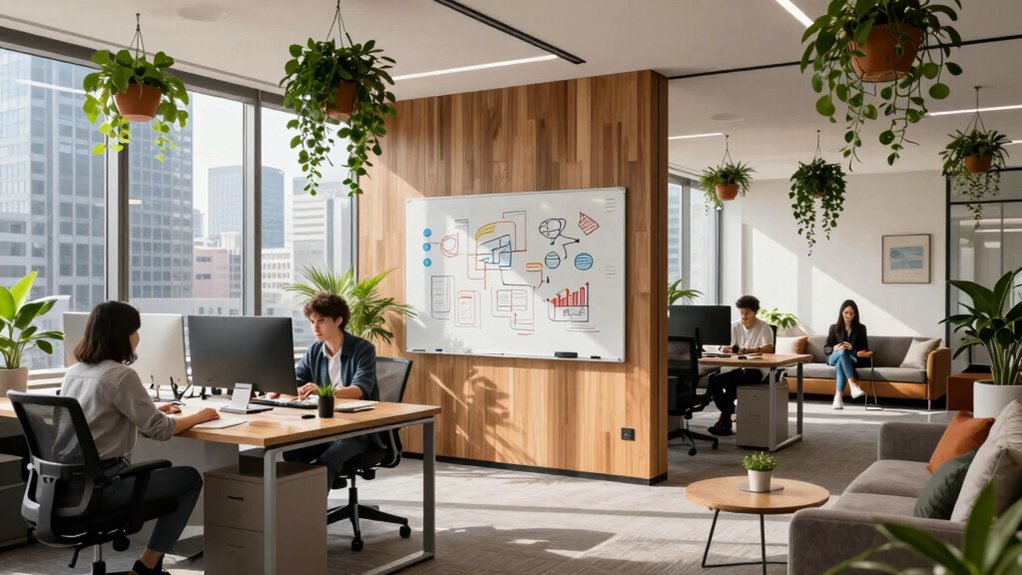

As a growing startup, you should focus on flexible, modular office designs that adapt to your evolving needs. Prioritize branding elements that reflect your company’s culture, boosting morale and identity. Invest in ergonomic furniture to keep your team comfortable and productive. Incorporate advanced technology to support innovation and efficiency. Balancing open-plan spaces with designated zones for different tasks guarantees versatility. Keep evolving your workspace—there’s much more to uncover on how to do it better.
Key Takeaways
- Prioritize flexible, reconfigurable spaces to support rapid growth and changing team needs.
- Incorporate strong branding elements to reinforce company identity and boost employee pride.
- Invest in ergonomic furniture to enhance comfort, health, and productivity as the team expands.
- Use technology integration to streamline operations and demonstrate innovation.
- Design with adaptability in mind, allowing quick adjustments to layouts and workspace functions.
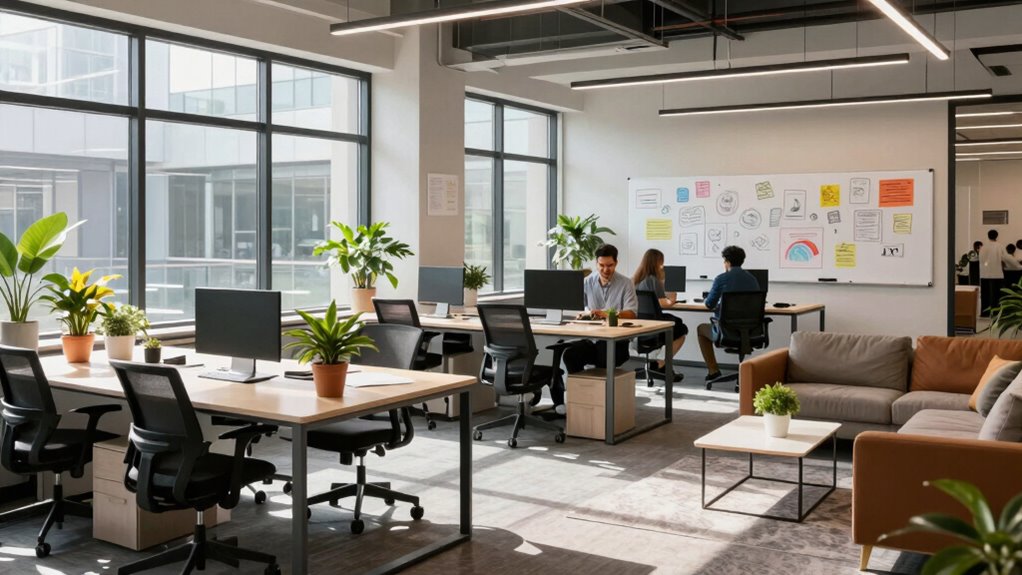
As startups grow, their office spaces must evolve to support changing needs and foster productivity. You start with a small, flexible area, but soon, that space feels cramped and outdated. It’s time to rethink your office design, focusing on creating an environment that reflects your brand and promotes well-being. One of the most impactful lessons is how office redesign can strengthen your corporate branding. Your workspace is a reflection of your company’s identity, values, and culture. Incorporate elements like your logo, color schemes, and design motifs into the office layout. This consistency helps reinforce your brand to employees, clients, and visitors alike. When your office visually aligns with your company’s mission, it creates a cohesive atmosphere that employees feel proud of and connected to.
A well-designed office reflects your brand, boosts morale, and creates a cohesive environment that inspires and connects your team.
Alongside branding, ergonomic furniture plays an essential role in your office redesign. Investing in ergonomic chairs, adjustable desks, and proper workstation setups isn’t just about comfort; it’s about productivity and health. When your team is comfortable, they’re less prone to fatigue and musculoskeletal issues, leading to fewer sick days and increased focus. You should prioritize flexible furniture arrangements that accommodate different work styles—whether someone prefers a standing desk or a collaborative table. This flexibility boosts collaboration and encourages movement, which is critical for mental clarity and physical health. Incorporating ergonomic furniture can also help prevent long-term health problems and improve overall workspace satisfaction.
Another key lesson is to design with adaptability in mind. Your startup’s needs will shift as you expand, so avoid fixed layouts that can’t be reconfigured easily. Modular furniture and open-plan spaces allow you to reallocate areas quickly without costly renovations. Consider creating designated zones for focused work, collaboration, and social interaction. This variety caters to different tasks and personalities, helping everyone find their ideal work environment within the same space.
Technology integration is also indispensable. As your office redesign takes shape, ensure your space supports the latest tools and connectivity. Wireless charging stations, smart lighting, and soundproof meeting rooms can make a big difference. These features not only improve efficiency but also demonstrate your commitment to innovation—an important aspect of your corporate branding.
Ultimately, a successful office redesign for a growing startup balances aesthetics, functionality, and brand identity. Focus on creating an environment that evolves with you, promotes health and productivity, and clearly communicates your company’s values. By doing so, you’ll foster a workspace that inspires your team and impresses visitors, setting the stage for continued growth and success.
As an affiliate, we earn on qualifying purchases.
Frequently Asked Questions
How Do I Prioritize Redesign Features on a Limited Budget?
To prioritize redesign features on a limited budget, focus on essential improvements that boost productivity and morale. Use budget constraints as a guide for feature prioritization, identifying which updates have the greatest impact. Engage your team to gather input on must-have features, and consider phased implementations to spread costs over time. This approach guarantees you make strategic decisions that maximize value without overspending.
What Role Does Employee Feedback Play in Office Redesign?
Think of employee feedback as the compass guiding your office redesign. Their insights reveal what truly works and what doesn’t, helping you avoid costly mistakes. Regular feedback loops ensure you stay aligned with team needs, fostering engagement and ownership. Without this input, you risk creating spaces that miss the mark. Prioritizing employee insights guarantees your redesign is thoughtful, effective, and tailored to those who use the space every day.
How Can We Incorporate Sustainable Design Practices Effectively?
You can incorporate sustainable design practices by choosing eco-friendly materials like recycled furniture and low-VOC paints. Invest in renewable energy sources, such as solar panels, to power your office. Encourage energy-efficient lighting and appliances to reduce your carbon footprint. Additionally, involve your team in sustainability initiatives to promote awareness and commitment. These steps create an environmentally responsible workspace while supporting your company’s growth and values.
What Are Common Pitfalls to Avoid During a Redesign?
Don’t put all your eggs in one basket; avoid rushing the redesign process, which can lead to overlooked workspace ergonomics and poor technology integration. Make certain you involve employees for feedback, prioritize ergonomic furniture, and test new tech beforehand. Failing to plan thoroughly can cause disruptions and costly adjustments later. Stay flexible, communicate clearly, and keep an eye on long-term goals to guarantee a smooth, effective transformation.
How Do Redesign Changes Impact Company Culture?
Redesign changes can markedly impact your company culture by enhancing team collaboration and improving workspace aesthetics. When you create a more inviting and functional environment, employees feel more engaged and motivated. Open layouts and creative spaces foster communication, teamwork, and innovation. Conversely, poorly planned redesigns may hinder collaboration and dampen morale. You should prioritize thoughtful design to build a positive, productive culture that reflects your company’s values and encourages growth.
Conclusion
Remember, redesigning your workspace isn’t just about aesthetics—it’s about fostering flexibility, fun, and functionality. By embracing the lessons from a growing startup, you’ll cultivate creativity, curb confusion, and create a confident, collaborative culture. Keep your approach adaptable, your attitude optimistic, and your environment energizing. With thoughtful tweaks and a proactive mindset, you’ll turn your office into a vibrant venue where productivity and positivity flourish—making every day a dynamic, driven, and delightful experience.