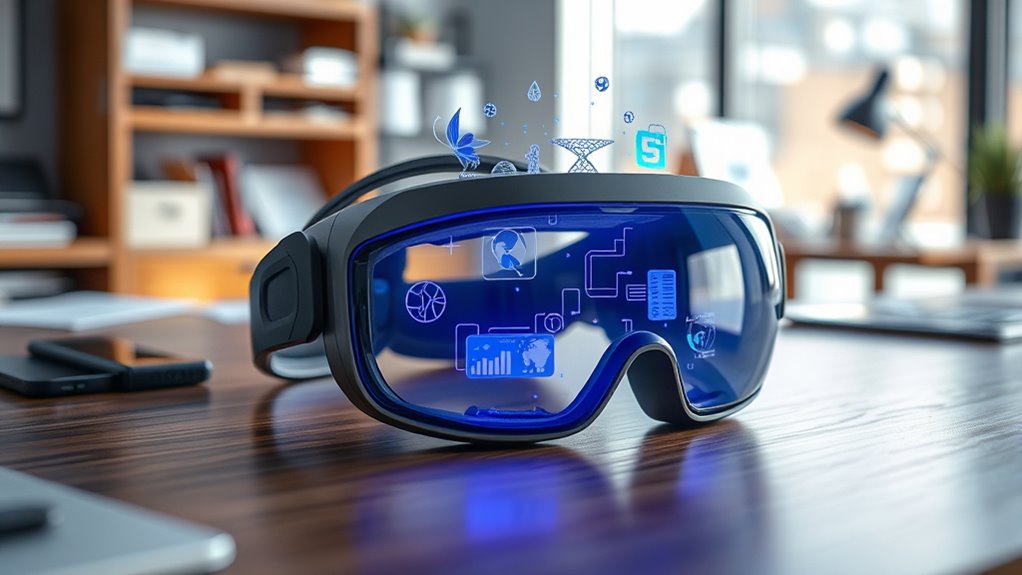

Magic Leap’s innovations in spatial computing transform how you interact with digital content by seamlessly blending virtual objects into your real-world environment. Their technology uses advanced sensors and environment mapping to anchor virtual elements naturally, making interactions feel tangible. Their lightweight, stylish devices enable intuitive gesture and voice control for everyday use. This approach enhances immersion and realism, paving the way for digital experiences that feel like a natural extension of your surroundings. Explore more to uncover how this technology will shape your future interactions.

Get business pricing on office and shipping supplies
- Business-only prices and quantity discounts
- Tax-exempt purchasing
- Multiple users, one account, clear invoices
Key Takeaways
- Magic Leap’s spatial computing integrates digital content seamlessly into real-world environments through advanced sensors and environment mapping.
- The technology enables virtual objects to interact with physical surfaces, cast shadows, and respond to environmental lighting for increased realism.
- Wearable devices are designed to be lightweight, stylish, and comfortable, promoting everyday accessibility and broader adoption.
- Magic Leap’s innovations allow real-time, gesture, and voice interactions within spatial environments, enhancing user immersion.
- These advancements support diverse applications across industries, paving the way for digital-physical integration in daily life.
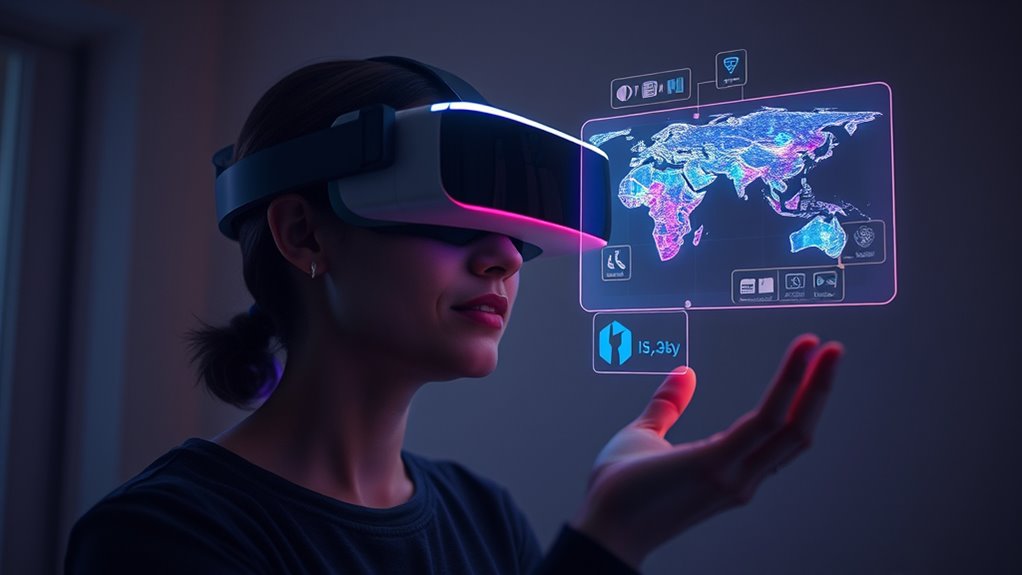
Have you ever wondered what the future of augmented reality looks like? With advancements from companies like Magic Leap, that future is becoming clearer and more immersive. Magic Leap’s innovations in spatial computing are transforming how you interact with digital content by blending virtual objects seamlessly into your real-world environment. This technology isn’t just about viewing digital images; it’s about creating a layered experience where digital and physical worlds coexist naturally. As you wear their device, you’ll notice how augmented reality becomes more intuitive, enabling you to manipulate virtual objects as if they were tangible.
Discover how Magic Leap’s spatial computing seamlessly blends virtual and real worlds for a more immersive AR experience.
Magic Leap’s focus on wearable technology pushes the boundaries of what AR can do. Unlike traditional headsets or screens, their devices are designed to be lightweight, comfortable, and stylish enough for everyday use. This emphasis on comfort and practicality makes augmented reality accessible beyond specialized settings, opening the door for broader adoption. When you put on a Magic Leap headset, you’re not just seeing digital content—you’re immersing yourself in a spatial environment that responds to your movements, gestures, and voice commands. This real-time interaction is made possible through advanced sensors and spatial mapping, which allows digital elements to anchor precisely in your physical space.
What sets Magic Leap apart is their approach to spatial computing. Instead of static images or simple overlays, their technology understands the geometry of your environment. This means virtual objects can cast shadows, interact with physical surfaces, and respond to changes in lighting. When you’re working on a project, playing a game, or collaborating with others, you’ll experience a level of realism and immersion that feels natural. The device’s ability to recognize surfaces and objects in your environment enhances your sense of presence, making digital content feel like a true extension of your surroundings.
As this technology advances, you’ll find augmented reality becoming more integrated into daily life. From enterprise solutions that improve productivity to entertainment that transports you into new worlds, Magic Leap’s innovations in spatial computing are paving the way. The combination of augmented reality and wearable technology means that the digital layer will become an unobtrusive, yet powerful, part of your everyday experiences. Whether for work, education, or leisure, this blend of tech promises a future where digital and physical seamlessly merge, changing how you perceive and interact with the world around you.
Magic Leap augmented reality headset
As an affiliate, we earn on qualifying purchases.
As an affiliate, we earn on qualifying purchases.
Frequently Asked Questions
What Are the Future Plans for Magic Leap’s Technology Expansion?
You can expect Magic Leap to focus on future collaborations and upcoming device launches. They plan to expand their spatial computing technology by partnering with various industries, enhancing device capabilities, and developing more advanced AR experiences. This strategy aims to strengthen their market presence and push innovation further. Stay tuned for new product announcements and collaborations that will shape the future of immersive technology, making it more accessible and powerful for users like you.
How Does Magic Leap Ensure User Privacy and Data Security?
You can trust Magic Leap to prioritize your privacy and data security by implementing strict privacy protocols and advanced data encryption. They actively safeguard your personal information through secure data handling practices and regular security updates. By adhering to industry standards, Magic Leap guarantees that your data remains confidential and protected from unauthorized access, giving you peace of mind as you explore immersive spatial experiences with their innovative technology.
What Industries Are Most Likely to Benefit From Magic Leap Innovations?
Imagine you’re using Magic Leap to revolutionize healthcare innovation, like a doctor diagnosing patients remotely with 3D imaging, or transforming education through immersive lessons. These industries stand to benefit most, as spatial computing enhances visualization, collaboration, and training. By integrating Magic Leap’s innovations, you can expect more precise diagnoses and engaging learning experiences, making healthcare and education more effective, accessible, and interactive for everyone involved.
How Does Magic Leap Compare to Other Ar/Vr Competitors?
In the competitive landscape, Magic Leap stands out with its focus on a seamless user experience, blending augmented reality with spatial computing. Unlike some competitors that prioritize gaming or entertainment, Magic Leap emphasizes enterprise solutions and real-world applications. You’ll find that its lightweight design and intuitive interfaces offer a more immersive and comfortable experience, giving it an edge over other AR/VR players aiming for broader adoption and practical use cases.
What Challenges Has Magic Leap Faced During Its Development Process?
You might not realize, but Magic Leap faced significant development hurdles and technical setbacks that slowed progress. As you follow their journey, you see how these obstacles created uncertainty and delayed breakthroughs. They struggled with hardware limitations, calibration issues, and balancing innovation with practical usability. Despite the setbacks, they pressed on, fueled by a vision to redefine spatial computing, turning each challenge into a stepping stone for future advancements.
Conclusion
You might be surprised to learn that Magic Leap has already shipped over 10,000 units worldwide, showcasing its rapid growth. As you explore spatial computing’s future, remember how Magic Leap’s innovations are transforming how you interact with digital content in real-world environments. With cutting-edge technology advancing fast, you’re on the cusp of a new era where augmented reality becomes part of everyday life. Stay tuned—this journey is just getting started, and you’re right at the forefront.
Fall Picks
fall essentials
As an affiliate, we earn on qualifying purchases.