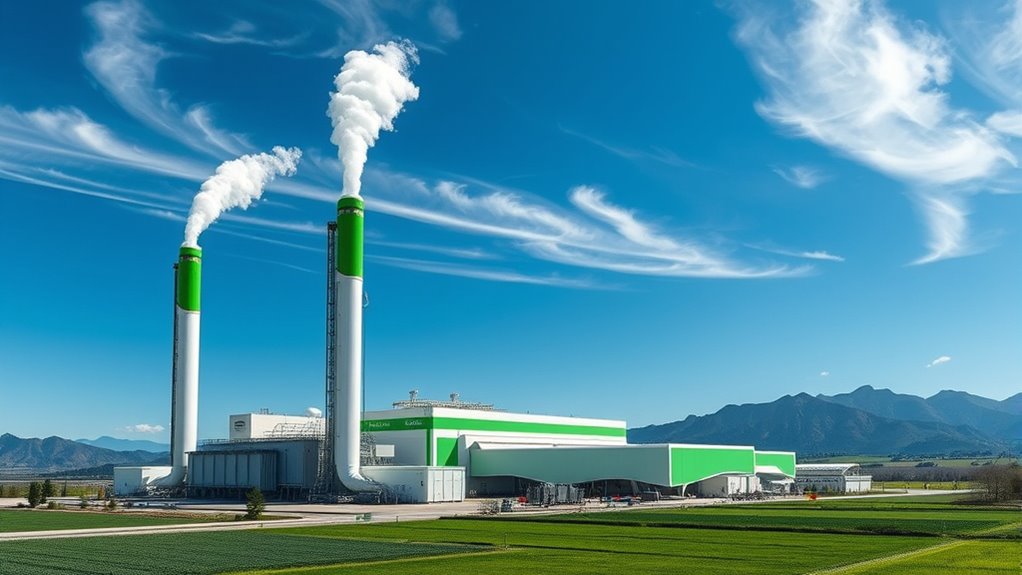

Climeworks captures CO2 directly from the air using specialized filters that trap the gas as you pass through their machines. The captured carbon is then released by heating the filters, allowing it to be stored underground or reused. This process helps fight climate change by actively removing existing greenhouse gases, providing a practical addition to emission reduction efforts. Keep exploring to discover how this innovative technology can contribute to a cleaner, healthier future.

Get business pricing on office and shipping supplies
- Business-only prices and quantity discounts
- Tax-exempt purchasing
- Multiple users, one account, clear invoices
Key Takeaways
- Climeworks employs direct air capture technology using specialized filters to remove CO2 from ambient air.
- The captured CO2 is either stored underground in geological formations or repurposed for other uses.
- The modular system allows scalable deployment to target high-emission areas, supporting climate mitigation efforts.
- Renewable energy sources power Climeworks’ operations to ensure environmentally sustainable carbon removal.
- This technology actively reduces existing atmospheric CO2, helping to combat climate change and support global sustainability goals.
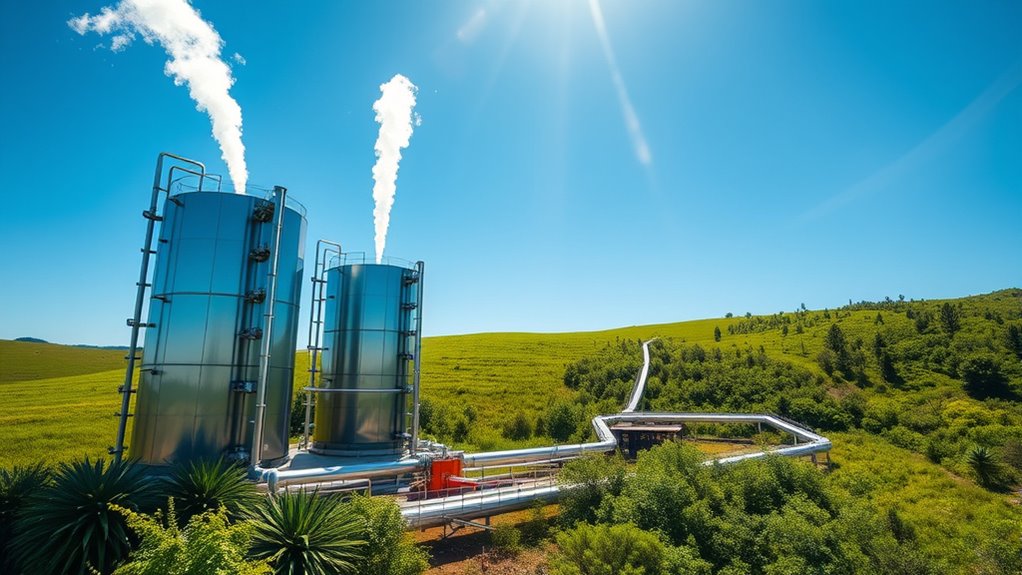
Have you ever wondered how technology can actively remove carbon dioxide from the atmosphere? It’s a fascinating process, and companies like Climeworks are making it possible through innovative methods. Their technology focuses on capturing CO2 directly from the air—what’s called direct air capture—using large, specialized filters that draw in ambient air. When air passes through these filters, the CO2 molecules stick to the surface. Once the filters are saturated, they’re heated or otherwise processed to release the captured CO2, which can then be used or stored.
Companies like Climeworks capture CO2 directly from the air using specialized filters and process it for storage or reuse.
This process is at the heart of Climeworks’ mission to combat climate change. Instead of relying solely on reducing emissions, they actively remove existing CO2, helping to reverse some of the damage caused by decades of pollution. The captured carbon isn’t just discarded; it’s stored safely underground or utilized in other ways, like in the production of synthetic fuels or building materials. This approach is called carbon storage, and it’s crucial for ensuring that the captured CO2 doesn’t re-enter the atmosphere. By integrating direct air capture with secure carbon storage, Climeworks creates a closed-loop system that effectively reduces the overall greenhouse gases in our atmosphere.
You might wonder how scalable this technology is. The good news is that it’s designed to be modular. Small units can be deployed in various locations, and they can be scaled up by adding more units as needed. This flexibility means Climeworks can target specific areas with high emissions or help offset emissions from industries that are hard to decarbonize. The energy used to operate these capture systems is also a critical factor; ideally, it’s sourced from renewable energy to ensure the process remains environmentally friendly. When powered sustainably, direct air capture becomes a net positive for the planet, removing more CO2 than it consumes.
What makes Climeworks’ approach particularly promising is its ability to be integrated into existing infrastructure. The captured carbon can be transported via pipelines or other means to storage sites, often located underground, where it’s injected into geological formations designed to hold it permanently. This method of carbon storage effectively locks away CO2, preventing it from warming the planet further. It’s a proactive strategy that complements reductions in fossil fuel use and renewable energy expansion. Additionally, advances in AI security technologies can enhance the monitoring and safety of these underground storage sites, ensuring long-term containment.
In essence, Climeworks’ technology offers a tangible way for individuals, companies, and governments to participate in climate change mitigation. By capturing direct air and securely storing carbon, they’re turning a harmful greenhouse gas into a manageable resource, giving us hope for a cleaner, healthier future.
As an affiliate, we earn on qualifying purchases.
Frequently Asked Questions
How Much Does Climeworks’ Technology Cost to Implement Annually?
The annual cost of implementing Climeworks’ technology varies depending on capacity and scale, typically ranging from hundreds of thousands to several million dollars. Conducting a thorough cost analysis helps you understand the economic viability of deploying their direct air capture systems. Factors such as energy expenses, maintenance, and infrastructure influence costs, but ongoing advancements aim to reduce these, making the technology more cost-effective for broader adoption.
Can Climeworks’ Systems Operate in All Climate Zones Worldwide?
You need to understand that Climeworks’ systems face climate zone limitations and geographic constraints. While they can operate in many environments, extreme cold, high humidity, or unpredictable weather can affect efficiency. You might find certain locations more suitable than others, and some climates could require additional adaptations. So, your deployment choices depend on evaluating these climate zone limitations to guarantee ideal performance and reliable carbon capture.
What Is the Lifespan of Climeworks’ Carbon Capture Equipment?
You’ll find that Climeworks’ carbon capture equipment has a lifespan of about 10 to 15 years, depending on usage and environmental conditions. Its durability is designed to withstand various climate zones, but regular maintenance is essential to guarantee peak performance. By keeping up with maintenance requirements, you can extend the equipment’s life, improve efficiency, and maximize the amount of CO₂ captured over its operational years.
How Does Climeworks Handle the Storage or Utilization of Captured Co₂?
You can trust Climeworks to handle captured CO₂ through secure storage or utilization. They prioritize storage safety, often injecting CO₂ underground for long-term sequestration, ensuring environmental safety. Alternatively, they explore CO₂ utilization, turning it into useful products like fuels or building materials, reducing emissions. This approach minimizes risks and promotes sustainable practices, making sure the captured CO₂ is managed responsibly and effectively, supporting climate change mitigation efforts.
Are There Any Known Environmental Impacts of Climeworks’ Installations?
You should know that Climeworks’ installations have minimal environmental impacts, but some concerns exist. For instance, each plant consumes significant energy, raising energy consumption concerns, and there’s potential for local ecosystem disruption during setup. Notably, their direct air capture process can remove up to 1,000 tons of CO₂ annually per unit, helping fight climate change. While generally safe, ongoing monitoring ensures installations don’t adversely affect nearby environments.
Conclusion
By now, you see how Climeworks is revolutionizing climate action, much like pioneering inventors of the Enlightenment. Their direct air capture technology helps you fight climate change actively, turning back the clock on global warming. With every CO₂ captured, you’re not just witnessing history — you’re making it. So, stay inspired and remember, even in an age of smartphones, the fight for our planet’s future still calls for bold innovations like this.
Fall Picks
fall essentials
As an affiliate, we earn on qualifying purchases.