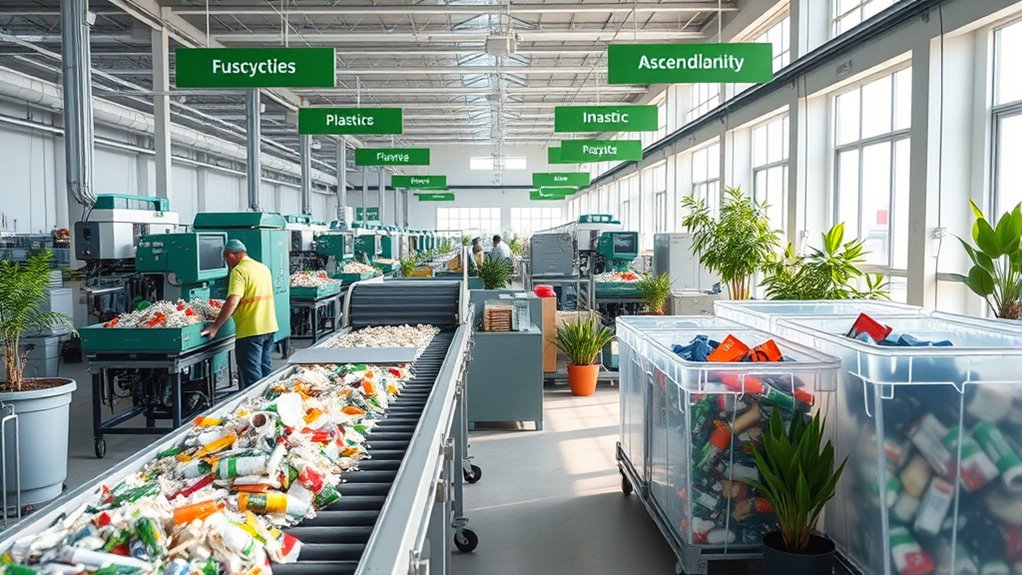

To improve your sustainable operations, adopting circular economy practices is key. You should focus on redesigning products for durability, disassembly, and reuse, enabling longer lifecycles. Implement take-back programs, recycle materials, and use recycled content to reduce resource demand. These strategies minimize waste, conserve finite resources, and lower environmental impact. By embracing these practices, you can create a more efficient, eco-friendly business model that benefits both your company and the planet. Keep exploring how these strategies can work for you.
Key Takeaways
- Redesign products for disassembly, repair, and reuse to extend their lifecycle and reduce waste.
- Implement take-back programs to recover materials for refurbishment or recycling.
- Use recycled materials and optimize supply chains to minimize resource consumption and environmental impact.
- Promote modular, durable designs that facilitate upgrading and repurposing of products.
- Focus on resource efficiency through innovative practices that maximize reuse and minimize raw material extraction.
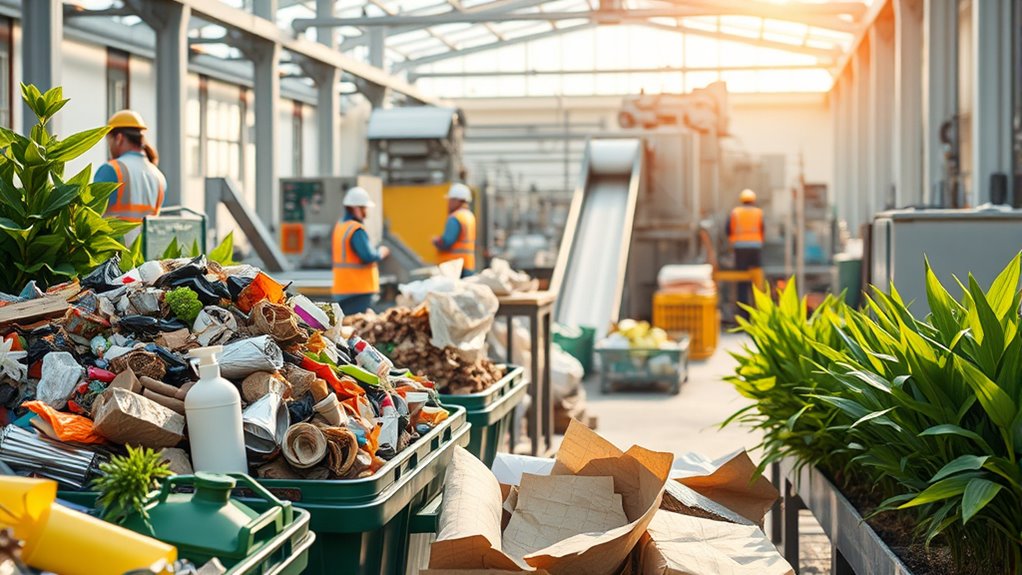
A circular economy is a sustainable approach that redesigns how we produce and consume goods, aiming to minimize waste and maximize resource efficiency. By shifting away from the traditional linear model—where products are made, used, and discarded—you can focus on keeping materials in use for as long as possible. Material reuse becomes a cornerstone of this system, allowing you to extend the lifecycle of products and components, reducing the need for virgin resources. Instead of discarding items after a single use, you can refurbish, repurpose, or upgrade them, which not only conserves raw materials but also cuts down on waste that would otherwise end up in landfills. This practice directly supports resource optimization, as it ensures that every bit of material contributes value over a longer period.
When you prioritize material reuse, you actively contribute to a more efficient resource cycle. For example, in manufacturing, you might implement take-back programs that allow products to be returned, repaired, or remanufactured. This keeps valuable materials circulating within the economy rather than being lost or wasted. It also encourages designing products with reuse in mind, making disassembly easier and materials more recoverable. By doing so, you reduce the demand for new raw materials, which helps lower environmental impact and conserves finite resources.
Resource optimization in a circular economy involves smarter planning and innovative practices. You can adopt strategies like designing for longevity, modularity, or ease of repair, which extend the usefulness of products. Efficient resource use also means streamlining supply chains to minimize excess and waste, and implementing processes that recover and recycle materials at the end of their initial life cycle. For instance, using recycled materials in production not only reduces extraction of virgin resources but also lessens energy consumption and emissions associated with manufacturing. This holistic approach ensures that every resource is used effectively, with minimal loss, maximizing the economic and environmental benefits.

Go Ho 4th of July Outfits for Women Men:6 Pack Silicone Bracelets,4th of July Accessories,Patriotic USA Flag Red White and Blue Rubber Wristbands for 250 Anniversary USA Independence Day
【6 Pack 4th of July Bracelets for 250 Anniversary USA Independence Day】 250 Anniversary USA Merchandise:This 6-pack of...
As an affiliate, we earn on qualifying purchases.
Frequently Asked Questions
How Can Small Businesses Adopt Circular Economy Practices Effectively?
You can adopt circular economy practices by focusing on recycling innovation and waste reduction. Start by evaluating your current waste streams and find ways to recycle materials efficiently. Innovate your processes to minimize waste, such as redesigning products for reuse or refurbishing. Engage your team in sustainability goals, and partner with recycling providers. Small steps like these can considerably reduce waste and promote a circular, sustainable operation.
What Are the Biggest Challenges in Implementing Circular Economy Models?
Imagine you’re steering a maze without a map—implementing circular economy models faces similar challenges. The biggest hurdles include balancing waste reduction and material innovation, as shifting to new materials or processes often requires significant investment and expertise. You might also struggle with changing mindsets and supply chains. Overcoming these obstacles demands persistence, collaboration, and embracing innovation to turn waste into valuable resources.
How Do Circular Economy Practices Impact Supply Chain Management?
You see that circular economy practices substantially impact supply chain management by promoting resource optimization and waste reduction. You’ll need to redesign your supply chain to prioritize reuse, recycling, and remanufacturing, which reduces dependency on raw materials and minimizes waste. This approach encourages collaboration with partners to create closed-loop systems, ultimately making your supply chain more resilient, sustainable, and cost-effective while supporting environmental goals.
What Metrics Measure Success in Circular Economy Initiatives?
Think of your circular economy efforts like tending a garden, where success blooms through key metrics. You measure recycling rates to see how much waste transforms into new resources, and track material reuse to gauge how efficiently materials stay in circulation. These indicators reveal how well your initiatives reduce waste and conserve resources, helping you nurture a sustainable, thriving system that minimizes environmental impact and maximizes resource longevity.
How Can Policymakers Incentivize Circular Economy Adoption?
You can encourage circular economy adoption by implementing government incentives like tax breaks or grants for sustainable practices. Strengthening regulatory frameworks that require or reward resource reuse and recycling also helps. When policymakers create clear, supportive policies, businesses are motivated to innovate and invest in circular models. These actions make it easier for companies to shift, fostering widespread adoption and accelerating the shift toward sustainable operations.

Gerrii 50 Pcs 250th Anniversary Keychains Bulk American 4th of July Acrylic Keyrings Independence Day Patriotic Souvenir Gifts 250 1776-2026 Party Favors for USA Us Citizens Veterans Patriots(Duck)
American Anniversary Gifts: you will receive 50 patriotic themed acrylic keychains, nice for large scale July 4th Independence...
As an affiliate, we earn on qualifying purchases.
Conclusion
By embracing circular economy practices, you can markedly reduce waste and boost efficiency. Did you know that businesses implementing these strategies can cut their waste by up to 80%? This not only benefits the environment but also enhances your company’s sustainability and profitability. So, start integrating reuse, recycling, and resource optimization into your operations today—because a greener future depends on your actions now. Together, you can make a lasting, positive impact.

Moon Boat 74PCS 4th/Fourth of July Accessories Party Favors: Patriotic Silicone Rubber Bracelets Bulk USA Flag Wristbands American Memorial Day Decorations Gifts Supplies
74PCS Patriotic Silicone Bracelets: This bulk pack includes 74 vibrant silicone rubber bracelets, great for Fourth of July...
As an affiliate, we earn on qualifying purchases.

Gersoniel 24 Set 250th Anniversary Pen Gift Bulk for 4th of July USA Star Keychain Ballpoint 1776-2026 Commemorative Pen USA Flag Patriotic Greeting Card for Veteran Independence Day Party Favor Team
Complete Patriotic Set: the 250th anniversary USA gifts set includes 24 patriotic-themed keychains, 24 1776-2026 commemorative ballpoint pens,...
As an affiliate, we earn on qualifying purchases.