
Choosing a WiFi 7 router for a future-ready office involves balancing high-speed performance, extensive coverage, and advanced security features. The eero Pro 7 stands out as the best overall pick, offering robust tri-band support and wide coverage suitable for most office environments. For those needing ultra-fast connectivity, the TP-Link Archer BE12000 provides impressive 6GHz band support and 10G ports. However, buyers face tradeoffs between price, ease of setup, and scalability. Continue reading for a detailed breakdown of the top contenders and what makes each unique.

Get business pricing on office and shipping supplies
- Business-only prices and quantity discounts
- Tax-exempt purchasing
- Multiple users, one account, clear invoices
Key Takeaways
- The top-ranked routers excel in combining high throughput with extensive coverage, making them ideal for future office needs.
- Tri-band models generally outperform dual-band options by providing dedicated channels for high-volume tasks and device management.
- Supporting the latest WiFi 7 features like 6GHz bands and multi-gig ports significantly enhances office productivity and scalability.
- Mesh systems, such as the TP-Link Deco 7 Pro, offer better coverage for larger spaces but may introduce complexity and cost.
- Price varies widely; investing in premium routers yields better longevity and advanced features, but high-value options can meet most needs at lower costs.
| eero Pro 7 Tri-Band Mesh Wi-Fi 7 Router – Supports Internet Plans up to 5 Gbps, Coverage up to 2,000 sq. ft., 1-pack |  | Best Overall | Coverage: 2,000 sq. ft. | Internet Speed Support: up to 5 Gbps | Device Capacity: 200+ devices | VIEW LATEST PRICE | See Our Full Breakdown |
| TP-Link Archer BE12000 Tri-Band Wi-Fi 7 Router with 6GHz Band and 10G Connectivity |  | Best for Large, Demanding Networks | Wi-Fi Bands: Tri-band (6 GHz, 5 GHz, 2.4 GHz) | Maximum Speed: up to 5,765 Mbps (6 GHz & 5 GHz), 688 Mbps (2.4 GHz) | Ports: 10 Gbps WAN, 2.5 Gbps WAN, three 1 Gbps LAN, USB 3.0 | VIEW LATEST PRICE | See Our Full Breakdown |
| NETGEAR Nighthawk Dual-Band WiFi 7 Router (RS90) |  | Best for Gaming and Smart Homes | WiFi Speed: up to 3.6 Gbps | Bands: Dual-Band 2.4 GHz + 5 GHz | Coverage: Up to 2,000 sq. ft. | VIEW LATEST PRICE | See Our Full Breakdown |
| NETGEAR Nighthawk Tri-Band WiFi 7 Router (RS700S) – Router Only | 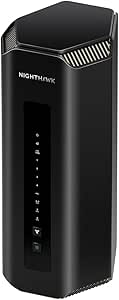 | Best for Gaming and Streaming Enthusiasts | Wireless Speed: up to 19 Gbps | Coverage: up to 3,500 sq. ft. | Ports: 1 x 10 Gbps, 4 x 1 Gbps LAN | VIEW LATEST PRICE | See Our Full Breakdown |
| TP-Link Tri-Band WiFi 7 Router (Archer BE600) with 10G Port and HomeShield Security |  | Best for Large Homes and Advanced Security | WiFi Technology: Tri-Band WiFi 7 | Max Speed: 5,765 Mbps on 6 GHz | Coverage: Up to 2,600 sq. ft. | VIEW LATEST PRICE | See Our Full Breakdown |
| TP-Link Deco 7 Pro BE63 Tri-Band WiFi 7 Mesh System (2-Pack) |  | Best Overall for Whole-Office WiFi Coverage and Seamless Scalability | Wi-Fi Standard: Wi-Fi 7 | Number of Units: 2 | Coverage: 5,800 sq.ft. | VIEW LATEST PRICE | See Our Full Breakdown |
| TP-Link AX1800 WiFi 6 Router (Archer AX21 V5) |  | Best for Budget-Conscious Offices Needing Reliable WiFi 6 | Wi-Fi Technology: Wi-Fi 6 (802.11ax) | Bands: Dual Band | Total Bandwidth: 1.8 Gbps | VIEW LATEST PRICE | See Our Full Breakdown |
| WiFi 7 router for future ready office | Coverage | Ports |
|---|---|---|
| eero Pro 7 Tri-Band Mesh Wi-Fi | 2,000 sq. ft. | 2 auto-sensing 5 GbE ports |
| TP-Link Archer BE12000 Tri-Ban | Up to 3,000 sq. ft. | 10 Gbps WAN, 2.5 Gbps WAN, three 1 Gbps LAN, USB 3.0 |
| NETGEAR Nighthawk Dual-Band Wi | Up to 2,000 sq. ft. | — |
| NETGEAR Nighthawk Tri-Band WiF | up to 3,500 sq. ft. | 1 x 10 Gbps, 4 x 1 Gbps LAN |
| TP-Link Tri-Band WiFi 7 Router | Up to 2,600 sq. ft. | 1x 10 Gbps WAN, 1x 2.5 Gbps WAN, 3x 2.5 Gbps LAN |
| TP-Link Deco 7 Pro BE63 Tri-Ba | 5,800 sq.ft. | 4x 2.5G WAN/LAN, 1x USB 3.0 |
| TP-Link AX1800 WiFi 6 Router | — | — |
More Details on Our Top Picks
eero Pro 7 Tri-Band Mesh Wi-Fi 7 Router – Supports Internet Plans up to 5 Gbps, Coverage up to 2,000 sq. ft., 1-pack
The eero Pro 7 stands out for its seamless mesh capabilities, making it ideal for future-ready offices that prioritize easy scalability. Compared to the TP-Link Archer BE12000, which offers higher raw speeds and more ports, the eero emphasizes simplicity and reliable coverage over top-tier performance, balancing user-friendliness with advanced features. Its support for over 200 devices and coverage of 2,000 sq. ft. makes it suitable for a busy office environment with multiple users, though setup can be daunting for those less tech-savvy. The mesh architecture ensures stable connections across large, multi-room spaces, but it relies on compatible internet plans to reach its maximum 5 Gbps speeds. If effortless expansion and reliable coverage are priorities, this model offers a compelling package.
Pros:- Excellent mesh coverage with easy expansion
- Supports over 200 devices simultaneously
- Supports internet plans up to 5 Gbps
Cons:- Setup can be complex for non-technical users
- Requires compatible internet plan for maximum speeds
Best for: Offices that need reliable, scalable mesh WiFi with straightforward management and coverage up to 2,000 sq. ft.
Not ideal for: Tech-savvy users seeking the highest possible speeds or advanced port configurations, as it prioritizes coverage and simplicity over raw speed.
- Coverage:2,000 sq. ft.
- Internet Speed Support:up to 5 Gbps
- Device Capacity:200+ devices
- Ports:2 auto-sensing 5 GbE ports
- Compatibility:Backward compatible with previous eero models
Our verdict“This is the best choice for offices seeking dependable mesh coverage with future expansion in mind.”
TP-Link Archer BE12000 Tri-Band Wi-Fi 7 Router with 6GHz Band and 10G Connectivity
The TP-Link Archer BE12000 excels in environments demanding the latest Wi-Fi 7 speeds and extensive coverage, making it ideal for large offices with multiple high-bandwidth devices. Unlike the NETGEAR RS700S, which offers blazing 19 Gbps speeds but over a slightly smaller area, the BE12000 balances high performance with broader coverage—up to 3,000 sq. ft.—and multiple high-speed ports, including a 10 Gbps WAN port. Its tri-band setup with the newest 6 GHz band ensures minimal interference and maximum throughput for demanding applications like 4K streaming or intensive data transfers. While it’s not compatible with mesh systems like Deco, it provides robust security and easy management, making it suited for tech-forward, large-office deployments. It’s a solid pick for those who prioritize speed and coverage over simplicity or mesh flexibility.
Pros:- Supports latest Wi-Fi 7 technology including 6 GHz band
- Extensive coverage up to 3,000 sq. ft.
- Multiple high-speed ports including 10 Gbps WAN
Cons:- No mesh support, limiting scalability
- Requires separate modem for internet access
- Setup can be complex for less experienced users
Best for: IT managers or office environments that require high throughput, large coverage, and multiple wired connections for demanding workflows.
Not ideal for: Small offices or users seeking mesh networking flexibility, as it’s a traditional router without mesh support and has a complex setup process.
- Wi-Fi Bands:Tri-band (6 GHz, 5 GHz, 2.4 GHz)
- Maximum Speed:up to 5,765 Mbps (6 GHz & 5 GHz), 688 Mbps (2.4 GHz)
- Ports:10 Gbps WAN, 2.5 Gbps WAN, three 1 Gbps LAN, USB 3.0
- Coverage:Up to 3,000 sq. ft.
- Compatibility:Works with Alexa, Google Assistant, major ISPs
Our verdict“Best suited for large, high-demand offices needing top-tier speed and extensive wired connectivity.”
NETGEAR Nighthawk Dual-Band WiFi 7 Router (RS90)
The NETGEAR Nighthawk RS90 offers a compelling dual-band WiFi 7 experience with speeds up to 3.6 Gbps, making it suitable for smaller offices or homes with gaming, streaming, and smart device needs. Its dual-band setup, supporting up to 50 devices, is less comprehensive than the tri-band options like the TP-Link BE12000, but it simplifies setup and management while still providing robust security with WPA3 and Armor. Its coverage of approximately 2,000 sq. ft. makes it ideal for single-floor offices or homes, though larger or multi-story environments might require a mesh extension. While it needs a separate modem, its security features and high speed make it a balanced choice for those prioritizing performance without overcomplicating network infrastructure.
Pros:- Supports WiFi 7 with speeds up to 3.6 Gbps
- Supports multiple devices with extensive coverage
- Advanced security features including WPA3 and Armor
Cons:- Limited coverage for larger or multi-story spaces
- Requires a separate modem for internet access
- Dual-band may experience more interference in crowded environments
Best for: Small offices or homes that need reliable WiFi 7 speeds for streaming, gaming, and smart devices with up to 50 connected devices.
Not ideal for: Large multi-story offices or environments needing extensive mesh coverage, due to limited coverage and device capacity.
- WiFi Speed:up to 3.6 Gbps
- Bands:Dual-Band 2.4 GHz + 5 GHz
- Coverage:Up to 2,000 sq. ft.
- Devices Supported:Up to 50
- Security:WPA3, NETGEAR Armor
Our verdict“Ideal for smaller offices or busy homes seeking high-speed WiFi 7 with straightforward setup.”
NETGEAR Nighthawk Tri-Band WiFi 7 Router (RS700S) – Router Only
The NETGEAR Nighthawk RS700S is designed for high-performance, high-speed internet needs, supporting speeds up to 19 Gbps across a wide coverage of 3,500 sq. ft. It’s perfect for gaming, 4K streaming, and AR/VR applications, surpassing many competitors in raw speed. Its 10 Gbps port and multiple 1 Gbps LAN ports make wired connections exceptionally fast, ideal for demanding workflows. However, being a router-only model, it requires a separate modem, adding complexity for users who want an all-in-one setup. Its sleek design and powerful antennas make it a centerpiece for tech-savvy offices that prioritize raw performance over simplicity. This model is overkill for basic browsing but excels where maximum throughput and wide coverage are non-negotiable.
Pros:- Supports ultra-fast speeds up to 19 Gbps
- Wide coverage area of up to 3,500 sq. ft.
- Includes a 10 Gbps port for high-speed wired connections
- Sleek, modern design with high-performance antennas
Cons:- Requires a separate modem, adding setup complexity
- Overkill for basic or small-scale internet needs
Best for: Enthusiasts and high-demand offices that need extreme speeds for gaming, streaming, and VR, with coverage up to 3,500 sq. ft.
Not ideal for: Small offices or users seeking an all-in-one solution, since it lacks a built-in modem and may be more than needed for basic tasks.
- Wireless Speed:up to 19 Gbps
- Coverage:up to 3,500 sq. ft.
- Ports:1 x 10 Gbps, 4 x 1 Gbps LAN
- Compatibility:Requires separate modem
Our verdict“Best for high-performance environments where maximum speed and coverage are essential, and users are willing to handle a separate modem setup.”
TP-Link Tri-Band WiFi 7 Router (Archer BE600) with 10G Port and HomeShield Security
The TP-Link Archer BE600 offers a balanced blend of high-speed WiFi 7 technology, extensive coverage, and security, making it a versatile choice for future-ready offices in large homes or expanding spaces. It provides speeds up to 5,765 Mbps on the 6 GHz band and supports up to 120 devices, outperforming dual-band options like the NETGEAR RS90. Its multi-gigabit ports, including a 10 Gbps WAN port, facilitate fast wired connections, while the HomeShield security suite offers advanced protection suitable for sensitive office environments. Setup, however, may challenge less technical users, and the need for compatible WiFi 7 devices means not everyone can fully utilize its potential immediately. Still, it delivers a comprehensive package for those needing high speed and security across a sizable space.
Pros:- Supports WiFi 7 with speeds over 5.7 Gbps
- Covers up to 2,600 sq. ft. for large spaces
- Multi-gigabit ports including 10 Gbps WAN
- Enhanced security with TP-Link HomeShield
Cons:- Complex setup for non-technical users
- High price point for some consumers
- Requires compatible WiFi 7 devices to realize full speeds
Best for: Large offices or homes requiring fast, reliable WiFi 7 with top-tier security features and extensive device support.
Not ideal for: Small offices or users with limited technical skills who may find setup and configuration challenging.
- WiFi Technology:Tri-Band WiFi 7
- Max Speed:5,765 Mbps on 6 GHz
- Coverage:Up to 2,600 sq. ft.
- Number of Devices Supported:Up to 120
- Ports:1x 10 Gbps WAN, 1x 2.5 Gbps WAN, 3x 2.5 Gbps LAN
Our verdict“Ideal for large, security-conscious offices seeking high-speed, extensive coverage with advanced protection features.”
TP-Link Deco 7 Pro BE63 Tri-Band WiFi 7 Mesh System (2-Pack)
The TP-Link Deco 7 Pro BE63 stands out as the best choice for larger offices needing expansive WiFi coverage, supporting up to 5,800 sq.ft. with Wi-Fi 7 speeds. Its mesh design, combined with AI-driven seamless roaming, ensures reliable connectivity across multiple spaces, making it ideal for a future-ready office environment. Compared with the eero Pro 7, this system offers broader coverage, but it requires a separate modem and can be complex to set up for non-technical users. The 10G WAN port and robust security features provide a strong wired backbone and data protection, though performance can vary based on layout and device placement. This pick is perfect for organizations prioritizing extensive coverage and device support, even if setup complexity is a consideration.
Pros:- Expansive coverage up to 5,800 sq.ft. suitable for large office environments
- Supports Wi-Fi 7 for high-speed, future-proof connectivity
- Multiple 2.5G Ethernet ports for wired device connections
- AI-driven seamless roaming for stable, consistent connectivity
Cons:- Requires a separate modem, adding to initial setup complexity
- Setup process may be challenging for less technical users
- Performance depends heavily on environment and placement
Best for: Large offices or co-working spaces seeking extensive WiFi coverage with future-proof speeds and device support
Not ideal for: Small home offices or users who prefer simple, plug-and-play setups without advanced configuration
- Wi-Fi Standard:Wi-Fi 7
- Number of Units:2
- Coverage:5,800 sq.ft.
- Maximum Speed:5,188 Mbps (6 GHz), 4,324 Mbps (5 GHz), 574 Mbps (2.4 GHz)
- Ports:4x 2.5G WAN/LAN, 1x USB 3.0
- Security:HomeShield, VPN support
Our verdict“This system is best for large offices needing wide coverage and high device capacity, willing to handle a more involved setup process.”
TP-Link AX1800 WiFi 6 Router (Archer AX21 V5)
The TP-Link AX1800 Archer AX21 V5 offers a solid Wi-Fi 6 solution, ideal for offices that prioritize speed and capacity without the immediate need for Wi-Fi 7. Its dual-band setup delivers 1.8 Gbps total bandwidth, supporting multiple devices with OFDMA technology, similar to the eero Pro 7, but without the newer 6 GHz band. This makes it a good choice for smaller to medium-sized offices aiming to upgrade their network affordably, though it lacks the ultra-wide coverage and future-proofing of Wi-Fi 7 systems. The four high-gain antennas provide decent coverage, and security features are comprehensive, but performance can be affected by device distance and environmental interference. If budget and simplicity matter most, this router provides reliable WiFi 6 speeds without the premium price tag.
Pros:- Fast dual-band Wi-Fi 6 speeds for smooth streaming and work tasks
- Supports multiple devices simultaneously with OFDMA
- Good coverage with four high-gain antennas
- Compatible with all major ISPs
Cons:- Lacks support for the 6 GHz band, limiting future-proofing
- Performance may decline with environmental interference or longer distances
- Not suitable for very large office spaces requiring extensive coverage
Best for: Small to medium-sized offices seeking reliable WiFi 6 performance at an affordable price
Not ideal for: Large offices or organizations planning to upgrade to Wi-Fi 7 in the near future, due to limited coverage and older technology
- Wi-Fi Technology:Wi-Fi 6 (802.11ax)
- Bands:Dual Band
- Total Bandwidth:1.8 Gbps
- 5 GHz Speed:up to 1200 Mbps
- 2.4 GHz Speed:up to 574 Mbps
- Antennas:4 high-gain antennas
- Security:Advanced security, VPN support
Our verdict“This router fits office environments needing dependable Wi-Fi 6 with a budget-friendly approach, but it won’t match the capacity or future-proofing of Wi-Fi 7 systems.”
How We Picked
These products were selected based on a combination of performance benchmarks, feature sets, build quality, and future-proofing capabilities. Priority was given to routers supporting the latest WiFi 7 standards, including multi-gig ports and 6GHz bands, which are essential for high-speed office environments. Ease of setup, security features, and scalability also influenced the rankings, ensuring options suit a range of office sizes and technical expertise. Devices were compared against each other to identify clear differentiators, such as coverage area, multi-device handling, and price-to-performance ratio, with the aim of highlighting options for various buyer profiles.Factors to Consider When Choosing WiFi 7 Router For Future Ready Office
When selecting a WiFi 7 router for a future-ready office, it’s important to consider factors beyond just raw speed. The right choice depends on your office size, current and planned device load, security needs, and future scalability. Understanding these factors helps avoid common pitfalls like overpaying for unnecessary features or underestimating coverage requirements. Here are key elements to guide your decision-making process.Coverage and Scalability
An office’s physical size and layout determine how much coverage a router needs. Larger spaces benefit from mesh systems or multiple access points, while smaller offices may be fine with a single high-performance router. Consider future expansion plans; investing in a system that can grow with your needs can save money and hassle down the line. Avoid underestimating coverage needs, which can cause dead zones and reduced productivity.
Speed and Band Support
While gigabit speeds are common, future-proofing means looking for multi-gig ports and support for WiFi 7’s 6GHz band, which provides higher throughput and lower latency. This is especially important for offices with bandwidth-heavy applications like video conferencing, cloud computing, or data backups. Be cautious of routers that support only older standards or lack multi-gig options, as they can bottleneck your network as demands grow.
Security Features
As networks become more complex, security must keep pace. Look for routers that include advanced security features like WPA3, automatic firmware updates, and integrated threat detection. Mesh systems with security services like HomeShield or equivalent can add layers of protection for sensitive business data. Don’t overlook security; a breach can be costly and disruptive.
Ease of Management and Setup
Managing a network efficiently is key for office environments. Routers with user-friendly apps, clear interfaces, and straightforward setup processes reduce downtime and technical issues. For larger offices, features like remote management, device prioritization, and analytics can streamline administration. Avoid overly complex systems if your team lacks dedicated IT support.
Cost and Value
Premium features come at a price, but they often translate into increased longevity and performance. Balance your budget against the required features; for example, a mesh system may cost more upfront but provide better coverage and scalability. Consider long-term value over initial savings, especially if future expansion or high-performance needs are anticipated.
Frequently Asked Questions
Will a WiFi 7 router really improve my office’s network performance now?
Yes, a WiFi 7 router offers higher speeds, lower latency, and better multi-device handling, which can significantly improve network performance. However, to benefit fully, your connected devices also need to support WiFi 7, or you’ll see limited improvements. For most offices planning to upgrade their infrastructure, investing in WiFi 7 now ensures readiness for future technology demands and reduces the need for frequent replacements.
Is a mesh WiFi 7 system better than a traditional router for office use?
Mesh WiFi 7 systems generally excel in covering larger or irregularly shaped office spaces, providing seamless connectivity across multiple areas. They are ideal if your office has dead zones or if you plan to expand. However, they tend to be more expensive and slightly more complex to manage. For small or straightforward offices, a high-performance single router might be more cost-effective and simpler to handle.
Should I prioritize multi-gig ports over WiFi 7 support in my office router?
Both are important, but multi-gig ports provide a wired backbone that complements WiFi 7’s wireless speeds, especially for data-intensive tasks. If your office relies heavily on wired connections, prioritizing multi-gig ports can prevent bottlenecks. For wireless performance, WiFi 7 features are essential, but don’t overlook the importance of wired infrastructure in a future-ready setup.
How important is security in choosing a WiFi 7 router for my office?
Security is critical, particularly for protecting sensitive business information and ensuring compliance. Look for routers supporting WPA3, automatic firmware updates, and integrated security services. A router with strong security features reduces the risk of cyberattacks and data breaches, which can be costly and damaging to your reputation.
Will investing in a premium WiFi 7 router save me money long-term?
Higher-end routers often include features like better hardware, longer support cycles, and enhanced security, which can extend their useful life and reduce maintenance costs. They are more resilient to future demands, meaning fewer replacements down the line. While the initial investment is higher, the long-term savings in performance, security, and scalability can make a premium router a smart choice for a future-ready office.
Conclusion
For most offices, the eero Pro 7 offers a strong balance of performance, ease of use, and coverage, making it the best overall choice. Those with larger or complex spaces may find the TP-Link Archer BE12000 or mesh options like the TP-Link Deco 7 Pro better suited to their needs. Budget-conscious buyers can consider the TP-Link AX1800, which offers solid WiFi 6 performance at a lower price point. For premium, future-proof setups, investing in high-end WiFi 7 models ensures longevity and top-tier features. Overall, matching your specific office size, device load, and security requirements will guide you toward the best fit.
Columbus Day / Indigenous Peoples' Day Picks
long weekend sales
As an affiliate, we earn on qualifying purchases.