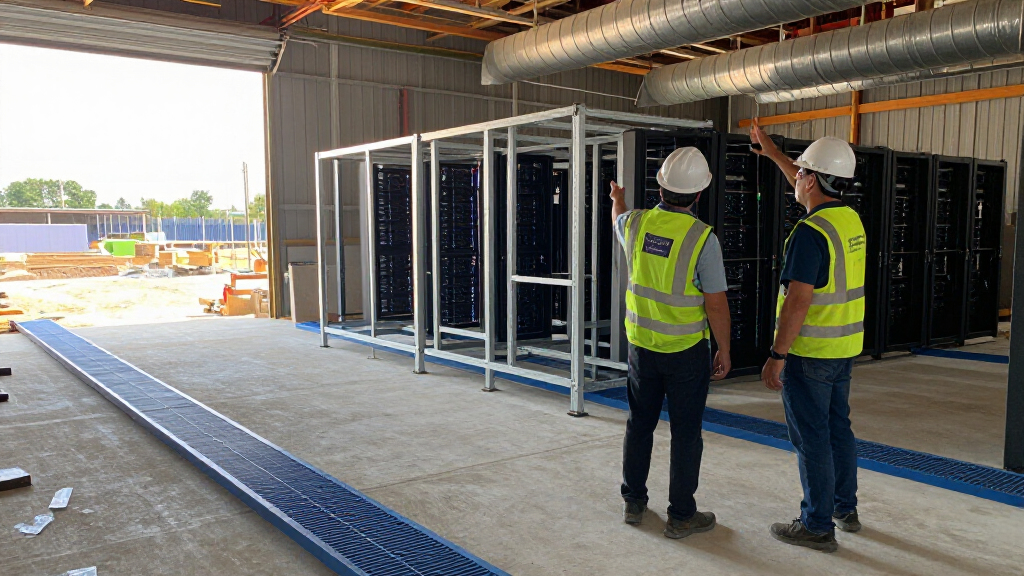

🔍 Read the full analysis: SpaceX Plans More Than $74 Billion For AI Infrastructure In Two States on ThorstenMeyerAI.com

Get business pricing on office and shipping supplies
- Business-only prices and quantity discounts
- Tax-exempt purchasing
- Multiple users, one account, clear invoices
TL;DR
SpaceX says it is planning more than $74 billion in combined investment for AI computing facilities in Starbase, Texas, and Cochise County, Arizona. The projects differ in their power plans and both face local decisions on Dec. 9; several details, including Texas facility water use and the Arizona power arrangement, remain unresolved.
SpaceX says it plans to invest more than $74 billion in two AI supercomputing projects: a facility near the Port of Brownsville in Starbase, Texas, and a campus in Cochise County, Arizona. The company announced the plans Nov. 12; both projects still face local review, with hearings or decisions scheduled for Dec. 9.
SpaceX values the Texas project at more than $24 billion. A Starbase city notice describes an estimated $24 billion in capital investment for the initial phases, with possible future expansion. The proposed site covers about 444 acres between Boca Chica Boulevard and the Port of Brownsville. SpaceX says the facility will generate its own electricity rather than draw from the public grid; the city notice describes a gas-fired power plant, but does not give its capacity.
Local outlet The 956 Report, citing an air registration filed with the Texas Commission on Environmental Quality, reported plans for a temporary setup of 35 natural-gas turbines with about 748 megawatts of combined capacity, followed by eight larger turbines totaling about 708 megawatts. Those figures come from the outlet’s account of the filing, not the city notice. SpaceX says the project is intended to train AI systems and test technology for future space-based computing. It projects more than 3,000 construction jobs and over 500 permanent jobs.
SpaceX puts the Arizona campus at roughly $50 billion. A county application filed by Tombstone Resources L.L.C. covers about 747 acres near Cochise and describes up to nine computing buildings, each around 493,000 square feet. The plan would be built in four phases, starting at about 1,500 megawatts and reaching approximately 6 gigawatts at full build-out, supported by a 24-gigawatt-hour battery system. The application describes grid power delivered through Sulphur Springs Valley Electric Cooperative and Arizona Electric Power Cooperative, with no on-site power plant.
SpaceX plans more than $74 billion for AI in two states
The proposed Texas and Arizona campuses would use different power strategies. Both still face local review, and key operating details remain unresolved.
Two states, two power plans
The proposals would supply substantial electricity to AI computing facilities in different ways.
- SpaceX says the site would generate its own electricity.
- The city notice describes a gas-fired power plant.
- Plant capacity and facility water use are not specified in the notice.
- The application describes grid power through utilities and cooperatives.
- It proposes up to nine computing buildings in four phases.
- Full build-out is projected at about 6 gigawatts.
What is proposed
The figures describe plans and estimates, not completed construction or realized benefits.
Jobs and computing
SpaceX projects more than 3,000 construction jobs and over 500 permanent jobs.
Dry cooling
The application estimates annual water use of about 7 to 10 acre-feet, mainly for staff, and describes dry cooling.
Local decisions are pending
Both proposals face scheduled local proceedings, but those dates do not settle all approvals or terms.
Two States, Two Power Strategies
The proposals illustrate the scale of electricity infrastructure now being planned for AI computing. The Texas site is described as having its own gas-fired generation, while the Arizona project would rely on electricity delivered through utilities and cooperatives. The Arizona application’s projected 6-gigawatt full build-out makes the project’s electricity supply and local approvals consequential for the surrounding region.
Promises about local benefits and environmental effects are part of the proposals, not settled outcomes. SpaceX says the Texas project will support medical research, emergency response, manufacturing and national security, and says it is contributing to regional water infrastructure. For Arizona, it promises dry cooling and lower bills for cooperative members. Whether those outcomes occur depends on approvals, implementation and, for the Arizona bill reductions, the relevant electricity arrangements.
Products Worth Considering

Apple Mac mini Desktop Computer with M6 Chip (2026)

Canon SELPHY CP1500 Compact Photo Printer Bundle with Ink and Paper Set, White

HP Sprocket Studio Plus Wireless 4×6 Photo Printer
As an affiliate, we earn on qualifying purchases.
From Orbital AI to Ground Sites
In February, following its acquisition of xAI, SpaceX argued that rising electricity demand for AI could not be met by terrestrial solutions without hardship to communities and the environment, and pointed to data centers in orbit. The newly announced projects are large facilities on the ground. SpaceX describes the Texas site in part as a place to develop and test technology for future space-based computing.
The announcement also comes amid the company’s broader push into AI. Reuters reported that SpaceX’s AI segment generated more than half of its revenue in the third quarter. That figure is Reuters’ reporting and refers to a particular quarter; it does not establish how much revenue these proposed facilities might generate.
“Together, they represent more than $74 billion in planned American investment.”
— SpaceX
Costs, Water and Utility Terms
Important project details are not yet established in the cited notices and application. For Texas, the city document does not state the power plant’s generating capacity, the computing facility’s electricity demand, or how much water the facility itself would use. SpaceX has pledged $220 million toward water and wastewater infrastructure for Brownsville and Cameron County, saying it has already provided $40 million; the company says the work would add about 20 million gallons a day from sources independent of the Rio Grande. The amount is not a disclosure of the data center’s own water consumption.
In Arizona, the application estimates annual water use of about 7 to 10 acre-feet at full build-out, mainly for staff, and says the buildings would use dry cooling without cooling towers. That is an estimate in the filing, not a measure of actual use. SpaceX has also promised lower electricity bills for cooperative members, but it is not clear whether the Arizona utility arrangement needed to deliver those cuts will receive approval. The size of any Texas property tax abatement is also not specified in the supplied material.
The Arizona county application names Tombstone Resources, not SpaceX. The connection is supported by SpaceX’s project page and a Tombstone statement saying SpaceX would host a community town hall. Those materials link the company to the plan, but county-level review is still pending. Proposed investment totals and job estimates remain company or applicant projections, not completed spending or realized employment.
Local Decisions Set for December
On Dec. 9, 2026, the Cochise County Planning and Zoning Commission is scheduled to hold a hearing on the Arizona application. The Starbase City Commission is also scheduled to consider a property tax abatement for the Texas project. The supplied material does not say that either decision is final or that all required permits and utility approvals will be resolved on that date.
Further public filings and local proceedings may clarify the projects’ operating details, environmental requirements, power arrangements and tax terms. Until those records and decisions are available, the combined $74 billion-plus figure describes planned investment, not money already spent or a guarantee that both campuses will be built as proposed.
Key Questions
How much does SpaceX plan to invest?
SpaceX says the two projects together represent more than $74 billion in planned investment: more than $24 billion for Starbase, Texas, and roughly $50 billion for Cochise County, Arizona. These are announced plans, not confirmed completed spending.
Where are the proposed facilities?
The Texas site is an approximately 444-acre tract near the Port of Brownsville in Starbase. The Arizona proposal covers about 747 acres near Cochise, along U.S. Highway 191.
How will the projects get electricity?
SpaceX says the Texas facility will generate its own power at a gas-fired plant. The Arizona application describes grid electricity supplied through local utilities and cooperatives, with backup generators for outages and testing.
Have the projects been approved?
The supplied materials describe local review still ahead. A Cochise County Planning and Zoning Commission hearing and a Starbase City Commission consideration of a property tax abatement are scheduled for Dec. 9, 2026; that does not establish that all approvals will be granted.
What is still unknown about the plans?
Among the unresolved details are the Texas facility’s own water use, its final power capacity and the size of any tax abatement. For Arizona, the utility arrangements behind promised bill reductions remain subject to approval, and the proposed job and investment figures have not yet been realized.
Source: ThorstenMeyerAI.com