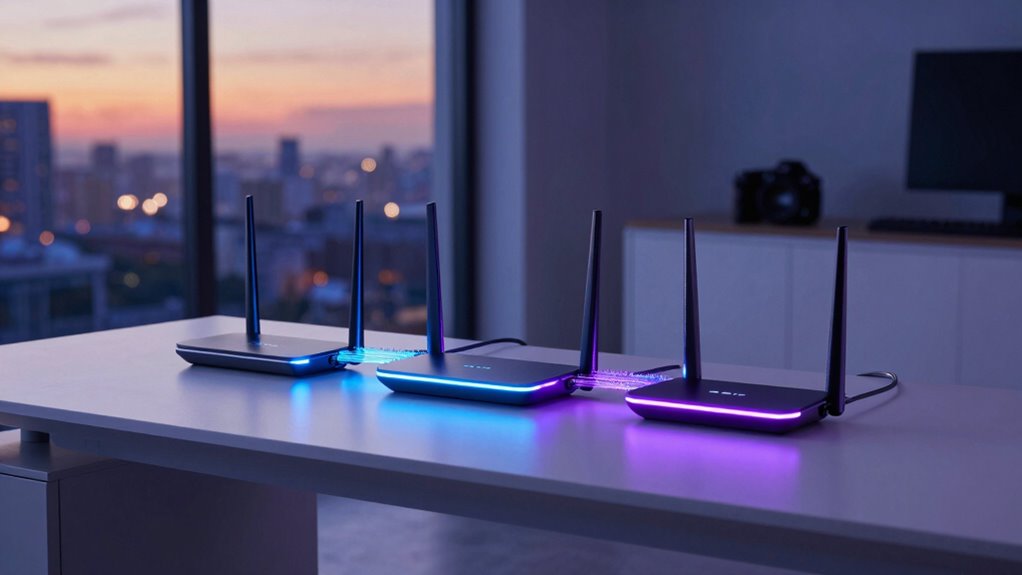

For most home offices, I’d start with the TP-Link Deco 7 Pro BE67: its tri-band design and three-node kit make it a strong fit when work calls and other household traffic compete for wireless capacity. The Amazon eero 7 is a simpler choice for buyers who value straightforward setup, while the NETGEAR Orbi 770 suits larger homes where broader coverage matters. The main tradeoff is between the added capacity and cost of tri-band systems and the simpler, often sufficient performance of dual-band kits. Your floor plan, wired connections, and number of active users matter as much as the Wi-Fi 7 label. Read on for the full comparison and guidance on choosing a system for your workspace.

Get business pricing on office and shipping supplies
- Business-only prices and quantity discounts
- Tax-exempt purchasing
- Multiple users, one account, clear invoices
Key Takeaways
- Tri-band kits stand apart for busy networks: the Deco 7 Pro BE67, Deco 7 Pro, eero Pro 7, and Orbi 770 are the lineup’s higher-capacity options for homes with concurrent calls, uploads, and streaming.
- More nodes can matter more than a higher tier: three- and four-piece kits can address coverage gaps across a home better than a premium router placed far from the office.
- The eero 7 is the approachable pick: its dual-band design keeps the choice simple, while the two-pack and three-pack let buyers match the system size to their layout.
- Several options share the Orbi 370 platform: the three-pack, four-pack, and renewed router-and-two-extender bundle mainly differ in kit size and condition, so choose by coverage needs and seller terms.
- Renewed Deco kits call for extra scrutiny: the BE3600 renewed system and RBE373 renewed Orbi may fit a tighter budget, but return policy, warranty, and included components deserve a close check.
| TP-Link Deco 7 BE5000 Dual-Band Wi-Fi 7 Mesh System |  | Best Overall for a Home Office | Wi-Fi standard: Wi-Fi 7 | Bands: Dual-band | Maximum combined speed: Up to 5 Gbps | VIEW ON AMAZON | See Our Full Breakdown |
| Amazon eero 7 Dual-Band Mesh Wi-Fi 7 Router, 2-Pack |  | Best for Existing eero Homes | Wireless standard: Wi-Fi 7 | Bands: Dual-band | Pack size: 2 routers | VIEW ON AMAZON | See Our Full Breakdown |
| TP-Link Deco 7 Pro Tri-Band Wi-Fi 7 Mesh System, 3-Pack |  | Best for Busy, Multi-Device Offices | Wi-Fi standard: Wi-Fi 7 | Bands: Tri-band | Coverage: Up to 7,600 sq. ft. | VIEW ON AMAZON | See Our Full Breakdown |
| Amazon eero Pro 7 Tri-Band Wi-Fi 7 Mesh Router, 4-Pack |  | Best Premium for Large Workspaces | Wi-Fi standard: Wi-Fi 7 | Radios: 3; tri-band | Bands: 2.4 GHz, 5 GHz, 6 GHz | VIEW ON AMAZON | See Our Full Breakdown |
| NETGEAR Orbi 370 Series WiFi 7 Dual-Band Mesh System with Router and 2 Extenders (RBE373, Renewed) |  | Best Renewed Coverage Pick | Wi-Fi standard: Wi-Fi 7 | Bands: Dual-band | Components: 1 router and 2 extenders | VIEW ON AMAZON | See Our Full Breakdown |
| NETGEAR Orbi 370 Series WiFi 7 Mesh System, 3-Pack |  | Best Value for Large Offices | WiFi standard: WiFi 7 | Bands: Dual-band | Maximum speed: Up to 5 Gbps | VIEW ON AMAZON | See Our Full Breakdown |
| NETGEAR Orbi 370 Series WiFi 7 Mesh System, 4-Pack |  | Best for Hard-to-Cover Homes | WiFi standard: WiFi 7 | System type: Dual-band mesh | Pack contents: Router and satellites, 4-pack | VIEW ON AMAZON | See Our Full Breakdown |
| Amazon eero 7 Dual-Band Mesh Wi-Fi 7 Router, 3-Pack |  | Best for Device-Heavy Offices | WiFi standard: WiFi 7 | Bands: Dual-band | Pack size: 3 routers | VIEW ON AMAZON | See Our Full Breakdown |
| NETGEAR Orbi 770 Series WiFi 7 Mesh System, 3-Pack |  | Best Premium Performance | WiFi standard: WiFi 7 | System type: Tri-band mesh | Pack size: 3-pack | VIEW ON AMAZON | See Our Full Breakdown |
| TP-Link Deco 7 BE3600 Whole Home Mesh Wi-Fi 7 System (Renewed) |  | Best Renewed Option | WiFi generation: WiFi 7 | Wireless standard: 802.11be | Data transfer rate: 3,600 Mbps | VIEW ON AMAZON | See Our Full Breakdown |
| TP-Link Deco 7 Pro BE67 Tri-Band Wi-Fi 7 Mesh System, 3-Pack |  | Best for Large Home Offices | Model: Deco 7 Pro BE67 | Wi-Fi standard: Wi-Fi 7 | Bands: Tri-band: 2.4 GHz, 5 GHz, and 6 GHz | VIEW ON AMAZON | See Our Full Breakdown |
| TP-Link Deco 7 BE23 Wi-Fi 7 Mesh System, Dual-Band BE3600, 3-Pack |  | Best Value for Wired Home Offices | Model: Deco 7 BE23 | Wi-Fi standard: Wi-Fi 7 | Bands: Dual-band: 2.4 GHz and 5 GHz | VIEW ON AMAZON | See Our Full Breakdown |
| wi fi 7 mesh system for home office | Coverage | Bands | Wi-Fi standard | Device capacity |
|---|---|---|---|---|
| TP-Link Deco 7 BE5000 Dual-Ban | Up to 6,600 sq. ft. | Dual-band | Wi-Fi 7 | Over 150 devices |
| Amazon eero 7 Dual-Band Mesh W | Up to 4,000 sq. ft. | Dual-band | — | — |
| TP-Link Deco 7 Pro Tri-Band Wi | Up to 7,600 sq. ft. | Tri-band | Wi-Fi 7 | Over 200 devices |
| Amazon eero Pro 7 Tri-Band Wi- | Up to 8,000 sq. ft. (4-pack) | 2.4 GHz, 5 GHz, 6 GHz | Wi-Fi 7 | — |
| NETGEAR Orbi 370 Series WiFi 7 | Up to 6,000 sq. ft. | Dual-band | Wi-Fi 7 | — |
| NETGEAR Orbi 370 Series WiFi 7 | Up to 6,000 sq. ft. | Dual-band | — | Up to 70 devices |
| NETGEAR Orbi 370 Series WiFi 7 | — | — | — | Up to 70 devices |
| Amazon eero 7 Dual-Band Mesh W | Up to 6,000 sq. ft. | Dual-band | — | — |
| NETGEAR Orbi 770 Series WiFi 7 | Up to 8,000 sq. ft. | — | — | Up to 100 devices |
| TP-Link Deco 7 BE3600 Whole Ho | — | — | — | — |
| TP-Link Deco 7 Pro BE67 Tri-Ba | Up to 8,100 sq. ft. | Tri-band: 2.4 GHz, 5 GHz, and 6 GHz | Wi-Fi 7 | Up to 200 devices |
| TP-Link Deco 7 BE23 Wi-Fi 7 Me | Up to 6,500 sq. ft. | Dual-band: 2.4 GHz and 5 GHz | Wi-Fi 7 | — |
More Details on Our Top Picks
TP-Link Deco 7 BE5000 Dual-Band Wi-Fi 7 Mesh System
Broad coverage and flexible backhaul make the Deco 7 BE5000 a strong fit when an office sits far from the modem or shares a home with many connected devices. Its advertised coverage reaches 6,600 square feet, and wired backhaul can help keep traffic between Deco units steadier when you can run Ethernet. Compared with the Amazon eero 7 2-Pack, it emphasizes wider stated coverage and VPN support, while eero specifies 2.5 GbE ports on each router and compatibility with earlier eero units. The Deco’s dual-band design has no separate 6 GHz band, so a busy mesh link may have less capacity than the tri-band Deco 7 Pro. It also needs a separate modem, and mesh expansion is limited to other Deco devices.
Pros:- Advertised coverage up to 6,600 square feet suits larger homes.
- Wired and wireless backhaul offer placement flexibility.
- Supports more than 150 devices.
- Includes AI-assisted roaming and VPN support.
Cons:- Requires a separate modem.
- Dual-band design lacks a dedicated 6 GHz band.
- Mesh expansion requires other Deco devices.
Best for: Remote workers in larger homes who want broad coverage, VPN support, and the option to wire mesh nodes.
Not ideal for: People seeking a tri-band system or hoping to mix mesh units from different brands.
- Wi-Fi standard:Wi-Fi 7
- Bands:Dual-band
- Maximum combined speed:Up to 5 Gbps
- Coverage:Up to 6,600 sq. ft.
- Device capacity:Over 150 devices
- Backhaul:Wired and wireless
- Ethernet:2.5G
- Modem:Required separately
Our verdict“Choose the Deco 7 BE5000 for a large home office setup that values coverage and flexible backhaul over tri-band capacity.”
Amazon eero 7 Dual-Band Mesh Wi-Fi 7 Router, 2-Pack
For a home office that needs a straightforward two-node upgrade, the eero 7 2-Pack keeps the setup relatively compact while offering coverage up to 4,000 square feet. Each router has two auto-sensing 2.5 GbE ports, useful for connecting a desktop, NAS, or wired backhaul without giving up every port to one purpose. Its support for earlier eero generations also makes it easier to extend an existing eero setup than the TP-Link Deco 7 BE5000, which meshes with Deco devices. The tradeoff is a lower stated coverage area and wireless speed than that Deco system, and advanced security features require an optional subscription. This is a practical fit for a moderate-size workspace, though it is less suited to a sprawling home or anyone who wants included advanced security.
Pros:- Two 2.5 GbE ports per router support wired devices and backhaul.
- Compatible with previous eero generations.
- Advertised coverage up to 4,000 square feet.
- Supports internet plans up to 2.5 Gbps.
Cons:- Advanced security features require an optional eero Plus subscription.
- Dual-band hardware lacks a separate 6 GHz band.
- Coverage and wireless speed claims are lower than the Deco 7 BE5000’s.
Best for: People with an existing eero network who want to cover a home office and nearby rooms with a two-router system.
Not ideal for: Workers in very large homes or buyers who want advanced security features without an added subscription.
- Wireless standard:Wi-Fi 7
- Bands:Dual-band
- Pack size:2 routers
- Coverage:Up to 4,000 sq. ft.
- Wireless speed:Up to 1.8 Gbps
- Supported internet plans:Up to 2.5 Gbps
- Ethernet:Two auto-sensing 2.5 GbE ports per router
- Compatibility:Previous eero generations and eero Built-in on select Amazon Echo devices
Our verdict“Pick the eero 7 2-Pack if you already use eero and need an easy-to-expand system for a moderate-size home office.”
TP-Link Deco 7 Pro Tri-Band Wi-Fi 7 Mesh System, 3-Pack
The Deco 7 Pro’s tri-band radios and capacity for over 200 devices make it the lineup’s clearest choice for a home where video calls, large uploads, and connected equipment compete for airtime. Its advertised 7,600-square-foot coverage also exceeds the dual-band Deco 7 BE5000, while four 2.5G WAN/LAN ports per unit give a desk, storage device, or wired mesh link room to connect. The extra 6 GHz band can provide more wireless capacity, though walls and distance still affect real performance. Its broad port selection and USB 3.0 port add flexibility, but the system needs a separate modem and at least two Deco units for mesh backhaul. For a smaller office with fewer devices, the eero 7 2-Pack is a simpler-sized alternative.
Pros:- Tri-band Wi-Fi 7 includes a 6 GHz band.
- Advertised coverage up to 7,600 square feet.
- Supports over 200 devices.
- Four 2.5G WAN/LAN ports and USB 3.0 add wired flexibility.
Cons:- Requires a separate modem.
- Mesh backhaul requires at least two Deco units.
- Real-world performance varies with distance, obstacles, and conditions.
Best for: Households with multiple remote workers, many connected devices, and a need for wired office equipment across a large area.
Not ideal for: People with a small workspace, few devices, or no need for tri-band capacity and multiple Ethernet ports.
- Wi-Fi standard:Wi-Fi 7
- Bands:Tri-band
- Coverage:Up to 7,600 sq. ft.
- Device capacity:Over 200 devices
- Maximum advertised speeds:5,188 Mbps (6 GHz), 4,324 Mbps (5 GHz), 574 Mbps (2.4 GHz)
- Ethernet ports:Four 2.5G WAN/LAN ports
- USB:USB 3.0
- Backhaul:Wired and wireless; requires at least two Deco units
Our verdict“Choose the Deco 7 Pro when a large home office needs tri-band capacity and extensive wired connections.”
Amazon eero Pro 7 Tri-Band Wi-Fi 7 Mesh Router, 4-Pack
If a home office spans a large property or several floors, the eero Pro 7 4-Pack pairs tri-band Wi-Fi 7 with stated coverage up to 8,000 square feet and support for more than 800 devices. Its two 5 GbE ports on each router offer more wired headroom than the Deco 7 Pro’s 2.5G ports, which matters when a fast internet connection or wired workstation is part of the setup. The four nodes also make placement across a larger home more practical than the eero 7 2-Pack. That scale may be excessive for a single office, though, and setup requires a supported iOS or Android device and internet service. Some smart home features and Alexa availability vary by country.
Pros:- Tri-band Wi-Fi 7 includes 2.4 GHz, 5 GHz, and 6 GHz bands.
- Advertised coverage up to 8,000 square feet with the four-pack.
- Two auto-sensing 5 GbE ports per router.
- Supports over 800 devices across the pack.
Cons:- Four routers may be more equipment than a single office needs.
- Setup requires a supported iOS or Android device and internet service.
- Some features and Alexa availability vary by country.
Best for: Professionals with large, multi-floor homes, fast internet service, and multiple wired workstations or smart home devices.
Not ideal for: People who need coverage for only a small office or prefer a setup that does not depend on a supported mobile device.
- Wi-Fi standard:Wi-Fi 7
- Radios:3; tri-band
- Bands:2.4 GHz, 5 GHz, 6 GHz
- Wireless speed:Up to 3.9 Gbps
- Internet plan support:Up to 5 Gbps
- Coverage:Up to 8,000 sq. ft. (4-pack)
- Ethernet:Two auto-sensing 5 GbE ports per router
- Warranty:3-year limited warranty
Our verdict“Choose the eero Pro 7 4-Pack for a large home office network that can use its tri-band radios, multiple nodes, and 5 GbE ports.”
NETGEAR Orbi 370 Series WiFi 7 Dual-Band Mesh System with Router and 2 Extenders (RBE373, Renewed)
This renewed Orbi 370 set includes one router and two extenders, with advertised coverage up to 6,000 square feet—a useful layout when an office is separated from the main router by several rooms. Its stated 5 Gbps maximum speed and 2.5 Gigabit internet port give it a strong connection point, but the system supports up to 70 devices, fewer than the Deco 7 BE5000’s more than 150. It is also dual-band, so it lacks the extra 6 GHz band offered by the Deco 7 Pro and eero Pro 7. Built-in security features are a plus, while renewed condition is a real consideration for buyers who want a new system. This pick makes sense when coverage and three nodes matter more than maximum device capacity.
Pros:- Router and two extenders can cover separated rooms.
- Advertised coverage up to 6,000 square feet.
- Includes a 2.5 Gigabit internet port.
- Built-in security features are included.
Cons:- Renewed condition may not suit buyers who want a new system.
- Device capacity is limited to 70.
- Dual-band design lacks a 6 GHz band.
Best for: Home workers seeking a three-unit layout for a larger home and who are comfortable buying a renewed system.
Not ideal for: Buyers who want a new product, need capacity above 70 devices, or prefer tri-band Wi-Fi 7.
- Wi-Fi standard:Wi-Fi 7
- Bands:Dual-band
- Components:1 router and 2 extenders
- Maximum speed:Up to 5 Gbps
- Coverage:Up to 6,000 sq. ft.
- Maximum connected devices:70
- Internet port:2.5 Gigabit Ethernet
- Condition:Renewed
Our verdict“Consider this renewed Orbi set if you need three nodes for a larger home and accept its dual-band design and lower device limit.”
NETGEAR Orbi 370 Series WiFi 7 Mesh System, 3-Pack
The Orbi 370 3-pack suits a home office that needs broad coverage without stepping up to a faster tri-band system. Its router and two satellites are rated for up to 6,000 sq. ft., while support for up to 70 devices leaves room for work computers, phones, and connected home equipment. Compared with the Orbi 770 3-pack, it has a lower stated maximum speed and fewer supported devices, but the dual-band design may be enough for typical video calls and cloud work. App-guided setup and compatibility with WiFi 6 and WiFi 5 devices simplify a mixed-device household. The main tradeoffs are the US-only region limit and coverage that depends on placement and building layout. NETGEAR Armor also requires a separate subscription after its 30-day trial.
Pros:- Router and two satellites are rated to cover up to 6,000 sq. ft.
- Supports up to 70 connected devices.
- Compatible with WiFi 6 and WiFi 5 devices.
- App-guided setup and management.
Cons:- Dual-band design has a lower stated maximum speed than the Orbi 770 tri-band system.
- NETGEAR Armor requires a subscription after the 30-day trial.
- Coverage and real-world speeds vary with placement, home layout, devices, and internet plan.
Best for: US households with a large office footprint, a mix of older and newer devices, and up to 70 connected devices.
Not ideal for: People outside the US or offices with heavy simultaneous network traffic that would benefit from a tri-band system such as the Orbi 770.
- WiFi standard:WiFi 7
- Bands:Dual-band
- Maximum speed:Up to 5 Gbps
- Coverage:Up to 6,000 sq. ft.
- Device capacity:Up to 70 devices
- Pack contents:Router and two satellites
- Internet compatibility:Cable or fiber plans up to 2.5 Gbps
- Region:US only
Our verdict“Choose this three-piece Orbi for a spacious US home office that needs broad coverage and straightforward setup without the Orbi 770’s higher speed tier.”
NETGEAR Orbi 370 Series WiFi 7 Mesh System, 4-Pack
When an office sits far from the router or behind several walls, the Orbi 370 4-pack adds another satellite to the same dual-band platform as the 3-pack. Its stated coverage reaches up to 8,000 sq. ft., which makes it a better fit for spreading connectivity across a large home than the eero 7 3-pack, rated for up to 6,000 sq. ft. Both are dual-band WiFi 7 systems, but the Orbi supports up to 70 devices versus eero’s 120-plus, so eero may suit a device-heavy home better. The Orbi’s app supports setup and management, and WiFi 6 and WiFi 5 devices remain compatible. Its extra satellite does not raise the stated 5 Gbps speed ceiling, and the US-only restriction and Armor subscription after the trial may rule it out for some buyers.
Pros:- Four-piece system is rated for coverage up to 8,000 sq. ft.
- Supports WiFi 7 alongside WiFi 6 and WiFi 5 devices.
- App-guided setup and network management.
- Cable and fiber plan compatibility up to 2.5 Gbps.
Cons:- Maximum stated speed remains 5 Gbps despite the additional satellite.
- Supports fewer devices than the eero 7 3-pack’s stated 120-plus.
- NETGEAR Armor requires a subscription after its 30-day trial, and the system is US only.
Best for: US households with a distant office or multiple work areas spread across a large floor plan.
Not ideal for: Homes with more than 70 connected devices, buyers outside the US, or anyone seeking a higher-speed tri-band mesh system.
- WiFi standard:WiFi 7
- System type:Dual-band mesh
- Pack contents:Router and satellites, 4-pack
- Maximum coverage:Up to 8,000 sq. ft.
- Maximum speed:Up to 5 Gbps
- Device capacity:Up to 70 devices
- Internet compatibility:Cable and fiber plans up to 2.5 Gbps
- Region:US only
Our verdict“Pick the four-piece Orbi when reaching a far-flung home office matters more than supporting the largest number of devices or getting tri-band performance.”
Amazon eero 7 Dual-Band Mesh Wi-Fi 7 Router, 3-Pack
The eero 7 3-pack makes a strong case for busy home offices where many devices share the network: it supports 120+ devices and includes two auto-sensing 2.5 GbE ports on each router. Those ports give a wired desktop, NAS, or workstation a fast connection without relying on WiFi. Its rated coverage of up to 6,000 sq. ft. matches the Orbi 370 3-pack, while eero’s stated device capacity is higher; the Orbi, however, lists a higher maximum wireless speed. Backward compatibility with previous eero generations can help households expand an existing eero setup, and the three-year warranty is a practical plus. The system is dual-band, with maximum wireless speed listed at 1.8 Gbps, so buyers focused on peak wireless throughput may prefer a faster alternative. Optional eero Plus services require a subscription.
Pros:- Supports more than 120 devices.
- Two auto-sensing 2.5 GbE ports on each router support wired office equipment.
- Compatible with previous eero generations.
- Includes a three-year warranty.
Cons:- Maximum wireless speed is listed at 1.8 Gbps, below the Orbi 370’s stated 5 Gbps.
- eero Plus security and other services require an optional subscription.
- Dual-band design may be less suited to offices prioritizing higher wireless throughput.
Best for: Home offices with many connected devices, wired workstations, and an existing eero network to extend.
Not ideal for: Users prioritizing the highest stated wireless speed or buyers who want optional security and other services without a subscription.
- WiFi standard:WiFi 7
- Bands:Dual-band
- Pack size:3 routers
- Maximum wireless speed:1.8 Gbps
- Maximum internet plan speed:2.5 Gbps
- Coverage:Up to 6,000 sq. ft.
- Supported devices:120+
- Ethernet ports:Two auto-sensing 2.5 GbE ports per router
- Warranty:Three years
Our verdict“Choose eero 7 if your office has many connected devices or wired equipment and you value compatibility with an existing eero setup over peak wireless speed.”
NETGEAR Orbi 770 Series WiFi 7 Mesh System, 3-Pack
For a home office where multiple people are on calls, transferring files, and using cloud apps at once, the Orbi 770 3-pack offers the lineup’s clearest step up in network capacity: it is tri-band, supports up to 100 devices, and lists speeds up to 11 Gbps. That makes it a stronger fit for demanding simultaneous traffic than the dual-band Orbi 370 3-pack, whose stated ceiling is 5 Gbps and capacity is 70 devices. Both systems are rated for up to 8,000 sq. ft. in their larger configurations, but those figures depend on the home and satellite placement. The Orbi 770 works with compatible cable or fiber plans up to 2.5 Gbps and is managed through the Orbi app. Its US-only availability and paid Armor subscription after the 30-day trial are real constraints; the internet plan also caps what reaches the home.
Pros:- Tri-band WiFi 7 system with stated speeds up to 11 Gbps.
- Rated to cover up to 8,000 sq. ft.
- Supports up to 100 connected devices.
- App-based setup and management.
Cons:- Compatible internet plans are listed up to 2.5 Gbps, limiting the value of its higher mesh speed ceiling for some homes.
- NETGEAR Armor requires a subscription after the 30-day trial.
- Made for use in the US only, with real coverage dependent on placement and home layout.
Best for: US households running a demanding home office with several people and many devices active at the same time.
Not ideal for: Small offices with modest network demands, buyers outside the US, or users whose internet plan makes the higher mesh speed ceiling unnecessary.
- WiFi standard:WiFi 7
- System type:Tri-band mesh
- Pack size:3-pack
- Coverage:Up to 8,000 sq. ft.
- Device capacity:Up to 100 devices
- Maximum speed:Up to 11 Gbps
- Internet plan compatibility:Cable or fiber plans up to 2.5 Gbps
- Management:Orbi app
- Region:US only
Our verdict“Choose the Orbi 770 for a large US home office with heavy simultaneous traffic that can make use of a tri-band system and its higher stated capacity.”
TP-Link Deco 7 BE3600 Whole Home Mesh Wi-Fi 7 System (Renewed)
The renewed Deco 7 BE3600 is the pick for buyers who want WiFi 7 mesh features and HomeShield tools in a renewed system, but its listing leaves important planning details open. It specifies a 3,600 Mbps data transfer rate, AI-driven mesh optimization, parental controls, and security features. Unlike the eero 7 3-pack, which states its coverage, node count, and Ethernet layout, this Deco listing does not say how many mesh nodes are included or give a coverage figure. That makes it harder to tell whether it can reach a separate office without extra hardware. The listed six ports may help with wired devices, but the data does not clarify their layout. Its renewed status is another tradeoff for buyers weighing condition and support against a new system.
Pros:- WiFi 7 with a stated data transfer rate of 3,600 Mbps.
- Includes AI-driven mesh optimization.
- Lists parental controls and TP-Link HomeShield security.
- Six ports are listed in the product data.
Cons:- Renewed condition may not suit buyers who want a new system.
- Product data does not specify the number of mesh nodes or coverage area.
- The six-port listing does not describe how ports are distributed across the system.
Best for: Buyers open to a renewed WiFi 7 mesh system who want HomeShield features and can confirm node count and condition before purchase.
Not ideal for: Remote workers who need a clearly specified coverage area, node configuration, or wired port layout before planning their office network.
- WiFi generation:WiFi 7
- Wireless standard:802.11be
- Data transfer rate:3,600 Mbps
- Number of ports:6
- Special features:AI-driven mesh optimization, parental controls, TP-Link HomeShield security
- Compatible devices:Tablet, gaming console, laptop, smartphone
- Connectivity:WiFi
- Condition:Renewed
Our verdict“Consider this renewed Deco if its condition and node configuration meet your needs, but choose a better-specified system if office coverage must be planned precisely.”
TP-Link Deco 7 Pro BE67 Tri-Band Wi-Fi 7 Mesh System, 3-Pack
The Deco 7 Pro BE67 makes the most sense when a home office is part of a large home with many connected devices. Its three-band Wi-Fi 7 design and stated coverage of up to 8,100 square feet give it more room to spread traffic than the dual-band Deco 7 BE23, while support for up to 200 devices suits homes mixing work gear, smart devices, and family streaming. For a desktop, NAS, or fast wired access point, each unit has 10 Gbps and 2.5 Gbps Ethernet, plus a 1 Gbps port. The tradeoff is that this is more capability than a small office may need, and the modem is separate. Some HomeShield security features also require a premium service. Choose it for broad coverage and flexible wired connections; skip it if a simpler dual-band mesh fits your space.
Pros:- Three-band Wi-Fi 7 supports a larger, busy home network.
- Stated coverage reaches up to 8,100 square feet across the three-unit system.
- 10 Gbps and 2.5 Gbps Ethernet ports give wired work devices room for faster links.
- Supports up to 200 devices and includes VPN support and parental controls.
Cons:- A modem must be supplied separately for internet service.
- Some HomeShield security features require a paid premium service.
- Its broad coverage and port capacity may be more than a small home office needs.
Best for: Remote workers with a large home, multiple workstations, and many connected smart devices who can use multi-gigabit wired connections.
Not ideal for: People in smaller homes with few connected devices who want an uncomplicated dual-band system or do not need multi-gigabit Ethernet.
- Model:Deco 7 Pro BE67
- Wi-Fi standard:Wi-Fi 7
- Bands:Tri-band: 2.4 GHz, 5 GHz, and 6 GHz
- Maximum combined speed:Up to 14 Gbps
- Coverage:Up to 8,100 sq. ft.
- Device capacity:Up to 200 devices
- Ethernet ports per unit:10 Gbps, 2.5 Gbps, and 1 Gbps WAN/LAN
- USB port:USB 3.0
- Mesh features:Multi-Link Operation and AI-driven roaming
Our verdict“Choose the Deco 7 Pro BE67 for a large, device-heavy home office that can make use of tri-band Wi-Fi and multi-gigabit wired ports.”
TP-Link Deco 7 BE23 Wi-Fi 7 Mesh System, Dual-Band BE3600, 3-Pack
The Deco 7 BE23 is a practical fit for a home office that needs three mesh units and useful wired connections without the BE67’s tri-band design. Each unit has two 2.5 Gbps WAN/LAN ports, so a worker can connect a desktop and another wired device, or use Ethernet between mesh points where cabling is available. Its stated coverage of up to 6,500 square feet is substantial, though below the BE67’s 8,100-square-foot claim, and its dual-band Wi-Fi has less wireless capacity for a crowded network. Compared with the Deco 7 Pro BE67, it supports fewer devices and has a lower stated combined speed, but that may be a sensible exchange for a household with a more typical number of devices. A modem is still required, and real coverage and speed depend on the home and client devices.
Pros:- Three units provide stated coverage of up to 6,500 square feet.
- Two 2.5 Gbps WAN/LAN ports per unit support flexible wired office setups.
- Supports simultaneous wired and wireless backhaul.
- Includes VPN, parental controls, and a separate IoT network.
Cons:- Dual-band networking has less wireless capacity than the tri-band Deco 7 Pro BE67.
- The system requires a separate modem for most internet service providers.
- Actual speed and coverage vary with home conditions and compatible devices.
Best for: Remote workers in a medium or large home who want a three-unit mesh with multi-gigabit Ethernet for a desktop, NAS, or wired backhaul.
Not ideal for: Homes with very high device counts or heavy simultaneous wireless traffic, where the BE67’s tri-band design and higher stated capacity may be a better fit.
- Model:Deco 7 BE23
- Wi-Fi standard:Wi-Fi 7
- Bands:Dual-band: 2.4 GHz and 5 GHz
- Combined wireless speed:Up to 3.6 Gbps
- Coverage:Up to 6,500 sq. ft.
- Maximum devices:Up to 150
- Pack size:3 units
- Ports per unit:Two 2.5 Gbps WAN/LAN ports
- Backhaul:Simultaneous wireless and wired
Our verdict“Pick the Deco 7 BE23 if you want broad mesh coverage and two 2.5 Gbps ports per unit without needing the BE67’s tri-band capacity.”

How We Picked
I ranked these systems around home-office needs: stable video calls, reliable connections between a workstation and router, room-to-room coverage, and manageable setup. Band count and mesh kit size matter because they affect how well a network can handle busy households and distant rooms; neither spec alone guarantees better results in every home. I also weighed usability and practical flexibility, including Ethernet ports for wired computers or backhaul and whether the kit’s node count fits a typical floor plan.
The ranking favors systems that pair useful capacity with a sensible setup for work, then distinguishes simpler dual-band choices from larger or more capable kits. Premium tri-band systems place higher for demanding homes, while approachable options earn their place through ease of use and flexible pack sizes. Renewed products rank as conditional alternatives because purchase condition, warranty, and return terms can vary. I treat coverage claims as dependent on walls, placement, and layout rather than as a guarantee for every home.
| wi fi 7 mesh system for home office | Device capacity |
|---|---|
| TP-Link Deco 7 BE5000 Dual-Ban | Over 150 devices |
| Amazon eero 7 Dual-Band Mesh W | — |
| TP-Link Deco 7 Pro Tri-Band Wi | Over 200 devices |
| Amazon eero Pro 7 Tri-Band Wi- | — |
| NETGEAR Orbi 370 Series WiFi 7 | — |
| NETGEAR Orbi 370 Series WiFi 7 | Up to 70 devices |
| NETGEAR Orbi 370 Series WiFi 7 | Up to 70 devices |
| Amazon eero 7 Dual-Band Mesh W | — |
| NETGEAR Orbi 770 Series WiFi 7 | Up to 100 devices |
| TP-Link Deco 7 BE3600 Whole Ho | — |
| TP-Link Deco 7 Pro BE67 Tri-Ba | Up to 200 devices |
| TP-Link Deco 7 BE23 Wi-Fi 7 Me | — |
Factors to Consider When Choosing Wi Fi 7 Mesh System For Home Offices
I’d choose a mesh system by starting with the office’s connection problems, then matching capacity and node placement to the home. These factors help avoid paying for features that won’t improve the workday.
Map the route from router to desk
Count the walls and floors between the internet connection and your desk, and note where calls or uploads lose stability. A mesh node placed halfway along that route can help more than a faster main router tucked in a basement or cabinet. Avoid placing every node beside the router; nodes need useful separation to extend coverage. Thick masonry, metal-backed insulation, and dense appliances can disrupt wireless links, so plan around open doorways and central locations. If your office has a reliable Ethernet run, a wired connection to the computer can reduce dependence on wireless conditions. Choose node count for the actual layout, not the number of rooms alone.
Decide whether tri-band capacity solves a real problem
Tri-band systems are most useful when several people share the network or when mesh nodes need to carry heavy traffic while devices remain active. A solo worker near the main router may see little practical benefit over a well-placed dual-band kit. Video meetings usually need consistent connectivity more than peak headline speed, so a stable signal at the desk should guide the decision. Households with large uploads, cloud backups, and simultaneous streaming have a stronger case for extra bands. Don’t assume every tri-band system dedicates a band exclusively to mesh traffic; implementations differ. Match the extra capacity to recurring congestion rather than buying it as insurance by default.
Check wired options before replacing your work setup
Ethernet can be a straightforward fix for a desktop, dock, or office access point that stays in one place. Before choosing a mesh system, count the ports on the main unit and satellites and check whether they support the connections you need. Some offices can use Ethernet backhaul between mesh nodes, which moves inter-node traffic off Wi-Fi and can improve consistency. If your workspace has only one cable run, a small switch may let several devices share it. Keep in mind that a wired computer connection does not fix poor service from the internet provider or congestion upstream. A mesh kit helps within the home; it cannot raise the speed of the broadband plan.
Treat Wi-Fi 7 as one part of the compatibility picture
A Wi-Fi 7 router can serve older phones and laptops, but those devices won’t gain Wi-Fi 7 features without compatible radios. For an office refresh, check the wireless capabilities of the work laptop and any dock or access point before paying more for the newest standard. The router may still offer useful capacity as other household devices are upgraded over time. Features such as wider channels also depend on device support, local spectrum rules, and signal conditions. A modern mesh kit is not a substitute for updating an aging client device with a weak antenna. For current work needs, prioritize reliable coverage and wired access where practical.
Compare setup, controls, and ongoing upkeep
Mesh systems vary in how they guide setup and expose network controls, which can matter if you expect to manage guest access or troubleshoot a work device. Check whether the app supports the controls you care about, such as device pausing, guest networks, or separating work equipment from household devices. Some systems emphasize a guided, low-maintenance experience, while others offer more settings that can take time to learn. Review whether advanced features require an account or subscription before buying. A system that is easy to update and monitor can save time when the office connection needs attention. Keep the router’s firmware current and place nodes where they can receive a strong link.
Weigh renewed gear and kit size carefully
Renewed systems can widen the set of options, but their condition and included accessories may vary by listing. Check the return window, warranty coverage, power adapters, and whether all nodes in the stated kit are included. A lower-cost bundle is a poor fit if one satellite is missing or the seller offers limited recourse for faults. Compare the exact model numbers, since similar names can refer to different band counts or hardware generations. Also consider whether a smaller new kit can solve the problem with less uncertainty. For work-critical connectivity, clear support and return terms have practical value.
Frequently Asked Questions
Should I choose a tri-band mesh system for video calls?
Not automatically. A tri-band kit can help when multiple people are using the network heavily or when wireless mesh links carry traffic across several nodes. If your office is close to the main router and the household network is quiet, a dual-band system may handle calls well. First check whether call problems happen only in the office or across the whole home. A wired connection to the work computer or a better-placed node may address the issue at lower complexity.
Is a two-pack enough for a home office, or do I need three nodes?
Choose based on the path between the internet entry point and the office, not the office’s size alone. A two-pack can suit a compact home or an office within good range of the main unit. Three nodes may help when the office is on another floor or behind several signal-blocking walls, provided each node can maintain a useful connection to the mesh. Too many nodes placed close together can add management without solving the underlying layout problem. If possible, identify a midpoint for a satellite before choosing a larger pack.
Will a Wi-Fi 7 mesh system make my older work laptop faster?
An older laptop can connect to a Wi-Fi 7 system, but it will use the wireless features its own adapter supports. The new router may improve signal distribution around the home, which can help if the laptop currently has weak coverage. It will not give the laptop Wi-Fi 7 speeds or features by itself. Check whether the laptop supports a compatible adapter upgrade, or use Ethernet if the workspace allows it. Consider the router’s future usefulness alongside the immediate limits of the device.
Can mesh Wi-Fi fix interruptions caused by my internet provider?
Mesh can improve the connection between your devices and the router, but it cannot repair outages or congestion on the provider’s network. Compare a wired speed or stability check near the modem with the same check from the office to isolate the source. If a wired device also disconnects, contact the provider or inspect the modem and service plan. If the wired connection is steady but the office Wi-Fi drops, node placement or a wired backhaul may help. This distinction can prevent replacing working network gear for a problem outside the home.
What should I check before buying a renewed mesh kit for work?
Read the listing for the exact model number, number of nodes, included power supplies, and stated condition. Confirm how returns and warranty claims work, especially if the kit will support daily calls or remote access. Check that all nodes are compatible with one another and that the system still receives software updates. A renewed option may suit a secondary workspace or a buyer who can tolerate setup troubleshooting. For a primary work connection, predictable support and an easy return path may matter more than getting a particular model.
Conclusion
For the strongest all-around fit in this roundup, I’d choose the TP-Link Deco 7 Pro BE67, especially for a busy household that needs three nodes and tri-band capacity. The Amazon eero 7 is my value-minded and beginner-friendly choice for buyers who want a simpler dual-band system and can pick between two- and three-piece kits. For a larger home with demanding coverage needs, look at the NETGEAR Orbi 770 or the tri-band eero Pro 7. The Orbi 370 four-pack suits buyers who need more nodes, while the renewed Deco and Orbi kits are better for those willing to check condition and support terms closely. Start with the office’s location and household traffic, then choose the smallest kit that can cover both reliably.
Halloween Picks
halloween
As an affiliate, we earn on qualifying purchases.