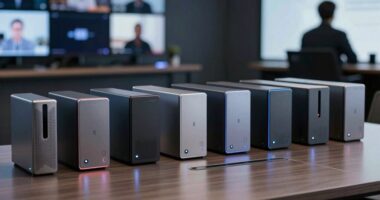
A rated countertop reverse osmosis system can simplify drinking water treatment without connecting a unit under the sink. My best overall pick is the DREO 7-in-1 Countertop Reverse Osmosis Water Filter System, which brings several treatment stages together in a countertop format. The Bluevua RO100ROPOT-UV stands out for buyers who want UV treatment, while the APEC RO-CTOP-PH suits those who prefer a portable system with alkaline minerals. The main tradeoffs are countertop space, refill and waste-water routines, and whether extras such as UV or mineral enhancement match your needs. Read on for how the 11 options compare and which one fits your priorities.

Get business pricing on office and shipping supplies
- Business-only prices and quantity discounts
- Tax-exempt purchasing
- Multiple users, one account, clear invoices
Key Takeaways
- DREO 7-in-1 leads this roundup for shoppers seeking a feature-rich countertop system, while its added complexity may be more than a minimalist setup requires.
- Bluevua RO100ROPOT-UV pairs reverse osmosis with UV treatment; buyers should weigh that extra treatment against their actual water concerns and upkeep preferences.
- APEC RO-CTOP-PH and SimPure Y7T-A offer different mineral-focused approaches, making pitcher design and water taste preferences useful tie-breakers.
- The two Bluevua RO100ROPOT listings and multiple DREO Countertop listings make model-number verification important before comparing features.
- Portable countertop units avoid under-sink installation, but every buyer still needs to plan for counter space, tank refills, wastewater handling, and filter replacement.
| DREO 7-in-1 Countertop Reverse Osmosis Water Filter System |  | Best Overall | Filtration: 7-in-1 reverse osmosis | Contaminant reduction: Up to 99.9% | Testing: SGS tested to meet NSF/ANSI 58 standards | VIEW ON AMAZON | See Our Full Breakdown |
| Bluevua RO100ROPOT-UV Countertop Reverse Osmosis Water Filter System |  | Best for UV and Mineralization | Filtration: Six-stage reverse osmosis with UV light and remineralization | RO membrane: 0.0001 μm | Carafe material: Borosilicate glass | VIEW ON AMAZON | See Our Full Breakdown |
| DREO Reverse Osmosis Countertop Water Filter System with 2 Autofill Pitchers |  | Best for Two-Pitcher Convenience | Filtration: 7-in-1 reverse osmosis | Contaminant reduction: Up to 99.9% of tested contaminants | Testing: SGS tested to meet NSF/ANSI 58 standards | VIEW ON AMAZON | See Our Full Breakdown |
| DREO Countertop Reverse Osmosis Water Filter System |  | Best for Self-Cleaning | Filtration: 7-in-1 reverse osmosis | Listed contaminant reduction: Up to 99.9%, including PFOA, PFOS, chlorine, and fluoride | Testing: Stated as SGS tested to meet NSF/ANSI 58 standards | VIEW ON AMAZON | See Our Full Breakdown |
| DREO Countertop Reverse Osmosis Water Filter System | 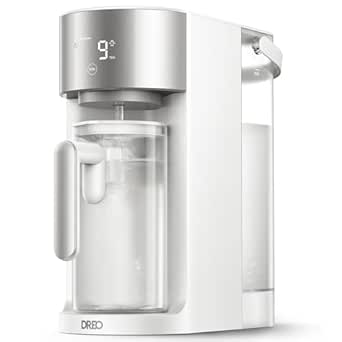 | Best Compact Daily Setup | Filtration: 7-in-1 reverse osmosis | Contaminant reduction: Up to 99.9% | Testing: SGS tested to meet NSF/ANSI 58 standards | VIEW ON AMAZON | See Our Full Breakdown |
| APEC Water Systems RO-CTOP-PH Portable Countertop Reverse Osmosis Water Filter with Alkaline Minerals |  | Best Faucet-Connected Pick | Filtration stages: 4 | Capacity: 90 GPD | Water pressure range: 40–80 psi | VIEW ON AMAZON | See Our Full Breakdown |
| SimPure Y7P-BW UV Countertop Reverse Osmosis Water Filter | 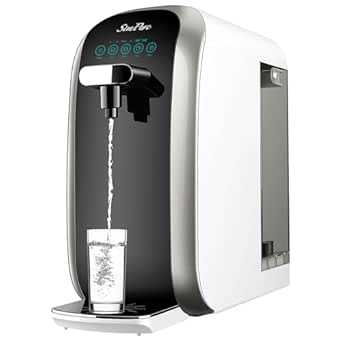 | Best for UV Plus RO | Purification method: UV purification and 0.0001 μm reverse osmosis | Installation: Countertop; no installation required | Filter capacity: 528 gallons | VIEW ON AMAZON | See Our Full Breakdown |
| SimPure Y7T-A Countertop Reverse Osmosis Water Filter with Mineral-Enhancing Glass Pitcher |  | Best Glass-Pitcher Mineral Pick | Filtration: 5-stage | Pitcher material: Borosilicate glass | Minerals added: Calcium, magnesium, and potassium | VIEW ON AMAZON | See Our Full Breakdown |
| Waterdrop C2SL Countertop Reverse Osmosis Water Filter with Mineral Filter |  | Best Smart Autofill Pick | Filtration stages: 7 | RO membrane pore size: 0.0001 μm | Feed water tank capacity: 108 oz | VIEW ON AMAZON | See Our Full Breakdown |
| Bluevua RO100ROPOT Countertop Reverse Osmosis Water Filter System |  | Best for Filter-Life Monitoring | Filtration stages: 5 | Filtration type: Reverse osmosis with remineralization | Pure-to-drain ratio: 2:1 | VIEW ON AMAZON | See Our Full Breakdown |
| Express Water Countertop Reverse Osmosis Water Filtration System |  | Best for Faucet-Connected Simplicity | Filter stages: 4 | Filter types: Sediment, granular carbon, reverse osmosis membrane, post-activated carbon | Water production rate: 0.5–1 gallon per hour | VIEW ON AMAZON | See Our Full Breakdown |
| rated countertop reverse osmosis system | Pure-to-drain ratio | Filtration | Installation |
|---|---|---|---|
| DREO 7-in-1 Countertop Reverse | 3:1 | 7-in-1 reverse osmosis | Countertop; no plumbing required |
| Bluevua RO100ROPOT-UV Countert | 2:1 | Six-stage reverse osmosis with UV light and remineralization | — |
| DREO Reverse Osmosis Counterto | — | 7-in-1 reverse osmosis | — |
| DREO Countertop Reverse Osmosi | 3:1 | 7-in-1 reverse osmosis | Countertop; installation-free |
| DREO Countertop Reverse Osmosi | 3:1 | 7-in-1 reverse osmosis | — |
| APEC Water Systems RO-CTOP-PH | — | — | Installation-free |
| SimPure Y7P-BW UV Countertop R | 4:1 | — | Countertop; no installation required |
| SimPure Y7T-A Countertop Rever | 4:1 | 5-stage | — |
| Waterdrop C2SL Countertop Reve | 3:1 | — | — |
| Bluevua RO100ROPOT Countertop | 2:1 | — | No plumbing or installation required |
| Express Water Countertop Rever | 1:3 | — | Countertop; compatible with select threaded faucets |
More Details on Our Top Picks
DREO 7-in-1 Countertop Reverse Osmosis Water Filter System
Real-time TDS readings, filter-life reminders, and two pitchers make this DREO the most complete everyday setup in this group. Its 5L tank gives it more reserve than the 3L tank in the DREO Countertop Reverse Osmosis Water Filter System (B0GHP4KY1Z), which is a practical advantage when more than one person needs water throughout the day. The listed 3:1 pure-to-drain ratio also uses less water per volume of purified output than the Bluevua RO100ROPOT-UV’s 2:1 ratio. I’d shortlist it for households that want visible upkeep cues and ready-to-serve water without plumbing. The tradeoffs are its need for an outlet and filter replacement every 265 gallons (1,000L); buyers seeking a glass carafe or UV treatment may prefer the Bluevua instead.
Pros:- Real-time raw and filtered water TDS monitoring
- 5L tank and two pitchers support serving water to multiple people
- 3:1 pure-to-drain ratio
- Filter-life reminders and twist-to-install replacement filter
Cons:- Requires an electrical outlet
- Filter replacement is needed after 265 gallons (1,000L)
Best for: Households that want a larger water reserve, two pitchers, and clear TDS and filter-life monitoring without plumbing.
Not ideal for: Buyers who need a non-electric filter or want UV treatment and a glass carafe.
- Filtration:7-in-1 reverse osmosis
- Contaminant reduction:Up to 99.9%
- Testing:SGS tested to meet NSF/ANSI 58 standards
- Pure-to-drain ratio:3:1
- Filter life:265 gallons (1,000L)
- Tank and pitchers:5L tank; two 1.1L pitchers
- Dimensions:14.51 × 6.73 × 13.35 inches
- Installation:Countertop; no plumbing required
Our verdict“Choose this DREO for a monitored, higher-capacity countertop setup with two pitchers and no plumbing.”
Bluevua RO100ROPOT-UV Countertop Reverse Osmosis Water Filter System
The Bluevua RO100ROPOT-UV is the lineup’s distinct choice for buyers who want UV treatment and remineralization alongside reverse osmosis. Its six-stage process and borosilicate glass carafe set it apart from the DREO systems, which emphasize TDS monitoring, pitcher capacity, or a 3:1 pure-to-drain ratio. Here, the ratio is 2:1, so more water goes to drain for each portion of purified water than with those DREO options. The 1.7L capacity and 0.26-liter-per-minute flow rate suit people who prefer a glass serving vessel and don’t need a large reserve at once. It still needs an outlet and periodic filter changes, and its 17.8-pound weight makes it less convenient to move than its portable label may suggest.
Pros:- Six-stage filtration includes UV light and remineralization
- Borosilicate glass carafe
- Built-in TDS meter and filter-life monitoring
- No-plumbing countertop setup
Cons:- 2:1 pure-to-drain ratio is lower than the listed 3:1 DREO systems
- Requires corded electric power
- At 17.8 pounds, it is heavy to move regularly
Best for: People who want UV treatment, remineralization, and a glass carafe in a self-contained countertop system.
Not ideal for: Households prioritizing a larger tank, a lighter unit, or a lower pure-to-drain ratio.
- Filtration:Six-stage reverse osmosis with UV light and remineralization
- RO membrane:0.0001 μm
- Carafe material:Borosilicate glass
- Capacity:1,700 ml
- Flow rate:0.26 liters per minute
- Pure-to-drain ratio:2:1
- Filter life:12 months
- Dimensions and weight:10.9 × 15.4 × 14.3 inches; 17.8 pounds
- Power:Corded electric
Our verdict“Pick the Bluevua if UV treatment, remineralization, and a glass carafe matter more to you than a larger reserve or a 3:1 ratio.”
DREO Reverse Osmosis Countertop Water Filter System with 2 Autofill Pitchers
Two autofill pitchers are the main reason to choose this DREO: one can be ready to serve while the other is in use. It shares the listed 7-in-1 filtration, up-to-99.9% contaminant reduction, and 3:1 purification ratio with the DREO B0GHP7SHL4, but the supplied details here focus on self-cleaning and pitcher convenience rather than giving a tank size, filter life, or monitoring specifications. That makes it harder to compare upkeep and capacity directly. Against the Bluevua RO100ROPOT-UV, this model offers two pitchers and a higher stated pure-to-drain ratio, while the Bluevua specifies UV treatment, remineralization, and a glass carafe. I’d choose this for pitcher rotation, provided regular filter replacement and an electrical connection fit your routine.
Pros:- Includes two autofill pitchers
- Self-cleaning feature
- 3:1 purification ratio
- Countertop design requires no installation
Cons:- Regular filter replacements are needed
- The supplied product data does not specify tank capacity or filter life
- Requires a countertop location and electrical power for operation
Best for: People who want two autofill pitchers so a serving vessel can be available while the other is being used.
Not ideal for: Buyers who need published tank capacity, filter-life details, or a specified TDS monitor before choosing.
- Filtration:7-in-1 reverse osmosis
- Contaminant reduction:Up to 99.9% of tested contaminants
- Testing:SGS tested to meet NSF/ANSI 58 standards
- Purification ratio:3:1
- Included pitchers:Two autofill pitchers
- System type:Countertop, installation-free
- Maintenance feature:Self-cleaning
Our verdict“Choose this DREO if rotating between two autofill pitchers matters more than having detailed capacity and filter-life specifications.”
DREO Countertop Reverse Osmosis Water Filter System
Among the DREO choices, this model puts self-cleaning and an autofill pitcher at the center of its feature set. It shares a 7-in-1 process, 3:1 pure-to-drain ratio, and SGS testing stated to meet NSF/ANSI 58 with the DREO B0GHP7SHL4, but its supplied specifications do not state tank size, pitcher capacity, filter life, or dimensions. That missing information makes it a less straightforward choice for buyers comparing refill frequency or counter fit. The Bluevua RO100ROPOT-UV is more specific about its 1.7L capacity and adds UV treatment and remineralization, though it has a 2:1 ratio. I’d favor this DREO when its stated self-cleaning and autofill functions match your priorities, and check capacity details before committing.
Pros:- Installation-free countertop design
- TDS and filter-life monitoring
- Autofill pitcher
- Self-cleaning feature and 3:1 pure-to-drain ratio
Cons:- Supplied product data does not specify tank or pitcher capacity
- Supplied product data does not state filter life
- Requires counter space and an electrical outlet
Best for: Buyers who want a no-plumbing system with self-cleaning, an autofill pitcher, and TDS monitoring.
Not ideal for: Shoppers who need stated capacity, filter-life, or size figures to plan household use and counter space.
- Filtration:7-in-1 reverse osmosis
- Listed contaminant reduction:Up to 99.9%, including PFOA, PFOS, chlorine, and fluoride
- Testing:Stated as SGS tested to meet NSF/ANSI 58 standards
- Pure-to-drain ratio:3:1
- Monitoring:TDS and filter life
- Pitcher:Autofill pitcher included
- Maintenance feature:Self-cleaning
- Installation:Countertop; installation-free
Our verdict“This DREO suits buyers who value self-cleaning and an autofill pitcher, as long as unspecified capacity and filter-life details are acceptable.”
DREO Countertop Reverse Osmosis Water Filter System
At 9.5 pounds and with a 3L tank plus a 1.1L pitcher, this DREO is the clearest fit here for one or two people who want a manageable daily supply. The smaller reserve is its defining compromise: the DREO B0GHP7SHL4 has a 5L tank and two pitchers, making it a stronger match for households that draw water more often. In return, this model’s auto-fill sensor and self-cleaning are paired with real-time TDS readings and filter reminders, so routine use requires little guesswork. Its 3:1 ratio and stated SGS testing to meet NSF/ANSI 58 mirror the broader DREO proposition. The 265-gallon filter capacity means replacement is part of ownership, and the countertop footprint still needs a dedicated spot.
Pros:- Real-time TDS monitoring and filter change indicator
- Auto-fill sensor and self-cleaning
- 3:1 pure-to-drain ratio
- No-install countertop format weighing 9.5 pounds
Cons:- 3L tank and 1.1L pitcher may need frequent refilling for larger households
- Takes up countertop space
- Filter capacity is 265 gallons (1,000L)
Best for: One- or two-person households that want automatic pitcher refills and monitoring in a lighter countertop system.
Not ideal for: Larger households that would drain a 3L tank and 1.1L pitcher quickly, or kitchens without spare counter space.
- Filtration:7-in-1 reverse osmosis
- Contaminant reduction:Up to 99.9%
- Testing:SGS tested to meet NSF/ANSI 58 standards
- Pure-to-drain ratio:3:1
- Filter capacity:265 gallons (1,000 liters)
- Capacity:3L tank; 1.1L pitcher
- Dimensions and weight:14.5 × 6.7 × 13.4 inches; 9.5 pounds
- Maximum supported water TDS:500 ppm
- Features:Built-in TDS meter, filter change indicator, touch control, auto-fill sensor, self-cleaning
Our verdict“Choose this DREO for a monitored, auto-filling setup sized for one or two people rather than a high-demand household.”
APEC Water Systems RO-CTOP-PH Portable Countertop Reverse Osmosis Water Filter with Alkaline Minerals
For buyers who want reverse osmosis without a powered dispensing unit, this APEC connects to most standard faucets and runs a four-stage filtration process. Its 90 GPD capacity and lightweight aluminum case suit a kitchen where the system may need to move or store away. The calcium carbonate stage adds minerals and raises water pH, a different approach from the pitcher-based mineral systems in the lineup, such as the SimPure Y7T-A. That faucet connection also sets its limits: it cannot attach to pull-out, designer, or sprayer faucets, so checking the tap style comes first. Compared with the self-contained SimPure Y7P-BW, the APEC avoids an electric dispenser, but it depends on a compatible faucet and offers less flexibility in where it can operate.
Pros:- Connects to most standard faucets without permanent installation
- Four-stage reverse osmosis filtration
- Calcium carbonate adds minerals and raises water pH
- Lightweight aluminum case is easy to move
Cons:- Does not fit pull-out, designer, or sprayer faucets
- Faucet connection limits placement compared with self-contained countertop dispensers
Best for: Renters or small-household buyers with a standard faucet who want a portable, non-electric RO system with mineral addition
Not ideal for: Kitchens with pull-out, designer, or sprayer faucets, or buyers who want a standalone dispenser
- Filtration stages:4
- Capacity:90 GPD
- Water pressure range:40–80 psi
- Mineral additive:Calcium carbonate
- Installation:Installation-free
- Faucet compatibility:Most standard faucets; excludes pull-out, designer, and sprayer faucets
- Case material:Aluminum
Our verdict“Choose the APEC if your faucet is compatible and you want portable, faucet-fed RO with mineral addition without a powered dispenser.”
SimPure Y7P-BW UV Countertop Reverse Osmosis Water Filter
The Y7P-BW pairs UV purification with four-stage reverse osmosis, giving buyers who want both methods in one countertop unit a clear reason to choose it. It needs no plumbing and can process feed water with TDS up to 500 ppm; its stated pure-to-drain ratio is 4:1. The tradeoff is a room-temperature-only dispenser and a corded power requirement, so this is less convenient than the faucet-fed APEC RO-CTOP-PH if you want to avoid electronics or need a hot or chilled pour. At 17.3 × 7.5 × 17 inches and 13 pounds, it is portable but still claims a dedicated patch of counter. Filter capacity reaches 528 gallons, with a six-month cycle listed, making upkeep part of the ownership routine.
Pros:- Combines UV purification with 0.0001 μm reverse osmosis
- No installation or plumbing connection required
- Filter set rated for up to 528 gallons
- 4:1 pure-to-drain ratio
Cons:- Dispenses room-temperature water only
- Requires a power supply
- Takes up a substantial countertop footprint
Best for: Households seeking a no-install countertop purifier that combines UV treatment and RO for room-temperature water
Not ideal for: Buyers who need hot or chilled dispensing, lack a nearby outlet, or want a small appliance footprint
- Purification method:UV purification and 0.0001 μm reverse osmosis
- Installation:Countertop; no installation required
- Filter capacity:528 gallons
- Filter life cycle:6 months
- Maximum supported TDS:500 ppm
- Pure-to-drain ratio:4:1
- Dimensions:17.3 × 7.5 × 17 in
- Weight:13 lb
- Dispensing temperature:Room temperature only
Our verdict“Pick the Y7P-BW if UV alongside RO matters more to you than temperature options or a compact footprint.”
SimPure Y7T-A Countertop Reverse Osmosis Water Filter with Mineral-Enhancing Glass Pitcher
A glass pitcher and a three-mineral finishing stage give the Y7T-A a distinct appeal for buyers who want purified water collected in a removable carafe. Its five-stage system adds calcium, magnesium, and potassium, while quick-change cartridges are rated for up to 528 gallons. Like the Waterdrop C2SL, it pairs RO with a glass pitcher, but the Y7T-A lists a 4:1 pure-to-drain ratio compared with Waterdrop’s 3:1. The practical constraint is vertical space: the lid needs at least 22 inches of clearance when open, more than its 16.1-inch closed height suggests. It also dispenses room-temperature water only. This is a strong fit for a kitchen with overhead room and a preference for a glass carafe, but less suited to low shelves or buyers seeking temperature choices.
Pros:- Borosilicate glass pitcher provides a removable water vessel
- Mineral filter adds calcium, magnesium, and potassium
- Quick-change cartridges rated for up to 528 gallons
- 4:1 pure-to-drain ratio
Cons:- Needs at least 22 inches of vertical clearance to open
- Dispenses room-temperature water only
- Input water TDS must be below 500 ppm
Best for: Buyers who want a removable borosilicate glass pitcher and calcium, magnesium, and potassium added after RO filtration
Not ideal for: Kitchens with less than 22 inches of clearance above the unit or households that need hot or chilled water
- Filtration:5-stage
- Pitcher material:Borosilicate glass
- Minerals added:Calcium, magnesium, and potassium
- Filter capacity:528 gallons
- Pure-to-drain ratio:4:1
- Input water TDS:Less than 500 ppm
- Height:16.1 in closed; 21.3 in open
- Clearance needed:At least 22 in
- Water temperature:Room temperature only
Our verdict“Choose the Y7T-A if a glass pitcher and added minerals are priorities and your counter has enough overhead clearance.”
Waterdrop C2SL Countertop Reverse Osmosis Water Filter with Mineral Filter
Automatic glass-pitcher refilling and status alerts make the C2SL the most hands-off choice in this group for a small household. Its seven-stage filtration includes a 0.0001 μm RO membrane, and a mineral filter adds calcium, magnesium, potassium, and sodium. The smart display and voice alerts help track operation and filter life, features the simpler SimPure Y7T-A does not list. Waterdrop’s 3:1 pure-to-drain ratio is less water-efficient on paper than the Y7T-A’s 4:1, though the C2SL offers a 108-ounce feed tank and automatically fills its 40-ounce pitcher. The maker positions it for just one or two people, and filter life can vary with water quality and use. Buyers who need frequent large batches may find the pitcher capacity restrictive.
Pros:- Automatically refills a detachable glass pitcher
- Seven-stage filtration with a 0.0001 μm RO membrane
- Smart display and voice alerts provide operating and filter updates
- Mineral filter adds calcium, magnesium, potassium, and sodium
Cons:- Designed for only one or two people
- 40-ounce pitcher may require frequent refilling for larger households
- Filter life varies with water quality and usage
Best for: One- or two-person households that value automatic pitcher refills and visible filter and operating updates
Not ideal for: Families or high-volume users who need larger batches or a larger pitcher than 40 ounces
- Filtration stages:7
- RO membrane pore size:0.0001 μm
- Feed water tank capacity:108 oz
- Glass pitcher capacity:40 oz
- Filter capacity:Up to 528 gallons or 12 months
- Pure-to-drain ratio:3:1
- Certification:NSF/ANSI/CAN 372
- Minerals added:Calcium, magnesium, potassium, and sodium
Our verdict“The C2SL suits a small household that wants automatic glass-pitcher refills and built-in filter alerts.”
Bluevua RO100ROPOT Countertop Reverse Osmosis Water Filter System
The RO100ROPOT keeps the setup simple: it needs no plumbing, collects purified water in a high-borosilicate glass carafe, and includes a monitor for filter life and water quality. Its five-stage RO process adds remineralization, while the 2:1 pure-to-drain ratio is less efficient than the 4:1 figures listed for both SimPure models. Filter life is stated as 12–24 months, a broad range that leaves replacement timing dependent on use and water conditions. The display helps make upkeep more visible, though it does not remove the need to replace filter tubes periodically. Compared with the Waterdrop C2SL, this Bluevua lacks the listed automatic pitcher refill and voice alerts, but its carafe setup may suit buyers who prefer filling and serving from a separate vessel.
Pros:- No plumbing or installation required
- High-borosilicate glass carafe
- Monitor displays filter life and water quality
- Power-saving standby mode
Cons:- 2:1 pure-to-drain ratio is lower than the SimPure models listed here
- Requires a power source
- Filter tubes need periodic replacement
Best for: Buyers who want a portable, no-plumbing RO system with a glass carafe and a visible filter-life and water-quality monitor
Not ideal for: Households prioritizing a high pure-to-drain ratio or automatic pitcher refilling, or kitchens without an outlet
- Filtration stages:5
- Filtration type:Reverse osmosis with remineralization
- Pure-to-drain ratio:2:1
- Carafe material:High-borosilicate glass
- Installation:No plumbing or installation required
- Filter life:12–24 months
- Monitor:Filter life and water quality
- Warranty:1-year limited manufacturer warranty upon registration
Our verdict“Choose the RO100ROPOT if you want a monitored, glass-carafe countertop RO system and accept its lower stated water recovery ratio.”
Express Water Countertop Reverse Osmosis Water Filtration System
This is the lineup’s faucet-connected alternative: unlike the Bluevua RO100ROPOT, which is a standalone countertop unit, the Express Water connects to a compatible threaded faucet and sends filtered water through its included tubing. Its four-stage filtration combines sediment, carbon, an RO membrane, and post-activated carbon, while the stated NSF Standard 58 testing gives buyers a concrete reference point for its filtration claims. The tradeoff is a more faucet-dependent setup and a slower 0.5–1 gallon-per-hour output; countertop systems with onboard reservoirs can be easier to use when faucet compatibility is uncertain. Its 1:3 pure-to-drain ratio also means water is sent to drain during production. I’d choose it for a compact, direct connection and included first-six-month filters, but skip it if you have a sprayer faucet or need water quickly in larger batches.
Pros:- Four filtration stages include sediment, carbon, reverse osmosis, and post-activated carbon
- Compatible-faucet connection uses included tubing for direct dispensing
- Compact countertop format avoids an under-sink installation
- Includes filters for the first six months of use
Cons:- Does not work with sprayer faucets and requires a compatible threaded faucet
- Produces only 0.5–1 gallon per hour
- A 1:3 pure-to-drain ratio sends three gallons to drain per gallon produced
Best for: Renters or small-household buyers with a compatible threaded faucet who want a compact RO setup and included initial filters.
Not ideal for: Households with sprayer faucets or high daily water demand, since compatibility is limited and production is slow.
- Filter stages:4
- Filter types:Sediment, granular carbon, reverse osmosis membrane, post-activated carbon
- Water production rate:0.5–1 gallon per hour
- Pure-to-drain ratio:1:3
- Operating pressure:45–80 PSI
- Operating temperature:40–85°F
- Installation:Countertop; compatible with select threaded faucets
- Included filter life:First 6 months of use
- Certification:Independently tested to NSF Standard 58
Our verdict“Choose the Express Water if your faucet is compatible and you prefer a compact connected system; pick a standalone reservoir model if faucet fit or faster batch access matters more.”

How We Picked
I compared the 11 named systems by the factors that shape daily ownership: stated filtration features, dispensing and storage format, countertop footprint, portability, maintenance needs, and the clarity of each model’s practical role. I gave weight to features that solve a recognizable buyer need, such as UV treatment, mineral enhancement, or a separate pitcher, rather than treating a longer feature list as an automatic advantage.
The order favors broad usefulness first, then more specialized strengths. The DREO 7-in-1 earns the leading position for buyers wanting a capable all-around setup; UV, mineral-focused, and portable options follow where their added feature or format better suits a narrower preference. Similar product names do not guarantee identical configurations, so I treat the DREO variants and the two Bluevua RO100ROPOT listings as distinct choices and recommend checking the exact model details before deciding.
| rated countertop reverse osmosis system | Installation |
|---|---|
| DREO 7-in-1 Countertop Reverse | Countertop; no plumbing required |
| Bluevua RO100ROPOT-UV Countert | — |
| DREO Reverse Osmosis Counterto | — |
| DREO Countertop Reverse Osmosi | Countertop; installation-free |
| DREO Countertop Reverse Osmosi | — |
| APEC Water Systems RO-CTOP-PH | Installation-free |
| SimPure Y7P-BW UV Countertop R | Countertop; no installation required |
| SimPure Y7T-A Countertop Rever | — |
| Waterdrop C2SL Countertop Reve | — |
| Bluevua RO100ROPOT Countertop | No plumbing or installation required |
| Express Water Countertop Rever | Countertop; compatible with select threaded faucets |
Factors to Consider When Choosing Rated Countertop Reverse Osmosis System
Choosing a countertop RO system is less about counting stages and more about matching the unit to your water, counter, and routine. These broader checks can help you rule out a poor fit before comparing model-specific extras.
Start With Your Water Concern
Reverse osmosis is a treatment method, not a guarantee that every system addresses every contaminant in the same way. Identify the concern you want to address, then look for documentation that names the relevant substances and explains the claimed reduction. A UV feature adds a different treatment step, but it does not replace checking the system’s performance claims. If your water comes from a private well or has an unusual taste or odor, consider getting it tested before buying equipment. A common mistake is choosing the model with the most stages without checking whether those stages match the water issue. Let the evidence for your specific concern guide the shortlist.
Measure the Full Countertop Footprint
Measure the space where the unit will sit, including room to open lids, remove tanks, and fill a glass. A compact body can still be awkward if its refill reservoir needs clearance above or beside it. Think about nearby outlets and whether the appliance will compete with a kettle, coffee maker, or prep area. Portable designs avoid plumbing work, but they occupy visible, permanent counter space while in use. Buyers often measure the appliance but forget the space needed to handle its parts. Check the dimensions and operating layout before committing.
Match Capacity to Your Household’s Routine
Household size matters because a small reservoir may require frequent refills even when the filtration itself is convenient. Consider how much water you use for drinking, cooking, and filling bottles, not just the number of people at home. A pitcher-based setup can suit someone who prefers storing chilled water, while direct dispensing may better fit repeated use throughout the day. Think about when you are willing to refill the unit and where wastewater will go. Capacity claims alone may not capture how often you will interact with the appliance. Choose a format that fits your daily pattern.
Understand Filter Replacement Before You Buy
Filter maintenance affects both the effort and ongoing expense of owning an RO system. Check which cartridges need replacing, how often the maker recommends replacement, and whether replacement parts are readily identified for the exact model. Some systems may combine stages into fewer cartridges, while others may use separate components; neither format is automatically easier for every household. Look for clear instructions on changing filters and resetting any reminders. Do not assume that similar-looking models share compatible cartridges. Confirm the replacement path before choosing a system with a specialized feature.
Decide Whether Mineral Enhancement Matters
Some systems add minerals back into filtered water, which can appeal to people who prefer that taste or want a dedicated mineral stage. Others leave that step out, keeping the setup focused on filtration. The label alone does not tell you whether the resulting taste will suit you, so treat mineral enhancement as a preference rather than a universal upgrade. Glass pitchers can change the serving experience, but they also add a separate item to handle and clean. A frequent buying mistake is paying attention to the word “alkaline” without checking what the system actually includes. Compare the stated feature and format with your own taste habits.
Compare Convenience Features With Their Upkeep
Autofill, UV treatment, extra pitchers, and multi-stage configurations can each make a system more appealing for a particular routine. Each added component can also mean more parts, more cleaning, or another feature to understand and maintain. Before paying extra for convenience, picture a normal week: how often will you use it, and what task will it save? Families sharing one unit may value automatic dispensing differently from a single user who prefers a simple refill-and-pour routine. Check whether the feature works with the container sizes you actually use. The right choice is the one whose added function solves a recurring annoyance.
Frequently Asked Questions
Can I choose between these systems based on the number of filtration stages?
Stage count is only useful when you know what each stage does. Compare the named filtration methods and documented contaminant claims for the exact model, then match them to your water concern. A system with UV treatment or mineral enhancement adds a different function, but those extras do not automatically make it a better fit. Also check cartridge replacement details, since more components can affect maintenance. Choose by the treatment you need and the upkeep you can manage.
Is a UV-equipped countertop system worth choosing for municipal water?
It depends on why you want UV and what the product documentation says the feature does. UV adds a treatment step, but it should not be treated as a substitute for checking the system’s full performance claims or your water report. If you have a specific concern, first confirm that the system is designed to address it. Buyers without that concern may prefer a simpler configuration with fewer features to maintain. The Bluevua RO100ROPOT-UV is the standout option here for shoppers who specifically want UV in a countertop RO unit.
How do I avoid buying the wrong version when several models have similar names?
Use the complete model name and model number when comparing listings, filters, and manuals. This roundup includes multiple DREO countertop systems and two Bluevua RO100ROPOT versions, so shared branding alone does not establish that their features are identical. Verify whether the exact unit includes UV, a mineral stage, autofill pitchers, or a particular reservoir format. Check that replacement cartridges are listed for that same model number. If a listing leaves a feature unclear, confirm it with the seller or manufacturer before purchase.
Will a countertop RO system work well in a small kitchen?
It can, provided you have a stable place for the unit and room to remove its tanks or pitchers. Measure the appliance and its operating clearance, not just its footprint on a product page. Consider whether you can leave it set up or would need to move it regularly; frequent lifting can make a portable system less convenient than expected. Also account for the place where you will pour out wastewater and store filtered water. If your counter is already crowded, a larger reservoir or separate pitcher may be the deciding constraint.
Should I pick a mineral-enhancing model if I prefer the taste of bottled water?
Mineral enhancement may appeal if you prefer water with added minerals, but the feature alone cannot predict whether the taste will match your preference. Compare what the maker says the mineral stage adds and whether it is part of the main system or a separate pitcher setup. The APEC RO-CTOP-PH and SimPure Y7T-A give this preference more prominence than a basic RO configuration. Consider cartridge upkeep and serving format along with taste. If taste is your main reason, look for a way to sample or otherwise validate the style before committing.
Conclusion
For the broadest feature set in this roundup, I recommend the DREO 7-in-1 as best overall. The best value depends on which features you will actually use: compare simpler versions such as the Bluevua RO100ROPOT or DREO Countertop models against your needs and exact replacement-filter requirements. For a premium feature preference, choose the Bluevua RO100ROPOT-UV if UV treatment is a priority. The best pick for beginners is a straightforward configuration whose filter changes and refill routine are clear; among these options, start by comparing the basic DREO and Bluevua variants. For specific needs, choose APEC RO-CTOP-PH for a portable mineral-focused setup, SimPure Y7T-A for a mineral-enhancing glass pitcher, or SimPure Y7P-BW if UV is your priority. Match the exact model to your water concern, counter space, and maintenance routine before deciding.
Fall Picks
fall essentials
As an affiliate, we earn on qualifying purchases.