The best office espresso machine depends on whether your team values quick, consistent drinks or hands-on control. I rank the Ninja Luxe Café Pro Series as the best overall for its broad drink options, while the Nespresso Vertuo Pop+ is a simpler fit for low-effort single servings and the Breville Barista Express suits offices that want more control over grinding and brewing. The main tradeoff is convenience versus involvement: pod machines simplify each cup, while semi-automatic machines ask users to grind, tamp, steam, and clean. Counter space, the number of daily drinks, and willingness to maintain the machine also change which choice makes sense. Read on for how all 15 options compare and which office setup each one best fits.

Get business pricing on office and shipping supplies
- Business-only prices and quantity discounts
- Tax-exempt purchasing
- Multiple users, one account, clear invoices
Complete the kit


Key Takeaways
- The Ninja Luxe Café Pro Series stands out for variety: its multi-drink approach suits teams that want more than espresso, though its extra functions may be unnecessary in a small office.
- Pod machines favor speed and consistency over control: the Nespresso Vertuo Pop+ and Lavazza BLUE Classy Mini reduce drink-making steps, but teams need to accept a capsule-based workflow.
- Manual and semi-automatic machines demand shared responsibility: the Breville Barista Express offers more control, but grinding, milk steaming, and cleanup need willing users.
- Compact models solve counter-space problems, not every workflow problem: options such as the De’Longhi Stilosa and CASABREWS CM5418 take a smaller footprint but still require hands-on preparation.
- Portable and electric moka-style choices fill narrower needs: the Fanttik Cafein works for mobility, while the IMUSA electric maker favors a simple brewing routine rather than a full café-style office station.
| Nespresso Vertuo Pop+ Coffee and Espresso Machine by De’Longhi, Black |  | Best for Fast, Low-Effort Office Brewing | Brand: Nespresso | Model: Vertuo Pop+ | Manufacturer: De’Longhi | VIEW ON AMAZON | See Our Full Breakdown |
| IMUSA 6 or 3 Cup Electric Espresso Maker with Cool-touch Handle, Black |  | Best for Small, Espresso-Only Servings | Capacity: 6 or 3 cups (1.5 oz each) | Material: Cast aluminum base | Color: Black exterior with brown-tinted carafe | VIEW ON AMAZON | See Our Full Breakdown |
| Ninja Luxe Café Pro Series Espresso Machine (ES701) |  | Best Premium All-in-One for Varied Office Drinks | Model: ES701 | Functions: Espresso, drip coffee, cold brew, and hot water | Grinder: Integrated conical burr grinder with 25 settings | VIEW ON AMAZON | See Our Full Breakdown |
| Ninja Luxe Café Premier 3-in-1 Espresso Machine, Drip Coffee, & Cold Brew |  | Best for Offices Sharing Espresso and Drip Coffee | Model: ES601 | Functions: Espresso, drip coffee, and cold brew | Water reservoir capacity: 70 oz | VIEW ON AMAZON | See Our Full Breakdown |
| Lavazza BLUE Classy Mini Single Serve Espresso Coffee Machine LB 300 |  | Best Compact Pod Machine for a Dedicated Espresso Station | Model: LB 300 | Dimensions: 5.3 × 13 × 10.2 in | Coffee selections: 2 | VIEW ON AMAZON | See Our Full Breakdown |
| Atatix Espresso Machine with Milk Frother, 20-Bar Pressure |  | Best for Adjustable Shot Sizes | Pressure: 20 bar | Temperature range: 90–96°C | Preheat time: 30 seconds | VIEW ON AMAZON | See Our Full Breakdown |
| Fanttik Cafein 11 Portable Espresso Maker – 20 Bar Coffee Machine with USB‑C |  | Best for Portable Office Brewing | Weight: 825 g | Pressure: 20 bar | Power input: 30 W USB-C fast charging | VIEW ON AMAZON | See Our Full Breakdown |
| Arecovas Semi-Automatic Espresso Machine with Touchscreen and Milk Frother |  | Best for a Feature-Rich Shared Counter | Operation mode: Semi-automatic | Pressure: 20 bar | Power: 1300 watts | VIEW ON AMAZON | See Our Full Breakdown |
| XIXUBX Compact Espresso Machine with Milk Frother, White |  | Best for Temperature-Controlled Brewing in a Small Space | Type: Semi-automatic espresso machine | Pressure: 20 bar | Temperature control: PID | VIEW ON AMAZON | See Our Full Breakdown |
| Casabrew 3700 Essential Stainless Steel Espresso Machine with Steam Wand |  | Best for a Larger Shared Water Reserve | Pressure: 20 bar | Wattage: 1350 watts | Voltage: 120 V | VIEW ON AMAZON | See Our Full Breakdown |
| De’Longhi Stilosa Compact Manual Espresso Machine with Milk Frother | 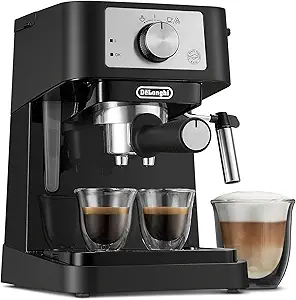 | Best Compact Manual Pick | Brand: De’Longhi | Model: Stilosa | Type: Manual espresso machine | VIEW ON AMAZON | See Our Full Breakdown |
| Breville Bambino Espresso Machine (Brushed Stainless Steel) | 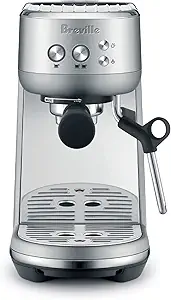 | Best for Fast, Consistent Milk Drinks | Power: 1560 W | Voltage: 110–120 V | Heating system: ThermoJet, 3-second heat-up | VIEW ON AMAZON | See Our Full Breakdown |
| CASABREWS CM5418 Compact Espresso Machine with Milk Frothing Steam Wand |  | Best for Hands-On Espresso Control | Model: CM5418 | Operation mode: Semi-automatic | Pressure: 20 bar | VIEW ON AMAZON | See Our Full Breakdown |
| Breville Barista Express Espresso Machine, Brushed Stainless Steel |  | Best All-in-One for a Dedicated Office Coffee Station | Model: BES870XL | Material: Brushed stainless steel | Power: 1600 W | VIEW ON AMAZON | See Our Full Breakdown |
| Nespresso Vertuo Pop+ Coffee and Espresso Maker by Breville, Matte Black and Gold |  | Best for Low-Effort Capsule Service | Brand: Nespresso | Model: BNV125MTB1BUC1 | Coffee system: Nespresso Vertuo capsules | VIEW ON AMAZON | See Our Full Breakdown |
More Details on Our Top Picks
Nespresso Vertuo Pop+ Coffee and Espresso Machine by De’Longhi, Black
The Nespresso Vertuo Pop+ suits a shared office where speed and simple controls matter more than hands-on espresso making. It heats in 30 seconds and brews five sizes, so coworkers can choose espresso or a larger coffee without learning grinder settings or tamping. Compared with the Lavazza BLUE Classy Mini, it offers more drink sizes and coffee-over-ice options, while keeping the capsule-based routine similarly straightforward. Its compact footprint and adjustable drip tray also make it easier to fit beside a kettle or accommodate taller mugs. The tradeoff is a Vertuo-only capsule system: there is no ground-coffee option, and the 25 fl oz tank may need frequent refills in a busy office. App connectivity adds software features, but does not change that limited brewing format.
Pros:- Brews five sizes, including single and double espresso and coffee over ice
- One-touch operation and 30-second heat-up suit short office breaks
- Compact design has a removable side-mounted tank and adjustable drip tray
- App connectivity supports software updates
Cons:- Works only with Nespresso Vertuo capsules
- The 25 fl oz tank can require frequent refills in a shared workspace
Best for: Small teams that want quick, consistent espresso and larger coffee drinks with minimal setup or training.
Not ideal for: Offices that want to use fresh-ground coffee, choose among capsule brands, or serve many drinks between water refills.
- Brand:Nespresso
- Model:Vertuo Pop+
- Manufacturer:De’Longhi
- Brew sizes:5, 8, and 12 oz coffee; single and double espresso
- Water tank capacity:25 fl oz
- Heat-up time:30 seconds
- Technology:Centrifusion
- Capsule compatibility:Nespresso Vertuo capsules
Our verdict“Choose the Vertuo Pop+ for a compact office that values quick, capsule-based variety over open coffee compatibility.”
IMUSA 6 or 3 Cup Electric Espresso Maker with Cool-touch Handle, Black
The IMUSA Electric Espresso Maker is a practical fit for an office where people want small, concentrated servings rather than full mugs of coffee. Its capacity can be set for six small cups or three larger servings, and the detachable base with an on/off switch keeps operation simple. Unlike the Nespresso Vertuo Pop+, it is not a capsule machine, so the brewing routine and drink format differ; it also lacks the Pop+’s broader coffee-size range. Cast aluminum construction and a cool-touch handle make the pot easy to move from its base, while its compact form can suit a desk-side kitchenette or travel use. The limitations are substantial for a shared break room: servings are only 1.5 oz each, and there is no grinder or milk frother for broader café-style drinks.
Pros:- Offers six small cups or three larger servings
- Detachable base includes an on/off switch and visual brewing indicator
- Cool-touch handle makes the carafe easier to handle
- Compact, portable design can work in an office or while traveling
Cons:- Limited to small 1.5 oz servings rather than full coffee mugs
- No built-in grinder or milk frother for more involved drinks
Best for: A small office or mobile worker who wants a portable brewer for short espresso-style servings and values a simple on/off routine.
Not ideal for: Teams that expect full-size coffees, milk-based drinks, or a machine that prepares varied drinks at the touch of a button.
- Capacity:6 or 3 cups (1.5 oz each)
- Material:Cast aluminum base
- Color:Black exterior with brown-tinted carafe
- Handle:Cool-touch
- Power switch:Detachable base with on/off switch
- Brewing indicator:Visual brewing indicator
Our verdict“Pick the IMUSA for portable, small-format espresso servings, but choose the Vertuo Pop+ if your office needs multiple mug sizes.”
Ninja Luxe Café Pro Series Espresso Machine (ES701)
The Ninja Luxe Café Pro Series is the most capable choice here for an office that wants espresso, drip coffee, cold brew, and hot water from one station. Its integrated burr grinder, weight-based dosing, guided Barista Assist, and built-in lever-action tamper help make fresh-ground drinks more repeatable across different users. The Ninja Luxe Café Premier also combines espresso, drip, and cold brew, but the Pro adds hot water and a more elaborate frothing setup, giving it a stronger case for teams with varied drink routines. That extra capability brings a real cost in counter space, upkeep, and learning time: this is not the quick capsule workflow of the Nespresso Vertuo Pop+. It makes sense when coworkers will use its range; for a team that mainly wants uncomplicated coffee, its many controls and regular cleaning demands are more machine than needed.
Pros:- Combines espresso, drip coffee, cold brew, and hot water in one machine
- Integrated conical burr grinder has 25 settings
- Weight-based dosing and Barista Assist support repeatable brewing
- Dual Froth System Pro offers five presets for hands-free milk texturing
Cons:- Many features and settings can take time for new users to learn
- Regular cleaning and descaling add work to a shared office routine
- More involved than capsule machines for quick, unattended brewing
Best for: A larger office with coffee enthusiasts who want freshly ground espresso, batch-style coffee options, hot water, and assisted milk texturing.
Not ideal for: Small teams seeking a compact, low-maintenance machine or coworkers who prefer capsule brewing without setup and cleanup.
- Model:ES701
- Functions:Espresso, drip coffee, cold brew, and hot water
- Grinder:Integrated conical burr grinder with 25 settings
- Dosing:Weight-based with built-in scale
- Frothing:Dual Froth System Pro with 5 presets
- Tamper:Integrated lever-action
- Included accessories:Portafilter, XL milk jug, baskets, cleaning kit, and descaling powder
Our verdict“Choose the Luxe Café Pro when an office will use its broad drink range and fresh-grind controls enough to justify the added complexity.”
Ninja Luxe Café Premier 3-in-1 Espresso Machine, Drip Coffee, & Cold Brew
The Ninja Luxe Café Premier fits a break room where some coworkers want espresso and others want a full cup of drip coffee or cold brew. Barista Assist, a built-in conical burr grinder, weight-based dosing, and assisted tamping reduce guesswork without forcing everyone into a capsule routine. Its 70 oz reservoir is a particular advantage for shared use: compared with the smaller-tank Nespresso Vertuo Pop+, it can serve more drinks before a refill. The Premier also covers three brewing styles with hands-free frothing, though it does not include the Pro model’s hot-water function. The tradeoff is a substantial countertop presence and more setup and cleaning than a one-touch pod brewer. This is better suited to a staffed kitchenette with room to spare than a cramped office counter or a team that wants the simplest possible workflow.
Pros:- Makes espresso, drip coffee, and cold brew
- 70 oz reservoir reduces refill frequency in shared use
- Built-in conical burr grinder offers 25 settings with weight-based dosing
- Guided brewing and hands-free dual frothing help standardize drinks
Cons:- Large footprint can crowd a small office counter
- Feature-rich workflow requires more setup and cleaning than a capsule machine
- Does not include the Pro model’s hot-water function
Best for: Workplaces with varied coffee preferences, enough counter space, and coworkers willing to use a grinder and clean a multi-function machine.
Not ideal for: Compact offices that need a small footprint, hot-water dispensing, or the fastest capsule-only routine.
- Model:ES601
- Functions:Espresso, drip coffee, and cold brew
- Water reservoir capacity:70 oz
- Grinder:Built-in conical burr grinder with 25 settings
- Drip coffee sizes:6, 8, 10, 12, 14, 16, and 18 oz
- Espresso styles:Double shot and quad shot
- Frothing system:Dual Froth with spinning whisk and automatic steamer
- Included accessories:Portafilter, milk jug, baskets, assisted tamper, cleaning tools, funnel, and descaling supplies
Our verdict“Choose the Premier for a shared office that needs several coffee styles and a larger reservoir, but not the Pro’s hot-water feature.”
Lavazza BLUE Classy Mini Single Serve Espresso Coffee Machine LB 300
The Lavazza BLUE Classy Mini is a space-conscious pick for an office that wants a dedicated single-serve espresso station rather than a machine for both espresso and full-size coffee. Its touch controls offer two selections, including one programmable dose, giving a little more control than a fixed one-button pod routine. Compared with the Nespresso Vertuo Pop+, however, it has fewer drink choices and is focused on Lavazza BLUE pods rather than a range of coffee sizes and over-ice brewing. The small 5.3-inch width makes it easier to place on a crowded counter, and the simple controls should be approachable for rotating coworkers. That compactness comes with a narrow purpose: it requires specific Lavazza BLUE pods and does not offer the format flexibility or broader menu of the Vertuo Pop+ or either Ninja machine.
Pros:- Compact 5.3-inch width suits a crowded kitchenette
- Touch controls keep operation simple for shared use
- One programmable dose allows some serving customization
Cons:- Only two coffee selections are available
- Requires Lavazza BLUE pods
- Does not offer the broader coffee-size range of the Nespresso Vertuo Pop+
Best for: A small office that wants a narrow-footprint, pod-based espresso machine with one customizable serving option.
Not ideal for: Teams that want full-size coffee, multiple brewing methods, or freedom to use different capsule systems.
- Model:LB 300
- Dimensions:5.3 × 13 × 10.2 in
- Coffee selections:2
- Controls:Touch
- Programmable dose:1 programmable free dose
- Preset dose:1 pre-set dose
- Pod compatibility:Lavazza BLUE pods
Our verdict“Choose the Classy Mini when counter space and straightforward pod espresso matter more than drink variety or capsule flexibility.”
Atatix Espresso Machine with Milk Frother, 20-Bar Pressure
The Atatix is a flexible fit for a small office where people want espresso drinks but may prefer different shot sizes. Its automatic single- and double-shot programs make routine brewing more straightforward, while manual extraction up to 102 seconds gives a hands-on user room to adjust output. Compared with the Fanttik Cafein 11, it is a better match for a shared counter with a steam wand and milk drinks, rather than a portable, capsule-based setup.
The tradeoff is that manual output is specified in grams, which may take some interpretation, and the water tank capacity is not listed. That makes it harder to plan refills for a busy break room. I’d choose it when drink variety and adjustable extraction matter more than known capacity or minimal staff involvement.
Pros:- Automatic single- and double-shot settings offer a simple routine for everyday brewing.
- Manual extraction allows more control over shot output.
- Steam wand supports cappuccinos, lattes, and other milk drinks.
- Detachable water tank and drip tray simplify cleaning.
Cons:- Water tank capacity is not specified, making refill planning difficult.
- Manual extraction output is given in grams, which may be less intuitive for some users.
- Making milk drinks requires hands-on steaming and cleanup.
Best for: Small office teams who want both preset espresso shots and adjustable manual extraction, plus milk drinks from a steam wand.
Not ideal for: Busy offices that need clearly specified water capacity or a low-involvement machine for frequent back-to-back drinks.
- Pressure:20 bar
- Temperature range:90–96°C
- Preheat time:30 seconds
- Automatic single shot:28 seconds; 25–40 g
- Automatic double shot:42 seconds; 55–85 g
- Manual extraction:Up to 102 seconds; 180–350 g
- Materials:ABS and stainless steel
- Features:Milk frother, detachable water tank and drip tray, cup-warming top
Our verdict“Choose the Atatix if your office wants milk drinks and adjustable shots in a compact machine, but skip it if tank capacity needs to be clear before buying.”
Fanttik Cafein 11 Portable Espresso Maker – 20 Bar Coffee Machine with USB‑C
The Fanttik Cafein 11 suits an office without a dedicated coffee counter, or a commuter who wants a machine that can leave the desk at the end of the day. At 825 g, it is far easier to carry than the counter-bound Casabrew 3700, and its built-in heating means it can make a shot without relying on an office kettle. Heating takes 135 seconds, so it is portable rather than instant; a full charge supports about eight 50 ml shots.
Its main limitation is flexibility: it works with Nespresso Original capsules, not ground coffee, and the small serving size means refills are part of the routine. Unlike the Atatix or Arecovas, it has no steam wand for lattes or cappuccinos. I’d pick it for individual espresso on the move, not as the shared machine for a team with varied drink preferences.
Pros:- Light 825 g build is practical for carrying between home, office, and travel.
- Built-in heating reaches 92°C without needing a separate kettle.
- USB-C charging can power the device while brewing.
- Capsule format keeps coffee preparation contained and simple.
Cons:- Limited to Nespresso Original capsules, reducing coffee choice.
- About 50 ml per shot means a small serving and frequent refills.
- No steam wand for preparing milk-based drinks.
Best for: Commuters, field staff, and solo workers who need a portable espresso maker that heats its own water and charges by USB-C.
Not ideal for: Shared offices seeking milk drinks, ground-coffee brewing, or larger servings without frequent water refills.
- Weight:825 g
- Pressure:20 bar
- Power input:30 W USB-C fast charging
- Heating time:135 seconds
- Extraction temperature:92°C
- Shots per full charge:Approximately 8 at 50 ml each
- Compatibility:Nespresso Original capsules
Our verdict“Pick the Fanttik for portable, individual capsule espresso, but choose a counter machine such as the Atatix if your office needs milk drinks or shared brewing.”
Arecovas Semi-Automatic Espresso Machine with Touchscreen and Milk Frother
The Arecovas gives a shared office more drink options than a basic espresso-only setup: it has single- and double-shot settings, an Americano button, and a steam wand. The touchscreen and real-time pressure gauge also make its controls and brewing feedback more visible than on the Casabrew 3700, which has a larger stated tank but no gauge. Its 1.2-liter removable tank and narrow 5.2-inch width help it suit a crowded break-room counter.
This remains a semi-automatic machine, not a one-touch solution for every task: someone must handle ground coffee, and milk steaming takes practice and cleanup. The Atatix offers manual extraction flexibility, while the Arecovas emphasizes preset drink choices and an on-screen interface. I’d favor the Arecovas when a team wants those options and can accept hands-on preparation.
Pros:- Single, double, and Americano options cover more office drink preferences.
- Touchscreen and real-time pressure gauge make settings and brewing feedback easy to see.
- Removable 1.2-liter tank supports several drinks before refilling.
- Compact 5.2-inch width helps preserve counter space.
Cons:- Semi-automatic brewing requires hands-on coffee preparation.
- Uses ground coffee rather than a capsule-based workflow.
- Milk steaming adds preparation and cleaning steps.
Best for: Small office teams that want espresso, Americanos, and milk drinks from a compact machine with visible controls.
Not ideal for: Teams seeking capsule convenience or fully automated drinks that do not require grinding, tamping, and milk steaming.
- Operation mode:Semi-automatic
- Pressure:20 bar
- Power:1300 watts
- Interface:Touchscreen with LED display and real-time pressure gauge
- Water tank capacity:1.2 L (40 oz)
- Dimensions:12 × 5.2 × 11.9 in (D × W × H)
- Brew options:Single shot, double shot, and Americano
- Included accessories:One-cup and two-cup filters, portafilter, tamper with spoon, instruction manual
Our verdict“Choose the Arecovas for a compact shared counter with several drink choices and visible controls, provided your team is comfortable with semi-automatic brewing.”
XIXUBX Compact Espresso Machine with Milk Frother, White
The XIXUBX focuses on a useful office combination: a compact vertical form, PID temperature control, and a steam wand for milk drinks. PID control is a differentiator against the Atatix, whose listed temperature range is adjustable but does not specify PID; it may appeal to teams that value steadier brewing conditions. The included stainless steel pitcher also means milk service is part of the package, unlike the portable Fanttik, which is built around capsule espresso rather than a shared counter routine.
That compact footprint comes with missing planning details: the product information gives no tank capacity or dimensions, so I can’t judge refill frequency or exact counter fit from the specs. It is also semi-automatic and calls for proper grinding and tamping. This is a better fit for a small office with someone willing to manage the coffee process than for a hands-off break room.
Pros:- PID temperature control supports more consistent brewing conditions.
- Steam wand and included stainless steel pitcher support milk drinks.
- Compact vertical design is intended for space-conscious counters.
- Detachable accessories help with everyday cleaning.
Cons:- Tank capacity and machine dimensions are not provided.
- Best results depend on proper grinding and tamping.
- Semi-automatic operation requires staff time for preparation and cleanup.
Best for: Small teams with limited counter space that want PID temperature control and a steam wand, and have someone comfortable grinding and tamping.
Not ideal for: Office managers who need confirmed machine dimensions or tank capacity, or teams that want brewing without manual coffee preparation.
- Type:Semi-automatic espresso machine
- Pressure:20 bar
- Temperature control:PID
- Brewing time:22–30 seconds
- Milk frother:Steam wand
- Included accessory:Stainless steel milk frothing pitcher
- Design:Compact vertical structure
- Warranty:1 year
Our verdict“The XIXUBX suits a space-conscious office that values PID control and milk drinks, but its missing capacity and size details make it a less certain fit for tightly planned counters.”
Casabrew 3700 Essential Stainless Steel Espresso Machine with Steam Wand
The Casabrew 3700 is the most straightforward choice here for an office that wants a larger stated water reserve. Its 43.9 oz removable tank reduces refill interruptions compared with the Arecovas’s 1.2-liter tank, and the included one- and two-cup filters suit both solo drinks and paired shots. The brushed stainless steel body also gives it a more conventional shared-counter presence than the portable Fanttik, which is designed for one person and capsule use.
It is still semi-automatic, so staff need to prepare ground coffee and clean the steam wand and drip tray. Unlike the Arecovas, the Casabrew has no built-in pressure gauge, leaving less visible feedback during extraction. I’d rank it for offices that value tank capacity and milk steaming over touchscreen controls or closely monitored brewing.
Pros:- 43.9 oz removable water tank supports multiple drinks between refills.
- One- and two-cup filters accommodate different serving needs.
- Steam wand can produce microfoam for milk-based drinks.
- Brushed stainless steel construction suits a shared kitchen counter.
Cons:- No built-in pressure gauge for monitoring extraction.
- Semi-automatic brewing requires hands-on preparation with ground coffee.
- Steam wand and drip tray need regular manual cleaning.
Best for: Small-to-medium office teams that make several espresso drinks between refills and want a steam wand with standard one- and two-cup filters.
Not ideal for: Teams that need a pressure gauge, automated preparation, or minimal cleanup after milk drinks.
- Pressure:20 bar
- Wattage:1350 watts
- Voltage:120 V
- Water tank capacity:43.9 oz
- Material:Brushed stainless steel
- Operation mode:Semi-automatic
- Filters included:One-cup and two-cup stainless steel filters
- Portafilter style:Double shot
Our verdict“Choose the Casabrew for a shared office that values a larger water tank and milk drinks, but look to the Arecovas if a pressure gauge and touchscreen matter more.”
De’Longhi Stilosa Compact Manual Espresso Machine with Milk Frother
For an office that wants a small, straightforward espresso setup without automatic features, the De’Longhi Stilosa keeps the essentials: a stainless steel boiler, portafilter with single- and double-shot filters, and a manual frother. Its two-level cup holder helps accommodate different cup heights without demanding much counter space. Compared with the Breville Bambino, it calls for more hands-on milk preparation and does not offer the same fast-heating convenience, but it provides a simpler manual route to espresso drinks. The tradeoff is time and skill: staff must handle the brewing and frothing themselves, and there is no built-in grinder. I’d choose it for a small team willing to use ground coffee and take turns making drinks, not an office expecting quick, consistent drinks with minimal involvement.
Pros:- Compact design helps preserve shared counter space.
- Stainless steel boiler provides a durable core component.
- Manual frother gives users control over milk texture.
- Two-level cup holder accommodates different cup sizes.
Cons:- Manual brewing and frothing take more attention than the automatic steaming on the Breville Bambino.
- No built-in grinder, so users need pre-ground coffee or a separate grinder.
Best for: Small offices with limited counter space and coffee drinkers willing to manually brew and froth drinks using pre-ground coffee.
Not ideal for: Busy teams seeking one-touch drinks, rapid back-to-back service, or a machine with an integrated grinder.
- Brand:De’Longhi
- Model:Stilosa
- Type:Manual espresso machine
- Boiler material:Stainless steel
- Included accessories:Portafilter, single filter, double filter, manual milk frother
- Cup holder:Two-level adjustable
Our verdict“Choose the Stilosa for a space-conscious office that values hands-on espresso making over speed and automation.”
Breville Bambino Espresso Machine (Brushed Stainless Steel)
The Breville Bambino is a strong fit for an office where short breaks matter: its three-second ThermoJet heat-up reduces the wait before brewing, and the automatic steam wand makes milk drinks less dependent on each person’s frothing technique. PID temperature control supports steady extraction, while its compact footprint suits a shared counter better than the larger Breville Barista Express. The Bambino’s convenience has limits, though. It handles only one or two cups per cycle, and its small reservoir can mean refills during heavier office use. It also lacks a built-in grinder, so the team must supply ground coffee or a separate grinder. I’d favor it over the manual De’Longhi Stilosa when speed and repeatable milk texture matter more than having full manual control.
Pros:- Three-second ThermoJet heat-up cuts waiting between office breaks.
- Automatic steam wand helps produce consistent microfoam with less technique.
- PID temperature control supports even espresso extraction.
- Compact design takes less counter space than the Barista Express.
Cons:- Small water reservoir may require frequent refilling in a shared office.
- No built-in grinder, unlike the Breville Barista Express.
- Limited to one- or two-cup servings per cycle.
Best for: Small teams that want quick espresso and more consistent milk drinks without giving up much counter space.
Not ideal for: High-volume offices needing a large reservoir, many drinks in succession, or an integrated grinder.
- Power:1560 W
- Voltage:110–120 V
- Heating system:ThermoJet, 3-second heat-up
- Portafilter size:54 mm
- Temperature control:PID
- Included accessories:1-cup and 2-cup filter baskets, milk jug, portafilter, tamper, steam wand tip cleaning tool, descaling powder
Our verdict“Pick the Bambino when quick heat-up and approachable milk steaming matter more than batch capacity or an all-in-one grinder.”
CASABREWS CM5418 Compact Espresso Machine with Milk Frothing Steam Wand
The CASABREWS CM5418 offers a compact semi-automatic setup with a built-in pressure gauge and a 34 oz removable tank. The gauge gives a developing home-barista more feedback while adjusting a shot, and the single- and double-shot filters cover common office servings. Its manual steam wand suits coworkers who want to texture milk themselves. Compared with the De’Longhi Stilosa, the CM5418 adds a pressure gauge and a larger listed tank, but neither machine removes the need for hands-on technique; the CASABREWS also calls for a cool-down period between steaming and brewing to avoid its overheating protection mode. A grinder is not included, and dialing in grind and tamping takes practice. This pick makes sense for a small office with an engaged coffee lead, rather than a team looking for automatic, quick-turn service.
Pros:- Pressure gauge gives users a visual reference while adjusting extraction.
- 34 oz detachable water tank supports multiple servings before refilling.
- Steam wand allows users to create their own milk texture.
- Compact stainless steel design suits smaller office counters.
Cons:- Requires a cool-down period between steaming milk and brewing to avoid overheating protection mode.
- Semi-automatic workflow requires practice with grinding and tamping.
- No built-in grinder is listed.
Best for: Small offices with a designated coffee enthusiast who wants feedback from a pressure gauge and manual control over espresso and milk.
Not ideal for: Teams that need simple, rapid drink service or expect to alternate between steaming and brewing without pauses.
- Model:CM5418
- Operation mode:Semi-automatic
- Pressure:20 bar
- Power:1350 W
- Water tank capacity:34 oz
- Material:Stainless steel
- Included components:Espresso machine, water tank, 1-cup filter, 2-cup filter, portafilter, tamper with spoon, instruction manual
Our verdict“Choose the CM5418 for a compact office station where one or more users are willing to learn and manage the manual workflow.”
Breville Barista Express Espresso Machine, Brushed Stainless Steel
Among these picks, the Breville Barista Express is the most complete traditional espresso station: its integrated conical burr grinder sends fresh grounds straight to the portafilter, while PID temperature control and low-pressure pre-infusion support more controlled extraction. The 67 oz tank also gives a shared station more room between refills than the Bambino’s smaller reservoir. That capacity and built-in grinding make it better suited to an office with a regular coffee routine, but the machine is not a shortcut to consistent drinks: users still need to grind, tamp, brew, and texture milk with the manual wand. It also occupies more counter space and takes more cleaning than the compact De’Longhi Stilosa. I’d rank it for a dedicated coffee corner, not a kitchenette where speed, simplicity, and a clear counter matter most.
Pros:- Integrated conical burr grinder delivers fresh grounds directly into the portafilter.
- PID control and low-pressure pre-infusion support more controlled extraction.
- 67 oz water tank reduces refill frequency compared with the Bambino.
- Manual steam wand supports milk texturing for lattes and cappuccinos.
Cons:- Manual grinding, tamping, steaming, and dialing in require time and practice.
- Larger footprint is less suitable for crowded shared counters.
- Multiple components make cleaning and maintenance more involved.
Best for: Offices with a dedicated coffee station and coworkers willing to learn espresso preparation, use fresh beans, and maintain the machine.
Not ideal for: Small or high-traffic offices that need one-touch drinks, minimal cleanup, or a machine with a compact footprint.
- Model:BES870XL
- Material:Brushed stainless steel
- Power:1600 W
- Voltage:120 V
- Water tank capacity:67 oz
- Bean hopper capacity:1/2 lb
- Portafilter size:54 mm
- Features:Integrated grinder, PID temperature control, steam wand
- Warranty:1-year limited
Our verdict“The Barista Express suits an office ready to give espresso its own counter space and assign time to preparation and upkeep.”
Nespresso Vertuo Pop+ Coffee and Espresso Maker by Breville, Matte Black and Gold
The Nespresso Vertuo Pop+ takes a different approach from the portafilter machines in this lineup: insert a Vertuo capsule and use one-touch brewing for espresso or several larger coffee sizes. Its 30-second heat-up and automatic capsule ejection make it a convenient shared option when coworkers have little time or interest in grinding, tamping, and cleaning a steam wand. Compared with the Breville Bambino, it asks much less of the user, but it relies on the Vertuo capsule system and does not offer the same manual control over extraction or milk texturing. The 37 fl. oz. tank is removable and positioned on the side, which can help with placement, though regular refills remain part of office upkeep. I’d choose it for easy, varied single-serve drinks, not for teams seeking traditional espresso preparation.
Pros:- One-touch operation makes it accessible to coworkers with different coffee routines.
- Brew options include espresso and coffee sizes from 5 to 18 oz.
- 30-second heat-up shortens the wait for a single serving.
- Automatic capsule ejection reduces handling of used capsules.
Cons:- Uses Nespresso Vertuo capsules rather than ground coffee or a portafilter.
- Does not include a steam wand for texturing milk.
- The 37 fl. oz. tank needs refilling as the office makes drinks.
Best for: Offices that prioritize simple, quick single-serve coffee and espresso in several sizes over hands-on brewing and milk steaming.
Not ideal for: Coffee enthusiasts who want to use ground beans, adjust espresso preparation, or make milk drinks with an integrated steam wand.
- Brand:Nespresso
- Model:BNV125MTB1BUC1
- Coffee system:Nespresso Vertuo capsules
- Brew sizes:5, 8, 12, and 18 oz coffee; single and double espresso
- Water tank capacity:37 fl. oz.
- Heat-up time:30 seconds
- Power and voltage:1500 W; 120 V
- Dimensions:14 x 8.6 x 10.4 in
- Operation:Fully automatic
Our verdict“Pick the Vertuo Pop+ for a low-effort, capsule-based office coffee station, not for traditional espresso control or fresh-milk steaming.”

How We Picked
I ranked these machines by how well they fit shared workplace use, not by feature count alone. I weighed everyday usability, drink consistency, brewing and milk options, counter footprint, maintenance demands, and how many steps an employee must manage to make a cup. An office machine should work for more than its most enthusiastic coffee maker, so clear workflows and manageable cleanup mattered alongside beverage range.
The ranking favors machines that balance broad usefulness with a realistic office routine. The Ninja Luxe Café Pro Series leads for its versatility; pod-based picks rank well for low-effort serving, while manual machines earn their place for teams that value control and fresh preparation. Compactness, portability, or a narrow brewing style can make a machine a strong fit for a specific workplace, but those advantages do not automatically outweigh extra effort or limited drink flexibility. I treat the two Vertuo Pop+ listings as distinct versions, while recognizing that their core pod-based workflow is similar.
Factors to Consider When Choosing Office Espresso Machine
Choosing an office espresso machine is less about chasing the most elaborate feature set and more about matching the machine to shared habits. I would start with who will make drinks, how often the machine will be used, and who will handle routine cleaning.
Match the workflow to the team
In a shared office, every extra step can slow the queue or lead to inconsistent drinks. Pod machines keep preparation straightforward, while semi-automatic models rely on users to grind, dose, tamp, and often steam milk. Before choosing, ask whether colleagues actually want to learn a repeatable espresso routine or simply want a quick cup between meetings. A more hands-on machine can reward a small group of coffee-minded users, but it may frustrate a larger team with mixed experience. Avoid buying around the habits of one power user if everyone else needs a simpler process.
Estimate daily volume and peak demand
Daily cup totals matter, but the busiest ten minutes may matter more. A machine that serves one drink at a time can be fine for a small team with staggered breaks, yet become a bottleneck when several people arrive together. Think about whether users make espresso shots, milk drinks, or larger coffees, since those routines take different amounts of time. A broad drink menu can reduce the need for separate appliances, but more options do not automatically mean faster service. If demand is unpredictable, favor a workflow people can repeat quickly and plan a simple queue or brew station around it.
Plan for cleanup and shared ownership
Milk residue, used grounds, drip trays, and capsule containers all need regular attention. In an office, neglect often comes from unclear responsibility rather than a difficult machine, so assign cleaning tasks before the purchase rather than after the first mess. Pod systems simplify grounds handling but still create waste and need routine care. Machines with steam wands can support café-style drinks, though the wand must be wiped and purged after use. A realistic maintenance routine is a better buying signal than a long feature list that nobody has time to use.
Measure the full workspace footprint
Check the available counter area, overhead clearance, nearby outlets, and room for mugs, beans, milk, and cleaning supplies. Compact machines can preserve valuable workspace, but a narrow body does not tell you whether the water reservoir or drip tray is easy to access. Consider the space needed to open lids, remove parts, and refill supplies without shifting other office equipment. Portable models make sense when coffee needs to move between rooms or locations, but they are not a substitute for a high-throughput shared station. Measure the working area around the machine, not just the appliance dimensions.
Choose a drink range people will actually use
Ask the team which drinks are regular habits rather than occasional curiosities. Espresso-only users may prefer a focused setup, while a mixed office could benefit from options that include larger coffee servings or milk-based drinks. A machine with several brew styles may replace separate equipment, but added flexibility can bring more controls, parts, and cleaning steps. Do not assume every employee will learn specialty settings just because they are available. Prioritize the few drinks that will be made most often, then decide whether the extra range justifies a more involved routine.
Decide how much control is worth the effort
Grinding fresh beans and adjusting preparation can give interested users more influence over the cup, but those choices create training and consistency challenges across a team. Capsule systems narrow the choices and make repeat servings simpler, at the cost of relying on compatible capsules and producing more single-use packaging. A built-in grinder can reduce the need for a separate appliance, though it does not remove the need to dose, clean, and learn the machine. Choose control when several people are willing to share the craft and upkeep. If the office mainly wants dependable drinks with little instruction, ease of use should carry more weight.
Frequently Asked Questions
Is a pod espresso machine or a semi-automatic machine better for a shared office?
I would choose a pod model when many people need a quick drink without training or shared preparation skills. A semi-automatic option makes more sense when a smaller group wants to grind, adjust, and steam milk themselves. The tradeoff is not only taste control; it is also who will handle cleanup and keep the routine consistent. A busy office with mixed experience will usually benefit from fewer steps, while a coffee-focused team may welcome more involvement. Match the machine to the least experienced regular user, not just the most enthusiastic one.
Can one machine serve a team that prefers different drinks?
It can, but first distinguish genuine daily preferences from occasional requests. The Ninja Luxe Café models offer a wider range of drink styles than focused espresso machines, while pod options can make individual servings straightforward. A broader menu may help one appliance serve more people, though it can add controls and maintenance. Milk drinks also introduce extra cleanup that plain espresso or coffee does not require. If preferences vary widely, ask employees what they drink most often and choose for those regular habits.
What is the biggest mistake when buying an espresso machine for an office?
A common mistake is choosing for beverage quality or features without planning for shared use. If no one owns refilling, cleaning, and clearing used grounds or capsules, even an easy machine can become an unpleasant station. Another frequent mismatch is buying a manual machine for a team that expects push-button convenience. Check the workspace, peak-time demand, and likely maintenance routine before focusing on specialized features. A machine that fits the office’s habits will serve more people than one that looks impressive on a feature list.
Is a portable espresso maker practical as the main office machine?
A portable model such as the Fanttik Cafein makes the most sense when mobility is a real requirement, such as moving between rooms or working away from a fixed kitchen. For a permanent shared station, portability may matter less than easy repeat serving, accessible water capacity, and simple cleanup. Also check how its power and charging routine fit the way the office works. A portable machine may suit one person better than a group that wants several drinks in quick succession. Treat it as a specialized fit rather than assuming its compactness makes it the best shared option.
How much should I prioritize a built-in grinder for office use?
A built-in grinder can keep the setup compact and support fresh-bean preparation, which appeals to users who want more control over espresso. It also adds a step to each workflow and requires someone to manage beans, grounds, and grinder cleaning. In a shared office, varying user technique can make results less consistent than a simpler serving system. If a few trained users will take responsibility, the added control may be worthwhile. If staff mainly want quick drinks with minimal instruction, prioritize a simpler routine over an integrated grinder.
Conclusion
For most shared workspaces, I recommend the Ninja Luxe Café Pro Series as the best overall because it combines espresso with a broader drink range. For best value in convenience, consider the Nespresso Vertuo Pop+ when quick, individual servings matter more than hands-on control. The Breville Barista Express is my best premium choice for a team willing to learn its grinder-and-espresso workflow, while the De’Longhi Stilosa is a straightforward best pick for beginners who want manual espresso without a larger, more elaborate setup. For specific needs, choose the Fanttik Cafein when portability leads, the Lavazza BLUE Classy Mini for a compact capsule-based station, or the IMUSA electric espresso maker for a simple, distinctive brewing routine. The right choice is the one your team can use consistently and keep clean.
Evergreen bestsellers Picks
bestsellers
As an affiliate, we earn on qualifying purchases.