Searching for the best 3D printers in 2026? The top pick, the Bambu Lab A1, offers a balanced mix of ease of use and reliable performance, making it ideal for hobbyists and beginners. The FlashForge AD5X stands out for high-speed, multi-color printing, perfect for creative projects, while the Bambu Lab A1 Combo adds multi-color capabilities with a compact design. These options highlight the main tradeoffs: cost versus features, ease versus versatility, and speed versus multi-material support. Keep reading for a detailed comparison to help you decide which 3D printer aligns with your goals.

Get business pricing on office and shipping supplies
- Business-only prices and quantity discounts
- Tax-exempt purchasing
- Multiple users, one account, clear invoices
Complete the kit


Key Takeaways
- The top-performing printers balance ease of use with advanced features like multi-material support and high-speed printing.
- Multi-color and multi-material capabilities are increasingly important but come with higher costs and complexity.
- Build volume varies significantly, making it essential to match your project size with the printer’s capacity.
- Auto-leveling and quick setup features save time but may add to the overall price.
- Choosing between FDM and resin printers depends heavily on your intended applications and desired detail level.
| Bambu Lab A1 3D Printer, Ready-to-Use FDM 3D Printer for Beginners and Kids |  | Best Overall for Ease and Precision in a Compact Form | Product Dimensions: 21.76 x 20.83 x 12.87 inches | Item Weight: 22 pounds | Automatic Calibration: Yes | VIEW ON AMAZON | See Our Full Breakdown |
| FlashForge AD5X Multi-Color 3D Printer, CoreXY, 600mm/s High-Speed, Auto Leveling, 300°C Extruder, 220x220x220mm Build Volume | 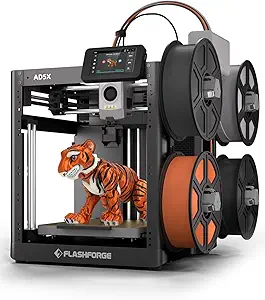 | Best for Fast, Multi-Color Prototyping and Batch Production | Build Volume: 220x220x220mm | Max Printing Speed: 600mm/s | Extruder Temperature: 300°C | VIEW ON AMAZON | See Our Full Breakdown |
| Bambu Lab A1 Combo + LED Lamp Kit, Multi-Color 3D Printing with AMS Lite |  | Best for Creative and Illuminated Multi-Color Projects | Product Dimensions: 23.01 x 21.06 x 16.77 inches | Item Weight: 28.5 pounds | Supports Multi-Color: Yes, with AMS lite | VIEW ON AMAZON | See Our Full Breakdown |
| Bambu Lab P1S 3D Printer, Ready-to-Use FDM 3D Printer |  | Best for Multi-Color and Multi-Material Enclosed Printing | Color Capabilities: Up to 16 colors | Speed: 500mm/s | Enclosure: Fully enclosed | VIEW ON AMAZON | See Our Full Breakdown |
| Creality SPARKX i7 Nano Combo 3D Printer, Multi-Color, Auto-Leveling, Auto Filament Refill |  | Best Compact Multi-Color with Automated Filament Handling | Build Size: 260×260×255mm | Color Support: Multi-color with auto switching | Auto Leveling: Yes | VIEW ON AMAZON | See Our Full Breakdown |
| FLASHFORGE Adventurer 5M 3D Printer with Auto Leveling and High-Speed Printing |  | Best for Speed and Ease of Use | Print Size: 220x220x220mm | Max Speed: 600mm/s | Extruder Temperature: 280°C | VIEW ON AMAZON | See Our Full Breakdown |
| FLASHFORGE Creator 5 Pro 3D Printer with 4 Toolheads, Multi-Material & Color Printing |  | Best for Complex Multi-Material Projects | Product Dimensions: 16 x 14 x 18 inches | Item Weight: 39 pounds | Active Heated Chamber: 65°C | VIEW ON AMAZON | See Our Full Breakdown |
| Bambu Lab P2S Combo, P2S 3D Printer & AMS 2 Pro, Multi-Color 3D Printing |  | Best for Ease and Versatility in Multi-Color Printing | Print Speed: 600mm/s | Setup Time: 15 minutes | Filament Drying Temperature: 65°C | VIEW ON AMAZON | See Our Full Breakdown |
More Details on Our Top Picks
Bambu Lab A1 3D Printer, Ready-to-Use FDM 3D Printer for Beginners and Kids
The Bambu Lab A1 stands out as the most balanced option, combining high-speed, precise printing with user-friendly features like automatic calibration and a touchscreen interface. Compared to the FlashForge AD5X, it offers simpler setup and quieter operation, making it ideal for beginners, though it lacks the high-speed capabilities of the AD5X. The requirement of AMS lite for multi-color printing can add complexity and cost, but this setup ensures high-quality multi-color results. Its moderate weight and compact size make it suitable for small spaces, while its complex features might be overwhelming for complete novices. Overall, this model offers a good mix of performance and usability for those starting out or working with kids.
Pros:- High-speed and precise printing with automatic calibration
- Supports multi-color printing with AMS lite
- Quiet operation with active motor noise canceling
- User-friendly touchscreen interface
Cons:- Requires AMS lite for multi-color printing, which may involve additional purchase
- Relatively heavy at 22 pounds, may be less portable
- Complex features might be overwhelming for absolute beginners
Best for: Beginners, families, and educational settings that prioritize ease of use and precise results
Not ideal for: Advanced users seeking high-speed batch production or multi-color printing without additional purchases
- Product Dimensions:21.76 x 20.83 x 12.87 inches
- Item Weight:22 pounds
- Automatic Calibration:Yes
- Supports Multi-Color:Yes, with AMS lite
- Operation Noise Level:Quiet
- Touchscreen Interface:Yes
Our verdict“This printer is best suited for beginners and families who want straightforward, accurate printing in a compact, quiet package.”
FlashForge AD5X Multi-Color 3D Printer, CoreXY, 600mm/s High-Speed, Auto Leveling, 300°C Extruder, 220x220x220mm Build Volume
The FlashForge AD5X excels in high-speed multi-color printing, reaching speeds up to 600mm/s, making it ideal for rapid prototyping and batch manufacturing. Its auto bed leveling ensures consistent quality, while the versatile nozzle system supports detailed work. Compared with the Bambu Lab A1, it offers much faster speeds, but this can come with increased noise and more complex setup requirements. The smaller build volume may limit larger projects, but its speed and multi-color capabilities make it a top choice for creative professionals needing quick turnarounds. However, the advanced features and speed come at a higher price point and may demand a higher technical skill level for optimal use.
Pros:- Supports multi-color printing with up to 4 colors simultaneously
- Rapid printing speeds up to 600mm/s
- Automatic bed leveling for consistent quality
- Versatile nozzle options for detailed and large prints
Cons:- Complex setup may require technical knowledge
- High-speed operation can generate more noise
- Price point is higher compared to basic 3D printers
Best for: Prototypers, small batch manufacturers, and creative professionals needing rapid, multi-color output
Not ideal for: Hobbyists seeking a simple, quiet machine or those working on larger models due to limited build size
- Build Volume:220x220x220mm
- Max Printing Speed:600mm/s
- Extruder Temperature:300°C
- Auto Leveling:Yes
- Connectivity:Mobile app control
- Nozzle Sizes:0.25mm to 0.8mm
Our verdict“This printer is best for experienced users focused on quick, multi-color projects and rapid prototyping workflows.”
Bambu Lab A1 Combo + LED Lamp Kit, Multi-Color 3D Printing with AMS Lite
The Bambu Lab A1 Combo extends the capabilities of the standard A1 with an added LED lamp kit, making it perfect for creating illuminated models and decorative items. Its high-speed, precise printing with automatic calibration remains the core strength, and support for multi-color printing with AMS lite ensures vibrant designs. Compared to the Creality SPARKX i7 Nano, it offers more advanced multi-color features and quieter operation, but it is heavier and requires more space. This model suits creative users who want to combine multi-color printing with lighting effects for artistic projects or gifts. The main tradeoff involves larger size and cost, which might pose storage or budget challenges.
Pros:- Supports multi-color printing for vibrant, multi-material designs
- Includes LED lamp kit for illuminated models
- High-speed, precise printing with automatic calibration
- Quiet operation with active motor noise canceling
Cons:- Requires AMS lite for multi-color printing, which may need an additional purchase
- Relatively large and heavy, needing ample space
- Higher cost due to bundled accessories
Best for: DIY enthusiasts, artists, and hobbyists who want to produce illuminated, multi-color, and decorative models
Not ideal for: Users with limited space or those seeking a simple, budget-friendly printer for basic models
- Product Dimensions:23.01 x 21.06 x 16.77 inches
- Item Weight:28.5 pounds
- Supports Multi-Color:Yes, with AMS lite
- Includes LED Lamp Kit:Yes
- Automatic Calibration:Yes
- Operation Noise Level:Quiet
Our verdict“This model is ideal for creative minds aiming to craft illuminated, multi-color artistic pieces in a larger, feature-rich setup.”
Bambu Lab P1S 3D Printer, Ready-to-Use FDM 3D Printer
The Bambu Lab P1S offers a fully enclosed design, making it a solid choice for consistent multi-material and multi-color printing, especially with its support for up to 16 colors. Its high-speed capabilities—up to 500mm/s—and automatic bed leveling streamline workflow for users of all levels. Compared with the FlashForge AD5X, the P1S’s enclosed build helps improve print quality on sensitive materials like PETG or TPU, but it does not support carbon or glass fiber reinforced filaments. Its quick setup and multi-material versatility make it suitable for educational and professional environments, though some advanced filament types are off-limits. The tradeoff is that it’s less adaptable to certain specialized filaments and may require investment in compatible materials.
Pros:- Vibrant multi-color/multi-material printing support
- High-speed operation at 500mm/s
- Automatic bed leveling for easy operation
- Enclosed design improves print quality and safety
Cons:- Does not support carbon or glass fiber reinforced filaments
- Higher cost and complexity compared to basic models
- Requires compatible multi-color filament management
Best for: Educational institutions, professional prototyping, and multi-material hobbyists seeking reliable, multi-color, enclosed printing
Not ideal for: Users needing to print with fiber-reinforced or highly specialized filaments like carbon fiber or glass fiber
- Color Capabilities:Up to 16 colors
- Speed:500mm/s
- Enclosure:Fully enclosed
- Supported Filaments:PLA, PETG, TPU, PVA, PET, ABS, ASA, PAs, PC
- Auto Bed Leveling:Yes
- Build Size:260×260×255mm
Our verdict“This printer is best for professional, educational, or multi-material projects where consistent quality and enclosure benefits are priorities.”
Creality SPARKX i7 Nano Combo 3D Printer, Multi-Color, Auto-Leveling, Auto Filament Refill
The Creality SPARKX i7 Nano Combo offers a notably compact design paired with advanced features like automatic filament switching and auto-leveling. Its large build volume of 260×260×255mm makes it versatile for both miniature and larger projects. Unlike the Bambu Lab P1S, it emphasizes convenience with auto filament refill and auto feed, reducing user intervention. However, its setup can be complex, especially for newcomers, and it’s more specialized in filament handling. The auto filament features are a significant advantage for those doing multi-color work, but the system’s complexity might require a learning curve. It suits users who want a space-saving machine with multi-color capabilities, but less experienced hobbyists may find initial setup challenging.
Pros:- Supports multi-color printing with automatic filament switching
- Large build volume suitable for diverse projects
- Auto filament refill and auto-leveling for ease of use
- Space-saving, compact design
Cons:- Complex initial setup may be intimidating for beginners
- Limited to specific filament types, not supporting fibers
- Potentially higher cost due to advanced features
Best for: Hobbyists and makers needing a space-efficient, multi-color printer with automated filament management
Not ideal for: Beginners reluctant to handle complex setup procedures or users focusing on fiber-reinforced materials
- Build Size:260×260×255mm
- Color Support:Multi-color with auto switching
- Auto Leveling:Yes
- Auto Filament Refill:Yes
- Auto Feed & Retract:Yes
- Space:Compact
Our verdict“This model is ideal for experienced hobbyists seeking a compact, automated multi-color printer that handles larger projects with minimal manual intervention.”
FLASHFORGE Adventurer 5M 3D Printer with Auto Leveling and High-Speed Printing
The FLASHFORGE Adventurer 5M stands out for its impressive high-speed capabilities of up to 600mm/s and automatic bed leveling, which simplifies setup compared to traditional manual methods. Compared to the Bambu Lab P2S, it offers faster print speeds but may produce more noise during operation, making it less ideal for quiet environments. Its large build volume of 220x220x220mm suits larger projects, yet the complex setup process could challenge beginners. This model excels for users needing rapid prototyping or quick-turnaround prints but may be less suited for those who prioritize ultra-quiet operation or a plug-and-play experience. Its direct drive extruder reaching 280°C supports a range of filaments, though it limits compatibility to those compatible with direct drive systems. The real-time app monitoring enhances remote workflow, but high-speed operation can generate increased noise and potential mechanical wear over time.Pros:- Automatic bed leveling for quick, hassle-free setup
- High-speed printing up to 600mm/s accelerates production
- Remote app monitoring enhances workflow flexibility
- Versatile nozzle options with quick changes
Cons:- Complex initial setup may require technical experience
- Limited filament compatibility with direct drive extruder
- Potential noise during high-speed operations
Best for: Hobbyists or small professional teams seeking fast, reliable prints with minimal manual calibration.
Not ideal for: Beginners or quiet workspace users who need a simple, silent printer with straightforward setup.
- Print Size:220x220x220mm
- Max Speed:600mm/s
- Extruder Temperature:280°C
- Nozzle:3S Detachable Nozzle
- Structure:CoreXY All Metal
- Print Technology:FDM
Our verdict“This printer makes the most sense for users who prioritize speed and automation over absolute quiet and simplicity.”
FLASHFORGE Creator 5 Pro 3D Printer with 4 Toolheads, Multi-Material & Color Printing
The FLASHFORGE Creator 5 Pro is designed for multi-material, multi-color printing thanks to its four independent toolheads, which surpasses the capabilities of the Bambu Lab P2S’s single extruder system. Its heated chamber up to 65°C significantly reduces warping, making it ideal for ABS and similar materials, while the high-speed of 600mm/s ensures rapid production. However, its complex setup and large, heavy frame mean it’s less accessible for newcomers or those with limited space. It’s perfect for users needing to produce intricate, multi-colored parts with consistent quality, but less suitable for hobbyists seeking portability or simplicity. The inclusion of safety features like HEPA filtration adds value for professional settings, though the absence of detailed pricing info could be a barrier for budget-conscious buyers.Pros:- Supports multi-material and multi-color printing with four independent toolheads
- Heated chamber up to 65°C reduces warping for complex materials
- High-speed printing up to 600mm/s with good stability
- Safety features including HEPA filtration
Cons:- Setup complexity demands some technical expertise
- Heavy and large size limits portability
- Price may be prohibitive for casual users
Best for: Professional makers or small industrial teams requiring multi-material, multi-color prototypes or parts.
Not ideal for: Hobbyists or educational users who need a lightweight, straightforward machine with simple operation.
- Product Dimensions:16 x 14 x 18 inches
- Item Weight:39 pounds
- Active Heated Chamber:65°C
- Print Speed:up to 600mm/s
- Number of Toolheads:4
- Filament Compatibility:ABS, PC, PA
Our verdict“This printer caters best to users focused on complex, multi-material production rather than casual or portable use.”
Bambu Lab P2S Combo, P2S 3D Printer & AMS 2 Pro, Multi-Color 3D Printing
The Bambu Lab P2S Combo excels at rapid, precise multi-color and multi-material printing, making it suitable for both professionals and serious hobbyists. Its automatic calibration and quick setup within 15 minutes streamline the workflow, especially compared to the more complex setup of the Creator 5 Pro. The AMS 2 Pro adds valuable features like built-in filament drying and adaptive airflow, which help maintain consistent quality across diverse materials. However, the P2S alone cannot support multi-color printing without the combo, which could be confusing for newcomers. Its learning curve may be steep for beginners unfamiliar with multi-material systems, yet it offers a high level of versatility once mastered. This pick is best for those who want fast, reliable multi-color output with minimal fuss.Pros:- High-speed printing up to 600mm/s with high accuracy
- Automatic calibration and quick setup for efficiency
- Supports multi-color and multi-material printing with AMS 2 Pro
- Built-in filament drying and adaptive airflow optimize print quality
Cons:- Multi-color support requires the Combo version, adding complexity
- Steep learning curve for users new to multi-material systems
- Complex features may overwhelm casual users
Best for: Advanced hobbyists or professionals seeking a versatile, fast multi-color printer with automated features.
Not ideal for: Absolute beginners or users with limited space who prefer a simple, single-material machine.
- Print Speed:600mm/s
- Setup Time:15 minutes
- Filament Drying Temperature:65°C
- Chamber Temperature:50°C
- Airflow System:Adaptive Airflow
- Filament Compatibility:Multi-material, Multi-color (AMS 2 Pro)
Our verdict“This printer benefits users who need fast, versatile multi-color printing and are comfortable with advanced features.”
How We Picked
The selection process focused on evaluating performance, usability, build quality, and value. I prioritized printers that offer reliable operation, straightforward setup, and versatility for different skill levels and project types. Cost-effectiveness was also key, but I didn’t compromise on features that significantly enhance the user experience, such as auto-leveling or multi-material support. The ranking reflects a combination of these factors, aiming to recommend options suitable for beginners, hobbyists, and more advanced users alike.Factors to Consider When Choosing 3d Printers
Choosing the right 3D printer involves understanding several key factors that impact both your initial experience and long-term satisfaction. Beyond specs, consider how easy the printer is to set up and maintain, the quality of the print results, and whether its features align with your projects. Budget constraints, space, and future expansion plans also play crucial roles. Making an informed decision means weighing these broader considerations carefully.Print Quality and Resolution
Print quality depends on the printer’s resolution and consistency. Higher resolution often means finer details and smoother surfaces, which is essential for intricate models or professional prototypes. However, achieving high resolution can slow down print times and increase costs. Consider your primary use—if detailed miniatures or precision parts matter, prioritize a model with better resolution capabilities, but if speed is more critical, a slightly lower resolution may suffice.
Build Volume
The size of the build volume determines the maximum dimensions of your projects. Larger volumes enable printing bigger models or multiple parts at once, but they also typically increase the printer’s cost and size. Think about the projects you plan to create—if small prototypes or jewelry are your focus, a compact printer will do; for larger art pieces or functional parts, look for models with bigger build areas.
Ease of Use and Setup
Ease of setup can significantly impact your initial experience. Features like auto-leveling, touchscreen controls, and straightforward assembly reduce frustration and save time. Some printers come pre-assembled or with quick-start guides, which benefit newcomers. Conversely, more complex models with extensive manual calibration might suit experienced users willing to invest time for customization and optimization.
Material Compatibility
Material support impacts the variety of projects you can pursue. Standard FDM printers work with common filaments like PLA, ABS, and TPU, but advanced models support multi-material or multi-color printing, opening creative possibilities. Resin printers, on the other hand, excel at high-detail work but require different resins and safety precautions. Match your material needs with the printer’s capabilities to avoid costly upgrades or limitations.
Cost and Upkeep
Initial cost is just part of the total investment. Higher-end printers often have better durability, faster print speeds, and more features, but maintenance and material costs can add up. Consider the availability and price of spare parts, replacement nozzles, and consumables. Budget models might save money upfront but may sacrifice speed, resolution, or reliability over time, so balance cost with expected longevity and performance.
Frequently Asked Questions
Is a resin 3D printer better than an FDM printer for detailed models?
Resin 3D printers generally produce higher-resolution, more detailed models compared to FDM printers, especially for intricate designs like miniatures or jewelry. Resin printing uses liquid resin cured by UV light, resulting in finer surface finishes. However, resin printers tend to be messier, require more post-processing, and involve handling chemicals, which might be a consideration for beginners. For high-detail projects, a resin printer makes sense, but for larger or less detailed parts, an FDM printer may be more practical and cost-effective.
How important is auto-leveling on a 3D printer?
Auto-leveling significantly simplifies the setup process by automatically calibrating the print bed, ensuring consistent first layers and reducing print failures. It’s especially valuable for beginners who may struggle with manual bed leveling. While it adds to the initial cost, auto-leveling features can save time and frustration in the long run, making the printing process more reliable and predictable. For experienced users, manual leveling may still suffice, but auto-leveling is generally a worthwhile upgrade for most users.
Can I print with multiple materials on a budget-friendly printer?
Most budget-friendly FDM printers support only a single filament at a time, limiting multi-material printing capabilities. If multi-material or multi-color projects are a priority, you’ll typically need to invest in a more advanced model with dual extruders or multi-material systems. While some affordable options offer basic multi-filament support, they often come with tradeoffs in complexity, reliability, or print quality. For serious multi-material work, budgeting for a dedicated multi-extruder or multi-material machine is advisable.
What should I consider if I want to print large models?
Printing large models requires a printer with a sizeable build volume, but larger printers often come with increased cost, size, and sometimes reduced speed. You should also consider the stability and rigidity of the frame, as larger prints require consistent extrusion and adhesion. Additionally, larger builds mean longer print times and higher material consumption, so plan for the associated costs and potential print failures. If large projects are frequent, investing in a model with a generous build area and reliable performance is worth it.
Are multi-material 3D printers worth the extra cost?
Multi-material 3D printers open up creative possibilities by allowing multi-color and multi-material prints, which can enhance the realism and functionality of your models. However, they tend to be more complex to operate, require more maintenance, and often come at a higher price point. If you are a hobbyist or professional needing multi-material capabilities for specific projects, the investment can be justified. For occasional use or beginners, single-material printers often provide more straightforward and reliable results at a lower cost.
Conclusion
For casual hobbyists and beginners, the Bambu Lab A1 offers a reliable, easy-to-use experience with solid performance. Those looking for high-speed or multi-color options should consider the FlashForge AD5X or the Bambu Lab A1 Combo, which add versatility at a moderate price. Professionals or users with specific needs—like large build volumes or multi-material printing—will find models like the FLASHFORGE Creator 5 Pro or the Bambu Lab P2S Combo better suited. Ultimately, your choice depends on your budget, project complexity, and desired features, but this lineup covers a range of priorities to help you make an informed decision.Halloween Picks
halloween
As an affiliate, we earn on qualifying purchases.