To choose the best security camera system for your office, look for expansion-friendly features like scalable cloud-based storage, easy integration with existing systems, and high-definition, wide-angle cameras for broader coverage. Remote access via apps and web portals makes management simple, while advanced analytics and facial recognition boost security. Regular updates and compatibility with future tech guarantee your system stays effective. Keep exploring to discover more ways to build a resilient, adaptable security setup.

Get business pricing on office and shipping supplies
- Business-only prices and quantity discounts
- Tax-exempt purchasing
- Multiple users, one account, clear invoices
Key Takeaways
- Support for easy scalability with additional cameras, storage, and management tools to grow with your office needs.
- Cloud-based solutions enabling remote management and flexible storage options.
- High-definition cameras with wide-angle lenses for comprehensive coverage.
- Compatibility with future upgrades and integration with other smart office systems.
- Regular updates and maintenance to ensure security and system resilience over time.
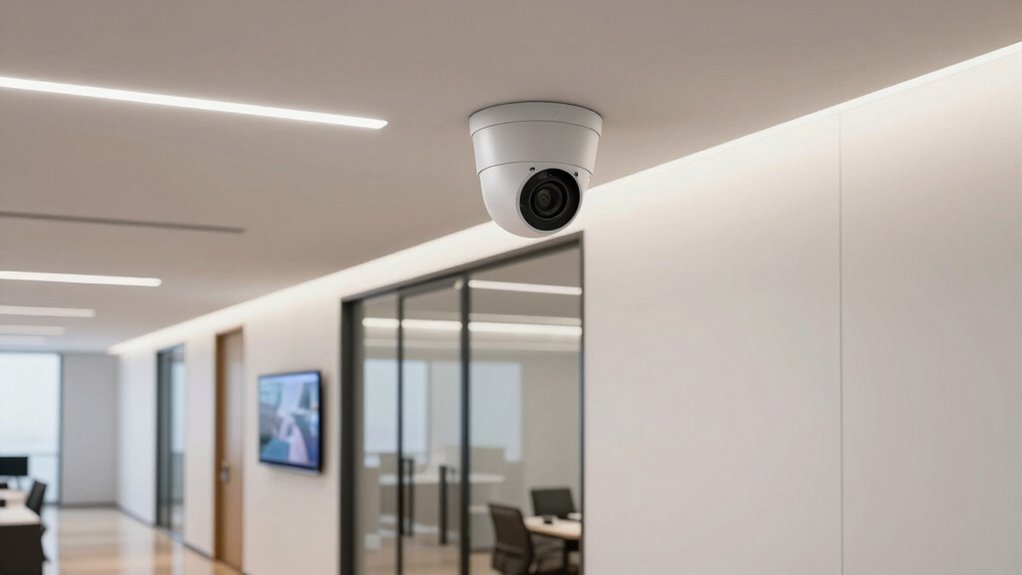
Implementing security camera systems in offices is an essential step to safeguard your workspace, employees, and assets. When choosing a system, look for features that offer both expansion potential and advanced security capabilities. One of the most valuable features is access control integration. This allows you to restrict entry to certain areas, making sure only authorized personnel can access sensitive zones. With access control, you can easily monitor who enters and exits, creating a detailed log that enhances accountability and reduces the risk of internal theft or unauthorized access. This integration also streamlines security management, as you can control door locks, badge readers, and alarms directly through your security system, all centralized for ease of use.
Another feature that’s worth paying for is video analytics. Modern security cameras come equipped with intelligent video analytics that automatically analyze footage in real-time. Instead of manually reviewing hours of video, your system can detect unusual behavior, such as loitering, tailgating, or unauthorized movement in restricted areas. This proactive approach helps you respond quickly to potential threats or incidents, minimizing damage or disruption. Video analytics also support features like facial recognition, which can be used to identify employees or visitors, further strengthening access control measures. When combined, access control and video analytics create a robust security environment, providing both preventative and reactive layers of protection.
Video analytics enhance security by detecting unusual behavior and supporting facial recognition, strengthening access control and threat response.
Expansion-friendly features are especially important as your office grows. Look for systems that support easy scalability—whether you’re adding more cameras, upgrading storage, or integrating new security tools. Cloud-based solutions often make expansion simple, offering remote management and flexible storage options that can adapt to your evolving needs. Additionally, choose cameras with high-definition resolution and wide-angle lenses to cover larger areas without needing multiple units. This not only reduces costs but also simplifies management. Incorporating scalable security infrastructure ensures your system remains effective as your needs change over time. Furthermore, selecting systems compatible with future technology upgrades can help you stay ahead in security innovation. An adaptable system can also integrate with other smart office solutions, creating a comprehensive security ecosystem.
Finally, consider the importance of user-friendly interfaces and remote access. Modern security systems should allow you to monitor cameras and manage access controls from anywhere, whether through a smartphone app or web portal. This flexibility ensures you stay in control, even when you’re off-site or managing multiple locations. Investing in a security camera system with these expansion-friendly features—especially integrated access control and video analytics—means you’re not just protecting today’s office but building a scalable security infrastructure that adapts to your future needs. Incorporating biodiversity and sustainable practices into your security infrastructure can also promote environmentally responsible management. Regular updates and maintenance are crucial to keep your system secure and functioning optimally, especially as new security threats emerge. Staying informed about emerging security trends can further bolster your office’s defenses against evolving risks.
Products Worth Considering

LG UltraGear 32-Inch QHD 180Hz Curved Gaming Monitor

Canon IVY 2 Mini Photo Printer Bundle, Blush Pink

Logitech MX Master 4 for Mac Wireless Ergonomic Mouse, White Silver
As an affiliate, we earn on qualifying purchases.
Frequently Asked Questions
How Do Security Cameras Impact Employee Privacy?
Security cameras can impact employee privacy by creating a sense of constant surveillance, which may feel invasive. To maintain trust, you should prioritize surveillance transparency, clearly communicating camera use and purpose. Balancing security with respect for employee privacy involves transparent policies and strategic camera placement, ensuring monitoring doesn’t intrude on personal spaces. When done right, security cameras enhance safety without compromising your team’s comfort or privacy.
What Is the Average Cost of Installing Office Security Cameras?
The average cost of installing office security cameras varies depending on system complexity and camera types, typically ranging from $1,500 to $5,000. You should consider access control integration and strategic camera placement to maximize coverage and security. Professional installation costs may add to this, but investing in expansion-friendly features guarantees your system adapts to your growing office needs, providing long-term security and peace of mind.
Are Wireless Security Cameras More Secure Than Wired Ones?
Imagine your office’s security as a fortress—wireless cameras might seem like agile scouts, but wireless vulnerabilities can expose blind spots. Wired reliability offers a steadfast shield, less prone to interference or hacking. While wireless cameras provide flexibility, their vulnerabilities make them less secure than wired options. For critical security, you should prioritize wired systems for consistent, reliable protection, minimizing risks and ensuring your office remains safe.
How Long Is the Typical Security Camera Footage Retained?
The typical security camera footage retention period varies based on your video storage and data retention policies. Usually, footage is stored for 30 to 90 days, giving you enough time to review incidents. Some systems offer longer or shorter retention periods depending on your storage capacity and compliance needs. Always check your system’s settings to customize video storage and data retention, ensuring you keep important footage as long as necessary.
Can Security Cameras Be Integrated With Existing Office Security Systems?
You can definitely integrate security cameras with your existing office security system, though some integration challenges may arise. Investigating the theory that seamless integration enhances security, proper camera placement is essential. You’ll want to guarantee compatibility with your current setup and address any integration challenges early. By doing so, you’ll create a more complete security system that’s easier to manage, providing better coverage and peace of mind.
Conclusion
Choosing the right security camera system for your office is like planting a sturdy tree—you want it to grow with you and shield you from storms. By focusing on expansion-friendly features, you guarantee your security setup can stretch and adapt as your business blossoms. Invest wisely now, and watch your security network flourish, providing peace of mind like a dependable guardian watching over your workspace—always ready to protect what matters most.