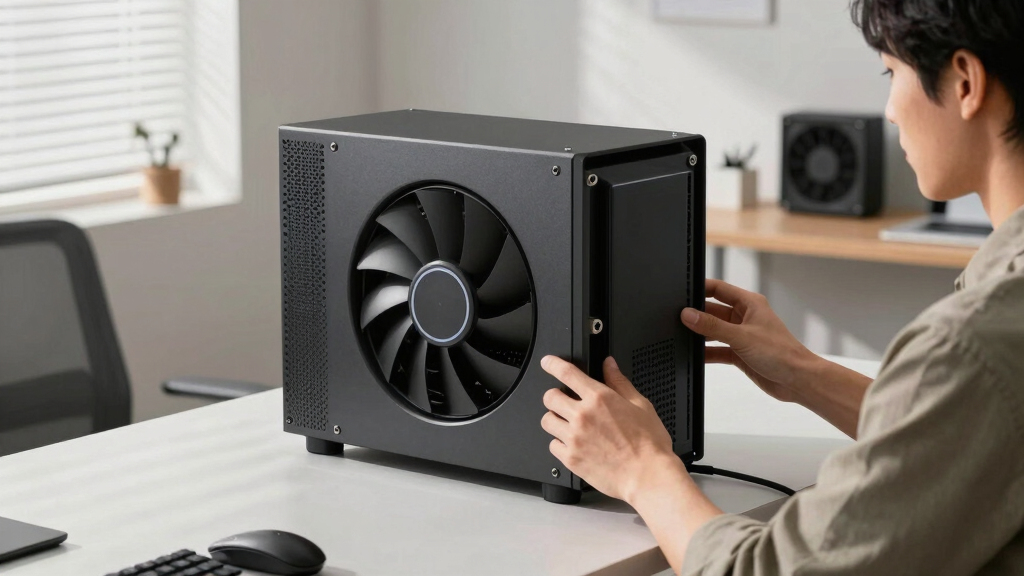

📊 Full opportunity report: How to Reduce Heat and Noise in a High-Power AI Workstation on ThorstenMeyerAI.com — validation score, market gap, and execution plan.

Get business pricing on office and shipping supplies
- Business-only prices and quantity discounts
- Tax-exempt purchasing
- Multiple users, one account, clear invoices
TL;DR
High-power AI workstations generate significant heat and noise due to sustained GPU loads. Effective cooling strategies focus on undervolting, improving airflow, and component management. This guide clarifies confirmed methods and ongoing uncertainties.
High-power AI workstations produce excessive heat and noise, primarily due to sustained GPU loads, making effective cooling essential for maintaining performance and comfort. This article details confirmed strategies to reduce both issues, helping users optimize their setups.
The core cause of heat and noise in AI workstations is the sustained high load on GPUs, which operate continuously at or near full capacity during inference tasks. This results in increased thermal output and fan activity. The main sources of heat include GPUs, CPUs, power supplies, and VRMs, with GPUs being the dominant contributor. Fan noise is primarily from cooling fans, but coil whine, pump noise, and vibrations also contribute.
Key proven methods include undervolting GPUs to lower power consumption and heat, optimizing airflow within the case to prevent recirculation, and selecting components like high-quality PSUs and cooling solutions suited for continuous load. These measures can significantly cut heat and noise, often with minimal cost or effort. However, some issues such as coil whine and vibrations may require specialized fixes, and the effectiveness of certain cooling methods varies depending on specific hardware and case design.
An AI workstation isn’t a gaming PC —
and that’s why it runs hot.
Local inference is a sustained load: the GPU sits near full power for hours with no loading screens, so the heat never dissipates and the fans never get a break. Here’s where the heat comes from — and the five levers that reduce it.
Impact of Effective Cooling on AI Workstation Performance
Implementing proven cooling strategies improves the longevity, stability, and comfort of high-power AI workstations. Lower heat reduces thermal throttling, maintaining higher inference speeds, while quieter operation enhances user experience, especially in home or office environments. Efficient cooling also extends hardware lifespan and can reduce energy costs.
As an affiliate, we earn on qualifying purchases.
Understanding Heat and Noise Sources in AI Workstations
Unlike gaming PCs, AI workstations run continuous loads, especially during inference tasks, causing sustained high temperatures. GPUs, often running at near full capacity for hours, are the primary heat source. Power draw can reach 800W or more in multi-GPU setups, translating into significant heat and noise. Prior guides have emphasized cooling solutions, but recent insights highlight the importance of targeted measures like undervolting and airflow management tailored for AI workloads.
“The key to cooling high-power AI workstations is understanding that these systems operate at near-constant full load, which demands different strategies than gaming PCs.”
— Thorsten Meyer, AI hardware expert
Unresolved Questions About Cooling Optimization
While undervolting and airflow improvements are well-supported, the optimal configurations for different hardware setups remain variable. The long-term effects of aggressive undervolting on GPU lifespan are still under study. Additionally, the effectiveness of liquid cooling versus air cooling in reducing noise and maintaining thermal stability in specific cases is not yet definitively established.
Next Steps for AI Workstation Cooling Improvements
Future developments will likely include more sophisticated software tools for dynamic power management and better case designs optimized for continuous high loads. Hardware manufacturers may release more efficient cooling solutions tailored for AI workloads. Users should monitor updates in cooling technology and test configurations to find the best balance between noise, temperature, and performance.
Key Questions
What is the most effective way to reduce noise in an AI workstation?
The most effective method is undervolting GPUs to lower fan speeds and heat output, combined with optimizing airflow within the case.
Can liquid cooling significantly reduce noise compared to air cooling?
Liquid cooling can reduce noise by allowing fans to run at lower speeds, but its effectiveness varies based on system design and implementation.
Does undervolting harm GPU performance or lifespan?
When done correctly, undervolting typically does not harm GPU performance and can actually extend lifespan by reducing thermal stress, though long-term effects are still being studied.
Are there specific cooling solutions recommended for multi-GPU setups?
High-quality air coolers with good case airflow or custom liquid cooling loops are recommended to manage the increased heat in multi-GPU systems effectively.
What role does case design play in heat and noise management?
Proper case design with good ventilation, sound dampening, and strategic fan placement is essential for effective heat dissipation and noise reduction.
Source: ThorstenMeyerAI.com
Halloween Picks
halloween
As an affiliate, we earn on qualifying purchases.