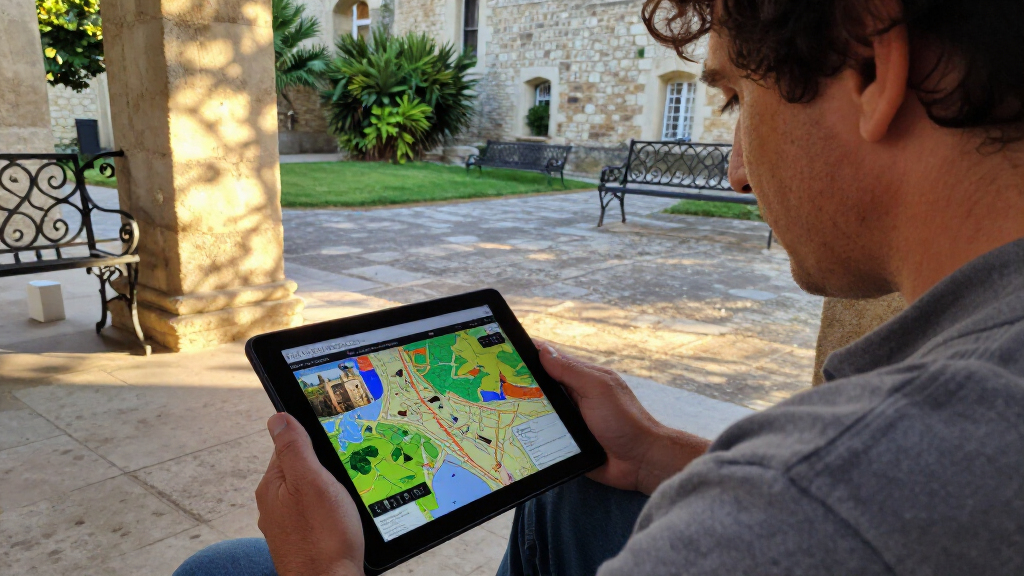

🔍 Read the full analysis: Experience The 1693 La Citadelle Siege Through An AI-Generated Digital Archive on ThorstenMeyerAI.com

Get business pricing on office and shipping supplies
- Business-only prices and quantity discounts
- Tax-exempt purchasing
- Multiple users, one account, clear invoices
TL;DR
An AI-created interactive digital exhibit now allows users to explore the 1693 La Citadelle siege through a cinematic, scroll-driven simulation. This development offers a new way to experience historical events with high fidelity and artistic storytelling.
Thorsten Meyer’s AI-driven project has launched a fully interactive digital archive simulating the 1693 siege of La Citadelle, offering an immersive experience that combines historical accuracy with cinematic storytelling. You can explore the detailed reconstruction in the original analysis. This innovative exhibit is accessible online and aims to transform how historical events are visualized and studied, making it a significant development in digital history and AI art applications.
The exhibit, titled “La Citadelle — An Anatomy of Siege, 1693,” is hosted on a dedicated website where visitors navigate through a scroll-driven, cinematic reconstruction of the siege, showcasing the potential of AI in digital history projects. It employs layered SVGs, CSS, and canvas elements to animate military movements, terrain shifts, and artillery fire, all without static images. The project follows a three-stage AI-guided workflow: initial construction, iterative critique for visual and historical coherence, and final approval by an art director.
The site’s design emphasizes a restrained palette of parchment, fortress ink, smoke grey, and blood-red accents, creating an atmosphere reminiscent of archival engravings. Typography combines Cinzel, EB Garamond, and Space Mono to establish a layered textual hierarchy. The signature interaction features animated siege maps, with earthworks, artillery trajectories, and defensive sorties animated through JavaScript, offering a dynamic and detailed view of the siege’s progression.
This digital reconstruction is part of a broader series of AI-crafted historical exhibits, each built end-to-end without external assets or frameworks, ensuring scalability and fidelity across devices. For more on the methodology, see the original analysis. The project’s creators emphasize that the exhibit balances educational intent with aesthetic restraint, providing a cinematic yet accurate portrayal of the 1693 event.
Implications of AI-Driven Historical Reconstructions
This project represents a significant advancement in digital history visualization, demonstrating how AI can produce highly detailed, interactive reconstructions of historical events without relying on static images or traditional media. It offers educational institutions, researchers, and the general public a new tool for engaging with history in a visceral, cinematic format. Such immersive experiences could reshape the way history is taught and understood, making complex military campaigns accessible and visually compelling.
Furthermore, the project showcases the potential of AI in creative storytelling, blending artistic design with precise historical modeling. It opens pathways for future developments in digital preservation, virtual museums, and interactive learning environments, where AI can generate dynamic, layered narratives that are both accurate and emotionally resonant.
interactive digital history exhibit
As an affiliate, we earn on qualifying purchases.
As an affiliate, we earn on qualifying purchases.
Historical and Technological Background of the Siege
The 1693 siege of La Citadelle was a pivotal event during the late 17th century, involving complex military tactics and fortification engineering. Historically, it has been documented through engravings and textual accounts, but visual reconstructions have been limited by static images and incomplete records.
Recent advances in AI and web technologies have enabled the creation of digital environments that simulate such events with high fidelity. This project builds on prior efforts in digital history, but distinguishes itself by its cinematic approach, layered architecture, and the use of AI to critique and refine the visualization process. The exhibit is part of a broader movement to leverage AI for cultural preservation and immersive storytelling.
It is not yet clear how widely this approach will be adopted or how it will influence traditional methods of historical education, but initial reactions suggest strong interest from both academic and public audiences in new ways to experience history.
“This project demonstrates how AI can craft layered, cinematic reconstructions of historical events, blending accuracy with artistic storytelling.”
— Thorsten Meyer
Unanswered Questions About the Exhibit’s Scope and Impact
It remains unclear how accurately the AI critique process ensures historical fidelity, and whether the exhibit will be expanded to include other events or periods. Additionally, the long-term educational and cultural impact of such cinematic reconstructions is still to be assessed, as the project is relatively new and ongoing evaluations are limited.
Further developments may include integrating user feedback, expanding interactivity, or applying similar techniques to other historical events, but these remain in planning or early testing stages.
Future Developments and Broader Adoption of AI History Exhibits
The creators plan to continue refining the exhibit based on user interactions and expert critiques, aiming to enhance both accuracy and cinematic quality. They also intend to expand this approach to other historical events, potentially creating a comprehensive digital archive of immersive, AI-generated reconstructions.
Wider adoption in educational settings and museums is anticipated, with ongoing efforts to evaluate its effectiveness as a teaching tool. The project’s success could influence future digital history initiatives, encouraging more AI-driven, interactive storytelling formats.
Key Questions
How does the exhibit ensure historical accuracy?
The project employs AI analysis during its critique phase to verify visual coherence and plausibility, guided by a detailed manual emphasizing accuracy. However, as an AI-driven reconstruction, some interpretive elements may still be subject to debate.
Can I explore the siege from different perspectives?
Yes, the exhibit offers multiple layers and viewpoints, including military movements, terrain features, and defensive actions, all animated to provide an immersive understanding of the siege.
Is this exhibit accessible on all devices?
Designed with scalability in mind, the exhibit works across a range of devices, from mobile phones to desktops, maintaining high fidelity and interactivity at various resolutions.
Will this approach be used for other historical events?
The creators intend to expand this methodology to other periods and conflicts, aiming to build a broader digital archive of AI-generated historical reconstructions.
How might this influence traditional history education?
By providing cinematic, interactive reconstructions, this approach could complement or even transform conventional teaching methods, making history more engaging and accessible.
Source: ThorstenMeyerAI.com
Fall Picks
fall essentials
As an affiliate, we earn on qualifying purchases.