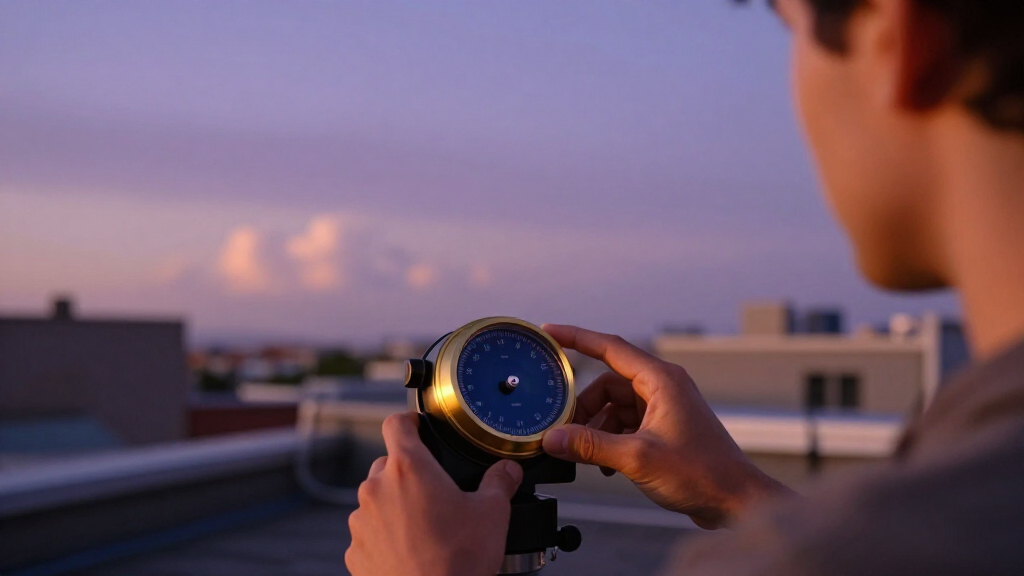

🔍 Read the full analysis: Could AI Make This Noctilucent Cloud Twilight Dial More Useful? on ThorstenMeyerAI.com

Get business pricing on office and shipping supplies
- Business-only prices and quantity discounts
- Tax-exempt purchasing
- Multiple users, one account, clear invoices
TL;DR
ThorstenMeyerAI.com describes “Noctilucent — NLC Watch at 83 km,” an AI-built exhibition page about real high-altitude ice clouds. Its interactive solar-depression dial changes the page’s lighting and illustrations, but the project is a fictional showcase, not a live observation service or scientific tool.
ThorstenMeyerAI.com has published the original analysis of “Noctilucent — NLC Watch at 83 km,” an AI-built exhibition page that uses an interactive solar-depression dial to change the lighting across a fictional noctilucent-cloud observing experience. The clouds are a real atmospheric phenomenon, but the site’s observing project and field-journal framing are fictional; the page is not a live scientific service.
The page’s central control represents the Sun’s angle below the horizon, with a stated range of 6 to 16 degrees and a most expressive point near 11 degrees. Moving it changes several visual elements together: the sky brightness, shadow depth, cloud glow, ambient color, grain and flare at the horizon. The same setting also feeds into diagrams and supporting text, making the dial a connected interface rather than a control for a single decorative effect.
According to the project description, the sky and cloud imagery are generated in the browser. Canvas draws the twilight gradient, stars and layered wave forms, while inline SVG provides diagrams and an altitude illustration. Different cloud forms receive distinct visual treatments: billows have closely repeating crests, whirls bend into polar-like distortions, and bands move in broader waves. A later exercise asks visitors to hold a control as ground-level haze recedes and a cloud band at 83 kilometres becomes clearer; releasing early lets the sighting fade.
The description also lists implementation features aimed at performance and accessibility. Offscreen scenes are not continually repainted, animation pauses when the document is hidden, and the page offers a still presentation for users who have enabled reduced motion. The project’s materials outline a three-pass design process—build, critique and art-director review—and include a construction guide. The supplied account does not provide independent testing or performance results.
Could AI Make This Noctilucent Cloud Twilight Dial More Useful?
“Noctilucent — NLC Watch at 83 km” turns a changing solar angle into an interactive twilight scene. It can help explain why high clouds may glow after sunset, while remaining a fictional exhibition rather than a live observing service.
One angle, many visual consequences
The dial makes a relationship easier to explore: cloud tops can remain sunlit while the ground observer is already in darkness.
Twilight shifts
The sky’s brightness, ambient color and horizon flare respond together as the solar depression changes.
Glow and shadow adapt
Cloud glow and shadow depth change with the scene, giving visitors contrasting twilight states to compare.
More than decoration
The same setting also feeds into diagrams and explanatory text, tying the control to the page’s story.
From dial movement to a fading sighting
The page pairs procedural visuals with a short interaction that asks visitors to hold a control as haze recedes.
Choose twilight
Move through the stated 6° to 16° solar-depression range.
Change the sky
Canvas draws gradients, stars and layered wave forms in the browser.
Hold to see
Ground haze recedes while a band at 83 km becomes clearer.
Let it fade
Releasing the control early lets the described sighting fade again.
Procedural graphics carry the idea
The project description says imagery is generated in-browser, using Canvas for scenes and inline SVG for diagrams and altitude illustration.
Cloud forms, drawn differently
Distinct motion and shape treatments help differentiate the exhibit’s cloud types.
CSS also supports the presentation; the account says no image assets are used.
Useful for understanding mood and mechanism
Noctilucent clouds are real high-altitude ice clouds. The observing network, station logs and field-journal framing belong to the fictional exhibition.
High-altitude ice clouds can remain sunlit when the surface below is dark.
Electric cyan suggests sunlit ice; violet and near-black tones evoke the night sky.
Invented station logs and the observing-project narrative are not records of actual sightings.
The experience is not presented as a forecast, measurement source or live monitoring service.
Promising design claims, limited evidence
The account describes accessibility and performance choices, but supplies no measured results or independent review.
Pause and conserve
Offscreen scenes are said not to repaint continually, and animation pauses when the document is hidden. No frame-rate results are given.
Still state for reduced motion
A still presentation is described for visitors who enable reduced motion; no accessibility audit or device testing is reported.
Build, critique, art-direct
Project materials outline a three-pass design process and a construction guide. Availability and implementation review are unclear.
What the dial can—and cannot—tell you
Is NLC Watch at 83 km a real observing service?
No. The supplied description calls it an AI-built exhibition about a fictional observing project.
What does the dial change?
It represents the Sun 6° to 16° below the horizon and changes scene lighting, cloud glow, shadows, color, diagrams and text.
Are the clouds themselves fictional?
No. The clouds are real; the exhibition’s observing network and field-journal narrative are fictional.
Does the page offer sightings or forecasts?
The supplied account describes no live sightings, forecasts or observational measurements.
How are its visuals made?
The description names browser-generated Canvas scenes, inline SVG diagrams and CSS, with no image assets.
Is its usefulness scientifically validated?
No independent testing or evidence that the visuals were checked against a scientific simulation is provided.
How the Dial Links Light and Clouds
The design makes a specific atmospheric relationship easier to explore visually: a cloud can remain illuminated after the ground observer has entered darkness. By tying one adjustable solar angle to the sky, cloud forms and explanatory diagrams, the page gives visitors a way to compare different twilight states rather than presenting a fixed illustration. That is the project’s clearest educational value, although the source describes an exhibition experience, not a validated scientific model.
The interaction also shows one way AI-assisted web design can move beyond producing a static image. Here, the stated concept is carried through interface behavior, procedural visuals and copy. The practical distinction matters to readers: the experience may help communicate an idea, but it should not be treated as a source of current cloud sightings, forecasts or observational measurements.
As an affiliate, we earn on qualifying purchases.
The Real Phenomenon Behind the Exhibit
Noctilucent clouds are high-altitude ice clouds that can remain sunlit when the surface below is dark. The exhibition uses that contrast as its organizing idea: electric cyan represents ice still catching sunlight, while violet and near-black tones evoke the night sky. A cream-colored field-log section shifts the visual style toward a paper journal.
The project brief proposes seasonal observation material, including a calendar tied to the solstice and a latitude range of 55 to 65 degrees, alongside invented station logs. Those details belong to the designed experience as described in the source; the fictional station records are not evidence of actual observations. The available material does not give a publication date, live monitoring data or a link to an external research dataset.
““A sky that responds to the sun you cannot see.””
— ThorstenMeyerAI.com project description
What the Exhibition Cannot Confirm
The source identifies the page as an AI-built exhibition piece for a fictional observing project, but does not supply a publication date, independent technical review or evidence that the dial’s visuals have been checked against a scientific simulation. It is not clear from the material whether the live site remains available or whether visitors can inspect the complete implementation and guide.
The description says animation pauses in certain conditions and that reduced-motion settings receive a still state, but it does not report measured frame rates, accessibility audit results or testing across devices. Nor does it provide real-time observations. Readers should distinguish the real atmospheric phenomenon from the fictional logs and the page’s illustrative behavior.
The Design Guide and Live Page
The source points readers to the room’s live page and a construction guide covering the lighting model, procedural graphics and animation behavior. It gives no release schedule, follow-up milestone or announced scientific partnership. The next useful step for readers interested in the implementation is to inspect those materials, if available, while treating any claims about usability or performance as unverified unless accompanied by test results.
Whether the dial makes the subject more useful will depend on what a visitor needs from it. As described, it is designed to make the relationship between twilight and cloud visibility intuitive; it is not presented as a replacement for observing guides, research data or forecasting tools.
Key Questions
Is NLC Watch at 83 km a real observing service?
No. The source describes it as an AI-built exhibition about a fictional observing project. It is not a live scientific monitoring service.
What does the solar-depression dial change?
It represents the Sun between 6 and 16 degrees below the horizon. Moving it changes the page’s sky brightness, cloud glow, shadows, colors and related diagrams and text.
Are the clouds themselves fictional?
No. Noctilucent clouds are real; the fictional element is the exhibition’s observing network and field-journal framing.
Does the page provide real sightings or forecasts?
The supplied description does not indicate that it provides live sightings, forecasts or observational measurements. Its dial and cloud scenes are presented as part of an interactive exhibition.
How are the visuals made?
The project description says the visuals are generated in the browser using Canvas, inline SVG and CSS, without image assets. It also says animation pauses when the page is hidden and that reduced-motion settings receive a still state; independent testing results were not provided.
Source: ThorstenMeyerAI.com
Halloween Picks
halloween
As an affiliate, we earn on qualifying purchases.


