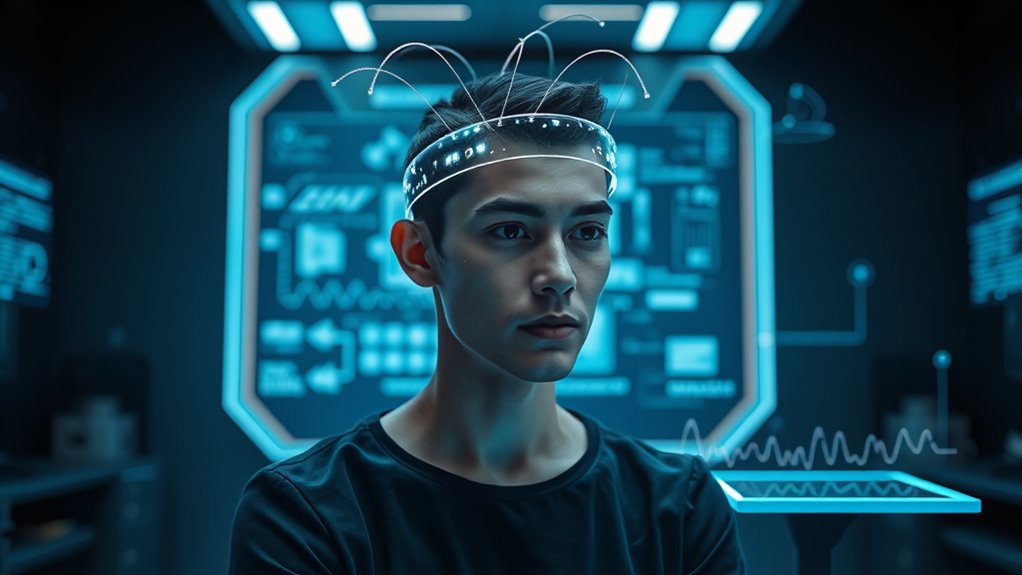

Brain-Computer Interfaces (BCIs) are transforming how you interact with technology by translating your neural signals directly into commands. This innovation enables control of prosthetics, computers, and even communication for those with disabilities. As BCIs become more accurate and faster, they raise important ethical questions about privacy, ownership, and safety. If you want to learn how these advancements could shape your future experiences and the ethical landscape they bring, keep exploring this exciting field.
Key Takeaways
- BCIs enable direct brain-to-device communication, promising more natural and intuitive human-computer interactions.
- Advances in neural decoding improve control speed and accuracy, expanding BCI applications in healthcare and technology.
- Ethical considerations include privacy, data ownership, and mental autonomy, requiring strict safeguards for responsible development.
- Future BCIs may restore lost functions and facilitate seamless integration between humans and machines.
- Ongoing research aims to enhance safety, trustworthiness, and accessibility, shaping a future where BCIs are integral to daily life.
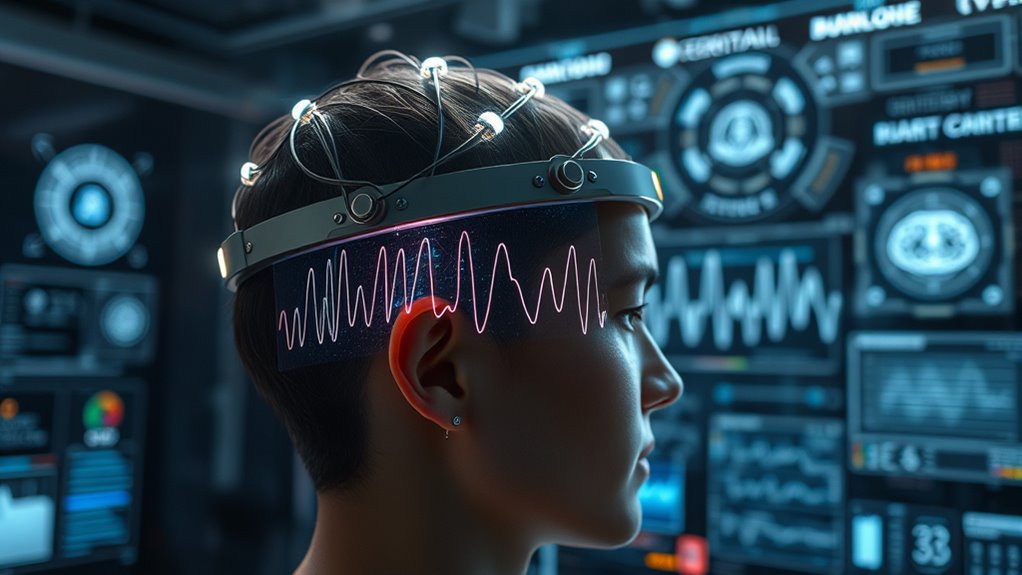
Brain-Computer Interfaces (BCIs) are systems that enable direct communication between your brain and external devices. They work by capturing neural signals and translating them into commands that computers or machines can understand. This process, known as neural decoding, is at the heart of BCI technology. It involves interpreting complex electrical activity in your brain, often measured through sensors placed on or inside your head. As you imagine movements or focus your thoughts, your brain generates specific patterns that these systems decode to control devices like prosthetics, computers, or even wheelchairs. Neural decoding is advancing rapidly, allowing for more accurate and faster translation of your intentions into actionable commands. However, with these technological breakthroughs come important ethical considerations. As BCIs become more sophisticated, questions arise about privacy and mental autonomy. If your brain signals can be read and interpreted, who owns that data? Could it be misused or hacked? These concerns emphasize the need for strict safeguards to confirm your thoughts remain private and protected. Moreover, there’s the issue of consent, especially as BCI technology extends into medical and military applications. You need to be fully aware of how your neural data is collected, stored, and used, and be able to withdraw consent at any time. Ethical considerations also include the potential for dependency or psychological impacts. If you rely heavily on these devices, what happens if they malfunction or are manipulated? The risk of altering your sense of self or identity is real, prompting ongoing debates about how to balance technological progress with human rights. Furthermore, as neural decoding improves, it opens up possibilities for restoring lost functions—helping paralyzed individuals communicate or control prosthetic limbs with their thoughts. Yet, this progress must be paired with responsible development, confirming that the technology serves your well-being without infringing on your rights. Researchers and policymakers are working to establish guidelines that address these ethical issues, but the rapid pace of innovation means continuous vigilance is necessary. Additionally, concerns about the trustworthiness of AI models used in neural decoding highlight the importance of ongoing research and safety measures. Ultimately, your engagement and awareness will be vital as BCIs evolve, shaping a future where technology supports your abilities while respecting your autonomy. As you become more familiar with neural decoding and the ethical landscape, you’ll better understand both the incredible potential and the profound responsibilities that come with this groundbreaking field.

Information Disorder (Algorithms and Society)
As an affiliate, we earn on qualifying purchases.
As an affiliate, we earn on qualifying purchases.
Frequently Asked Questions
How Secure Are Brain-Computer Interfaces Against Hacking?
Brain-computer interfaces are still developing, so they have hacking vulnerabilities that concern users like you. While neural encryption helps protect your thoughts, hackers could exploit weaknesses in the system. You should stay aware of potential risks and updates from manufacturers. As technology advances, security measures improve, but it is crucial to remain cautious about possible hacking threats to guarantee your neural data stays safe.
Can BCIS Read Thoughts Unrelated to Specific Commands?
Sure, BCIs can decode more than just commands—they can tap into your subconscious signals and read thoughts beyond your awareness. Think of it as mind-reading with a tech twist, where your deepest secrets are no longer safe from thoughts decoding. So, next time you worry about privacy, remember—your brain’s quiet whispers might just become open books, revealing a world of unspoken ideas you’d rather keep to yourself.
What Are the Long-Term Health Effects of BCI Use?
You might experience minimal long-term health effects from BCI use, as research suggests they promote neural plasticity, helping your brain adapt efficiently. However, psychological adaptation is essential, and some users could face mental fatigue or anxiety. While current data is promising, ongoing studies are necessary to fully understand potential risks, ensuring your safety and well-being as BCI technology advances.
How Affordable Will BCI Technology Become for Consumers?
BCI technology will likely become more affordable for consumers as cost reduction efforts increase and market accessibility expands. As manufacturers refine manufacturing processes and competition grows, prices will drop, making BCIs accessible to a broader audience. You can expect these advancements to lead to more affordable, user-friendly devices, allowing you to integrate BCI tech into daily life without breaking the bank. The future promises greater accessibility and affordability for users like you.
Will BCIS Replace Traditional Communication Methods Entirely?
Will BCIs replace traditional communication methods entirely? It’s unlikely, like a ship never entirely losing its anchor. While BCIs could revolutionize interaction, ethical considerations and societal impact will keep them as powerful complements rather than replacements. You’ll still rely on speech, writing, and gestures because human connection thrives on familiarity, but BCIs will offer new ways to communicate that enhance, rather than eliminate, existing methods.
Conclusion
You’re standing at the brink of a revolution where your thoughts could command machines instantly, making science fiction feel like yesterday’s news. Brain-computer interfaces will transform everything—how you work, play, and connect—turning your mind into the most powerful device on the planet. Soon, you’ll unlock superhuman abilities, communicate without words, and unveil secrets of your brain that were once unimaginable. Get ready—your mind is about to become the ultimate interface of the future!