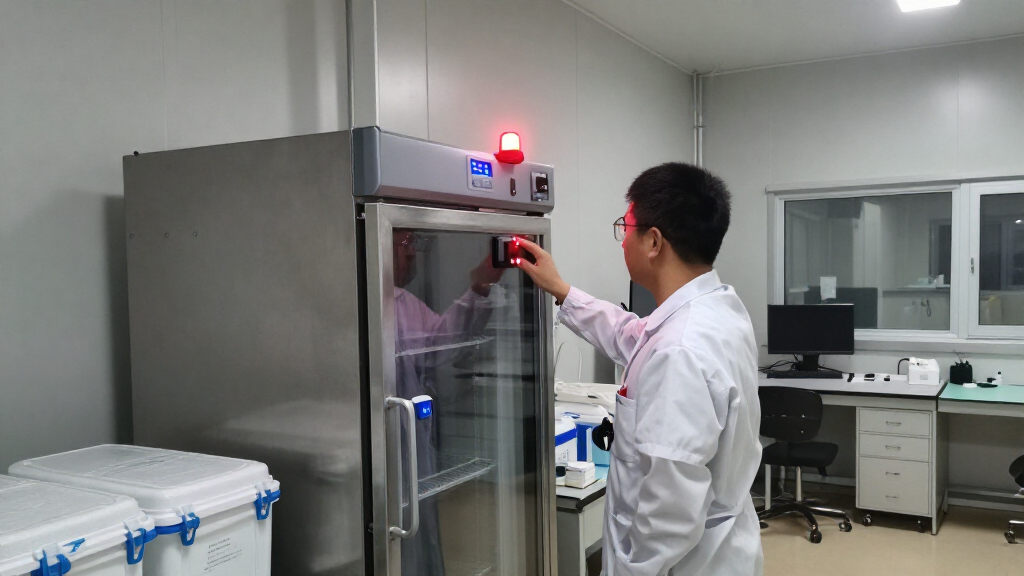

🔍 Read the full analysis: A Night At The Blood Bank: Hackers, Plasma Freezers, And An Alarm on ThorstenMeyerAI.com

Get business pricing on office and shipping supplies
- Business-only prices and quantity discounts
- Tax-exempt purchasing
- Multiple users, one account, clear invoices
TL;DR
France’s national blood service, the EFS, said a cybersecurity incident affecting a refrigeration contractor’s systems altered cold-room settings at three sites overnight on Nov. 1-2. Monitoring and alarms detected rising temperatures, staff moved the plasma as a precaution, and the EFS reported no health impact or loss of blood products. The widely circulated 110 °C figure was a controller setting, not a measured temperature.
France’s national blood service said a cybersecurity incident involving a refrigeration contractor altered controls for cold rooms at three EFS sites overnight on Nov. 1-2, prompting staff to move stored plasma. The EFS said its alarms detected the changes quickly and reported no health impact and no loss of blood products.
In a statement issued Nov. 3, the Établissement français du sang (EFS) said a contractor responsible for refrigeration equipment had suffered a cybersecurity incident affecting the supervision and control systems for cold rooms at three of its sites. The service said temperature and defrost thresholds were raised to very high levels, but did not provide a specific setting or identify the contractor. The rooms held plasma for transfusion and plasma intended for processing into medicines.
According to the EFS, its monitoring and alarm systems identified the anomalies. The equipment was brought under control or switched off, and the contents were moved to other storage as a precaution. The EFS said it had increased temperature monitoring across its equipment and that technical teams were working with France’s national cybersecurity agency, ANSSI, and the health ministry.
The figure of 110 °C comes from reporting by Le Canard enchaîné, cited by other French outlets, rather than the EFS statement. That reporting described it as a programmed target in the controller—not a temperature recorded inside a cold room. No source in the supplied material reports that the plasma reached that temperature. EFS president Frédéric Pacoud told BFMTV that products could have been lost if the situation had not been detected, while saying their safety was not affected.
Infographic 01 · 110 °C, explained
A setting, not a temperature
Someone raised the targets of plasma cold rooms at France’s blood service to +110 °C. The rooms never got there. What mattered was the alarm.
Frozen plasma has to stay at or below this line. The danger was thawing, not boiling. A few degrees too warm can already mean discarding bags.
- +110 °CThe programmed setpointTyped into the controller (Canard). Never reached, never measured.
- ~+50 °CHottest reported in the supermarket waveDefrost heaters forced on, same night (AFP, ZDFheute)
- −25 °CThe line that mattersFrozen plasma is stored at −25 °C or colder (EDQM guide via ISBT)
- −30 °CNormal operation of the EFS cold roomsAs reported by Le Canard enchaîné
Why the alarm won
- DetectionEFS monitoring and alarms flagged the anomaly quickly (EFS)
- A person on callAn on-call technician saw the temperature rise in the night (Canard)
- A plan BThe plasma was moved to other installations as a precaution (EFS)
Sources: EFS communiqué, 3 Nov 2026, via franceinfo · Le Canard enchaîné, as reported by Solutions Numériques · ISBT, citing the EDQM Guide · AFP via Al Jazeera, 4 Nov · ZDFheute, 3 Nov. The 110 °C and −30 °C figures come only from Le Canard enchaîné; the EFS gives no number.
Powered by Thorsten Meyer AI
Why Plasma Storage Alarms Matter
Plasma must remain frozen to preserve its suitability for transfusion or for use in medicines. The source material says fresh frozen plasma is stored at −25 °C or colder; the affected rooms were reportedly meant to operate around −30 °C. A rise above the required range could put stored products at risk, even though the reported 110 °C figure was only a setting and no product loss was reported in this incident.
The immediate outcome depended on detection and response: alarms flagged the change, an on-call technician responded, and plasma was moved. The episode shows why cold-storage operators need to monitor equipment independently and have procedures for relocating stock when refrigeration controls are compromised. It does not establish that the blood supply was disrupted or that patients were harmed.
Products Worth Considering

Dell UltraSharp 32 U3226QER 4K Thunderbolt Hub Monitor

LG PuriCare AeroHit Smart Air Purifier for Large Rooms up to 1000 sq ft, True HEPA Filter with 360° Airflow, PM1.0 Sensor & LED Air Quality

Dell Pro 14 Plus P1425 14-Inch Portable Monitor
As an affiliate, we earn on qualifying purchases.
The Contractor Access at Issue
The EFS collects blood donations and supplies hospitals throughout France. Its public statement described the affected party as a refrigeration equipment contractor but did not name the company. Le Canard enchaîné identified the contractor as Coolworld; that identification is based on the newspaper’s reporting, and Coolworld had not publicly commented in the material provided. The EFS said it was not directly targeted.
The incident occurred on the same night as a second wave of attacks targeting supermarket refrigeration systems in multiple European countries. The supplied reporting says there is no official link between the incidents. Two groups describing themselves as pro-Russian later claimed responsibility for the supermarket attacks in a video, but that claim was unverified, the posts were deleted, and no government had attributed those attacks to a perpetrator. Those claims do not establish who was behind the EFS incident.
“The EFS monitoring and alarm systems made it possible to identify these anomalies quickly.”
— Établissement français du sang, statement issued Nov. 3
What the Incident Record Leaves Open
The EFS has not publicly named the contractor, disclosed the exact altered settings, or identified the two other affected sites. The 110 °C setting is attributed to Le Canard enchaîné, while the EFS’s own statement only referred to very high thresholds. No measured peak temperature in the rooms is given in the supplied reporting.
The available material also does not explain how the attacker obtained access, how long the systems were exposed, or whether investigators have identified a responsible party. Although the blood-service incident overlapped in time with attacks on supermarket refrigeration, no authority has linked them. Claims by groups about the supermarket attacks remain unverified and do not resolve attribution in this case.
Monitoring and Investigation Continue
The EFS said technical teams were working with ANSSI and the health ministry and that temperature monitoring across its refrigeration equipment had been stepped up. The supplied information does not give a timetable for the investigation or say whether the affected control systems have all been restored.
Further updates from the EFS or French authorities could clarify the contractor’s identity, the access route, the affected locations and any changes made to remote maintenance arrangements. For now, the confirmed public account is that alarms detected the problem, plasma was moved, and the EFS reported no product loss or health impact.
Key Questions
What happened at the EFS sites?
The EFS said a cybersecurity incident involving a refrigeration contractor affected cold-room supervision and control systems at three sites overnight on Nov. 1-2. The service moved stored plasma after its monitoring systems detected anomalies.
Did a blood bank freezer actually reach 110 °C?
The supplied reporting describes 110 °C as a controller setpoint, not a measured room temperature. The EFS did not include that figure in its statement, and no measured temperature near 110 °C is reported.
Was plasma lost or was anyone harmed?
The EFS reported no loss of blood products and no identified health impact. It said the plasma was moved as a precaution after alarms detected the issue.
Who was responsible for the incident?
The supplied reporting does not identify a confirmed perpetrator or explain how access was obtained. Le Canard enchaîné named a contractor, but the EFS did not name it in its statement, and no attribution for the cyber incident is provided.
Was this linked to attacks on supermarket refrigeration?
The incidents happened on the same night, but the source material says no authority has linked them. Claims of responsibility for the supermarket attacks were unverified and do not establish who was behind the EFS incident.
Source: ThorstenMeyerAI.com