
📊 Full opportunity report: Virtual Reality Training: The Key To Better Manufacturing Workforce Performance on IdeaNavigator AI — validation score, market gap, and execution plan.

Get business pricing on office and shipping supplies
- Business-only prices and quantity discounts
- Tax-exempt purchasing
- Multiple users, one account, clear invoices
TL;DR
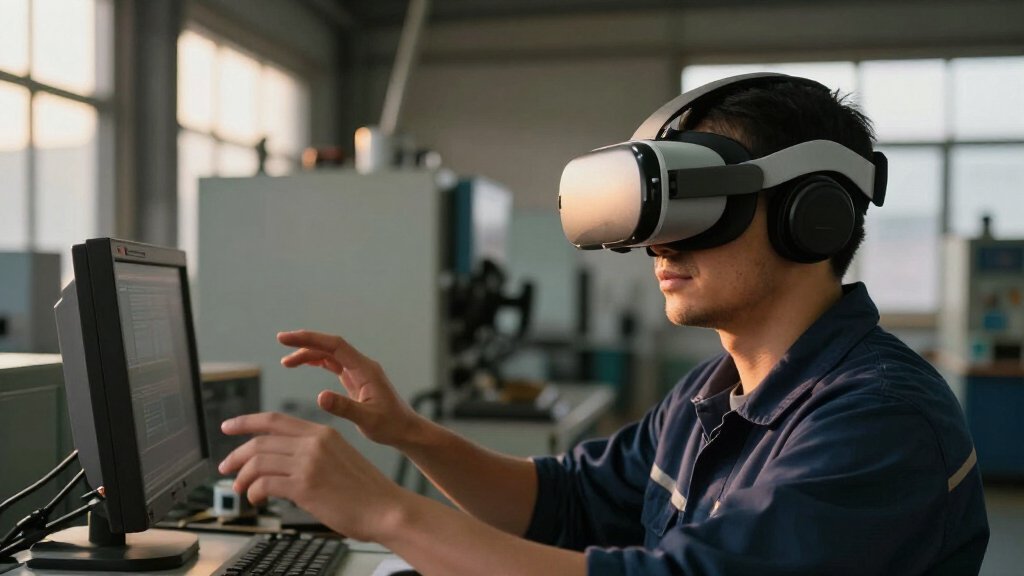
Manufacturers are piloting VR training modules to address labor shortages and safety challenges. Early tests show potential for faster onboarding and better hazard recognition, but broader validation is ongoing.
Manufacturers are testing virtual reality (VR) training modules as a targeted approach to improve workforce onboarding and safety performance. Early pilot programs at mid-to-large manufacturing plants aim to address persistent labor shortages, skills gaps, and safety risks by deploying immersive VR scenarios on standalone headsets. These efforts are driven by the urgent need for faster, more standardized training amid a shrinking skilled labor pool.
According to industry sources, manufacturers are focusing on VR modules that simulate high-risk procedures such as lockout/tagout and forklift safety. These modules are delivered via affordable standalone headsets like Meta Quest, with cloud dashboards tracking completion, hazard recognition accuracy, and quiz scores. The initial goal is to run 60- to 90-day pilots at select plants, comparing VR-trained cohorts with traditional classroom or on-the-floor training.
Early indications suggest VR training could reduce time-to-competency and improve hazard recognition, which is critical as the U.S. manufacturing sector faces an estimated 409,000 unfilled positions as of August 2025. The broader immersive enterprise training market, valued at approximately USD 14.55 billion in 2025, is expanding rapidly, with a CAGR of about 20%.
Manufacturers see VR as a cost-effective way to standardize training across multiple plants, reduce safety incidents, and accelerate onboarding processes. The pilot programs involve shipping 5-10 headsets per plant, delivering a core safety scenario, and monitoring individual performance against baseline classroom results. Success will be measured by improvements in hazard recognition scores, reduced onboarding time, and supervisor assessments of readiness.
Implications for Workforce Development and Safety
This initiative could significantly reshape manufacturing workforce training by providing scalable, consistent, and engaging learning experiences. If successful, VR training may reduce safety incidents, lower training costs, and help fill labor gaps more efficiently. The approach aligns with industry needs for rapid onboarding during a period of critical labor shortages and skills deficits, especially on dangerous machinery.
Early results could influence broader adoption across the sector, encouraging manufacturers to invest in immersive training solutions that improve safety outcomes and operational performance. However, it remains to be seen whether pilot successes will translate into long-term, large-scale implementation.
Products Worth Considering

Logitech MX Master 4 for Mac, Ergonomic Bluetooth Mouse with Haptic Feedback, Ultra-Fast Scrolling, USB-C Charging, for MacOS, iPadOS, Windo

Logitech MX Mechanical Wireless Illuminated Keyboard, Tactile Quiet, Graphite

Brother TD-2020A 2‑Inch Direct Thermal Desktop Label Printer with USB
As an affiliate, we earn on qualifying purchases.
Growing Need for Safer, Faster Training Solutions
The manufacturing sector is under intense pressure from labor shortages and safety compliance requirements. As of August 2025, the U.S. had roughly 409,000 unfilled manufacturing jobs, with projections indicating a need for 3.8 million new workers by 2033. Traditional training methods—classroom instruction and on-the-floor supervision—are increasingly inadequate for rapid onboarding and hazard mitigation.
Advances in cloud-native XR streaming and the decreasing cost of standalone headsets like Meta Quest and Pico have made immersive VR training more accessible. Industry analysts estimate that the immersive enterprise training market is growing at approximately 20% annually, driven by the need for standardized, engaging, and scalable training solutions.
Manufacturers are now exploring VR as a strategic tool to bridge skills gaps, improve safety, and accelerate new hire productivity, especially on high-risk equipment and procedures. These pilot programs are among the first steps toward integrating VR into mainstream manufacturing training workflows.
Uncertainties in Broader Adoption and Long-Term Impact
While early pilots show promise, it is not yet clear whether VR training will deliver consistent, long-term improvements across different plants and procedures. Broader adoption depends on scalability, cost-effectiveness, and integration with existing training systems. Additionally, the impact on safety incident rates and workforce retention remains to be conclusively proven through larger studies.
Next Steps for Validating VR Training Effectiveness
Manufacturers involved in pilot programs will monitor key performance metrics over the next 60-90 days, including onboarding speed, hazard recognition accuracy, and supervisor assessments. Successful pilots are expected to lead to expanded deployment across multiple plants, with potential customization for various procedures. Industry observers will watch for data confirming whether VR training can reliably improve safety and operational readiness at scale.
Key Questions
How does VR training compare to traditional methods in manufacturing?
Initial pilot results indicate VR can reduce onboarding time and enhance hazard recognition, but comprehensive data from larger studies are needed to confirm long-term benefits.
What safety procedures are being tested with VR modules?
Procedures like lockout/tagout and forklift safety are among the first high-risk scenarios adapted for VR training modules.
What hardware is used for VR training in manufacturing?
Standalone headsets like Meta Quest and Pico are being used, which are affordable and easy to deploy at scale.
What are the costs associated with implementing VR training?
Costs include hardware, cloud platform subscriptions, and custom scenario development. Manufacturers are testing a per-seat or per-headset SaaS model for affordability.
When can we expect broader adoption of VR training in manufacturing?
Broader adoption depends on pilot success; if metrics show clear improvements, industry-wide rollout could occur within the next 12-24 months.
Source: IdeaNavigator AI