

To build an effective operational risk register for your small company, identify potential threats like supply chain issues or IT failures, and evaluate their likelihood and impact. Keep it simple, assign clear responsibilities, and update regularly to reflect changing conditions. Use it as a communication tool to foster risk awareness and proactive responses within your team. Implementing these steps helps guarantee resilience; continue exploring to discover practical tips for strengthening your risk management approach.
Key Takeaways
- Keep the risk register simple, clear, and tailored to your small team’s specific operational threats.
- Regularly update the register to reflect changing business conditions and emerging risks.
- Assign clear ownership for monitoring and responding to each identified risk.
- Use the register as a communication tool in team meetings to promote risk awareness.
- Develop practical, easy-to-implement contingency plans for critical operational risks.
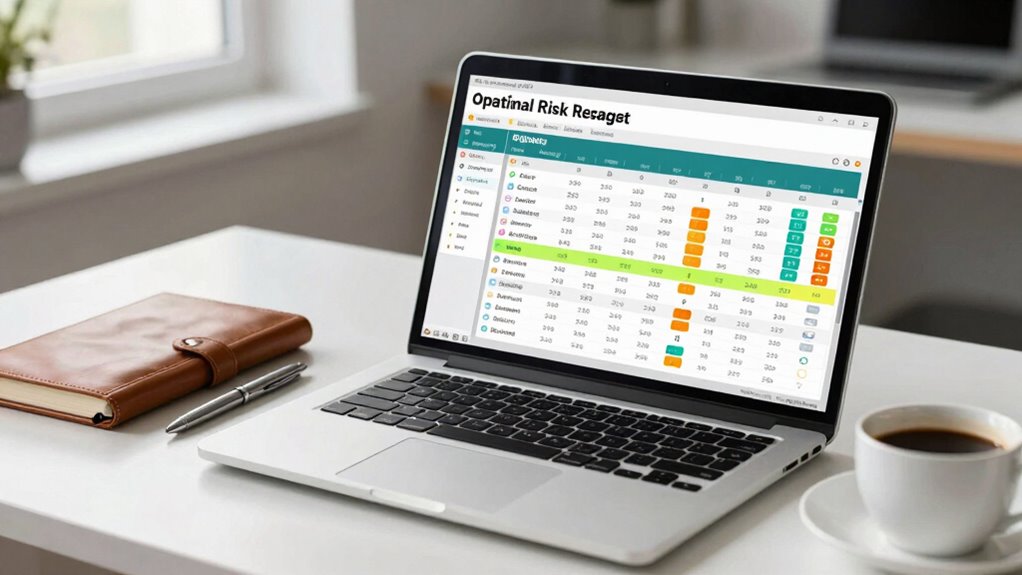
Managing operational risks is vital for small companies aiming to stay resilient and competitive. You need a clear way to identify potential threats and prepare for them effectively. That’s where an operational risk register becomes invaluable. It’s a straightforward tool that helps you track risks systematically, making it easier to prioritize actions and allocate resources efficiently. The foundation of an effective risk register is thorough risk evaluation. You should start by identifying all possible operational risks—things like supply chain disruptions, IT failures, or staffing shortages. Once you’ve listed these risks, evaluate their likelihood and potential impact. This process isn’t about creating fear but about understanding where your vulnerabilities lie, so you can act proactively rather than reactively. Incorporating smart technology solutions can also help monitor and mitigate some risks more effectively. Additionally, leveraging risk assessment methods can enhance your understanding of complex threats and improve decision-making. Regularly updating your risk register based on changing business conditions ensures it remains a relevant and practical tool. It’s also beneficial to establish risk ownership so responsibilities for monitoring and responding to risks are clearly assigned. Developing a culture of risk awareness within your team encourages everyone to stay vigilant and engaged in risk management efforts.
Contingency planning is just as vital. After evaluating risks, you need to develop specific plans to address them if they materialize. These plans should be practical, tailored to your business’s size and scope, and easy to implement under pressure. For example, if a key supplier fails, do you have a backup supplier lined up? If your IT system crashes, is there a quick recovery process in place? By integrating contingency plans into your risk register, you guarantee that each identified risk has a clear response strategy. This helps you minimize disruptions and maintain operational continuity without unnecessary delays. The process is iterative; as your business evolves, so should your risk evaluation and contingency plans. Regular reviews keep your risk register relevant and guarantee you’re prepared for new threats that may emerge.
For small teams, simplicity and clarity are key. You don’t need a complex system; instead, focus on creating a manageable risk register that everyone can understand and update easily. Assign responsibilities clearly so that each team member knows what to do if a risk occurs. Use the risk register as a communication tool during team meetings, making sure everyone stays aware of potential issues and response strategies. By doing so, you foster a culture of awareness and proactive management. Ultimately, the goal of your operational risk register isn’t just to identify threats but to embed a mindset of preparedness into your daily operations. With diligent risk evaluation and contingency planning, you’ll build resilience, reduce surprises, and keep your small business moving forward confidently, no matter what challenges come your way.
operational risk management software for small business
As an affiliate, we earn on qualifying purchases.
As an affiliate, we earn on qualifying purchases.
Frequently Asked Questions
How Often Should a Small Business Review Its Risk Register?
You should review your risk register at least quarterly to stay on top of potential issues. Regular risk assessment helps identify new threats and updates existing ones. It also guarantees your contingency planning remains effective and relevant. By revisiting your risk register often, you can proactively manage operational risks, adapt strategies, and maintain business resilience. This ongoing process keeps your small business prepared for unexpected challenges and supports steady growth.
What Tools Are Best for Maintaining a Risk Register?
You’ll want to pick tools that keep your risk assessment and risk mitigation clear and simple. Spreadsheets are a reliable, no-fuss option, allowing you to track risks and updates easily. Risk management software like RiskWatch or LogicManager offers more automation, helping you stay organized and proactive. Think of it as hitting two birds with one stone; these tools streamline your process and make certain nothing slips through the cracks.
How Do I Prioritize Risks in a Small Company?
You should start with a thorough risk assessment to identify potential threats. Then, prioritize risks based on their likelihood and potential impact on your business. Focus on high-priority risks first, implementing risk mitigation strategies to reduce their effects. Regularly review and update your risk register to adapt to changing circumstances. This approach guarantees you efficiently allocate resources, protect your small company, and stay proactive in managing operational risks.
Can Risk Registers Help Prevent Business Failures?
Think of risk registers as your business’s safety net—they can indeed help prevent failures. By pinpointing risks early, you can implement risk mitigation strategies and develop contingency plans, turning potential pitfalls into manageable challenges. This proactive approach keeps your operations resilient, ensuring you’re prepared for surprises. Essentially, a well-maintained risk register isn’t just a tool; it’s your roadmap to stability and long-term success.
Who Should Be Responsible for Managing the Risk Register?
You should assign risk ownership to a team member or a small group responsible for managing the risk register. It’s essential that this person facilitates team collaboration, ensuring risks are identified, assessed, and updated regularly. By clearly defining who owns each risk, you foster accountability and streamline communication, helping your small company stay proactive in managing operational risks and preventing potential issues from escalating.
Conclusion
By now, you’re equipped to craft an operational risk register as if you’ve got a crystal ball—no need for a time machine. Keep it lean, update it regularly, and stay vigilant like a knight guarding the castle. Remember, small companies face big risks, but with this practical guide, you’ve got the tools to navigate them smoothly. So, don’t wait for a Renaissance fair—start managing your risks today and protect your business’s future.