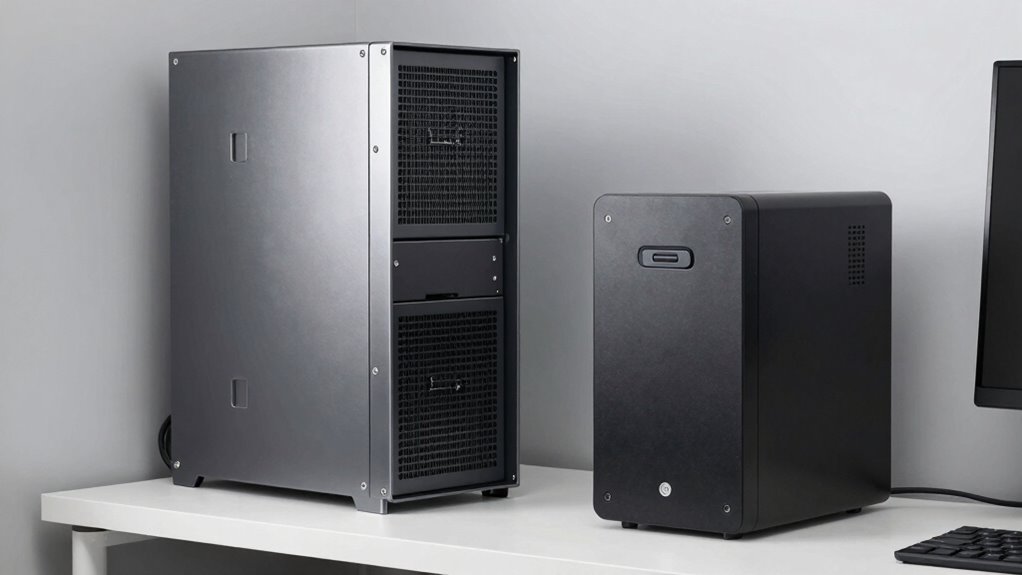

Choosing between a rackmount and desktop UPS depends on your environment and needs. A mismatched choice can waste space and money—using a rackmount in a small office or desktop unit in a data center isn’t efficient. Rackmounts fit server racks but are bulkier and pricier, while desktops save space and cost less but aren’t suitable for high-demand setups. To avoid costly mistakes, consider your power needs, space, and future growth—more insights await if you keep exploring.

Get office and shipping supplies delivered free — and shop member deals
- Fast, free delivery on millions of items
- Access to Prime Big Deal Days deals on October 6–7
- Prime Video, Amazon Music and more included
Key Takeaways
- Rackmount UPS units optimize space in data centers but are unnecessary and costly for small, individual setups.
- Desktop UPS units are more affordable and suitable for limited spaces, preventing wasted investment in extensive infrastructure.
- Choosing a rackmount for small environments leads to increased costs and underutilized space.
- Opting for desktop models in large-scale environments results in inadequate backup capacity and higher long-term costs.
- Proper assessment of space, capacity, and environment prevents wasting money on inappropriate UPS form factors.
As an affiliate, we earn on qualifying purchases.
What Are the Main Differences Between Rackmount and Desktop UPS?
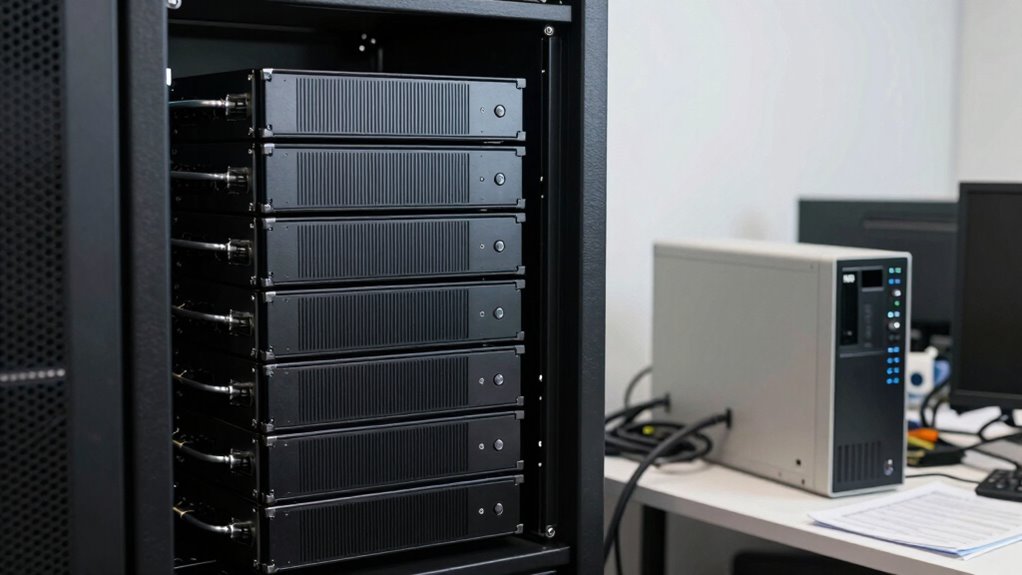
While both rackmount and desktop UPS units serve the same purpose of providing backup power and surge protection, they differ considerably in design and application. Rackmount UPS systems are built to fit into server racks, making them ideal for data centers and network closets. Desktop UPS units are compact, designed to sit on desks or under workstations. When comparing them, consider battery lifespan; rackmount units often have longer-lasting batteries due to their larger size and cooling capabilities. Noise levels also differ: desktop models tend to produce more noise because of smaller fans, while rackmount units are generally quieter, especially in controlled environments. space efficiency plays a crucial role in selecting the right UPS type for your setup. Additionally, choosing the right unit involves understanding the power capacity needed for your equipment to prevent overloads and ensure reliable operation. It’s also important to evaluate the thermal management features of each type to maintain optimal performance and longevity. Proper maintenance practices can further extend the lifespan and reliability of your UPS system, ensuring continuous protection. Regular monitoring of your UPS’s battery health can help prevent unexpected failures and maintain overall system reliability.
When Should You Choose a Rackmount UPS?
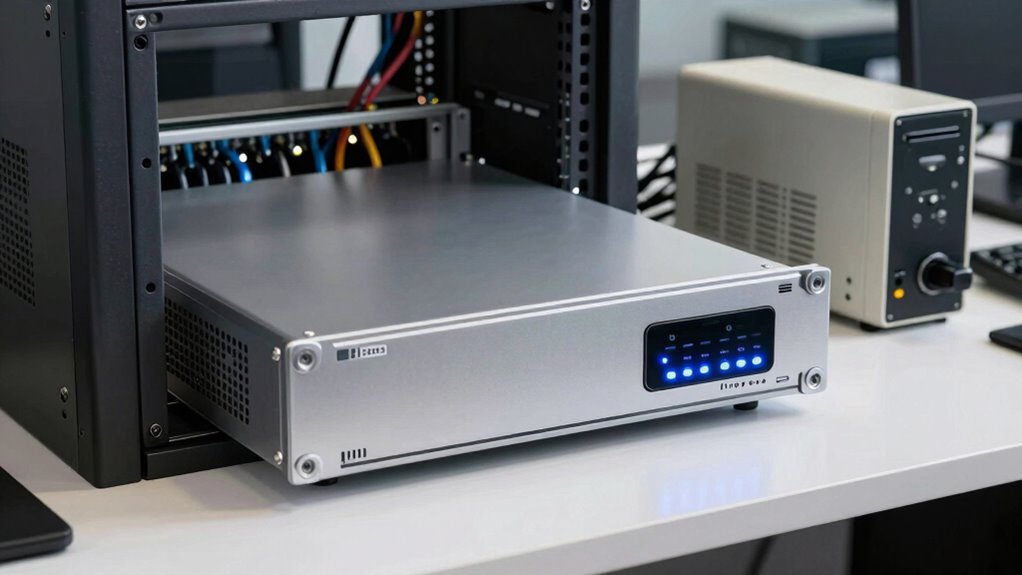
You should consider choosing a rackmount UPS when you need reliable backup power for multiple servers, networking equipment, or data center infrastructure. Rackmount units are designed for high-density setups, offering scalability and consistent performance. They typically have longer battery lifespans, reducing replacement frequency and maintenance costs over time. Noise levels are usually higher with rackmount models, but this is often less of a concern in dedicated server rooms or data centers. If your environment demands minimal downtime and you require a solution that can handle heavy loads efficiently, a rackmount UPS is your best choice. It guarantees your critical systems stay operational during power interruptions, providing peace of mind and protecting valuable data. Additionally, they are often designed with space efficiency in mind, making them suitable for environments with limited room. Proper thermal management can also extend the lifespan of your equipment and ensure consistent performance. Understanding cybersecurity vulnerabilities in connected systems can help protect your setup from potential threats. Regular monitoring and updates are essential to maintaining the security and reliability of your backup power system. Moreover, considering maintenance requirements can help ensure the uptime and reliability of your backup power system.
Why a Desktop UPS Might Save Space and Money

Have you considered how a desktop UPS can help you save space and money? It’s a compact solution ideal for small setups. Here are three reasons why:
A desktop UPS saves space and money, perfect for small setups with quiet operation and long-lasting batteries.
- Space efficiency: Desktop UPS units fit easily on desks or shelves, freeing up valuable room compared to bulky rackmount models. Additionally, their small footprint makes them easier to incorporate into various environments. This design also aligns with the trend toward compact technology that maximizes utility in limited spaces. Moreover, their straightforward design simplifies setup and adjustments, making them suitable for users seeking ease of use in their power backup solutions. Incorporating landscaping elements or other space-saving features can further optimize your setup.
- Lower noise levels: They operate more quietly, creating a less distracting environment—great for offices or home use.
- Battery lifespan: Many desktop models offer longer-lasting batteries, reducing replacement costs over time.
- Ease of maintenance: Desktop UPS units are generally easier to access for cleaning and upkeep, helping to maintain overall household organization.
How to Assess Your Power Needs Before Choosing a UPS
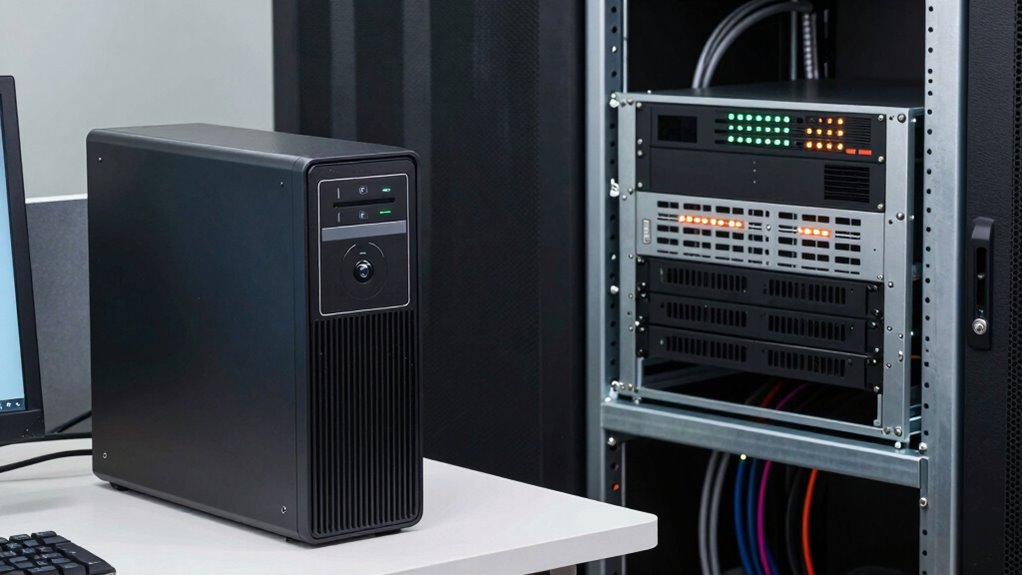
Before choosing a UPS, you need to accurately assess your power needs. Start by calculating the power requirements of your equipment, and think about potential future expansion. Also, prioritize which devices are critical to guarantee your UPS provides enough backup for what’s most important.
Evaluate Equipment Power Requirements
Determining your equipment’s power requirements is a crucial step in selecting the right UPS. To do this effectively, you need to take into account several factors:
- Total Power Load: Add up the wattage of all devices you want to protect. This helps you choose a UPS with enough capacity to handle your current needs without overloading.
- Battery Lifespan: Check the UPS’s battery lifespan, ensuring it can provide backup during outages for an appropriate duration.
- Noise Levels: Consider noise output, especially if your equipment is in a quiet environment. A quieter UPS minimizes disruptions and maintains a comfortable workspace.
Assessing these factors ensures your UPS meets your power, durability, and noise requirements efficiently.
Consider Future Expansion Needs
Planning for future expansion guarantees your UPS can grow with your needs. When evaluating your power requirements, consider potential equipment upgrades or additional devices. Choose a UPS with sufficient capacity and modular features to accommodate growth. Keep in mind that larger units may impact battery longevity and noise levels over time. To help evaluate your needs, review the table below:
| Current Load | Future Expansion | Recommended UPS Capacity |
|---|---|---|
| 10 kW | Add 5 servers | 15 kW or higher |
| Moderate | Extra storage | Slightly larger units |
| Low | Additional network devices | Scalable options |
This approach ensures you’ll avoid unexpected costs or performance issues later, while maintaining efficient, quiet operation. Incorporating long-term planning into your assessment supports sustainable growth and operational stability.
Determine Critical Load Priorities
Evaluating your power needs starts with identifying which equipment is most critical to your operations. To do this effectively, focus on understanding your load priorities. First, list essential devices like servers, networking equipment, and data storage—these should have the highest priority. Second, consider the Battery lifespan of your UPS, guaranteeing it can support critical loads during outages. Third, assess noise levels, especially if your equipment is in quiet workspaces or offices, to avoid disruptions. By pinpointing which devices matter most, you can select a UPS that balances capacity without wasting space or money. This approach helps prevent unnecessary upgrades and ensures your critical systems stay powered reliably while maintaining a quiet environment.
Cost Comparison: Rackmount vs Desktop UPS
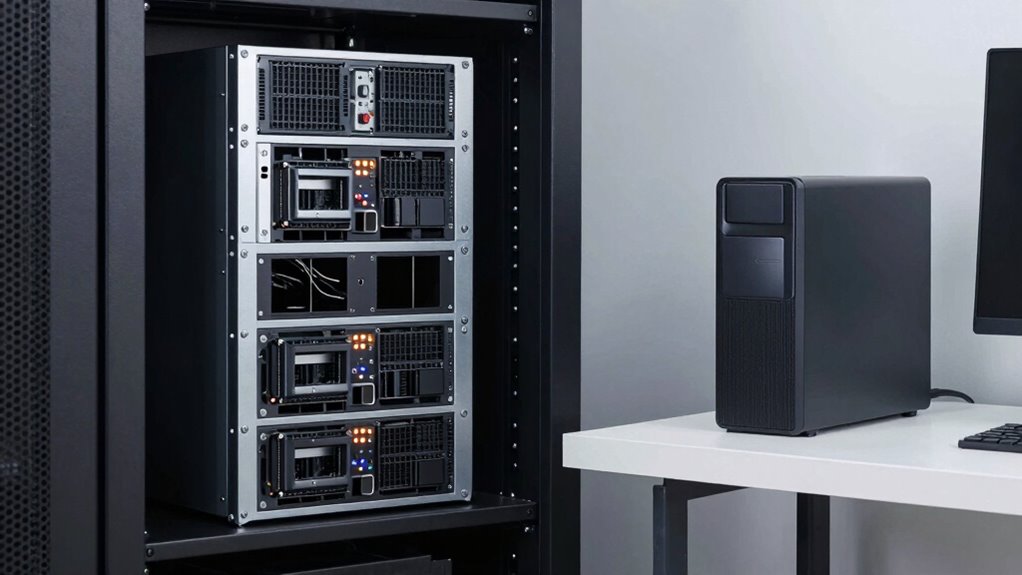
When comparing the costs of rackmount and desktop UPS units, the initial purchase price is usually the most noticeable difference. Theoretical concepts behind these units help explain why rackmount models tend to be more expensive upfront, as they incorporate advanced features suited for large-scale, professional setups. Over time, their durability and capacity can lead to lower total ownership costs. The historical evolution of UPS design shows that desktop units became more affordable as technology advanced, but they often lack the robustness of rackmount models. Additionally, enterprise-grade features in rackmount UPSs contribute to their higher initial investment but can offer greater reliability and scalability for growing needs. For example, power output of rackmount models is often higher, supporting more extensive infrastructure. Technological advancements continue to improve the efficiency and capabilities of rackmount units, making them a more attractive option for demanding environments. Furthermore, scalability options in rackmount models allow for easier expansion as demands increase, which is crucial for enterprise applications. A comprehensive understanding of derating factors such as altitude and temperature is essential when selecting a UPS to ensure optimal performance and longevity in various environments. While rackmount UPSs are costlier initially, their scalability and longevity can justify the investment for enterprise environments. Ultimately, your choice depends on balancing upfront costs against long-term value and application needs.
Space Requirements for Rackmount and Desktop UPS Units
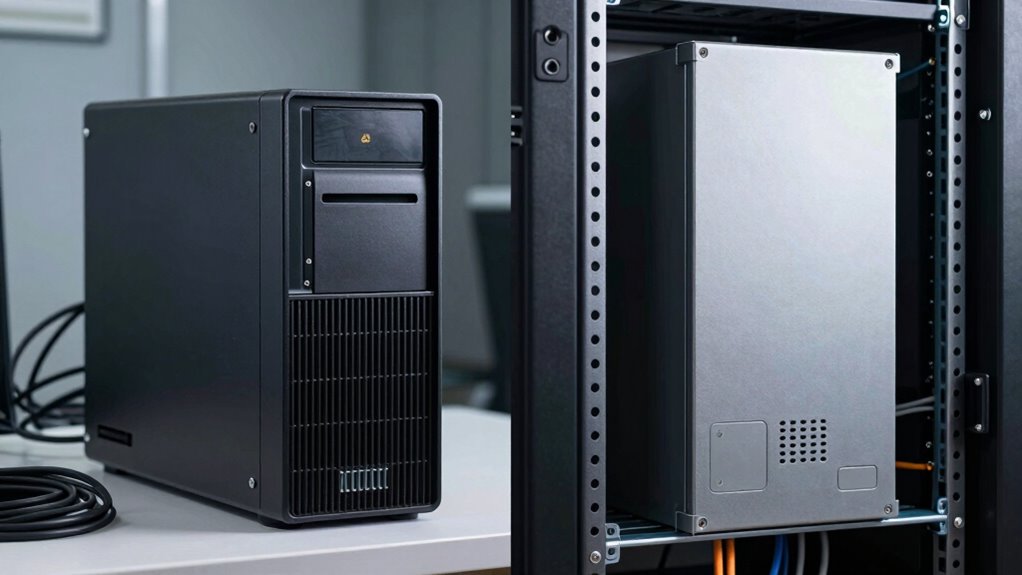
Rackmount UPS units are designed to fit into standard server racks, requiring a designated rack space that ranges typically from 1U to 10U or more, depending on their capacity. You need to take into account space efficiency—rackmounts often maximize vertical space but can be bulky. Additionally, consider cabling and installation requirements, as proper setup can influence overall space utilization and ease of maintenance. Properly managing server rack components can further optimize your setup and prevent clutter. Desktop UPS units, on the other hand, are compact and sit on desks or floors, saving you rack space.
Installation and Maintenance Tips for Each UPS Type

Installing a UPS properly is essential to guarantee reliable backup power and avoid potential issues down the line. For rackmount units, ensure proper ventilation and secure mounting to prevent overheating and excessive noise levels. Desktop UPSs should be placed on stable surfaces, away from heat sources, to prolong battery lifespan and reduce noise. Regularly check the battery status and replace batteries according to the manufacturer’s recommendations to maintain peak performance. Keep vents clean and unobstructed to prevent overheating and preserve battery health. Schedule periodic maintenance checks to monitor noise levels and battery condition. Both types benefit from a clean, dry environment to minimize wear. Proper installation and routine upkeep help extend battery lifespan and guarantee your UPS operates quietly and reliably when needed, especially when considering power management strategies for optimal performance. Additionally, understanding mythology-inspired names can be a creative way to label and personalize your equipment, adding a unique touch to your setup.
Common Mistakes When Selecting a UPS
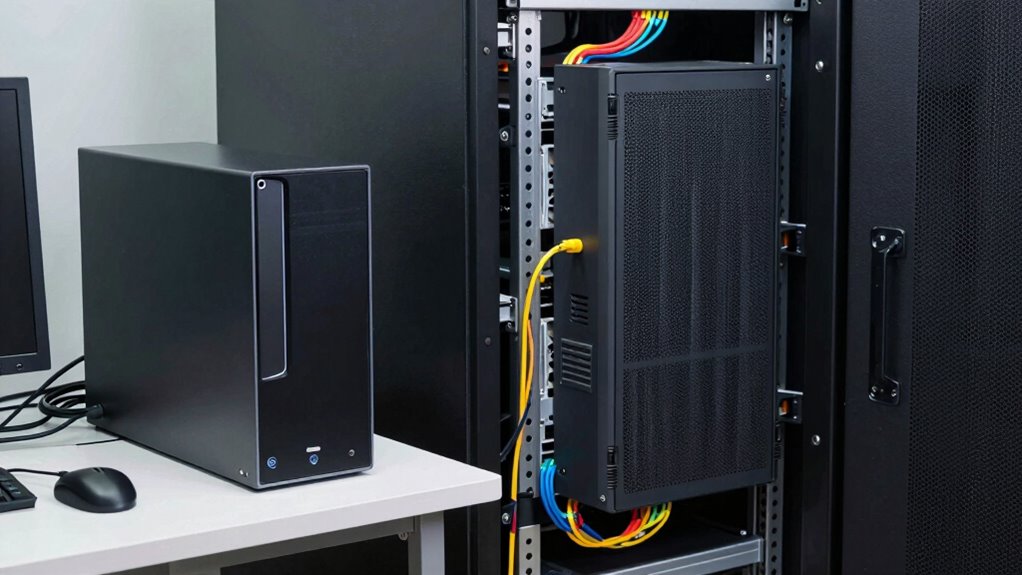
Choosing the right UPS can be tricky, and rushing the decision often leads to costly mistakes. One common error is ignoring battery lifespan, which can result in unexpected failures and replacement costs. Second, overlooking noise levels may cause disruptions in quiet environments like offices or homes. Third, you might select a UPS based solely on initial price, missing the importance of long-term reliability and performance. Failing to consider battery lifespan means you might replace batteries too often, increasing expenses. Ignoring noise levels can lead to dissatisfaction or disturbance. Additionally, choosing a UPS without evaluating its capacity and compatibility can cause system outages or damage. Avoid these mistakes by thoroughly assessing each factor, ensuring your investment is both effective and cost-efficient over time.
Reliability and Performance: Rackmount vs Desktop UPS
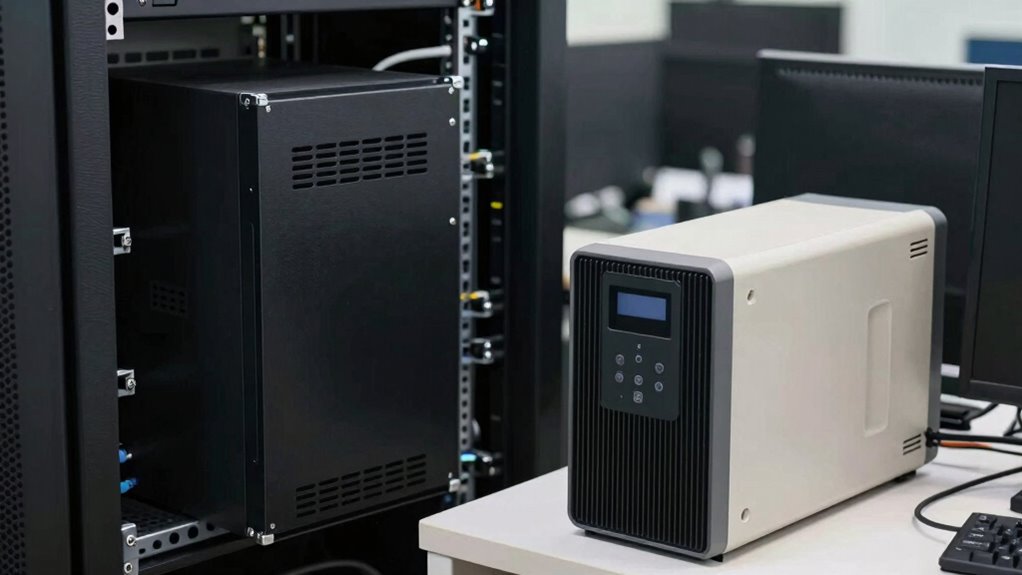
When choosing between rackmount and desktop UPS units, you need to consider their durability, redundancy, and how consistently they perform under load. Rackmount models often offer higher build quality and better redundancy options, ensuring reliable operation in demanding environments. Desktop units can vary in performance stability, so it’s essential to select one that meets your specific needs for long-term dependability.
Durability and Build Quality
Durability and build quality are essential factors that directly impact the reliability and performance of both rackmount and desktop UPS units. You’ll want units with high material quality and solid design robustness to guarantee longevity. Here are three key considerations:
- Material quality: Look for heavy-duty components like steel enclosures and high-grade circuit boards that withstand wear and tear.
- Design robustness: A well-constructed design prevents damage from impacts or vibrations, especially in demanding environments.
- Cooling and ventilation: Proper airflow enhances durability by reducing overheating and extending component lifespan.
Redundancy Capabilities
Redundancy capabilities are essential for ensuring continuous uptime and protecting your equipment from power failures. Rackmount UPS units often feature dual batteries or parallel configurations, providing backup if one battery fails. Desktop UPS models typically have a single battery, making them less reliable during power issues. The battery lifespan varies between types, affecting long-term performance and maintenance costs. Noise levels can also differ, with rackmount units sometimes generating more noise due to larger fans for cooling. Here’s a quick comparison:
| Feature | Rackmount UPS | Desktop UPS |
|---|---|---|
| Redundancy | Dual batteries, parallel configs | Single battery |
| Battery lifespan | Longer, with proper maintenance | Shorter, more frequent replacements |
| Noise levels | Higher, due to cooling fans | Quieter |
| Space requirements | Larger footprint | Compact |
| Reliability | Higher, better backup options | Lower, more prone to failure |
Performance Stability
Are you confident that your UPS will deliver consistent performance during unexpected power fluctuations? Performance stability depends on factors like battery chemistry and noise levels. To guarantee reliability, consider these key points:
- Battery Chemistry: Lithium-ion batteries offer longer life and faster recharge times compared to lead-acid, boosting performance stability.
- Noise Levels: Rackmount UPS units typically operate more quietly, reducing disruptions in sensitive environments.
- Design Impact: Rackmount models often have superior cooling systems, maintaining stable performance under heavy loads.
Choosing the right UPS with stable battery chemistry and low noise levels helps prevent unexpected shutdowns and keeps your equipment running smoothly during outages.
How to Pick the Best UPS for Your Budget and Space
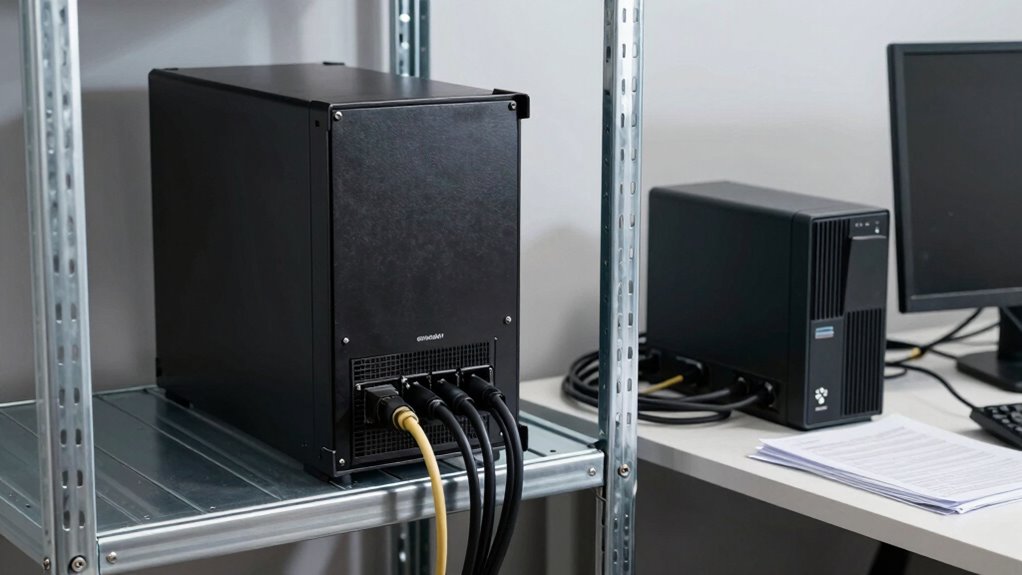
Choosing the right UPS depends heavily on your budget and available space, so it’s essential to prioritize your needs upfront. Consider battery longevity—if you need longer backup times or frequent power outages, invest in models with robust batteries. If space is limited, a compact desktop UPS might suit you better than a rackmount. Noise levels also matter; quieter units are preferable for office or home environments, while louder models may be acceptable in server rooms. Balance cost with these features; higher-priced units often offer longer battery life and quieter operation. Ultimately, focus on your primary needs: if space or budget constraints are tight, select a model that maximizes efficiency without sacrificing essential qualities like battery longevity or noise control.
Frequently Asked Questions
Can a Desktop UPS Be Upgraded for Higher Capacity?
Yes, you can upgrade a desktop UPS for higher capacity by exploring its upgrade options. Many models allow you to replace or add batteries to increase battery capacity, extending backup time during outages. Check the manufacturer’s specifications and compatibility before attempting an upgrade. Keep in mind, though, that not all desktop UPS units are designed for easy upgrades, so make certain your model supports this feature to avoid issues.
Are There Specific Environments Ideal for Rackmount UPS?
Think of a rackmount UPS as the backbone of a data center—it’s perfect for environments with ample rack space and specific equipment compatibility. You’ll find them ideal in server rooms, telecom setups, and industrial facilities where maximizing space and ensuring reliable power delivery are priorities. They seamlessly integrate with other rack-mounted hardware, making maintenance easier and ensuring your critical systems stay online without a hitch.
How Do Noise Levels Differ Between Rackmount and Desktop UPS?
You’ll notice that noise levels differ between rackmount and desktop UPS units, impacting acoustic performance. Rackmount UPS units tend to generate more noise due to their larger cooling fans and enclosed design, which can be disruptive in quiet environments. Desktop UPS units generally operate more quietly, making them better suited for offices or home use. So, consider noise levels carefully when choosing based on your environment’s acoustic needs.
What Are the Warranty Differences Between the Two Types?
You’ll find that warranty coverage and service duration differ between rackmount and desktop UPS units. Rackmount models often come with longer warranty periods, sometimes up to five years, reflecting their professional use and durability. Desktop UPS units usually have shorter warranties, around one to three years, and may offer limited coverage. Always check the specific warranty details and service options to guarantee your investment is protected for the needed duration.
Can a Desktop UPS Be Integrated Into a Server Rack?
You can integrate a desktop UPS into a server rack using an appropriate mounting kit or adapter, but it may not be the most energy-efficient choice. Desktop UPS units aren’t designed for ideal heat dissipation in rack environments, risking overheating and reduced lifespan. For better power efficiency and heat management, rackmount UPS systems are specifically built into server racks, ensuring reliable performance and easier maintenance.
Conclusion
Choosing between a rackmount and desktop UPS is like selecting the right tool for a job—you want it to fit snugly and perform reliably. Consider your space, budget, and power needs carefully. Think of your setup as a garden: a well-chosen UPS is the sturdy trellis that supports your equipment’s growth without crowding or wasting resources. Make the right choice, and your systems will thrive smoothly and efficiently.
Halloween Picks
halloween
As an affiliate, we earn on qualifying purchases.