You should store your most valuable physical assets, like cash reserves, in a secure, fire-resistant safe to prevent theft and damage. Critical legal documents, such as contracts and licenses, need protection from theft or loss, ideally in locked storage. For digital data, keep hard drives with sensitive information in the safe, and back them up securely or use encrypted cloud storage. If you want to know more about choosing and managing your safe, keep exploring these essential tips.
Key Takeaways
- Cash reserves should be stored securely in fire-resistant safes to prevent theft and damage.
- Critical legal documents, such as contracts and licenses, must be stored in secure, access-controlled safes.
- Hard drives containing sensitive or critical data should be backed up digitally and stored in a protected safe environment.
- Digital valuables require encryption and secure physical storage to prevent unauthorized access or loss.
- Regularly review and update storage protocols to ensure all valuable and sensitive items remain protected.
What Items Should You Store in Your Business Safe?
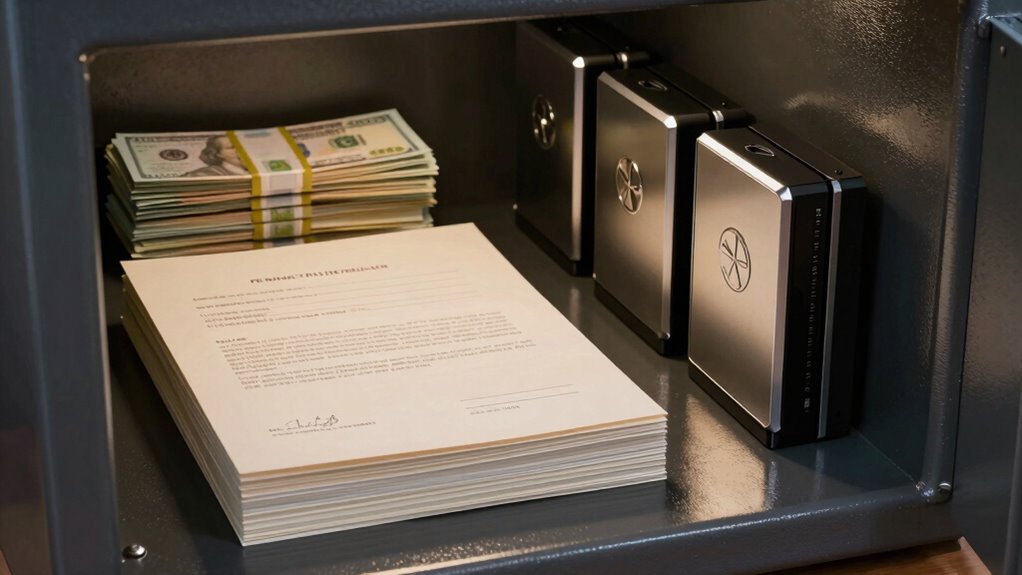
When it comes to safeguarding your business, certain items should always be stored in your safe. Inventory management documents, such as detailed records and sensitive spreadsheets, are crucial to protect from theft or damage. You also need to control employee access carefully; only trusted staff should have keys or codes. This ensures controlled access and helps prevent unauthorized entry and maintains security. Essential legal documents, like contracts and business licenses, should be securely stored to guarantee they’re protected yet accessible when needed. Valuable assets, such as expensive equipment or rare supplies, also belong in your safe to prevent loss. Additionally, implementing access control policies helps ensure that only authorized personnel can retrieve sensitive information or valuables. To further strengthen security, regularly reviewing your storage practices and staying informed about security threats can help you adapt and protect your business assets more effectively. Incorporating fire-resistant safes can provide extra protection against unexpected events such as fires or floods. By organizing these items properly, you enhance your inventory management and guarantee only authorized personnel can access sensitive information or valuables.
Why Keep Cash Secure in Your Business Safe?
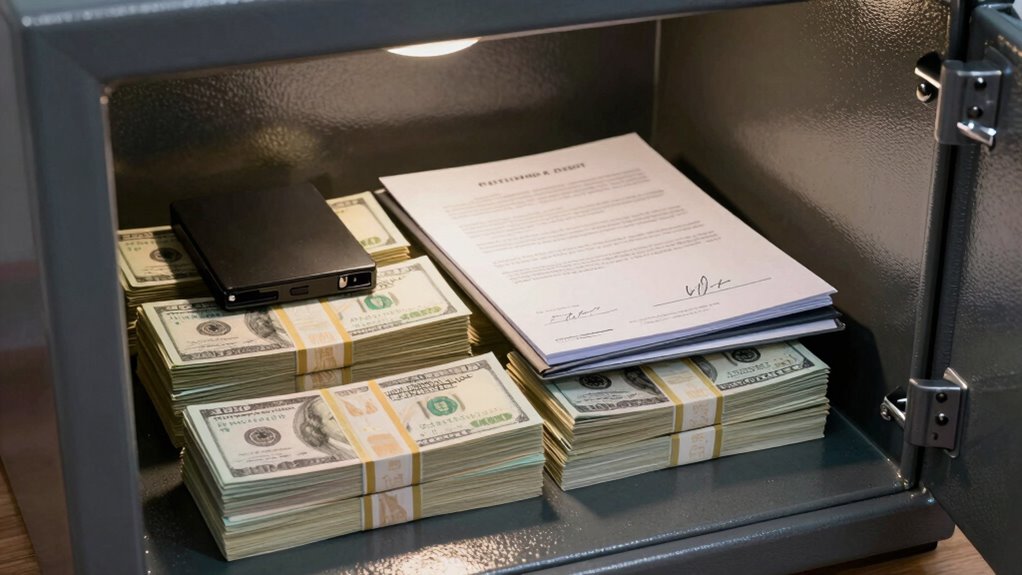
Ever wonder why keeping cash in your business safe is vital? Securing cash helps protect your cash flow, ensuring funds are available when needed without risking theft or loss. A safe provides a reliable way to store cash securely, especially during busy times or after deposits. Proper safe maintenance keeps it functioning effectively, preventing vulnerabilities that could expose your money. When cash is stored safely, you reduce the risk of internal theft or burglaries, safeguarding your business’s financial stability. Additionally, storing cash properly can simplify record-keeping and improve security protocols. Regularly inspecting and maintaining your safe is crucial to prevent cable failures that could compromise security. Incorporating security features such as electronic locks or alarms can further enhance your safety measures. Understanding nanotech fabrication challenges can help in designing more advanced safes that resist tampering and unauthorized access. Staying informed about local reviews of security products can help you select the most reliable options. Implementing comprehensive security systems can provide an extra layer of protection for your cash and assets. Ultimately, a well-maintained safe offers peace of mind, knowing your cash is protected and accessible only to authorized personnel. Keeping cash secure in your safe is an essential step in managing your business’s financial health.
How to Protect Your Business Contracts and Legal Documents?

Securing your business’s physical assets doesn’t stop at cash; protecting important contracts and legal documents is equally essential. Store these documents in a secure, fireproof safe to prevent damage or theft. Make sure your safe is bolted down and located in a discreet area. Regularly review your insurance coverage to ensure it includes business insurance that protects against theft or disaster. Employee training is crucial—educate staff about the importance of safeguarding legal documents and recognizing potential security threats. Keep physical copies of critical contracts in a separate location or off-site safe deposit box for added security. Implementing these measures helps you preserve vital business information and reduces the risk of losing essential documents during unforeseen events. Privacy Policy principles can guide you in understanding how to manage sensitive information securely. Additionally, understanding early warning signs of potential security issues can help you respond proactively and prevent losses. Being aware of security vulnerabilities within your physical or digital infrastructure allows you to address risks before they result in significant damage. Conducting regular security audits can help identify and mitigate these vulnerabilities effectively. Ensuring proper storage practices can further enhance your overall security measures.
Keeping Digital Data Safe: Hard Drives and Cloud Storage
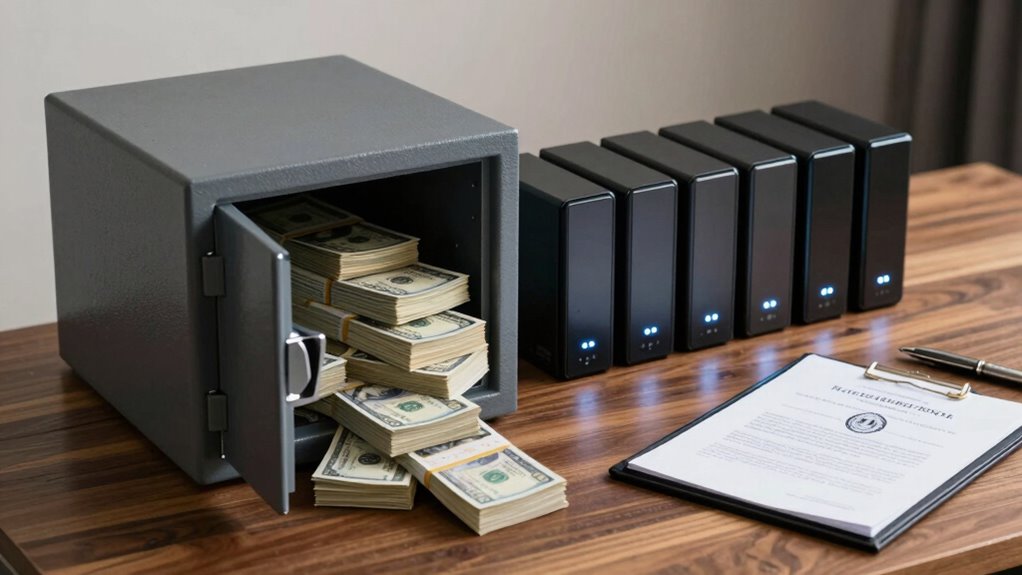
Keeping digital data safe requires more than just storing files on your computer; it involves implementing reliable backup solutions like external hard drives and cloud storage. These options defend your data from hardware failures, theft, or cyberattacks. Guarantee your data backups are encrypted using robust encryption protocols to prevent unauthorized access. Regularly test your backups to confirm they’re complete and recoverable. Cloud storage provides off-site security, reducing the risk of data loss from physical damage. External hard drives are ideal for quick restores and offline access. To maximize security, use multi-factor authentication and update your encryption protocols routinely. Remember, a thorough data protection plan integrates physical, digital, and procedural safeguards to keep your digital assets secure. Incorporating comprehensive security measures can further strengthen your data defense against emerging threats. Additionally, staying informed about cybersecurity best practices helps you adapt your strategies to new risks. Understanding the importance of data redundancy can also enhance your overall backup reliability.
Choosing the Right Business Safe: Key Factors to Consider
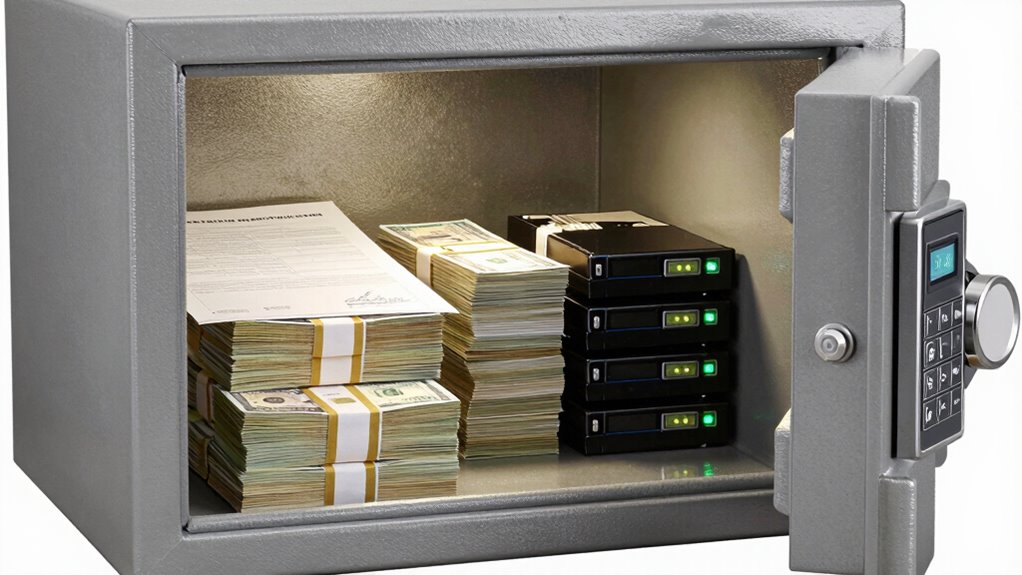
When choosing a business safe, you’ll want to prioritize strong security features and high ratings to protect your valuables effectively. Consider the size and capacity that fit your storage needs without sacrificing accessibility, and think about the best placement for quick access and security. By focusing on these key factors, you can select a safe that balances protection, convenience, and practicality.
Security Features and Ratings
How do you determine if a business safe provides adequate protection? Look for security features and ratings that demonstrate strength against theft and unauthorized access. Check if the safe employs robust encryption protocols for digital security, especially if it stores sensitive data. Biometric access adds an extra layer of protection by ensuring only authorized personnel can open it. Ratings from independent organizations, like UL or ETL, verify the safe’s durability and fire resistance. Also, consider features like reinforced steel construction, drill-resistant locks, and secure locking mechanisms. These elements work together to enhance your safe’s security, giving you peace of mind that your valuables are protected from both physical threats and digital breaches. Additionally, understanding the Fort Worth, Texas heritage can help inform cultural considerations for safekeeping valuables in certain regions. Incorporating cybersecurity tactics such as secure network configurations and physical security measures can further bolster your overall safety strategy. Furthermore, selecting a safe with appropriate watt-hour capacity ensures it can withstand power outages or electronic failures without compromising security. Ensuring your safe has the right battery backup systems can also prevent data loss or access issues during emergencies. Considering fire resistance ratings can provide added assurance that your valuables will be protected in the event of a fire.
Size and Capacity Options
Choosing the right business safe involves carefully considering its size and capacity to meet your specific storage needs. Start by evaluating what you plan to store, whether it’s cash, contracts, or hard drives, to determine the necessary storage units. Larger safes offer more capacity but may be more challenging to install securely and discreetly. Consider the space available for safe installation, ensuring it fits comfortably without obstructing access or other operations. Think about future growth—select a size that can accommodate increased storage needs down the line. Remember, a safe that’s too small can lead to overcrowding and compromised security, while an oversized safe may be unnecessary and cumbersome. Proper sizing ensures you protect your assets effectively without sacrificing convenience. Additionally, understanding safe security features can help you choose a model that offers optimal protection for your valuables.
Accessibility and Placement
Have you considered how easily accessible your safe needs to be for daily use and emergency situations? Accessibility challenges can impact how quickly you can retrieve essential items, so careful placement is vital. Use effective placement strategies to balance security and convenience.
- Avoid hidden spots that delay access during urgent moments
- Stay away from high-traffic areas prone to accidental damage
- Choose a discreet location to deter theft but remain reachable
- Consider the safe’s weight and size to prevent placement issues
- Keep in mind that improper placement can lead to market manipulation affecting the value of stored assets or valuables.
Proper placement ensures you can access your valuables when needed without compromising security. Think about the safe’s location in relation to your workflow and emergency protocols to optimize its usefulness.
Space-Saving Tips for Organizing Your Safe Effectively
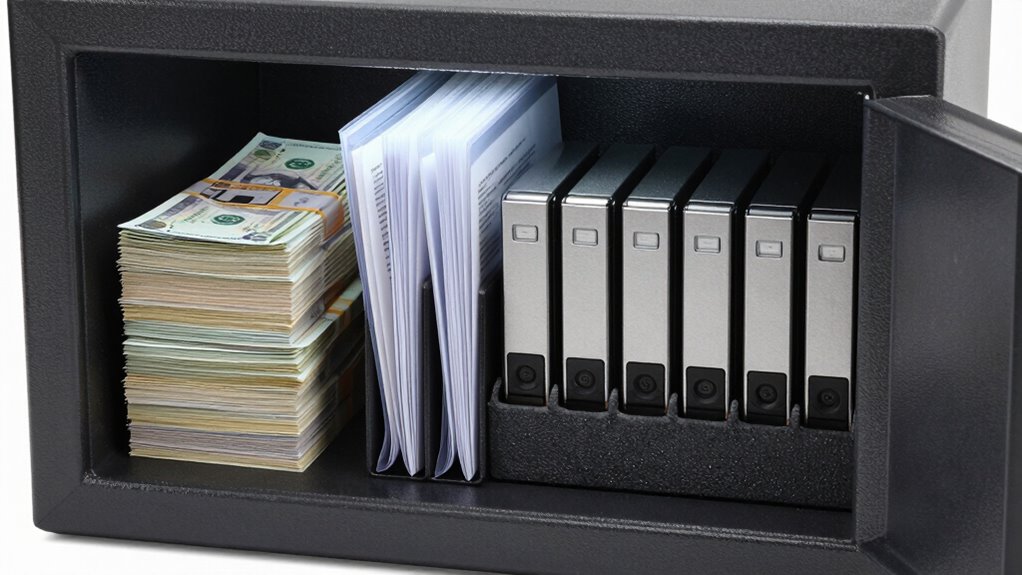
To make the most of your safe’s space, focus on maximizing vertical storage and stacking items efficiently. Using compact containers helps keep everything organized and easy to access without taking up extra room. Small adjustments like these can substantially improve your safe’s capacity and efficiency.
Maximize Vertical Space
Maximizing vertical space in your safe can substantially increase its storage capacity. To optimize organization, consider using stacking trays or adjustable shelves that allow you to utilize every inch efficiently. This approach helps you manage inventory better and guarantees quick access for employees. Properly organized vertical space also minimizes clutter, making it easier to locate important items quickly. When planning your setup, think about accessibility for employees—place frequently used items at eye level or within easy reach. Employ vertical dividers or small bins to separate different categories of valuables, reducing the risk of misplacement. Remember, strategic use of vertical space enhances both inventory management and security, enabling smoother operations and better protection of your business assets.
Use Compact Containers
Want to make the most of limited space in your safe? Using compact containers is a smart way to maximize your storage capacity. These space-saving solutions help you organize small items like cash, documents, or hard drives efficiently. Choose stackable or multi-compartment containers to keep everything accessible and neat. Label each container clearly so you can quickly find what you need without rummaging. Avoid loose piles and scattered items, which waste space and create clutter. Compact containers also protect your valuables from damage or theft by keeping them secure and contained. Incorporate these space-saving solutions into your safe’s layout to optimize every inch. With the right containers, you’ll improve organization and ensure your essential business assets stay safe and easy to retrieve.
Should You Store Files in a Safe or the Cloud?
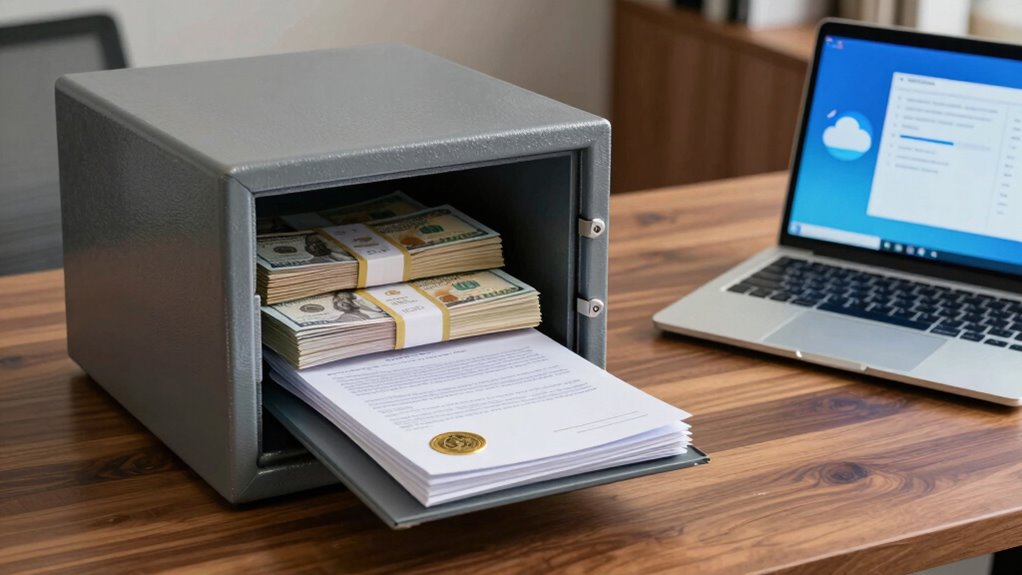
Have you ever wondered whether it’s safer to store important files in a physical safe or in the cloud? Both options have pros and cons. Physical safes protect against theft and physical damage but can be lost or damaged themselves. Cloud backup offers easy access and automatic updates, but relies on internet security. Digital encryption is essential in both methods to keep your data safe from cyber threats. Consider these points:
- Physical safes guard against physical threats but lack remote access
- Cloud storage allows quick recovery and scalability
- Digital encryption enhances security regardless of location
- Combining both methods offers layered protection
Deciding depends on your specific needs, risk tolerance, and the importance of remote access for your business. Balancing physical safes with secure cloud backup provides all-encompassing protection.
Common Mistakes to Avoid When Securing Business Assets

Many businesses overlook the value of their assets or neglect proper storage methods, leaving valuables vulnerable. Failing to regularly update security measures can also create gaps that thieves or disasters exploit. To protect your assets effectively, you need to identify risks early and stay current with best practices.
Overlooking Asset Valuables
Failing to recognize the full value of your assets can leave your business vulnerable to significant losses. Overlooking asset valuables often results in inadequate asset valuation, which affects your insurance coverage and protection strategies. If you don’t know the true worth of your assets, you risk underinsuring critical items or missing valuable items altogether. To avoid this mistake, regularly assess and update the asset valuation of everything from cash reserves to digital data. Proper valuation ensures your insurance coverage aligns with actual asset worth, minimizing gaps during emergencies.
- Misjudging the value of high-tech equipment or sensitive data
- Ignoring the importance of documenting physical and digital assets
- Neglecting to update asset valuation after significant purchases or upgrades
- Overlooking valuables stored off-site or in transit
Ignoring Proper Storage Techniques
Proper storage techniques play a pivotal role in protecting your business assets from theft, damage, or loss. Falling for storage myths can lead you to overlook essential security measures, leaving valuables exposed. Many assume that simply locking items away is enough, but improper techniques can undermine security. For example, storing sensitive documents near heat sources or in easily accessible areas risks damage or theft. Avoid hiding valuables in obvious spots like under mattresses or in common files, as these are well-known hiding places for intruders. Using outdated or makeshift storage methods can create vulnerabilities. Instead, invest in secure safes, organized storage, and proper environmental controls. Ignoring proper storage techniques leaves your assets vulnerable and can compromise your entire security setup.
Failing to Update Security Measures
If you neglect to regularly update your security measures, your business becomes an easy target for thieves and intruders. Cybersecurity vulnerabilities can emerge from outdated software, weak passwords, or unpatched systems. Failing to keep security protocols current leaves gaps that intruders can exploit. Additionally, without ongoing employee training, staff may overlook new threats or follow outdated procedures. This increases the risk of accidental breaches or security lapses. To avoid these pitfalls, regularly review and upgrade your security systems, including firewalls, antivirus, and encryption tools. Educate your team on emerging threats and best practices. Staying proactive helps close vulnerabilities before they’re exploited and ensures your business assets remain protected against evolving risks.
- Keep security software up to date
- Regularly review access controls
- Train employees on cybersecurity threats
- Monitor for new vulnerabilities
Best Practices for Managing Access to Your Business Safe
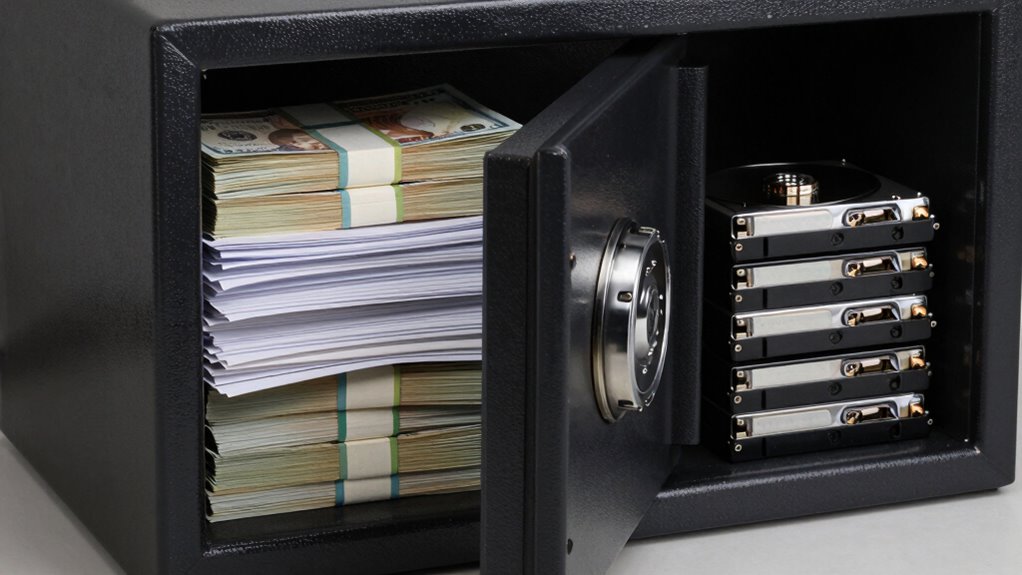
Managing access to your business safe is essential for maintaining security and preventing unauthorized entries. You should restrict employee access to only those who need it, and regularly review who has keys or combination codes. Implement a strict system for issuing and recovering access credentials, and avoid sharing codes or keys unnecessarily. Establish clear emergency protocols so employees know how to respond if they need immediate access during urgent situations. Keep a record of all access activities and promptly revoke permissions for employees who leave or change roles. Using secure, limited access minimizes risks and enhances accountability. Regularly train your staff on security procedures and emphasize the importance of safeguarding the safe’s contents. This disciplined approach helps protect your valuables and guarantees your security measures stay effective.
How to Review and Update Your Business Security Strategy

Regularly reviewing and updating your business security strategy is essential to staying ahead of evolving threats and vulnerabilities. You should evaluate your current measures, identify gaps, and adapt to new risks. Incorporate ongoing employee training to guarantee everyone understands security protocols and emergency preparedness. Keep your plan flexible to respond to emerging threats effectively.
Consider these key points:
- Regularly schedule security audits to identify weaknesses
- Update employee training programs for new procedures
- Review emergency preparedness plans and drills
- Adapt security measures to changes in your business environment
Frequently Asked Questions
How Often Should I Update My Business Safe’s Contents?
You should update your business safe’s contents at least quarterly to guarantee proper inventory management and security. Regularly review what’s inside, removing outdated documents or excess valuables. Implement access control to limit who can open the safe, reducing risk. Keeping your safe’s contents current helps protect your assets and ensures you’re prepared for audits, emergencies, or audits, and helps prevent theft or loss.
Are Fireproof Safes Necessary for Business Asset Protection?
Think of fireproof safes as your business’s fortress against disaster. Yes, they’re essential for business asset protection, shielding crucial documents, hard drives, and contracts from fiery infernos. Without one, your critical assets risk turning to ash. Investing in a fireproof safe is like building a sturdy castle wall—giving you peace of mind that your valuables are safeguarded, no matter how fierce the flames might get.
What Legal Requirements Exist for Storing Sensitive Business Documents?
You need to follow legal compliance standards when storing sensitive business documents. This means implementing encryption protocols for digital files and ensuring physical documents are securely stored in a fireproof, locked safe. Laws vary by industry and location, so you should regularly review relevant regulations like GDPR or HIPAA. Staying compliant helps protect your data, avoid fines, and maintain trust with clients and partners.
Can Digital Backups Replace Physical Storage in a Safe?
Digital backups can replace physical storage in a safe, but only when you prioritize cloud backups and physical security equally. You should rely on cloud backups for quick access and disaster recovery, while keeping essential physical copies in a secure safe for added protection. Balance digital and physical storage by safeguarding your data through encryption, strong access controls, and regular backups, ensuring your business information remains protected and accessible in any situation.
How Do I Prevent Unauthorized Access to My Business Safe?
To prevent unauthorized access to your business safe, you need strong access control and security protocols. Limit safe access to trusted personnel only, and implement unique, complex PINs or biometric authentication. Regularly update security measures and keep a record of access logs. Consider installing surveillance cameras to monitor safe areas. Consistently review and reinforce your security protocols to guarantee only authorized individuals can access the safe, maintaining your business’s security.
Conclusion
Ultimately, your business safe is more than just a lockbox — it’s your fortress of peace of mind. While it protects your cash and contracts, it’s not a substitute for digital backups or cybersecurity. Balancing physical security with digital safeguards guarantees your assets are truly secure. Remember, a safe isn’t just about stopping theft; it’s about safeguarding your business’s future, both tangible and digital. Protect wisely, and you’ll sleep easier knowing your business is resilient.