
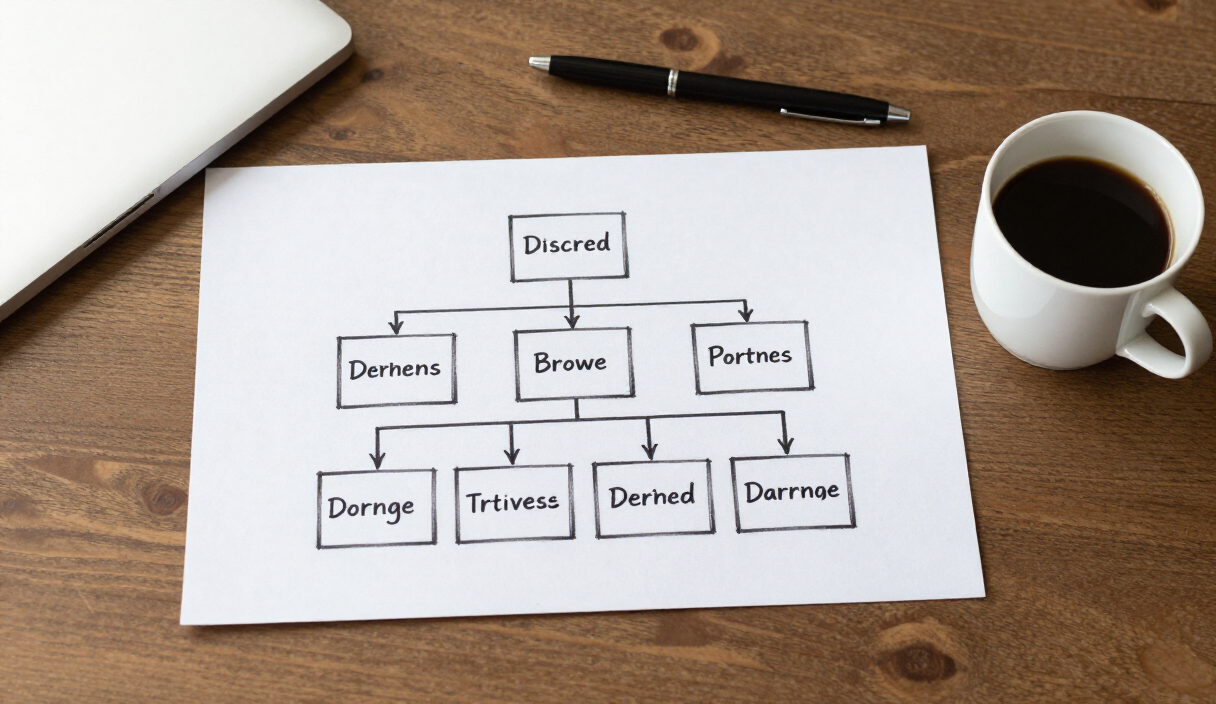
Most build-in-public content is a scoreboard. Revenue screenshots, follower counts, launch-day traffic — the outputs. Gewerkton, a voice-first construction documentation and defect management platform for global markets, is doing something less common and far more useful: it is building in public at the level of decisions. One brand instead of many. Ten domains consolidated into a single address. An EUIPO trademark. And — the part other founders should read twice — a rejected list: the products deliberately not built.

Get business pricing on office and shipping supplies
- Business-only prices and quantity discounts
- Tax-exempt purchasing
- Multiple users, one account, clear invoices
Most build-in-public content is a scoreboard of outputs. Gewerkton — a voice-first construction documentation and defect management platform — publishes decisions instead: what was consolidated, what was refused, what is honestly unfinished. Outputs tell you what happened; decisions tell you why.
The status labels are the promise — documented status over verbal assurance, the same discipline the product sells to construction sites.
That distinction matters. Outputs tell you what happened; decisions tell you why, and the why is the only part another operator can actually reuse. A revenue chart is a result with the reasoning stripped out. A public record of what was consolidated, what was refused and what was honestly labelled as unfinished is a transfer of judgement — and judgement, unlike execution, is still scarce.
The company was born in the German market and carries the deepest German commercial integration in its field — GAEB, REB, XRechnung and DATEV — but the story here is not a regional one. It is a story about decision discipline, told by a solo founder directing a fleet of coding agents, and about why the ability to say no may be the last genuinely scarce founder skill.
One brand, ten domains, one trademark
Startups routinely fragment their own identity. A product gets a name, the name gets a domain, the domain spawns a microsite, and three years later marketing is maintaining a small empire of URLs that confuses buyers and dilutes search authority. Gewerkton went the opposite way: a branded house. One brand, three product lines, and ten domains consolidated into a single address. The name is protected with an EUIPO trademark — a detail that looks like paperwork and is actually strategy, because renaming a fragmented product family after traction is one of the most expensive unforced errors a young company can commit.
The house-of-brands alternative is seductive because each new name feels like free positioning. It is not free. Every sub-brand doubles the explanation work in every sales conversation, splits whatever search authority the company earns, and turns the website into a map only the founding team can read. Operators who have untangled a portfolio of legacy microsites know the cost is not hypothetical — it arrives as confused procurement teams and duplicated content budgets.
The three product lines sit under the master brand with descriptive names rather than invented sub-brands. Gewerkton Field is the voice-first construction site app: dictation to evidence, defects, daywork reports, takt and portal. Gewerkton Studio is the browser workspace for plans and models — and where no model exists, the site team creates one directly in the browser. Gewerkton Cloud handles operations and the coordination of models and data between Field, Studio and third parties.
Notice what the naming does. A site manager, a project coordinator and an engineer on three different continents are all buying the same brand at different depths. There is no translation layer of sub-brands to maintain, no question about which logo belongs on a handover document. For a platform that serves cross-border teams in 27 content languages, one name is not a vanity choice; it is an operational one.
construction documentation voice-first platform
As an affiliate, we earn on qualifying purchases.
As an affiliate, we earn on qualifying purchases.
The product, stated plainly
Gewerkton is in beta. A public beta is planned for fall 2026. That sentence matters, and the company prints it where you can see it rather than burying it in a footer — because the product’s entire promise is that on site, what counts is what’s proven. A platform that asks the construction industry to trust documented evidence cannot itself run on vapour. The beta badge is not a disclaimer; it is the marketing line applied to the company itself.
In practical terms: a worker dictates instead of typing, and the dictation becomes evidence — defects with photo and deadline, daywork reports signed on device at handover, meeting decisions that become trade-sorted task lists. Underneath sits the deep German commercial integration — GAEB, REB, XRechnung, DATEV — alongside 27 content languages and a choice of AI providers by region: EU, US and Asian providers, including mainland China. Voice-first documentation and defect management, built for global markets from a German foundation.
The rejected list
Here is the part of the story most companies never publish. Gewerkton’s strategy contains a deliberate not-to-do list, and two entries on it would have been obvious moves for a construction software firm: a CAD clone and a payment product. Both were rejected. Not postponed, not deprioritised — rejected, with reasoning a founder can articulate. In an industry where every platform pitch eventually drifts toward “we do everything”, a written refusal is a positioning document.
No CAD clone
The CAD refusal is the clearest. Studio is a browser workspace for plans and models — a place to view, coordinate and, where no model exists, let the site team create one in the browser. Building a full CAD authoring suite would have put the company in head-on competition with entrenched tools its future customers already own, burned years of development capacity, and added nothing to the core promise of voice-first documentation and defect management. The workspace meets plans where they are; it does not try to replace the software that draws them.

No payment product
The payment refusal is subtler, because the adjacency is real. When your platform already touches XRechnung and DATEV, payments look like the next checkbox on a pitch deck. But an integration is not a product. Connecting cleanly to the financial systems construction firms already run is a feature; becoming a payment company is a second startup — new regulation, new risk, new team — strapped onto the first. Saying no keeps the surface area small enough for the actual promise to be excellent.
There is a practical operator’s lesson in how such a list works. A rejected list is not a graveyard of bad ideas; it is a triage document for good ones. The ideas on it are tempting precisely because they are plausible. Writing them down, with the reason for refusal attached, converts a recurring internal debate into a settled decision — and stops the same suggestion from re-entering the room every quarter dressed in new vocabulary.
That is the founder skill the word “focus” understates. It is not focus; it is arithmetic. Every yes consumes the same hours and the same brand trust, and the returns on yes decay with distance from the core. A rejected list, written down and defended, is how a small team keeps its compounding pointed in one direction.
The roadmap as an honesty tool
Public roadmaps usually fail in one of two ways: they promise dates nobody can keep, or they stay so vague they promise nothing. Gewerkton uses a third pattern. Items that are not committed carry in-planning chips; what is unfinished carries a beta badge. The status labels are the promise. A customer evaluating the platform today can see exactly what is real, what is being tested and what is still a drawing — which is, not coincidentally, precisely the discipline the product sells to construction sites: documented status over verbal assurance.
Enterprise software has a long history of selling the roadmap and shipping the apology. Construction buyers, burned more than once, have learned to discount future-tense features to zero. A vendor that visibly distinguishes “in planning” from “in beta” from “available” is speaking that scepticism fluently — and charging nothing for the credibility it earns.
For founders, the transferable lesson is that a roadmap is a trust instrument before it is a planning one. In-planning chips cost nothing to print and buy something expensive: the right to be believed later. When the public beta opens in fall 2026, the companies that take the beta badge seriously will be the ones whose waitlists convert, because their status labels meant something during the quiet months.
A solo founder, a fleet of agents, and why “no” got more valuable
The operating model behind Gewerkton makes the rejected list more than philosophy. The platform is built by a solo founder directing a fleet of coding agents — Codex and Claude — and in one night that fleet shipped 21 software packages, verified with negative controls and mutation tests. Read that twice. When execution capacity stops being the bottleneck, the constraint moves upstream to judgement. A founder who can ship twenty-one verified packages in a single night is a founder for whom saying yes is cheap and saying no is priceless. Every unbuilt product line is not lost revenue; it is undivided attention.
The verification detail deserves its own paragraph. Negative controls and mutation tests are not how teams behave when they are shipping demos; they are how teams behave when the output has to survive scrutiny. For a buyer evaluating beta software, that distinction is the whole evaluation. Anyone can generate code quickly now; the differentiating asset is a verification habit that catches what the generator got wrong. And it is the same posture as the product itself — dictation that becomes evidence, instructions backed by original audio, an evidence original that stays unambiguous across languages. The company builds the way it wants its users to document.
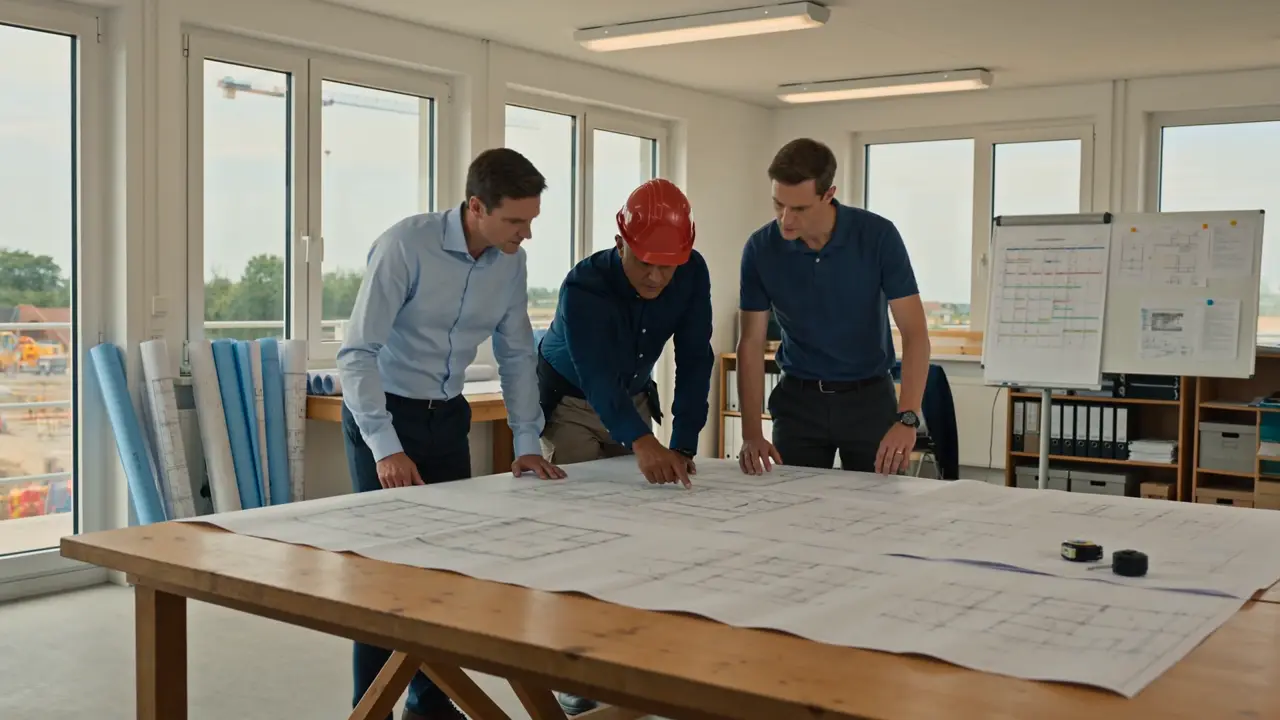
Where the platform earns its keep
The deployment fields read like a stress test for documentation and defect management, which is the point:
- Wind farms and renewables: distributed sites, rotating crews, field acceptance, offline capture in dead zones.
- Data centers and industrial plants: many trades in parallel, tight deadlines, meeting decisions that become trade-sorted task lists.
- Housing and building construction: defects with photo and deadline, dictated daywork reports, signature on device at handover.
- Infrastructure and tunnels: long durations, many change orders, instructions backed by original audio.
- Cross-border teams: EU, US and APAC on the same project, each working in their own language, while the evidence original stays unambiguous.
- Projects in Asia: Chinese, Korean and Vietnamese crews — multilingual from capture to report, with data residency by choice.
The common thread is hostility to improvisation. These are environments where connectivity fails, crews rotate, languages multiply and deadlines compress — exactly the conditions in which undocumented verbal agreements go to die. A platform that stays coherent there has covered the average office job by default.
Two architectural choices run through all of these fields. The first is BYO-AI: 13 AI providers, bring your own keys, selectable by region — EU, US, Asia including mainland China — so there is no vendor lock-in at the layer where lock-in hurts most. The second is data residency: EU cloud or your own infrastructure, your choice. For an industrial plant operator or a cross-border consortium, these are not compliance decorations. They are procurement answers, settled before the first meeting.
Even the marketing site is built like the product: 27 languages, zero trackers, no cookie banner, a fully egress-free architecture, and a media bank of more than 51 self-produced clips and posters. A company selling evidence to an industry allergic to fine print chose to make its own shop window evidence-shaped. Build in public, applied to the plumbing.
What to copy, what to steal
Condensed for founders and operators, the playbook is five moves. Consolidate the brand before the brand consolidates you — one name, one domain, protected early. Write the rejected list and treat it as strategy, not confession; a CAD clone and a payment product are exactly the kind of obvious ideas that sink focused companies. Label your roadmap with the honesty you expect from your product. When agents make execution cheap, spend the surplus on judgement, not scope. And let the product’s values leak into everything, including the cookie banner that isn’t there.
Gewerkton is in beta now, with a public beta planned for fall 2026. If you run sites, crews or cross-border projects — or you simply want to watch a branded house being built with unusual discipline — the consolidation lives at gewerkton.com: one domain, three product lines, and a rejected list that says more about the company than most feature pages do.
Halloween Picks
halloween
As an affiliate, we earn on qualifying purchases.