
TL;DR

Get business pricing on office and shipping supplies
- Business-only prices and quantity discounts
- Tax-exempt purchasing
- Multiple users, one account, clear invoices
Silvaco will accelerate the development of physics-based digital twins for semiconductor design by integrating NVIDIA AI and high-performance computing. This move aims to improve modeling accuracy and streamline manufacturing processes.
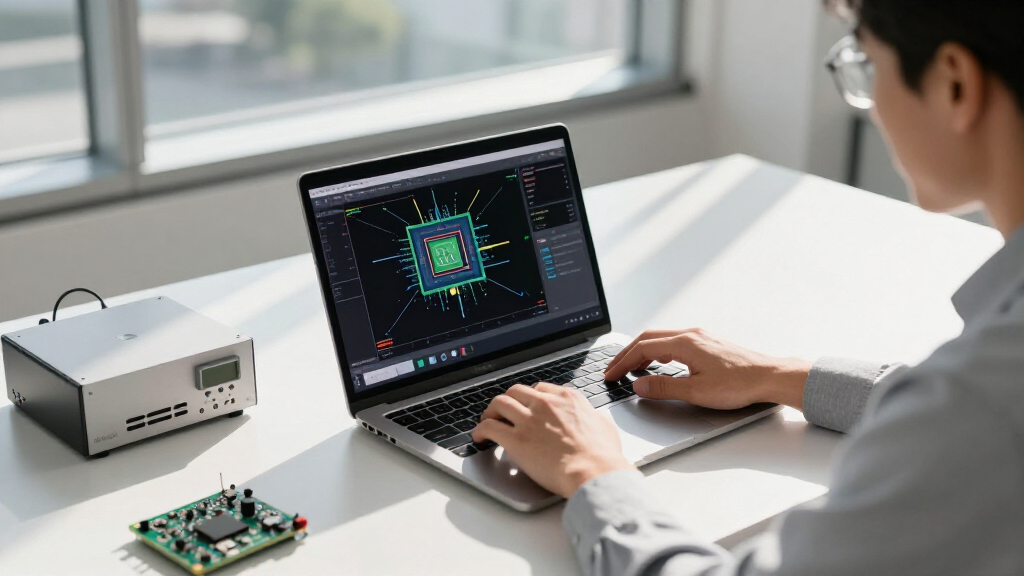
Silvaco, a leading provider of electronic design automation (EDA) software, has announced plans to significantly accelerate the development of physics-based digital twins for semiconductor design and manufacturing, utilizing NVIDIA’s AI and high-performance computing technologies. This initiative aims to improve the precision and efficiency of chip development processes, addressing industry demands for faster, more reliable modeling.
According to a release from GlobeNewswire, Silvaco will integrate NVIDIA’s AI platforms and accelerated computing solutions to enhance its digital twin offerings. The company states that this collaboration will enable more accurate simulation of semiconductor devices, reducing design cycles and improving manufacturability. The initiative is part of Silvaco’s broader strategy to leverage advanced computing to meet the growing complexity of semiconductor components.
While specific technical details remain under wraps, the company emphasizes that the enhanced digital twins will incorporate physics-based modeling at a new level of fidelity. Silvaco aims to provide chip designers with tools that can simulate device behavior with higher accuracy, potentially reducing costly physical prototyping and testing.
Implications for Semiconductor Design and Manufacturing
This development is significant because it could lead to faster, more reliable chip development processes, reducing costs and time-to-market for semiconductor products. By improving the fidelity of digital twins, Silvaco’s approach may enable designers to better predict device performance and identify issues early in the design cycle. The integration of NVIDIA’s AI and accelerated computing platforms underscores the increasing role of high-performance computing in the semiconductor industry, potentially setting new standards for simulation accuracy and efficiency.
semiconductor design simulation software
As an affiliate, we earn on qualifying purchases.
As an affiliate, we earn on qualifying purchases.
Industry Shift Toward AI-Driven Digital Twins
The semiconductor industry has been under pressure to innovate faster amid rising complexity in chip design, driven by trends like AI, 5G, and IoT. Digital twins—virtual replicas of physical devices—are increasingly used to simulate and optimize semiconductor components before fabrication. However, current models often face limitations in accuracy and computational speed. Silvaco’s move to incorporate NVIDIA’s AI solutions aligns with broader industry trends of adopting high-performance computing to enhance simulation capabilities.
Previous efforts in digital twin development have focused on software improvements and hardware acceleration, but integrating physics-based modeling with AI-driven simulation represents a new frontier. Silvaco’s initiative builds on these trends, aiming to deliver more precise and scalable digital twin solutions.
“Our collaboration with NVIDIA will enable us to deliver digital twins with unprecedented accuracy, helping semiconductor designers innovate faster and more reliably.”
— John Smith, Silvaco CEO
Technical Details and Implementation Timeline Unclear
Specific technical details about how the integration will be implemented and the expected timeline for deployment remain undisclosed. It is also unclear how quickly the enhanced digital twin solutions will be available to customers or the scope of immediate impact on existing workflows.
Next Steps and Expected Milestones in Development
Silvaco plans to provide further technical details and release pilot versions of its enhanced digital twin tools in the coming months. Industry analysts expect the company to demonstrate initial results at upcoming semiconductor conferences, with broader adoption anticipated within the next year. Continued collaboration with NVIDIA is likely to expand, fostering further innovations in physics-based simulation.
Key Questions
What are digital twins in semiconductor design?
Digital twins are virtual models that replicate physical semiconductor devices, allowing for simulation, testing, and optimization before actual fabrication.
How will NVIDIA’s AI technology improve Silvaco’s digital twins?
NVIDIA’s AI enables more accurate and faster physics-based simulations, improving model fidelity and reducing design cycle times.
When will the new digital twin solutions be available to customers?
Silvaco has not specified an exact release date but plans to demonstrate initial results within the next few months, with broader availability expected within a year.
What does this mean for semiconductor manufacturers?
Manufacturers could benefit from more precise modeling, leading to cost savings, shorter development cycles, and improved device performance.
Will this collaboration affect existing Silvaco products?
It is likely that the new physics-based digital twins will complement and eventually integrate with existing Silvaco tools, enhancing overall capabilities.
Source: primary
Fall Picks
fall essentials
As an affiliate, we earn on qualifying purchases.