

📊 Full opportunity report: What Benchmark Partners Know About AI’s Future That Zero-Sum Crowd Misses on ThorstenMeyerAI.com — validation score, market gap, and execution plan.
TL;DR
Benchmark partner Eric Vishria argues that the AI market is not a fixed pie but an expanding space with multiple winners. He highlights lessons from the cloud era, emphasizing the importance of differentiation and the complexity of infrastructure and hardware markets.
Eric Vishria, a General Partner at Benchmark, has warned that the AI market is not a zero-sum game with a single winner but an expanding space with multiple significant players. His insights, drawn from decades of experience in tech investing, challenge prevailing narratives that suggest one company will dominate all segments, emphasizing instead that the market’s size and complexity support numerous winners.
Vishria’s key argument is that the common mistake in thinking about AI is assuming a fixed market where one firm will capture all value. Drawing parallels from the cloud era, he notes that early skepticism about Amazon Web Services (AWS) being durable or high-margin proved wrong. Instead, the cloud market evolved into an oligopoly with multiple large players, including Microsoft Azure, Google Cloud, and independent giants like Cloudflare, each carving out substantial market share.
He emphasizes that the market is too big for any one company to monopolize entirely, citing examples like Snowflake, Databricks, and MongoDB, which built billion-dollar businesses competing with Amazon on its own infrastructure. Vishria also highlights that the AI landscape will mirror this pattern, with a handful of large winners across different layers, including inference providers, chipmakers, and edge computing firms.
Regarding infrastructure, Vishria challenges the assumption that open-source models on commodity hardware are purely a commodity. He points to Fireworks, a specialist that runs the same models as hyperscalers but achieves significantly higher throughput by optimizing for efficiency—an advantage rooted in expertise, not scale alone. Similarly, he underscores that hardware investments, such as those by Cerebras, differ fundamentally from software investments, requiring control and specialization.
Distilled from Eric Vishria (Benchmark) on Invest Like the Best. Less a set of predictions than a set of disciplines for reading this moment clearly rather than emotionally. Not investment advice.
The error that runs through every wrong AI prediction: carving up a fixed pie when the pie is exploding. The cloud era is the cautionary tale.
Implications of a Non-Zero-Sum AI Market
This perspective shifts how investors and companies should approach AI. Instead of seeking a single dominant player, the focus should be on differentiation and niche strengths within a large, expanding market. Recognizing that many companies can succeed simultaneously reduces the risk of overconcentration and encourages diversified strategies. For the broader industry, it suggests a more resilient ecosystem where innovation and specialization drive growth, rather than zero-sum battles for market share.
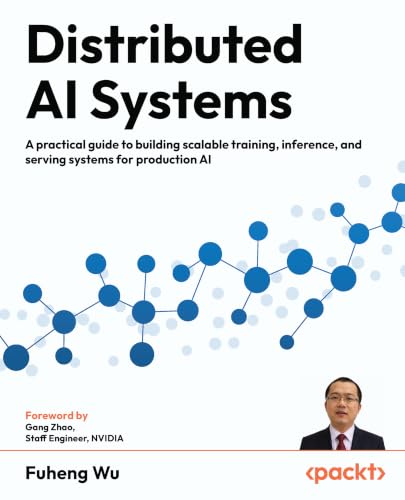
Distributed AI Systems: A practical guide to building scalable training, inference, and serving systems for production AI
As an affiliate, we earn on qualifying purchases.
As an affiliate, we earn on qualifying purchases.
Lessons from Cloud Era for AI Market Dynamics
The cloud industry provides a blueprint for understanding AI's future. Initially dismissed as a commodity, cloud infrastructure became a multi-player space with many large firms. Amazon's AWS was underestimated in 2007 but grew into a dominant, yet not monopolistic, force. By 2014, the narrative shifted to AWS potentially dominating everything, but market realities proved otherwise. The cloud's evolution into an oligopoly involved many successful competitors, illustrating that market size and complexity support multiple winners. Vishria believes AI will follow a similar pattern, with layered winners across hardware, software, and infrastructure.
"The market was simply too big for one vendor to consume. Snowflake, Databricks, and others built billion-dollar businesses on top of Amazon, competing directly with Amazon’s own services."
— Eric Vishria
Unanswered Questions About AI Market Composition
While Vishria provides a compelling analogy with the cloud industry, it remains uncertain how exactly AI will unfold across different segments. The pace of technological breakthroughs, regulatory changes, and market adoption could alter the landscape. Additionally, the specific number and nature of winners across hardware, inference, and application layers are still developing. It is not yet clear how many companies will sustain long-term success or how market share will distribute among emerging competitors.
Next Steps for Investors and Companies in AI
Stakeholders should focus on differentiation and niche strengths rather than seeking to dominate entire layers. Monitoring emerging winners across hardware, inference, and application segments will be crucial. Additionally, companies should invest in specialized expertise—especially in hardware and efficiency—since these areas will be key to maintaining competitive advantage. Industry watchers can expect continued evolution, with new entrants and incumbents vying for multiple slices of the expanding AI market.
Key Questions
Does this mean there will be no dominant AI company?
Yes, according to Vishria, the AI market is likely to feature multiple large winners across different layers, rather than a single dominant player.
How does this perspective change investment strategies?
Investors should focus on identifying multiple high-growth companies with differentiated offerings, rather than betting on one company to monopolize the market.
What are the key areas where differentiation matters?
Hardware, inference efficiency, and specialized software are critical areas where companies can build durable competitive advantages.
Is the cloud analogy perfect for AI?
While not perfect, Vishria believes the cloud industry provides valuable lessons about market size, competition, and the importance of multiple winners in a large, evolving ecosystem.
What could disrupt this multi-winner outlook?
Major technological breakthroughs, regulatory shifts, or market failures could alter the competitive landscape, but current evidence supports a multi-winner model.
Source: ThorstenMeyerAI.com