
📊 Full opportunity report: The Delegation Ladder: The Four Agentic Loops, and What Each One Lets You Stop Doing on ThorstenMeyerAI.com — validation score, market gap, and execution plan.

Get business pricing on office and shipping supplies
- Business-only prices and quantity discounts
- Tax-exempt purchasing
- Multiple users, one account, clear invoices
TL;DR
Anthropic’s team introduced the ‘Delegation Ladder,’ outlining four levels of AI loops that shift control from humans to autonomous systems. Each rung represents increasing autonomy, from simple turn-based checks to fully proactive workflows. This framework helps define how much human oversight can be safely delegated in AI tasks.
Anthropic’s Claude Code team has officially outlined the ‘Delegation Ladder,’ a framework describing four levels of AI agentic loops that progressively shift control from humans to autonomous systems. This development clarifies how organizations can structure AI workflows to delegate tasks safely and efficiently, marking a significant step in operationalizing AI as a process rather than just a tool.
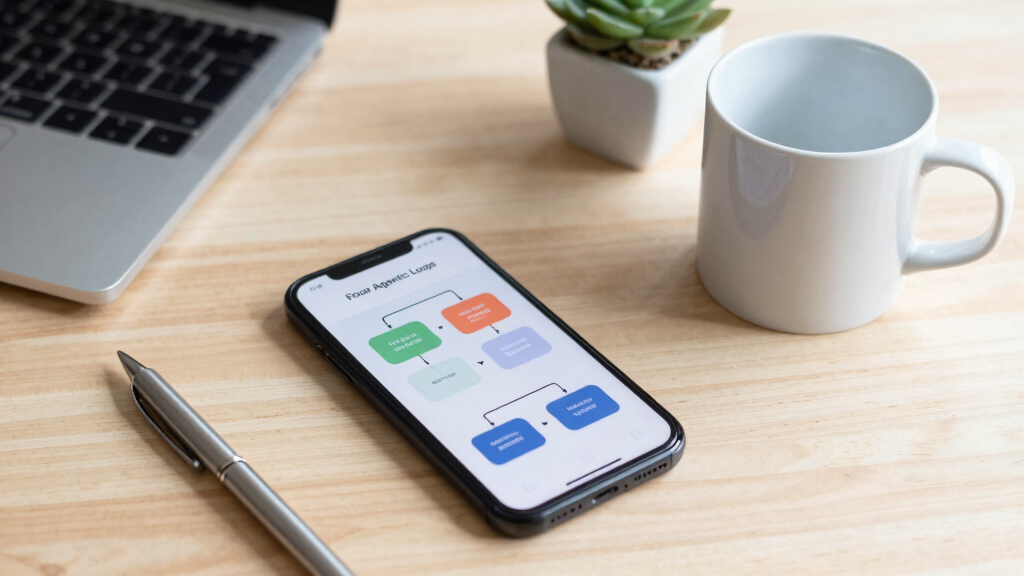
The ‘Delegation Ladder’ categorizes AI loops into four distinct types, each representing a different level of autonomy. The first, Turn-based, involves human oversight with the AI performing checks and validations within each interaction. The second, Goal-based, allows the AI to iterate until a predefined success criterion is met, with human oversight limited to setting the goal and constraints. The third, Time-based, enables the AI to operate on scheduled triggers, such as polling external systems or performing routine updates without human intervention. The highest, Proactive, involves fully autonomous workflows triggered by events or schedules, orchestrating multiple agents and processes without real-time human input.
The delegation ladder: four agentic loops, and what each lets you stop doing
Strip the hype and a “loop” is simple — an agent repeating work until a stop condition is met. The useful lens isn’t the mechanics, it’s what you hand off. Four loop types = four rungs of delegation, from a tool you operate to a process that runs.
The whole framework reduces to one question about your own work: where am I the bottleneck, and which single piece can I hand off? Can you write the check? Is the goal concrete? Does the work arrive on a schedule? That answer picks your rung — and you climb one step at a time. The real skill isn’t operating a loop; it’s the judgment of what to delegate and how far — enough hands off to gain leverage, enough on the wheel that “runs without you” doesn’t become “runs away from you.”
Implications for AI Workflow Automation
This framework provides organizations with a clear roadmap for increasing AI autonomy while managing risks. By understanding the different loops, businesses can decide where to place controls, reduce manual oversight, and optimize operational efficiency. It emphasizes that not all tasks require complex automation, and starting at lower rungs minimizes potential errors. The highest levels of autonomy, while offering leverage, demand rigorous discipline and safeguards to prevent unintended outcomes.
As an affiliate, we earn on qualifying purchases.
Evolution of AI Loop Design and Industry Adoption
The concept of AI loops has gained prominence as organizations seek to transition from manual prompts to automated processes. Anthropic’s contribution formalizes this shift, aligning technical capabilities with business needs. Previously, AI workflows relied heavily on human oversight, but recent advancements have introduced the possibility of more autonomous systems. The ladder model addresses a critical gap by defining the specific control points where human oversight can be safely reduced, supporting the broader trend toward autonomous AI operations in industries like software development, customer service, and data management.
“The Delegation Ladder provides a structured way to think about how much control we delegate to AI systems, from simple checks to fully autonomous workflows.”
— Thorsten Meyer, AI researcher
Unanswered Questions About Practical Implementation
It is not yet clear how widely organizations will adopt the highest rung—fully autonomous, event-driven workflows—and what safeguards will be most effective. Details about real-world testing, safety protocols, and regulatory considerations remain under development. Additionally, how these loops perform across different industries and use cases is still being evaluated.
Next Steps for AI Automation and Safety Standards
Organizations are likely to experiment with lower rungs first, refining verification and goal-setting mechanisms. Industry groups and regulators may develop standards around the highest levels of autonomy, emphasizing safety and transparency. Further research will focus on best practices for managing complex, multi-agent workflows and ensuring fail-safes are in place for fully autonomous systems.
Key Questions
What is the main purpose of the Delegation Ladder?
The ladder provides a structured framework to understand and implement increasing levels of AI autonomy, helping organizations decide how much human oversight to delegate at each stage.
How does each rung differ in terms of control?
Each rung represents a different control point: Turn-based involves human checks, Goal-based allows AI to iterate until success, Time-based triggers periodic actions, and Proactive involves fully autonomous workflows.
Why is the highest level of autonomy risky?
Fully autonomous, event-driven workflows can operate without human oversight, increasing the risk of unintended actions or errors if safeguards are not properly implemented.
Can organizations implement these loops immediately?
Most organizations will start with lower rungs, such as turn-based or goal-based loops, gradually progressing to more autonomous levels as safety protocols and verification methods improve.
What industries stand to benefit most from this framework?
Software development, customer service, data analysis, and any field involving repetitive or rule-based tasks are prime candidates for adopting the Delegation Ladder approach.
Source: ThorstenMeyerAI.com
Halloween Picks
halloween
As an affiliate, we earn on qualifying purchases.