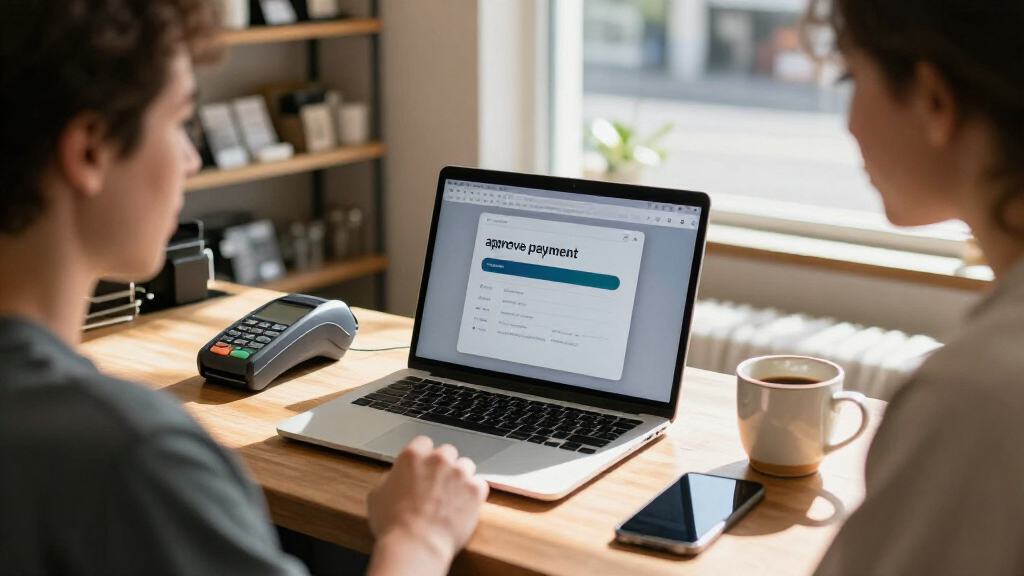

🔍 Read the full analysis: Let An AI Agent Help With Payments Without Giving It Your Password on ThorstenMeyerAI.com

Get business pricing on office and shipping supplies
- Business-only prices and quantity discounts
- Tax-exempt purchasing
- Multiple users, one account, clear invoices
TL;DR
Bank of America has warned customers not to share banking passwords with AI assistants, saying customers are responsible for activity resulting from access they provide. The warning comes as financial firms confront AI agents using customer credentials and as questions remain about liability, safeguards and how banks identify authorized agent activity.
Bank of America has warned customers not to give their banking usernames or passwords to AI assistants or agents, saying customers are responsible for activity resulting from access they provide. The warning, confirmed by the bank to TechCrunch after a customer posted the email, comes as financial firms face questions about how to control AI agents that can use customers’ accounts to make payments or trades.
The email, titled “Protecting your finances in the AI World,” says credentials should never be shared with another person or provided to an outside service, including an AI-enabled tool or agent acting on a customer’s behalf. It adds that customers who share their credentials are responsible for activity resulting from that access. Bank of America also said it is “excited about what AI used responsibly can deliver.”
The source article reports that TechCrunch reported the email on October 27 after a customer shared a screenshot on Bluesky, and that a Bank of America spokesperson confirmed the email was authentic. The warning does not say that the bank has introduced a new payment feature or published a dedicated system for authorizing AI agents.
The article also points to financial firms’ wider engagement with agent-led activity. It says Visa told investors that trust is a major barrier to AI agents paying for goods, while Robinhood said customers had placed more than $250 million into accounts that AI agents trade. The source provides no time window or comparison baseline for the Robinhood figure, so it should be read as a reported amount, not a growth rate.
Before your agent touches money
Give it a valet key, not the master key
Logging in with your password makes the agent you. A credential made for the agent can do only the job you gave it, and you can take it back.
- What it opensEverything you can do: transfers, payees, settings, statements
- LimitsNone that the agent cannot get around by logging in as you
- What the bank seesYou, or a thief. It cannot tell which
- If a web page tricks itThe trick reaches your whole account
- To take it backChange your password everywhere it was used
- If money goes missingUS rules can exclude transfers by someone you gave access to; Bank of America: “you’re responsible”
- What it opensOnly what you allowed: read-only, one card, one pot of money
- LimitsBuilt in: amount, merchant, time window, approval on your phone
- What the bank seesAn identified agent acting for an identified person
- If a web page tricks itThe damage stops at the limit
- To take it backDisconnect the agent or delete its card. Your password never moved
- If money goes missingDepends on the terms. Read them first: some still put all risk on you
A comparison of two set-ups, not a measurement. Which limits exist depends on your bank, card and app.
Sources: Bank of America customer email, confirmed to TechCrunch (27 Oct 2026); 12 CFR 1005.2(m); OWASP LLM01. Comparison: Thorsten Meyer.
Powered by Thorsten Meyer AI
The Risks of Sharing a Banking Login
A banking password can give an agent broad access, rather than permission for one narrowly defined task. If the agent can sign in as the customer, the bank may have difficulty distinguishing intended actions from a stolen password or an agent making a mistake. That can create two kinds of harm: money may move without the customer’s informed approval, or a bank may flag the login and restrict account access.
Responsibility is also unsettled. The source article cites US and EU rules on unauthorized transfers and credential security, but says no regulator or court has ruled on how those provisions apply specifically to a customer who gives credentials to an AI agent. The email’s warning is the bank’s stated position; it does not resolve how a dispute would be decided under applicable law or a customer’s account terms.
For customers, the practical distinction is between giving an agent a master key and granting limited authority. The source suggests options such as read-only access, requiring approval for each payment, a capped virtual card, or a separate account with limited funds. These are safety measures, not guarantees that a customer will be reimbursed if something goes wrong.
Products Worth Considering

Brother TD-2020A 2‑Inch Direct Thermal Desktop Label Printer with USB

Logitech MX Master 4 for Mac, Ergonomic Bluetooth Mouse with Haptic Feedback, Ultra-Fast Scrolling, USB-C Charging, for MacOS, iPadOS, Windo

Dell XPS 13 9350 Laptop, 13.4 FHD+ Display, Intel Ultra 7 256V, 16GB DDR5, 1TB SSD
As an affiliate, we earn on qualifying purchases.
Banks Confront Agents in Accounts
The warning follows a reported rise in banks encountering third-party AI agents inside customer accounts. According to the source article, Axios reported on October 22, citing unnamed sources, that major US banks were finding agents logged in with customers’ own passwords. The report said banks often could not tell whether the activity was directed by the account holder. Those details are attributed to Axios and its sources, rather than to a public statement from the banks named in that reporting.
The underlying technical problem is straightforward: when an agent uses a customer’s login credentials, its activity can resemble the customer’s own actions. The source also describes prompt injection as a risk: instructions concealed in a web page, email or document may influence an agent processing that material. It cites OWASP’s ranking of prompt injection as a leading risk for AI applications. That risk does not establish that a particular agent has been compromised, but it helps explain why broad, unattended access can be hazardous.
Some companies are testing narrower arrangements. The source says Robinhood built a separate account and spending limits for AI-agent trading, while also reporting that customers “assume all risk” for trades made by agents. Limits can constrain exposure, but the source’s account does not show that they settle questions about who is responsible for losses.
Liability Rules Have Not Been Tested
It remains unclear how existing consumer-protection rules would apply if an AI agent uses credentials a customer deliberately supplied. The source article says the relevant US Regulation E provision excludes certain transfers initiated by a person given account access by the consumer, and that EU payment rules require customers to protect their security credentials. But the article’s application of those provisions to AI agents is its own reading; it reports no court or regulator ruling on the question.
The source does not provide the full Bank of America email beyond the wording it quotes, details of any bank-specific process for approving an agent, or a response from regulators. It is also unclear how widely agents are accessing accounts, how often their actions lead to losses or account restrictions, and what protections different agent providers offer. The reported Robinhood amount has no stated measurement period or baseline.
Watch for Controls and Clearer Terms
Customers considering an AI tool that can interact with financial accounts should check the bank’s terms and the agent provider’s permissions before connecting an account. The source recommends avoiding password sharing and looking for limited access, transaction-by-transaction approval, spending caps or a separate pool of funds. Readers should not assume those controls change who bears a loss under an account agreement or applicable law.
The next developments to watch are whether banks publish specific methods for authorizing agents, whether providers adopt limited-use credentials rather than customer passwords, and whether regulators or courts clarify responsibility when an agent makes a disputed transaction. The source material does not identify a timetable for any such guidance or policy changes.
Key Questions
What did Bank of America tell customers?
The bank’s email said customers should not share usernames or passwords with people or outside services, including AI tools and agents. It also said customers are responsible for activity resulting from credentials they share.
Does the warning mean AI agents cannot be used for payments?
No. The email warns against giving an agent a customer’s banking credentials. The source discusses narrower approaches, such as read-only access, payment approval requirements, capped virtual cards and separate accounts, but does not report a Bank of America-approved agent-payment system.
Will a bank have to reimburse a loss caused by an AI agent?
The source material does not establish a general answer. It discusses US and EU rules but says their application to AI agents has not been tested by a court or regulator. The bank’s email states its position on shared credentials; account terms and the facts of a dispute may also matter.
What is prompt injection?
Prompt injection is an attempt to influence an AI system through instructions placed in material it reads, such as a web page, email or document. The source identifies it as a risk for agents that process outside content; it does not report a specific attack involving a bank account.
What safer controls can limit an agent’s access?
The source suggests permissions limited to reading information, approval before each payment, a virtual card with a spending cap, a token restricted by merchant, amount and time, or a separate account holding limited funds. Such controls may reduce exposure, but they do not by themselves settle liability.
Source: ThorstenMeyerAI.com