📊 Full opportunity report: Digital MSK Assessments: Improving Remote Work Employee Wellbeing on IdeaNavigator AI — validation score, market gap, and execution plan.

Get office and shipping supplies delivered free — and shop member deals
- Fast, free delivery on millions of items
- Access to Prime Big Deal Days deals on October 6–7
- Prime Video, Amazon Music and more included
TL;DR
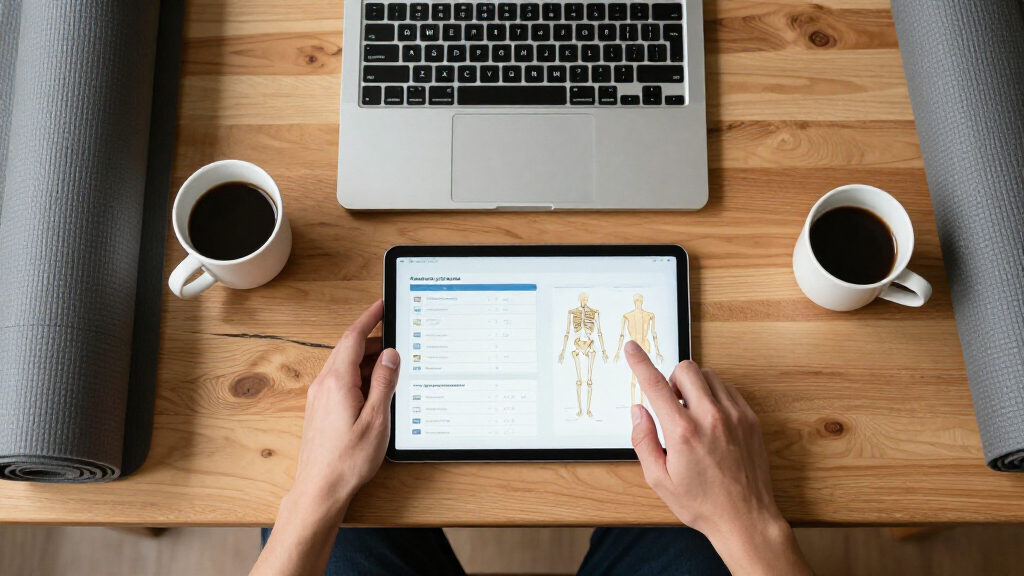
A new digital MSK assessment platform enables remote workers to self-evaluate posture, mobility, and strength using their phone cameras. Employers can identify early MSK risks, supporting preventive health strategies. Pilot programs are underway to validate effectiveness and engagement.
A new digital musculoskeletal (MSK) assessment platform is in development to enable remote employees to self-screen for MSK risks using their phone cameras. This innovation addresses a rising concern among employers about the health impacts of remote and hybrid work, which has led to increased sedentary behavior and related MSK problems. The platform aims to provide early detection, helping employers intervene before costly clinical episodes occur.
The platform involves a web and mobile self-assessment that guides employees through a series of strength, mobility, and posture tests lasting around 10 minutes. Using their phone cameras and pose estimation technology, employees perform tasks such as sit-to-stand repetitions, shoulder and hip range-of-motion exercises, and seated posture photos. The system then generates a personalized MSK risk score, along with tailored corrective routines and progress tracking over time.
Employers receive a privacy-safe aggregate dashboard showing team-level MSK risk trends and engagement metrics. The system also supports a referral process to clinical MSK/PT providers for employees flagged as at risk. The initial deployment will involve one or two pilot employers to validate scoring accuracy, engagement levels, and user retention over 60-90 days. Success criteria include a high completion rate, meaningful retention, and a strong correlation between camera-derived scores and established self-report instruments scored by physical therapists.
Potential Impact on Remote Employee Health
This development could significantly improve preventive MSK care for remote workers, a group increasingly vulnerable to sedentary-related musculoskeletal issues. By enabling early detection through a simple, accessible tool, employers can proactively address risks, potentially reducing medical claims and lost productivity. The approach aligns with the broader shift toward digital health solutions that support wellness without disrupting remote workflows. If validated, this platform could become a standard component of corporate health strategies, especially for self-insured organizations seeking cost-effective, scalable solutions.
As an affiliate, we earn on qualifying purchases.
Rise of Sedentary Risks in Remote Workforces
Remote and hybrid work arrangements have become permanent for a large portion of knowledge workers, leading to a decline in incidental movement and ergonomic oversight. This shift has contributed to a surge in MSK issues such as neck, back, and posture-related problems, which are now among the top drivers of employer medical costs. Traditional MSK prevention programs tend to be reactive, treating pain after it develops, rather than preventing it.
Recent advancements in smartphone camera technology and pose estimation algorithms have matured, enabling contactless, at-home assessments without sensors or clinician involvement. This technological progress opens opportunities for early screening and intervention, creating a new front door for MSK health management that fits into remote work routines.
Validation and Adoption Challenges
It is not yet clear how accurately the camera-based assessments will correlate with clinical evaluations or self-report questionnaires. The effectiveness of the risk scoring algorithm, employee engagement levels, and privacy considerations remain under validation during pilot testing. Additionally, the willingness of HR and benefits leaders to adopt and pay for this new approach depends on pilot outcomes, which are still pending.
Upcoming Pilot Programs and Validation Steps
The next steps involve deploying pilot assessments with 2-3 employers over a 60-90 day period. During this phase, researchers will measure assessment completion rates, retention, and the correlation of camera-derived scores with validated clinical tools. Based on pilot results, developers aim to refine the platform, demonstrate cost-effectiveness, and secure broader adoption among mid-to-large organizations. The ultimate goal is to establish this as a standard preventive tool integrated into employee wellness programs.
Key Questions
How does the remote MSK assessment work?
Employees use their smartphone cameras to perform guided strength, mobility, and posture tests. Pose estimation algorithms analyze the movements and generate a personalized risk score, which helps identify early signs of MSK issues.
What are the privacy considerations?
The platform is designed to be privacy-safe, with data stored in aggregate form for employer dashboards and no personal video recordings retained or shared without consent.
When will the platform be widely available?
Following successful pilot validation, a broader rollout could occur within 12-18 months, depending on regulatory and technical validation outcomes.
Who benefits most from this technology?
Employers with large remote or hybrid workforces, particularly those who are self-insured, stand to benefit by reducing MSK-related costs and improving employee wellbeing through early intervention.
Can this replace traditional MSK assessments?
It is designed as a preventive screening tool, not a replacement for clinical assessments. Employees flagged as at risk will be referred to healthcare providers for further evaluation.
Source: IdeaNavigator AI
Fall Picks
fall essentials
As an affiliate, we earn on qualifying purchases.