
📊 Full opportunity report: Are AI Prices Falling? The Real Reason Is Consumer Budget Issues, Not Tech Improvements on ThorstenMeyerAI.com — validation score, market gap, and execution plan.
TL;DR
Memory prices linked to AI hardware are not falling because of increased supply but because consumers and companies are unable to afford higher prices. The industry faces a prolonged period of high costs driven by demand destruction, not supply relief.
Memory prices for AI hardware are slowing their rate of increase not because of supply improvements, but primarily due to consumer and enterprise budget constraints. This signals a plateau at historically high prices, with demand destruction rather than supply recovery being the main driver, according to recent industry analysis.
Recent data from TrendForce’s July survey shows that DRAM contract prices are increasing by only 13–18% quarter-over-quarter for Q3 2026, a significant slowdown from the 60% jumps seen in Q2. NAND prices are also rising at a slower pace, up 10–15%, compared to earlier surges. Industry experts attribute this moderation to consumers and electronics manufacturers reaching their spending limits, rather than any easing of supply constraints.
Despite record-high prices and tight supply, the market has not stabilized; instead, it has entered a period of demand destruction. The core issue is the industry’s reallocation of wafer capacity toward high-bandwidth memory (HBM) for AI accelerators. Major manufacturers like Samsung, SK Hynix, and Micron have dedicated most of their capacity to HBM, which is sold out through 2026. This shift has caused a steep surge in PC DRAM prices, which rose over 100% in Q1 2026, and DDR4 prices increased by over 2,200% in the past year, with no signs of immediate relief.
Memory-Squeeze Check-In: Cooling Because You’re Broke,
Not Because It’s Fixed
Same-day-verified price pulse · TrendForce Q3 survey, July 3 · a plateau at altitude is not relief
The quarter-by-quarter curve — conventional DRAM contracts, QoQ
THE SKEPTIC’S FOOTNOTE
An industry with a documented price-fixing history (the mid-2000s DRAM cartel pleas) is posting record profits on a shortage its own capacity choices created. The AI demand is real — but supplier-side “shortage persists” messaging deserves the same scrutiny as any vendor claim.
Three reads for local-first builders
HBM is now half-plus of a packaged GPU’s cost; H100 rentals +14% y/y. Every squeeze month makes router + hybrid arithmetic more compelling — only high utilization justifies hardware at these prices.
Apple-silicon fleets sidestep the HBM tax — but flagships hold RAM flat and pricing flows through. The window to build at current prices has known width now, unknown later.
Hardware needed within two quarters: waiting is a losing trade. The kit you’re deferring “until prices normalize” waits on fabs that pour concrete in 2027.
The signal: ignore the cooling headline; watch the mechanism. Record prices rising more slowly, caused by exhaustion not supply, with relief parked in 2027-28 — the squeeze is maturing, not ending. Plan hardware like a multi-year condition. One honest wildcard: architectures that simply need less memory — the open labs are already competing on exactly that.
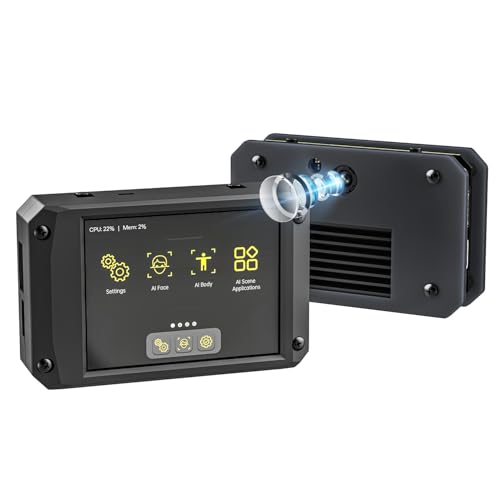
Yahboom K230 AI Development Board 1.6GHz High-performance chip/2.4-inch Display/Open Source Robot Maker Python, Supports AI Visual Recognition CanMV Sensor (Separate module)
- High-performance AI Chip: 1.6GHz processor with advanced AI capabilities
- Enhanced Computing Power: KPU 13.7x, CPU 8.5x faster than K210
- Real-time AI Processing: Supports complex image and voice recognition
As an affiliate, we earn on qualifying purchases.
As an affiliate, we earn on qualifying purchases.
Impact of Budget Constraints on Memory Pricing Trends
This situation indicates that memory prices are unlikely to fall soon, and high costs will persist for AI hardware and related sectors. For businesses and consumers, this means hardware will remain expensive, influencing procurement strategies and infrastructure planning. It also underscores that the recent slowdown in price increases does not reflect supply easing but reflects demand exhaustion, which could prolong high-price periods.
Industry Shift Toward High-Bandwidth Memory and Its Effects
The core driver behind the current pricing dynamics is the industry’s strategic reallocation of wafer capacity toward high-margin HBM for AI. This has resulted in a shortage of conventional DRAM, fueling record prices and limiting supply. Major manufacturers, including SK Hynix and Micron, have already booked their entire 2026 production, with HBM being unavailable for purchase through the year.
Analysts note that this reallocation is a permanent shift rather than a temporary cycle, with relief not expected before late 2027, when new fabs begin production. Meanwhile, the market faces a price plateau driven by demand exhaustion rather than supply recovery.
“Memory prices are plateauing at high levels because consumers and manufacturers have reached their spending limits.”
— TrendForce report
Unclear Duration of Demand-Driven Price Plateau
It remains unclear how long demand constraints will persist or whether supply will eventually catch up, easing prices. Industry analysts project relief no earlier than late 2027, but market dynamics could change based on macroeconomic factors, technological innovations, or shifts in AI demand.
Expected Market Developments and Procurement Advice
Industry experts advise buying hardware promptly if needed within the next two quarters, as prices are unlikely to decline soon. Companies and consumers should plan for sustained high costs and treat memory as a contracted line item. Future developments will depend on supply chain adjustments and potential demand shifts, including architectures requiring less memory.
Key Questions
Will memory prices ever fall back to previous levels?
It is uncertain. Current trends suggest prices will remain high until at least late 2027, driven by demand exhaustion and supply reallocation. A significant price decrease depends on supply chain adjustments and demand reduction.
How does this impact AI hardware costs?
High memory prices contribute to increased costs for AI hardware, especially GPUs and accelerators that rely on HBM. This will likely keep AI infrastructure expensive for the foreseeable future.
Should I delay hardware purchases?
Experts recommend purchasing within the next two quarters if hardware is needed soon, as prices are unlikely to decrease and may continue to rise if demand persists.
What is causing the memory price slowdown if supply is still tight?
The slowdown is due to demand reaching its limit, not supply easing. Manufacturers have allocated most capacity to high-margin HBM, leading to a demand-driven plateau at high prices.
Source: ThorstenMeyerAI.com