For most professional network equipment, I’d start with the CyberPower PR3000RTXL2UC: its 3000VA rackmount design and sine-wave output suit a larger network rack, while the CyberPower CP1500PFCLCD is a more approachable choice for a small server or office network. Buyers needing continuous online power conversion should compare the APC Smart-UPS SRT 3000VA Online UPS and CyberPower OL3000RTXL2U, which target a different level of power conditioning than line-interactive models. The main tradeoffs are capacity, rack or tower fit, runtime options, and the cost and complexity of online operation. Read on for the full breakdown and guidance on matching a UPS to your actual network load.

Get business pricing on office and shipping supplies
- Business-only prices and quantity discounts
- Tax-exempt purchasing
- Multiple users, one account, clear invoices
Key Takeaways
- The PR3000RTXL2UC is the strongest all-around rack choice in this lineup for buyers seeking 3000VA capacity, sine-wave output, and network-oriented features without stepping up to an online UPS.
- 1500VA models fit smaller network loads, but their lower capacity makes them less suitable for a rack with multiple servers, switches, storage devices, and a modem.
- Online UPS models serve a distinct power-quality need: the APC SRT 3000VA and CyberPower OL3000RTXL2U suit installations where continuous power conversion matters more than simplicity.
- Rackmount and tower models are not interchangeable by default; installation space, outlet access, equipment weight, and service access can decide the right pick before capacity does.
- VA and watt ratings both matter: the 3000VA CyberPower PR3000LCD is rated for 2700W, while the 2000VA OR2200PFCRT2U is rated for 1540W, so compare watt capacity against the measured load.
| CyberPower CP1500PFCLCD PFC Sinewave UPS Battery Backup and Surge Protector |  | Best Overall for Small Network Closets | Capacity: 1500VA / 1000W | Output waveform: Sine wave | Topology: Line-interactive | VIEW ON AMAZON | See Our Full Breakdown |
| CyberPower PR3000RTXL2UC Smart App Sinewave UPS Battery Backup |  | Best for Expandable Rack Protection | Capacity: 3000VA / 3000W | Output waveform: Sine wave | Topology: Line-interactive | VIEW ON AMAZON | See Our Full Breakdown |
| CyberPower PR1500LCD Smart App Sinewave UPS Battery Backup |  | Best for Compact Professional Loads | Capacity: 1500VA / 1500W | Output waveform: Sine wave | Form factor: Mini-tower | VIEW ON AMAZON | See Our Full Breakdown |
| CyberPower CP1500AVRLCD3 Intelligent LCD UPS Battery Backup |  | Best for Basic Network Backup | Capacity: 1500VA / 900W | Output waveform: Simulated sine wave | Outlets: 12 NEMA 5-15R; 6 battery backup and surge protected, 6 surge protected | VIEW ON AMAZON | See Our Full Breakdown |
| APC Smart-UPS SMX3000LVNC 3000VA Line-Interactive UPS, 120V |  | Best for Managed Network Infrastructure | Capacity: 3000VA / 2700W | Output waveform: Pure sine wave | Topology: Line-interactive | VIEW ON AMAZON | See Our Full Breakdown |
| CyberPower PR3000RT2UC 3000VA/3000W Smart App Sinewave UPS |  | Best for High-Power Rack Network Loads | Capacity: 3000VA / 3000W | Output voltage: 120V | Input: NEMA L5-30P, 30A | VIEW ON AMAZON | See Our Full Breakdown |
| CyberPower PR3000LCD Smart App Sinewave UPS System, 3000VA/2700W, 10 Outlets, AVR, Tower |  | Best for Tower-Based Network Closets | Capacity: 3000VA / 2700W | Input/output voltage: 120V | Form factor: Tower | VIEW ON AMAZON | See Our Full Breakdown |
| APC SRT10KRMXLT Rack-Mountable UPS |  | Best for Large Infrastructure Loads | Maximum power: 10,000W | Output voltage: 208V AC | Input voltage: 120V | VIEW ON AMAZON | See Our Full Breakdown |
| Eaton Tripp Lite SMART1500LCD 1500VA/900W Rack Mount UPS | 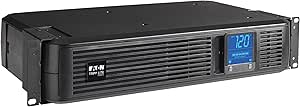 | Best Compact Rack-and-Tower Fit | Capacity: 1500VA / 900W | Input/output voltage: 120V | Outlets: 8 | VIEW ON AMAZON | See Our Full Breakdown |
| APC BX1500M 1500VA UPS Battery Backup and Surge Protector |  | Best for Desktop-Style Network Backup | Capacity: 1500VA / 900W | Input/output voltage: 120V | Outlets: 10 total: 5 battery backup and surge protection, 5 surge-only | VIEW ON AMAZON | See Our Full Breakdown |
| APC Smart-UPS SRT 3000VA Online UPS |  | Best for 208V Online Protection | Model: SRT3000XLT | Capacity: 3000 VA | Maximum power: 2700 W | VIEW ON AMAZON | See Our Full Breakdown |
| CyberPower OR2200PFCRT2U PFC Sinewave UPS Battery Backup, 2000VA/1540W |  | Best for 120V Outlet Capacity | Model: OR2200PFCRT2U | Capacity: 2000 VA / 1540 W | Outlets: 8 total: 2 NEMA 5-20R and 6 NEMA 5-15R | VIEW ON AMAZON | See Our Full Breakdown |
| CyberPower OL3000RTXL2U 3000VA/2700W Online UPS System |  | Best for Expandable Online Runtime | Capacity: 3000 VA / 2700 W | Outlets: 6 NEMA 5-20R and 1 L5-30R | Form factor: 2U rack / tower | VIEW ON AMAZON | See Our Full Breakdown |
| professional ups battery backup for network equipment | Outlets | Capacity | Form factor | Warranty |
|---|---|---|---|---|
| CyberPower CP1500PFCLCD PFC Si | 12 NEMA 5-15R; 6 battery backup and surge protected, 6 surge protected | 1500VA / 1000W | — | 3 years, including the battery |
| CyberPower PR3000RTXL2UC Smart | 8 NEMA 5-20R and 1 NEMA L5-30R | 3000VA / 3000W | 2U rack/tower convertible | — |
| CyberPower PR1500LCD Smart App | 8 NEMA 5-15R | 1500VA / 1500W | Mini-tower | 3 years, including the battery |
| CyberPower CP1500AVRLCD3 Intel | 12 NEMA 5-15R; 6 battery backup and surge protected, 6 surge protected | 1500VA / 900W | — | 3 years, including the battery |
| APC Smart-UPS SMX3000LVNC 3000 | 10: 6 NEMA 5-15R, 3 NEMA 5-20R, 1 NEMA L5-30R | 3000VA / 2700W | 4U rack or tower | — |
| CyberPower PR3000RT2UC 3000VA/ | 9: eight NEMA 5-20R and one NEMA L5-30R | 3000VA / 3000W | 2U rack/tower convertible | 3 years, including batteries |
| CyberPower PR3000LCD Smart App | 10: eight NEMA 5-15R and two NEMA 5-20R | 3000VA / 2700W | Tower | 3 years, including battery |
| APC SRT10KRMXLT Rack-Mountable | 7 | — | Rack-mountable | 1 year |
| Eaton Tripp Lite SMART1500LCD | 8 | 1500VA / 900W | 2U rack mount or vertical tower | 3-year limited manufacturer warranty |
| APC BX1500M 1500VA UPS Battery | 10 total: 5 battery backup and surge protection, 5 surge-only | 1500VA / 900W | — | — |
| APC Smart-UPS SRT 3000VA Onlin | 3 NEMA | 3000 VA | Rack-mountable | — |
| CyberPower OR2200PFCRT2U PFC S | 8 total: 2 NEMA 5-20R and 6 NEMA 5-15R | 2000 VA / 1540 W | 2U rack / tower | 3 years, including batteries |
| CyberPower OL3000RTXL2U 3000VA | 6 NEMA 5-20R and 1 L5-30R | 3000 VA / 2700 W | 2U rack / tower | 3 years, including batteries |
More Details on Our Top Picks
CyberPower CP1500PFCLCD PFC Sinewave UPS Battery Backup and Surge Protector
I’d put the CP1500PFCLCD first for a small office or network closet that needs dependable battery protection without stepping up to a rack UPS. Its 1500VA/1000W capacity, sine-wave output, and AVR suit routers, switches, and compact servers, while AVR corrects minor voltage swings without drawing on the battery. Compared with the PR1500LCD, it has less rated output but adds six surge-only outlets, USB-A and USB-C charging, and a tilting color display that is easier to check under a desk. Its limitation is scale: six battery-backed outlets and 1000W leave less room for a loaded server rack than the 3000W PR3000RTXL2UC. I’d choose it for network essentials, not for long outages or a growing rack.
Pros:- Sine-wave output supports Active PFC and conventional power supplies.
- AVR handles minor voltage fluctuations without using battery charge.
- Color LCD tilts for easier status checks in low placements.
- Six battery-backed outlets plus six surge-only outlets provide flexible connections.
Cons:- 1000W output is modest for a server-heavy network rack.
- Only six outlets provide battery backup.
- No external battery module option is specified for extending runtime.
Best for: Small offices or home labs protecting a router, switch, firewall, and one modest server that need sine-wave output and clear local status information.
Not ideal for: Network teams running multiple high-draw servers or seeking rack installation and expandable runtime; its 1000W rating and six battery-backed outlets are more limited than the PR3000RTXL2UC.
- Capacity:1500VA / 1000W
- Output waveform:Sine wave
- Topology:Line-interactive
- Outlets:12 NEMA 5-15R; 6 battery backup and surge protected, 6 surge protected
- Voltage regulation:Automatic Voltage Regulation (AVR)
- USB charging:1 Type-A and 1 Type-C port
- Input:NEMA 5-15P; 5-foot cord
- Dimensions and weight:14 x 3.9 x 11 inches; 24.9 lb
- Warranty:3 years, including the battery
Our verdict“Choose the CP1500PFCLCD for a small network setup that needs sine-wave protection and useful status visibility, but move to the PR3000RTXL2UC for rack-scale loads.”
CyberPower PR3000RTXL2UC Smart App Sinewave UPS Battery Backup
For a professional network rack with a substantial load, I rank the PR3000RTXL2UC above the smaller CyberPower options because it delivers 3000W at 120V and accepts an external battery module. That combination gives a network team room to protect servers, storage, and telecom gear while adding runtime capacity as needs change. The 2U rack/tower design and built-in cloud monitoring also suit managed environments better than the desk-focused CP1500PFCLCD. The tradeoff is that remote management through a network card requires the separately sold RMCARD205, and its L5-30P input calls for compatible 30A power infrastructure. Its nine outlets are fewer than the CP1500PFCLCD’s twelve, even though they’re aimed at heavier equipment. I’d shortlist it when capacity and expansion matter more than simple plug-in convenience.
Pros:- 3000W capacity supports substantially heavier loads than the 1500VA CyberPower models.
- Accepts the BP48VP2U02 external battery module for expanded runtime.
- Rack/tower convertible 2U chassis suits varied equipment layouts.
- Built-in cloud monitoring and adjustable LCD provide useful status and control options.
Cons:- Requires a compatible NEMA L5-30P 30A power connection.
- RMCARD205 is sold separately for network-card remote management.
- Nine outlets are fewer than the 12 on the CP1500PFCLCD.
Best for: IT teams with compatible 30A circuits that need a 2U UPS for servers, storage, VoIP, or telecom equipment and may add external battery capacity.
Not ideal for: Small offices with standard 15A outlets or buyers who need full network-card management included; the L5-30P input and separately sold RMCARD205 add setup requirements.
- Capacity:3000VA / 3000W
- Output waveform:Sine wave
- Topology:Line-interactive
- Form factor:2U rack/tower convertible
- Outlets:8 NEMA 5-20R and 1 NEMA L5-30R
- Input:NEMA L5-30P; 10-foot cord
- Monitoring:Built-in cloud monitoring; optional RMCARD205
- External battery option:BP48VP2U02
- Dimensions and weight:19.7 x 17.1 x 3.4 inches; 75.4 lb
Our verdict“Pick the PR3000RTXL2UC when your rack needs 3000W capacity and an external-battery path, provided your power circuit and management-card plans match.”
CyberPower PR1500LCD Smart App Sinewave UPS Battery Backup
The PR1500LCD is my pick for a modest professional network load that still calls for a full 1500W rating and sine-wave output. Its eight battery-backed outlets focus on connected equipment rather than providing the mix of backup and surge-only outlets found on the CP1500PFCLCD. The standout is the detachable LCD, which can be repositioned with its 4.5-foot cable; that helps when the UPS sits in a cabinet or another hard-to-reach spot. AVR also corrects routine voltage fluctuations without switching to battery. Compared with the PR3000RTXL2UC, this mini-tower is less suited to dense racks and lacks the described external-battery option. The product data lists just four minutes of runtime, so I’d treat it as a bridge to safe shutdown rather than outage-duration power.
Pros:- 1500W sine-wave output supports Active PFC and conventional power supplies.
- All eight listed outlets provide battery backup and surge protection.
- Detachable LCD can be relocated for visibility in a cabinet or restricted space.
- AVR corrects minor power fluctuations without switching to battery.
Cons:- Listed runtime is four minutes, limiting its role during extended outages.
- Remote management requires the separately sold RMCARD205.
- No external battery module option is specified.
Best for: Small-business IT staff protecting a server, storage appliance, and network devices who need 1500W output and a status screen that can be mounted away from the UPS.
Not ideal for: Rack operators seeking high outlet count, expandable runtime, or a short-depth rack unit; the PR1500LCD is a mini-tower with eight outlets and no listed EBM option.
- Capacity:1500VA / 1500W
- Output waveform:Sine wave
- Form factor:Mini-tower
- Outlets:8 NEMA 5-15R
- Input:NEMA 5-15P; 6-foot cord
- Voltage regulation:Automatic Voltage Regulation (AVR)
- Runtime:4 minutes
- Dimensions:17 x 6.7 x 8.7 inches
- Warranty:3 years, including the battery
Our verdict“Choose the PR1500LCD for a compact professional setup that values 1500W sine-wave output and a relocatable display, but not for expandable rack runtime.”
CyberPower CP1500AVRLCD3 Intelligent LCD UPS Battery Backup
The CP1500AVRLCD3 makes sense when a network setup needs everyday voltage correction and outage coverage for modest loads, but does not require sine-wave output. It offers 12 outlets, including six battery-backed connections, along with AVR and a color LCD. Those features make it a straightforward fit for a router, switch, modem, and a few related devices. Against the CP1500PFCLCD, its 900W rating is lower and its output is simulated sine wave rather than sine wave, so I’d favor the PFCLCD for Active PFC equipment or greater output headroom. The AVRLCD3 adds USB-A and USB-C charging, but its listed runtime is only three minutes. I’d treat this as a basic backup and graceful-shutdown option, not as protection for a heavily loaded professional rack.
Pros:- 12 outlets offer six battery-backed and six surge-only connections.
- AVR corrects minor power fluctuations without switching to battery.
- Color LCD displays battery and power conditions.
- USB-A and USB-C ports can charge portable devices.
Cons:- Simulated sine-wave output is a less suitable match for some sensitive or Active PFC equipment than the CP1500PFCLCD.
- 900W capacity is below the CP1500PFCLCD’s 1000W and the PR1500LCD’s 1500W.
- Listed runtime is three minutes.
Best for: A small office or network closet with a router, modem, and switch that needs AVR, an LCD status panel, and several battery-backed outlets at a modest load.
Not ideal for: Teams powering Active PFC servers or equipment that calls for sine-wave output, or anyone expecting several minutes of operating time under load.
- Capacity:1500VA / 900W
- Output waveform:Simulated sine wave
- Outlets:12 NEMA 5-15R; 6 battery backup and surge protected, 6 surge protected
- USB charging:1 Type-A and 1 Type-C port
- Input:NEMA 5-15P; 6-foot cord
- Voltage regulation:Automatic Voltage Regulation (AVR)
- Runtime:3 minutes
- Dimensions and weight:13.78 x 3.94 x 10.2 inches; 23.8 lb
- Warranty:3 years, including the battery
Our verdict“Choose the CP1500AVRLCD3 for modest network loads that benefit from AVR and convenient outlets, but select a sine-wave model for sensitive or higher-draw equipment.”
APC Smart-UPS SMX3000LVNC 3000VA Line-Interactive UPS, 120V
I’d rank the APC Smart-UPS SMX3000LVNC for organizations that want network management built in rather than added later. Its preinstalled AP9631 management card and PowerChute Network Shutdown support fit a managed server or security-equipment environment, while pure sine-wave output and 2700W capacity offer more headroom than the 1500W CyberPower PR1500LCD. It also supports external battery packs and can be installed as a 4U rack or tower unit. The tradeoffs are size and power requirements: the 4U chassis occupies more rack space than CyberPower’s 2U PR3000RTXL2UC, and its L5-30P input needs a matching 30A connection. External packs are separate, and the listed runtime is six minutes. I’d choose it for managed shutdown and monitoring, not for a compact or long-runtime build.
Pros:- Pure sine-wave output suits critical electronics and sensitive power supplies.
- Preinstalled AP9631 card enables network management without a separate card purchase.
- PowerChute Network Shutdown supports managed shutdown workflows.
- External battery packs can expand runtime, and the chassis converts between rack and tower use.
Cons:- 4U form factor uses more rack space than the 2U CyberPower PR3000RTXL2UC.
- External battery packs are sold separately.
- Listed six-minute runtime may not cover extended outages.
Best for: IT departments protecting servers, security systems, or network infrastructure that need integrated network management and automated shutdown support.
Not ideal for: Small closets with limited rack space or buyers without a compatible 30A circuit; its 4U rack footprint and L5-30P input add installation demands.
- Capacity:3000VA / 2700W
- Output waveform:Pure sine wave
- Topology:Line-interactive
- Form factor:4U rack or tower
- Output voltage:120V, user-selectable 100–127V
- Input:NEMA L5-30P
- Outlets:10: 6 NEMA 5-15R, 3 NEMA 5-20R, 1 NEMA L5-30R
- Network management:Preinstalled APC AP9631 card; PowerChute Network Shutdown
- Runtime and battery expansion:6 minutes listed; supports external battery packs
Our verdict“Choose the APC SMX3000LVNC when built-in network management and shutdown support matter more than compact rack space or included extended runtime.”
CyberPower PR3000RT2UC 3000VA/3000W Smart App Sinewave UPS
I rank the PR3000RT2UC first for network installations that need up to 3000W of sine-wave backup in a 2U rack or tower format. Its full 3000W rating gives it more output capacity than the tower-style PR3000LCD, which is rated at 2700W, while the rack-convertible enclosure suits equipment rooms with changing installation needs. AVR can correct minor voltage swings without drawing down the battery, and the LCD can be rotated and tilted for a more useful view in a rack. Built-in cloud monitoring adds visibility, but remote management still requires the separately sold RMCARD205. The listed one-minute runtime is the main limitation: this is a high-load protection pick, not a promise of extended operation through an outage. I would skip it if longer backup time matters more than output capacity.
Pros:- 3000W output capacity exceeds the PR3000LCD’s 2700W rating
- Sine-wave output suits sensitive network equipment and Active PFC power supplies
- AVR corrects minor power fluctuations without switching to battery
- Rotating LCD and built-in cloud monitoring provide useful status visibility
Cons:- Listed runtime is only one minute
- SNMP/HTTP remote management requires a separately sold RMCARD205
- 30A input and L5-30P plug require a compatible circuit and receptacle
Best for: Network and telecom administrators who need a 2U rack/tower-convertible UPS with 3000W output, sine-wave power, and local or cloud status monitoring.
Not ideal for: Small offices or sites that need several minutes of backup at a heavy load, or buyers who expect full remote management without purchasing an additional card.
- Capacity:3000VA / 3000W
- Output voltage:120V
- Input:NEMA L5-30P, 30A
- Form factor:2U rack/tower convertible
- Outlets:9: eight NEMA 5-20R and one NEMA L5-30R
- Runtime:1 minute
- Monitoring:Built-in cloud monitoring; RMCARD205 sold separately for remote management
- Warranty:3 years, including batteries
Our verdict“Choose this CyberPower when 3000W sine-wave capacity and rack flexibility matter more than extended runtime or included card-based remote management.”
CyberPower PR3000LCD Smart App Sinewave UPS System, 3000VA/2700W, 10 Outlets, AVR, Tower
The PR3000LCD is the more straightforward fit when a network closet calls for a high-capacity tower UPS rather than a rack-convertible chassis. Its 3000VA/2700W output and sine-wave power support servers, storage, and network devices, while ten battery-backed outlets give a small installation room to connect several components. Compared with the rack/tower PR3000RT2UC, it gives up 300W of output but lists six minutes of runtime rather than one; actual backup time will depend on load. The detachable LCD and 10-foot input cord can help when the unit sits out of easy reach. AVR reduces battery use during minor voltage fluctuations. The tradeoff is that remote SNMP/HTTP monitoring needs a separate RMCARD205, and this tower-only model takes more deliberate floor or shelf placement than a rack unit.
Pros:- Sine-wave output supports Active PFC and conventional power supplies
- Ten battery-backup and surge-protected outlets
- Detachable LCD can be positioned for easier viewing
- AVR corrects minor power fluctuations without using battery power
Cons:- 2700W output is lower than the PR3000RT2UC’s 3000W
- Remote SNMP/HTTP monitoring requires a separately sold RMCARD205
- Tower form factor is less suited to rack-only installations
Best for: Small-business IT teams running a tower-based server or network closet who want sine-wave output, ten battery-backed outlets, and an accessible remote-position LCD.
Not ideal for: Rack-focused installations, or buyers who need the PR3000RT2UC’s higher 3000W output or included built-in cloud monitoring.
- Capacity:3000VA / 2700W
- Input/output voltage:120V
- Form factor:Tower
- Outlets:10: eight NEMA 5-15R and two NEMA 5-20R
- Input connector:NEMA L5-30P
- Runtime:6 minutes
- Dimensions:20.2 × 7.7 × 17 inches
- Warranty:3 years, including battery
Our verdict“Pick the PR3000LCD for a tower-based network closet that values its ten outlets and listed runtime over rack mounting and maximum output.”
APC SRT10KRMXLT Rack-Mountable UPS
The APC SRT10KRMXLT belongs in a different capacity class from the 3kW CyberPower units: its listed 10,000W maximum output targets large infrastructure loads rather than a modest network rack. For a facility protecting core network hardware alongside substantial server equipment, automatic internal bypass can pass utility power through during an overload or UPS fault, while hot-swappable batteries let maintenance happen without interrupting connected equipment. Runtime can be scaled with additional battery capacity, a useful distinction from the fixed short runtime listed for the PR3000RT2UC. The tradeoffs are significant for ordinary network closets: the unit weighs 150 pounds, has only seven outlets, and lists four minutes of runtime. Its 208V AC output also calls for careful compatibility checks before connecting standard 120V network gear.
Pros:- 10,000W maximum output suits loads beyond the capacity of the 3kW CyberPower models
- Automatic internal bypass supplies utility power during a UPS overload or fault
- Hot-swappable batteries support replacement without interrupting protected equipment
- Runtime can be extended with additional battery capacity
Cons:- Listed runtime is four minutes before any added battery capacity
- 150-pound weight makes installation and servicing demanding
- 208V AC output and seven outlets may not suit a standard 120V network rack
Best for: Data-center and enterprise facilities teams protecting high-demand infrastructure that can use 208V output and benefit from scalable runtime and serviceable batteries.
Not ideal for: Small offices or standard 120V network closets that cannot support the 208V output, heavy chassis, or infrastructure-scale capacity.
- Maximum power:10,000W
- Output voltage:208V AC
- Input voltage:120V
- Form factor:Rack-mountable
- Outlets:7
- Runtime:4 minutes
- Battery:Lead-acid AGM; hot-swappable
- Weight:150 pounds
- Warranty:1 year
Our verdict“Choose the APC SRT10KRMXLT for a large facility with compatible 208V infrastructure, not as an oversized substitute for a small network UPS.”
Eaton Tripp Lite SMART1500LCD 1500VA/900W Rack Mount UPS
For a lighter network rack that does not need multi-kilowatt capacity, the SMART1500LCD offers a practical 2U rack or vertical-tower format and weighs 29 pounds—far easier to place than the 124-pound PR3000LCD. Its eight outlets, AVR, and LCD status readout cover the essentials for routers, switches, and modest server loads. The display reports runtime, load, battery status, and operating mode, helping an administrator judge whether the connected equipment is within the UPS’s limits. The compromise is its 900W ceiling, well below either CyberPower 3000VA model, plus modified sine-wave output in battery mode. That waveform makes it a less suitable choice for sensitive equipment than the sine-wave PR3000 options. Listed runtime is four minutes, so I would treat it as a short ride-through and shutdown aid, not extended backup.
Pros:- 2U rack or vertical-tower installation supports flexible placement
- AVR corrects brownouts and overvoltages without relying on battery power
- LCD displays load, runtime, battery condition, and operating mode
- Replaceable battery supports ongoing maintenance
Cons:- 900W capacity is far below the PR3000LCD and other 3kW-class options
- Modified sine-wave output in battery mode is less suitable for some sensitive equipment
- Listed runtime is four minutes
Best for: Small-office IT staff who need a manageable 2U UPS for a limited router, switch, and modest server load, with tower placement as an option.
Not ideal for: Installations with sensitive Active PFC equipment that require sine-wave output, or racks whose load approaches the 900W limit.
- Capacity:1500VA / 900W
- Input/output voltage:120V
- Outlets:8
- Form factor:2U rack mount or vertical tower
- Runtime:4 minutes
- Battery charge time:4.5 hours
- Dimensions:10.5 × 17.25 × 3.5 inches
- Weight:29 pounds
- Warranty:3-year limited manufacturer warranty
Our verdict“Select the SMART1500LCD for a small, low-load rack that needs flexible mounting and clear status information, but not sine-wave battery output.”
APC BX1500M 1500VA UPS Battery Backup and Surge Protector
The APC BX1500M is the simplest fit here for a desktop-style network setup rather than a rack: it combines 1500VA/900W capacity with ten outlets, an LCD, and AVR in a consumer-oriented enclosure. Five outlets provide battery backup and surge protection; the other five are surge-only, so I would reserve battery-backed sockets for the modem, router, switch, or workstation that needs to stay online during a brief outage. Compared with the rack/tower SMART1500LCD, the APC gives you more total outlets and a clear split between backup and surge-only connections, but it lacks rack mounting and also uses a stepped approximation to a sine wave. Its runtime varies with load, and the replacement battery is sold separately. This is a sensible small-office choice, not a substitute for a sine-wave professional rack UPS.
Pros:- Ten outlets provide five battery-backed and five surge-only connections
- AVR corrects voltage fluctuations without using battery power
- LCD shows load, battery condition, and input voltage
- User-replaceable battery supports longer-term ownership
Cons:- Stepped-approximation sine-wave output is less suited to equipment that requires a pure sine wave
- Runtime depends on connected load
- Replacement battery is sold separately
Best for: Home-office or small-business users protecting a desktop network stack, modem, router, and workstation who want an LCD and user-replaceable battery.
Not ideal for: Rack-mounted professional systems or sensitive equipment that calls for sine-wave output and a clearly specified runtime.
- Capacity:1500VA / 900W
- Input/output voltage:120V
- Outlets:10 total: 5 battery backup and surge protection, 5 surge-only
- Voltage regulation:Automatic Voltage Regulation
- Display:LCD status display
- Waveform:Stepped approximation to a sine wave
- Battery:User-replaceable APC APCRBC124
- Efficiency:92%+; ENERGY STAR certified
Our verdict“Choose the BX1500M for a small desktop network setup that needs outlet flexibility and basic monitoring, not a rack installation or sine-wave backup.”
APC Smart-UPS SRT 3000VA Online UPS
The APC Smart-UPS SRT 3000VA suits network closets and server racks where continuous power conditioning matters more than a large outlet count. Its double-conversion online design supplies power without the transfer gap associated with standby and line-interactive models, while its 2700-watt capacity can support a substantial equipment load. Compared with the 120V CyberPower OR2200PFCRT2U, this APC is aimed at 208V installations and offers scalable runtime, but the CyberPower provides eight outlets and is easier to match to ordinary 120V circuits. Here, only three NEMA outlets make a separate distribution plan likely for multiple network devices. The rack-mountable format and scalable runtime favor managed infrastructure; the supplied listing’s 0.27 g weight appears unreliable, so I would verify actual installation weight before selecting rack hardware.
Pros:- Double-conversion online design provides continuous power conditioning
- 2700W maximum output supports substantial rack equipment loads
- Scalable runtime can accommodate longer backup needs
- Rack-mountable form factor fits server and network cabinets
Cons:- Three output connectors limit direct connections for multiple devices
- 208V input and output are not a match for many standard 120V setups
- The listed 0.27 g weight is implausible and should be checked before rack planning
Best for: IT teams with a compatible 208V supply that need online power protection for servers, core switches, or network storage and can plan outlet distribution.
Not ideal for: Small offices with standard 120V circuits or several directly connected devices; its voltage requirements and three outlets may call for additional infrastructure.
- Model:SRT3000XLT
- Capacity:3000 VA
- Maximum power:2700 W
- Input voltage:208 V
- Output voltage:208 V
- Voltage support:208/240 V
- Output current:13 A
- Outlets:3 NEMA
- Form factor:Rack-mountable
Our verdict“Choose this APC for a compatible 208V rack that needs online protection and scalable runtime, not for a small 120V setup with many devices to plug in.”
CyberPower OR2200PFCRT2U PFC Sinewave UPS Battery Backup, 2000VA/1540W
For a 120V network rack with numerous devices, the CyberPower OR2200PFCRT2U offers a practical mix of sine-wave backup and connection capacity. Its eight battery-backed outlets reduce the need for a separate power strip, and automatic voltage regulation can correct minor fluctuations without using battery charge. The rotatable LCD also makes status checks easier in either rack or tower placement. Compared with the 208V APC Smart-UPS SRT 3000VA, this CyberPower is a better electrical fit for many standard circuits and has more outlets, but it provides 1540W rather than 2700W and is not described as a double-conversion unit. The stated four-minute runtime is a short backup window, so this is better for bridging brief outages or enabling a controlled shutdown than for extended operation.
Pros:- Eight battery backup and surge-protected outlets accommodate multiple devices
- Sine-wave output supports equipment with active PFC power supplies
- AVR corrects minor voltage fluctuations without switching to battery
- Rack/tower design and rotatable LCD make placement and status checks more flexible
Cons:- Listed runtime is only four minutes, limiting outage coverage
- 1540W capacity is lower than the 2700W online models in this group
- 120V output does not suit installations built around 208V equipment
Best for: Small-to-midsize network and telecom teams using 120V equipment that need several battery-backed connections, AVR, and rack-or-tower flexibility.
Not ideal for: Sites that need long battery autonomy, higher loads above 1540W, or online double-conversion protection; the listed runtime is only four minutes.
- Model:OR2200PFCRT2U
- Capacity:2000 VA / 1540 W
- Outlets:8 total: 2 NEMA 5-20R and 6 NEMA 5-15R
- Input:120 V, NEMA 5-20P
- Output voltage:120 V AC
- Form factor:2U rack / tower
- Listed runtime:4 minutes
- Power cord:10 ft
- Warranty:3 years, including batteries
Our verdict“Pick this CyberPower for a 120V rack needing multiple protected outlets and brief ride-through, but choose an online 3000VA unit for heavier loads or longer runtime expansion.”
CyberPower OL3000RTXL2U 3000VA/2700W Online UPS System
The CyberPower OL3000RTXL2U is the flexible choice for network operators who need online power protection now and a path to longer runtime later. Its zero-transfer-time sine-wave output is suited to servers, storage, and telecom equipment that should not see a switching gap during an outage. Support for up to ten optional battery modules gives it a stronger expansion story than the APC Smart-UPS SRT 3000VA’s stated scalable-runtime feature alone, while selectable 100–125V output makes it a better match for varied 120V equipment than that APC’s 208V setup. The tradeoff is that expansion batteries and the remote-monitoring card are optional, so the base unit does not provide the full extended-runtime or remote-management setup by itself. Its 30A input also calls for an appropriate circuit and receptacle.
Pros:- Online sine-wave output provides zero transfer time for connected equipment
- Supports up to ten optional extended battery modules
- Selectable 100–125V output accommodates a range of 120V equipment
- Rack/tower 2U format and extendable LCD support flexible installation and local monitoring
Cons:- Optional battery modules add to the equipment and installation requirements for extended runtime
- Remote monitoring requires an optional card
- 30A input and L5-30P plug require a compatible circuit and receptacle
Best for: Network and server teams on a compatible 30A circuit that need online protection, selectable 120V output, and the option to add battery modules as runtime needs grow.
Not ideal for: Small offices without a 30A supply or buyers seeking extended runtime and remote monitoring in the base configuration; the extra modules and monitoring card are optional.
- Capacity:3000 VA / 2700 W
- Outlets:6 NEMA 5-20R and 1 L5-30R
- Form factor:2U rack / tower
- Selectable output voltage:100, 110, 115, 120, or 125 V
- Input:NEMA L5-30P plug with 10 ft cord
- Frequency:50/60 Hz
- Amperage:30 A
- Extended battery support:Up to 10 optional BP72V60ART2U modules
- Warranty:3 years, including batteries
Our verdict“Choose the OL3000RTXL2U when you need online protection with a clear battery-expansion path and have the 30A infrastructure to support it.”

How We Picked
I ranked these UPS units for their fit with professional network equipment: routers, switches, firewalls, wireless controllers, and the servers or storage systems that support them. The main criteria were usable watt capacity, output type, rack or tower practicality, runtime expandability where specified, outlet and monitoring features, and how well each model’s design fits a small office versus a dedicated rack. I favored models that balance capacity and deployment flexibility for common network setups, while keeping online units distinct for buyers with demanding power-quality requirements.
The ranking is not a claim that the largest UPS is best for every site. A smaller line-interactive unit can be the more sensible choice for a modem, firewall, and switch, while a 3000VA rack model better fits a larger load. I also weighed usability and complexity: display and management features can help with routine checks, but they do not compensate for inadequate watt capacity or a poor physical fit. Product specifications differ, so I would confirm outlet layout, input requirements, battery expansion support, and exact runtime at the intended load before purchasing.
Factors to Consider When Choosing Professional Ups Battery Backup For Network Equipment
I’d choose a UPS by starting with the equipment and failure scenario, not by picking a familiar brand or the largest VA figure. These checks help separate a compact office backup from a rack-level power system.
Size for watts and the load you will actually protect
List every device that must stay online during an outage, then use its rated or measured watt draw to estimate the combined load. A UPS’s VA figure alone can overstate what it can support, because the watt rating sets another limit. Leave headroom for startup behavior and future additions rather than choosing a unit that runs near its ceiling from day one. A firewall, switch, and access point may need far less capacity than a rack that also includes storage and servers. Avoid plugging nonessential, high-draw devices into battery-backed outlets just because they are nearby. This approach can point a small network toward a 1500VA unit and a heavier rack toward a 3000VA model without paying for capacity you cannot use.
Choose line-interactive or online power based on the site
Line-interactive UPS designs can correct some voltage fluctuations without switching to battery, making them a practical fit for many office and network closets. Online models continuously convert incoming power, which can provide a different level of isolation from input disturbances but brings added operating complexity. That distinction matters more in sites with unstable power or equipment requirements than in a typical office with reliable utility service. Do not assume an online model is automatically the right choice for every network rack; its capabilities should match a real power-quality need. Check the manufacturer’s operating specifications and installation requirements before deciding. The lineup includes both approaches, so readers can compare the APC SRT and CyberPower OL series with the line-interactive PR models by purpose, not just capacity.
Plan runtime around recovery, not an arbitrary number of minutes
Decide what the UPS must accomplish during an outage: bridge a short interruption, let network services shut down cleanly, or maintain connectivity through a longer disruption. Runtime falls as the connected load rises, so published estimates only help when they match your equipment’s watt draw. If you need extended backup, check whether the exact model supports external battery modules and whether those modules fit the available space. A frequent mistake is buying a high-capacity UPS while leaving no plan for orderly server shutdown or battery replacement. Network gear that draws little power may run longer than a server-heavy rack on the same unit, but the runtime curve is model-specific. Treat runtime as a requirement tied to your recovery plan, not a number inferred from VA alone.
Match the chassis to the rack, room, and service routine
Rackmount equipment can keep a network closet organized, but it needs compatible rack space, suitable rails, and room for ventilation and battery service. A tower model may be easier to place in a small office, although it can consume floor or desk space and may not suit a secured rack. Check the unit’s depth, weight, outlet orientation, and access to its display before ordering. Also plan for airflow: enclosing a UPS in a cramped cabinet can undermine reliable operation. Buyers sometimes focus on front-facing dimensions and overlook the clearance needed to remove batteries later. A practical fit includes both installation day and routine maintenance access.
Check outlets, monitoring, and shutdown behavior together
Count the devices that need battery backup and compare that number with the outlets that provide it; a high outlet count does not always mean every outlet is battery-backed. Map plugs by device and check whether the supplied outlet types match your equipment cables. For managed networks, review how the UPS reports status and whether it can communicate with the server or network management tools you already use. Monitoring can help staff respond to battery alerts and power events, but only when somebody receives and acts on those alerts. If servers need automatic shutdown, confirm compatibility with their operating systems and the required connection method. A UPS that fits the electrical load but cannot support your shutdown workflow may leave the most important equipment exposed.
Include batteries, replacement, and operating needs in the plan
UPS batteries are consumable parts, so check replacement availability, service access, and maintenance guidance before choosing a model for a critical site. Ask who will receive battery and fault alerts, and who is responsible for scheduled checks. Larger systems can demand more attention to installation, ventilation, and safe handling than a compact office unit. Review the manufacturer’s instructions for battery replacement and any service restrictions rather than treating maintenance as an afterthought. Consider how downtime during service would affect network availability and whether a bypass or redundant power path exists elsewhere in the setup. A simpler unit may be a better fit when the team cannot support extra operational work, even if a more advanced model offers greater power conditioning.
Frequently Asked Questions
Is a 1500VA UPS enough for a firewall, switches, and a small server?
It can be, but the answer depends on the combined watt draw and the runtime you need. Add the load of each device and compare the total with the UPS’s watt rating, not just its VA capacity. A small firewall-and-switch setup may leave useful headroom, while adding a server or storage array can change the sizing quickly. I would also leave room for future equipment rather than running near the unit’s limit. If the measured load is close to the rated capacity, compare a larger model such as a 3000VA option before buying.
Should I choose an online UPS for network equipment?
Choose online operation when the site has a clear need for continuous power conversion or has power conditions that justify the added system complexity. Many ordinary network closets can use a line-interactive model, which may be a more straightforward fit for routine outages and voltage variation. The online APC SRT and CyberPower OL models in this roundup target buyers with more demanding power-quality needs. Consider heat, installation requirements, maintenance, and operating demands alongside power conditioning. If the utility supply is stable and the connected devices have no special power requirements, compare a line-interactive unit before stepping up.
Can I use a rackmount UPS in a standard network rack?
Do not assume compatibility from the rackmount label alone. Check the UPS’s dimensions, weight, mounting hardware, rack depth, and the rack’s load capacity. Leave clearance for ventilation and battery service, and confirm that the outlet panel can be reached after installation. Some rack environments also need a plan for lifting and installing a heavy unit safely. If the rack cannot accommodate those needs, a tower model may be a more workable fit even if the rackmount option appears neater.
How do I know whether I need an external battery pack?
Start with the outage duration the site must cover and the load the UPS will carry during that period. Compare runtime information for the exact model at a similar watt draw, since a light network load and a server-heavy rack can have very different runtimes. External battery support is useful when longer backup is part of the plan, but it adds space, weight, and battery maintenance. Also decide whether the goal is continued operation or enough time for an orderly shutdown. If clean shutdown is sufficient, an external pack may add little value.
What should I prioritize if my network closet has limited space?
Measure the usable rack or floor space, including depth, cable clearance, ventilation, and access for battery service. Then identify the essential devices and size the UPS around their combined watt draw instead of selecting a larger chassis by habit. A compact 1500VA unit may suit a modest firewall and switch setup, while the rackmount 3000VA models need more room and installation planning. Check outlet placement as well; awkward cable routing can make a physically compatible UPS difficult to use. When space is tight, a smaller correctly sized UPS can be a better choice than an oversized unit with features the site will not use.
Conclusion
For most professional network racks, I’d choose the CyberPower PR3000RTXL2UC as the best overall balance of 3000VA capacity, rackmount design, and sine-wave output. The CyberPower CP1500PFCLCD is my best value-style fit for smaller loads, while the APC SRT 3000VA Online UPS is the best premium choice for sites that have a specific reason to use online power conversion. Beginners with a firewall, switch, and modest office network can start by comparing the CP1500PFCLCD and APC BX1500M, then verify watt capacity and battery-backed outlets. For a larger tower installation, the PR3000LCD offers a different form factor; for a rack that needs online operation, compare the CyberPower OL3000RTXL2U. Match the final pick to measured load, runtime goals, power conditions, and service space rather than choosing by capacity alone.
Fall Picks
fall essentials
As an affiliate, we earn on qualifying purchases.