Finding the right espresso machine for a studio can be challenging, especially with limited space and varying skill levels. The Casabrews CM5418 stands out as a compact, versatile choice for small setups, while the Breville BES870XL Barista Express offers professional-level features for aspiring baristas. Many options balance ease of use with build quality, but tradeoffs often include size, price, or complexity. Continue reading for a detailed breakdown of the best options to fit your studio needs and skills.

Get business pricing on office and shipping supplies
- Business-only prices and quantity discounts
- Tax-exempt purchasing
- Multiple users, one account, clear invoices
Complete the kit

Key Takeaways
- Compact design is essential for studio spaces, making smaller machines like the Casabrews CM5418 a top choice.
- User-friendly machines like the Breville Barista Express balance automation with control, ideal for beginners and enthusiasts.
- Premium models offer advanced features but come with higher costs and complexity; choose carefully based on skill level.
- Maintenance and build quality significantly impact long-term satisfaction and performance.
- Price often correlates with features—be clear on which functionalities are must-haves versus nice-to-haves.


More Details on Our Top Picks
Casabrews CM5418 Compact Espresso Machine with Milk Frother, 20-Bar Pump, Stainless Steel
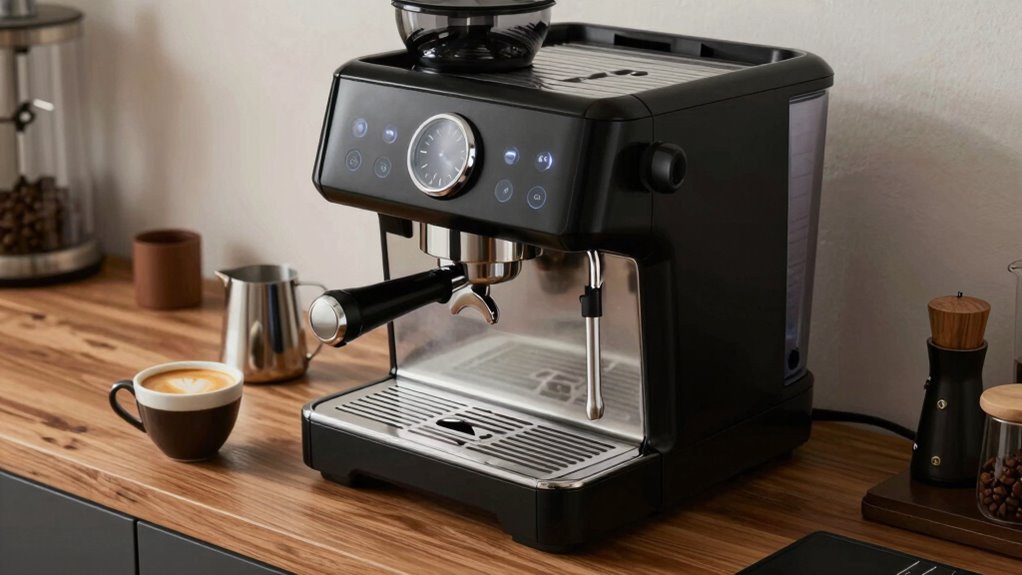
The Casabrews CM5418 stands out for delivering professional-quality espresso in a sleek, space-saving design. Its 20-bar pump ensures rich, full-bodied shots comparable to larger machines like the Breville Barista Express, but in a much smaller footprint. The powerful steam wand makes it easy to create creamy milk froth, although it requires a cool-down period to prevent overheating—a tradeoff for its compact size. Unlike more automated options, this model demands some manual skill, which might challenge beginners but appeals to those wanting more control. Compared to the Breville, it lacks integrated features like automatic milk frothing, making it better suited for users comfortable with manual operation. Its removable water tank simplifies refilling in tight spaces, but the need for occasional rest periods after frothing is a minor inconvenience. This pick makes the most sense for those with limited space who still want a capable, stylish espresso machine.Pros:- Compact and stylish design fits small studio spaces
- Professional 20-bar pressure for rich espresso extraction
- Powerful steam wand for milk frothing and latte art
- Removable water tank for easy refilling
Cons:- Requires cooling down after frothing to prevent overheating
- No automatic functions—manual control needed
Best for: Studio owners or apartment dwellers needing a space-efficient machine that still produces quality espresso
Not ideal for: Beginners seeking a fully automatic machine or users who prefer quick, fuss-free brewing
- Water Tank Capacity:34 oz
- Pump Pressure:20 Bar
- Power:1350 W
- Material:Stainless Steel
Our verdict“Ideal for small studio spaces where style and quality are priorities, but requires some manual effort.”
Breville Barista Express User Guide for Beginners 2026
This guide excels at helping newcomers master their Breville Barista Express, providing clear instructions that fill the gaps left by basic manuals. While it doesn’t include the machine itself, it complements the machine’s semi-automatic features, making it easier to produce barista-quality drinks. Compared with the Casabrews, which is more straightforward but less feature-rich, this guide helps users get the most out of the advanced capabilities of the Breville. It’s perfect for beginners who want structured guidance but should be skipped by those seeking technical details or machine specs, as these are not included. Its focus on troubleshooting, maintenance, and technique boosts confidence, but the lack of detailed machine specs might leave some users wanting more technical insight. This resource is best for new users of the Breville Barista Express who want to develop barista skills without frustration.Pros:- Clear, easy-to-follow instructions for beginners
- Covers essential maintenance and troubleshooting
- Builds confidence in operating the machine
Cons:- No actual machine included or technical specs provided
- Limited to guide content without hands-on features
Best for: Beginners or owners of the Breville Barista Express seeking detailed operational guidance
Not ideal for: Experienced baristas or those who already know their way around espresso machines
Our verdict“A practical, focused resource for new Breville users wanting to improve their espresso skills.”
The Coffee Gear Buyer’s Guide: The Complete Equipment Reference for Home Coffee
This guide offers an extensive overview of home coffee gear, making it invaluable for those planning a full setup. It compares various grinders, machines, and accessories across budgets, helping readers choose what fits their needs and space constraints. Unlike the other products, it doesn’t focus on a single machine but instead helps users understand the broader context of home coffee. This makes it less suitable for someone seeking specific product recommendations but perfect for those looking to upgrade their entire setup or learn about equipment options. It’s a solid starting point for enthusiasts who want to understand the technical landscape, yet it lacks detailed reviews or pricing. For anyone starting from scratch or considering a major upgrade, this guide provides a broad perspective that can inform smarter choices.Pros:- Provides detailed information on a wide range of coffee equipment
- Suitable for all budgets and needs
- Excellent resource for understanding home coffee gear
Cons:- No specific product reviews or ratings
- Lacks detailed technical specifications
Best for: Home coffee enthusiasts planning to upgrade or expand their equipment collection
Not ideal for: Those seeking immediate, specific product recommendations or detailed reviews
Our verdict“Best suited for coffee lovers wanting an in-depth understanding of equipment options for their home setup.”
Coffee Under Pressure: A Guide to Espresso Machine Ownership
This book provides an in-depth look at owning and operating espresso machines, making it ideal for both newcomers and seasoned enthusiasts. It covers techniques, maintenance, and troubleshooting, helping users get consistent results—comparable to the practical advice found in the Breville guide but with broader scope. Unlike the Casabrews machine, which is a specific product, this guide focuses on mastery and longevity, making it suitable for those committed to a long-term espresso journey. The absence of specific machine details means it’s less useful for choosing a particular model but immensely valuable for understanding how to care for any machine. Its comprehensive approach makes it well worth considering if you want to deepen your knowledge beyond just making coffee.Pros:- Provides detailed guidance on machine ownership and maintenance
- Suitable for both beginners and experienced users
- Enhances long-term espresso quality and machine care
Cons:- No specific product details or features listed
- No ratings or customer reviews available
Best for: Coffee lovers looking to improve their skills and maintain their espresso machines over time
Not ideal for: Casual users or those only interested in quick, straightforward espresso making
Our verdict“A comprehensive guide for dedicated enthusiasts wanting to master espresso machine ownership and upkeep.”
Espresso at Home: A Practical Guide for Beginners
This book offers step-by-step instructions tailored for newcomers eager to learn espresso making. Its focus on grinding, yield, and tasting helps beginners develop their palate and technique, making it a practical companion for those starting with any machine, including the Casabrews or Breville. Compared with the other guides, this one emphasizes practical exercises and real-world examples, which can accelerate learning. However, it doesn’t provide technical specifications or detailed machine reviews, limiting its usefulness for those wanting to evaluate equipment options. Its checklists, templates, and straightforward language make it ideal for absolute beginners who want a clear, structured approach to espresso at home.Pros:- Comprehensive, beginner-friendly guidance
- Includes checklists and templates for practice
- Real-world examples help improve understanding
Cons:- No detailed technical specifications
- Focuses solely on espresso, not other coffee methods
Best for: Absolute beginners seeking clear, practical guidance to start making espresso at home
Not ideal for: Intermediate or advanced users looking for technical details or machine reviews
Our verdict“Perfect for newcomers wanting a straightforward, practical introduction to espresso making at home.”
Breville Barista Express Machine Cookbook for Beginners
This cookbook stands out for anyone who wants to develop barista skills alongside their espresso machine. Unlike the Breville BES870XL, which offers the hardware to make espresso, this guide provides structured, visual instructions for mastering those skills. It’s especially useful for beginners who need step-by-step guidance, latte art tips, and recipes, but it doesn’t address machine specifics or troubleshooting. The full-color images and detailed techniques make it a valuable companion for new users aiming to improve their craft. However, it’s limited to instructional content and doesn’t include any hardware features or technical specs.
Pros:- Clear, step-by-step instructions that demystify brewing and latte art
- Includes café-style recipes for variety and practice
- Full-color images enhance understanding and confidence
Cons:- Focuses solely on the cookbook content, not machine features or specs
- Lacks technical troubleshooting or maintenance details
Best for: Beginners eager to learn espresso making and latte art with their existing or new machine
Not ideal for: Experienced baristas seeking advanced techniques or technical machine insights
Our verdict“This guide is perfect for beginners who want structured learning and visual guidance without technical machine details.”
Breville BES870XL Barista Express Espresso Machine, Brushed Stainless Steel
The Breville BES870XL is a versatile choice that combines a built-in grinder with manual controls, making it ideal for those who want fresh espresso and more control over their brew. Compared with the cookbook, this machine delivers actual brewing power, but it involves a learning curve, especially for users unfamiliar with espresso techniques. The adjustable grind and tamping options let users refine their shots, while the 67 oz water tank is suitable for multiple drinks, though frequent refilling can be a minor inconvenience. Its 1600-watt power ensures quick heat-up and consistent temperature, but high energy use and the need for some skill make it better suited for committed hobbyists rather than casual users.
Pros:- Built-in grinder ensures fresh grounds and flavor
- Adjustable grind size and manual controls for personalized brewing
- Includes comprehensive accessories for brewing, steaming, and cleaning
- Produces café-quality espresso, lattes, and cappuccinos
Cons:- High power consumption may increase electricity costs
- Manual operation requires some skill and practice
- Limited water capacity may necessitate frequent refilling during heavy use
Best for: Intermediate to advanced home baristas who want a complete, manual espresso experience
Not ideal for: Small spaces with limited power supply or users seeking automation with minimal effort
- Included accessories:Razor Dose Trimming Tool, 54mm Stainless Steel Portafilter, Filter Baskets, Coffee Scoop, Tamper, Milk Jug, Cleaning Tools, Water Filter
- Bean hopper capacity:1/2 lb
- Water tank capacity:67 oz
- Power:1600 Watts
- Voltage:120 Volts
- Warranty:1 Year Limited
Our verdict“This machine suits dedicated enthusiasts seeking an authentic and customizable espresso experience at home.”
The Complete Guide to Espresso Machines
This guidebook provides a broad overview suitable for those new to espresso machines or looking to deepen their understanding. Unlike the more hands-on products like the Breville BES870XL, this book offers detailed explanations of selecting and maintaining equipment, making it useful for future upgrades or troubleshooting. While it’s comprehensive and suitable for both beginners and enthusiasts, it doesn’t include specific product features or technical specs, limiting its usefulness as a direct purchase guide. It complements hardware but doesn’t replace practical experience or machine-specific advice.
Pros:- Extensive guidance on selecting and understanding espresso equipment
- Suitable for beginners and enthusiasts alike
- Includes tips on maintenance and troubleshooting
Cons:- No direct product features or technical specifications
- Limited practical brewing guidance or step-by-step instructions
Best for: Coffee lovers wanting a solid foundation on espresso equipment and maintenance
Not ideal for: Those seeking immediate hands-on brewing or specific machine recommendations
Our verdict“Ideal for those wanting to make informed decisions about espresso gear rather than immediate brewing instructions.”
Home Espresso Made Easy: A Beginner’s Guide to Making Café-Quality Espresso, Steaming Milk, and Building Barista Skills at Home
This guide emphasizes skill development, including steaming milk and building confidence in espresso making, making it similar to the cookbook but with a stronger focus on technique. Compared to the comprehensive hardware-focused approach of the Breville BES870XL, this book prioritizes barista skills over equipment specifics. It’s well-suited for those starting out, but seasoned users may find it too basic. The step-by-step instructions help users produce café-quality drinks, but without any included equipment, it’s a good complement to a suitable machine rather than a standalone solution.
Pros:- Step-by-step guidance on making café-quality espresso and milk steaming
- Focuses on developing barista skills for consistent results
- Includes tips on technique that can elevate the home coffee experience
Cons:- No specific equipment or product features included
- Content may be too basic for experienced users
Best for: Beginners eager to learn barista techniques and improve their home coffee craft
Not ideal for: Experienced home baristas seeking advanced recipes or detailed equipment reviews
Our verdict“This book is ideal for beginners looking to master fundamental barista skills at home.”
All About Espresso: The Art & Science of Perfect Coffee — Home Barista Guide to Espresso Machines, Beans, Grinders, Roasting, Crema, Latte Art & Specialty Coffee Drinks
This comprehensive guide appeals to home baristas who want to understand every aspect of espresso making, from equipment selection to roasting and latte art. Unlike the machine-specific focus of the Breville BES870XL, it offers insights into beans, grind sizes, and roasting techniques, making it more suitable for those interested in the science behind the craft. While it covers a broad array of topics, it doesn’t include specific product reviews or technical specs, so it’s less useful for immediate equipment decisions. It’s best for those who want to deepen their appreciation of the art and science of espresso.
Pros:- Covers a wide range of topics including beans, roasting, and latte art
- Suitable for both beginners and experienced home baristas
- Deep dive into the science behind espresso for better understanding
Cons:- Lacks specific product features or technical specifications
- Content is in book format, not a practical equipment guide
Best for: Enthusiasts who want a holistic understanding of espresso from bean to cup
Not ideal for: People seeking quick setup solutions or specific product recommendations
Our verdict“Perfect for those looking to expand their knowledge and appreciation of espresso beyond just brewing.”
The Home Espresso Handbook: Everything You Need to Pull Great Shots, Steam Perfect Milk, and Build a Café-Quality Espresso Setup at Home
This comprehensive guide stands out for its depth, making it ideal for coffee enthusiasts eager to learn the art of home espresso brewing. Unlike the Breville Espresso Machine User Guide, which focuses solely on machine operation, this handbook covers the entire process—from pulling shots to steaming milk—helping users develop skills beyond basic use. However, it requires you to already own an espresso machine, so it’s not suitable if you’re just starting without equipment. Its detailed tips improve shot quality and milk texture, but it doesn’t include any hardware, meaning you’ll need to purchase your own setup separately. For those who want to understand the craft and elevate their skills, this book is a valuable investment.
Pros:- Provides detailed, step-by-step guidance on brewing and steaming
- Helps develop barista skills with thorough techniques
- Covers building a professional-quality setup at home
Cons:- No actual equipment or accessories included, requiring separate purchase
- Can be overwhelming for complete beginners with no prior experience
Best for: Serious coffee enthusiasts who want to master espresso making at home and are willing to invest time in learning.
Not ideal for: Beginners seeking an all-in-one starter kit or those without existing equipment who want a simple, plug-and-play solution.
- Format:Paperback
- Pages:250+
- Author:Home Barista Experts
- Focus:Brewing techniques, milk steaming, setup
- Intended Audience:Enthusiasts, aspiring baristas
- Language:English
Our verdict“This book is best suited for dedicated coffee lovers aiming to deepen their home espresso skills and build a professional setup.”
Breville Espresso Machine User Guide
This user guide makes a strong case for new home baristas who already own a Breville espresso machine, offering clear instructions to optimize performance, much like the Breville Barista Express User Guide for Beginners, but with a focus on calibration and maintenance. While it helps users get the most out of their existing equipment, it does not include the machine or accessories, so it’s not helpful for those without a Breville model. Compared to general reference books like “The Complete Guide to Espresso Machines,” this manual is more specific and hands-on, ensuring you can troubleshoot and fine-tune your machine’s settings. However, its limited scope means it’s less useful if you’re still deciding which machine to buy or need broader coffee knowledge. It’s best for current Breville owners who want to enhance their brewing routine.
Pros:- Provides step-by-step setup and calibration instructions
- Maximizes espresso quality through detailed performance tips
- Helps troubleshoot common issues for consistent results
Cons:- Does not include the machine or accessories, so additional purchases are necessary
- Limited to users with a Breville machine, less useful for other brands
Best for: Home baristas with a Breville espresso machine seeking to improve performance and learn maintenance routines.
Not ideal for: Potential buyers still considering their first espresso machine or those who want a comprehensive coffee education beyond Breville models.
- Format:Digital PDF / Print
- Compatibility:Breville espresso models
- Pages:50-100
- Focus:Setup, calibration, troubleshooting
- Language:English
- Author:Breville Experts
Our verdict“This guide is ideal for current Breville espresso machine owners who want to refine their brewing and maintenance skills.”

How We Picked
I evaluated these espresso machines based on key factors such as performance, ease of use, build quality, and suitability for small studio environments. Cost-effectiveness and versatility were also critical, alongside the machine’s ability to produce consistent, high-quality espresso. The ranking emphasizes options that balance quality with space considerations and user experience, ensuring each pick serves a specific buyer profile. This approach helps guide buyers toward machines that meet their skill level and budget while fitting into a studio setup.Factors to Consider When Choosing Espresso Machine For Studios Buyer Guide
Choosing an espresso machine for a studio involves balancing space constraints, user expertise, and desired coffee quality. It’s important to consider how much automation you want, maintenance requirements, and your budget. Understanding these factors helps avoid common pitfalls, such as buying a machine that’s too complex or underpowered for your needs. Here are the key considerations to make an informed decision.Size and Space Requirements
Studio spaces often mean limited counter space, so compact, space-saving machines are a priority. Look for slim profiles or machines designed for small kitchens or workspaces. However, smaller machines may sacrifice some features or capacity, so consider how much coffee you need to prepare at once. A model that’s too bulky defeats the purpose of a studio setup, while overly small units might lack necessary functionalities.
Ease of Use and Skill Level
Beginners should prioritize machines with straightforward controls, automatic features, or built-in grinders to reduce the learning curve. More experienced users might prefer semi-automatics or manual machines that offer greater control over shot extraction and milk steaming. Avoid complex setups if you’re new, but don’t shy away from automation if consistency and speed are more important than fine-tuning every shot.
Performance and Brew Quality
Consistent high-quality espresso depends on stable pressure, temperature control, and good steam power. Higher-end machines generally deliver better shot quality and milk frothing, but they also cost more and require more maintenance. For studio use, balance your desire for barista-level results with your willingness to maintain and operate more complex equipment.
Build Quality and Durability
Investing in a well-built machine pays off over time, especially in a studio where equipment might see frequent use. Steel or high-quality plastic components increase longevity and reliability. Cheaper models might save money upfront but could lead to frequent repairs or replacements, disrupting your workflow.
Price and Value
Budget constraints are common, but choosing a machine solely on price can be shortsighted. Consider what features are essential versus optional—spending more on a machine with better durability, performance, or automation can lead to better long-term value. Also, factor in ongoing costs like filters, descaling solutions, or replacement parts.
Frequently Asked Questions
Is a semi-automatic espresso machine better for a studio setup?
Semi-automatic machines offer a good balance of control and convenience, making them suitable for studios where you want quality without full manual effort. They allow you to control shot timing and steam pressure, which can improve espresso consistency, but still automate some processes. These models are ideal if you plan to develop barista skills or want café-quality results without extensive manual work.
Do I need a professional-grade machine for my small studio?
Not necessarily. While professional-grade machines deliver the highest quality and durability, many smaller or semi-automatic models can produce excellent espresso for personal use. Your choice should depend on your skill level, how often you’ll use the machine, and your budget. For occasional use, a well-chosen mid-range machine will usually suffice, while frequent, high-volume use might justify a more robust, commercial-style model.
What’s more important: built-in grinder or separate grinder?
Choosing between a built-in grinder and a separate grinder depends on your priorities and space. Built-in grinders save counter space and simplify setup, appealing for small studios. However, dedicated grinders often provide better grind consistency and more customization options, which can improve espresso quality. If space allows, a separate grinder is usually preferable for serious coffee enthusiasts aiming for top-tier results.
How much should I expect to spend on a good studio espresso machine?
Entry-level machines suitable for small studios generally start around $300 to $700, offering basic features and decent quality. Mid-range options between $700 and $1,500 often include better build quality, more control, and improved performance. Premium models exceeding $1,500 deliver professional-grade features, durability, and advanced controls but may be too complex or costly for casual use. Balance your budget with your desired features and usage frequency.
Are all machines compatible with different coffee beans and grind sizes?
Most espresso machines are compatible with various coffee beans, but their performance depends heavily on grind size and freshness. Machines with adjustable grind settings or dedicated grinders give you more control to optimize extraction. Cheaper or less flexible models may require specific grind sizes or beans for best results, so consider your coffee preferences and whether you’re willing to experiment with different beans and settings.
Conclusion
For those just starting out or with limited space, the Casabrews CM5418 offers a compact, easy-to-use option. Enthusiasts seeking a balance of control and convenience should consider the Breville Barista Express, which provides excellent value for its feature set. For dedicated home baristas or small studios with space and budget, investing in a premium model like the Breville BES870XL can elevate your espresso game. Tailor your choice based on skill level, space, and how much you plan to use the machine — there’s an ideal fit for every studio setup.
Halloween Picks
halloween
As an affiliate, we earn on qualifying purchases.