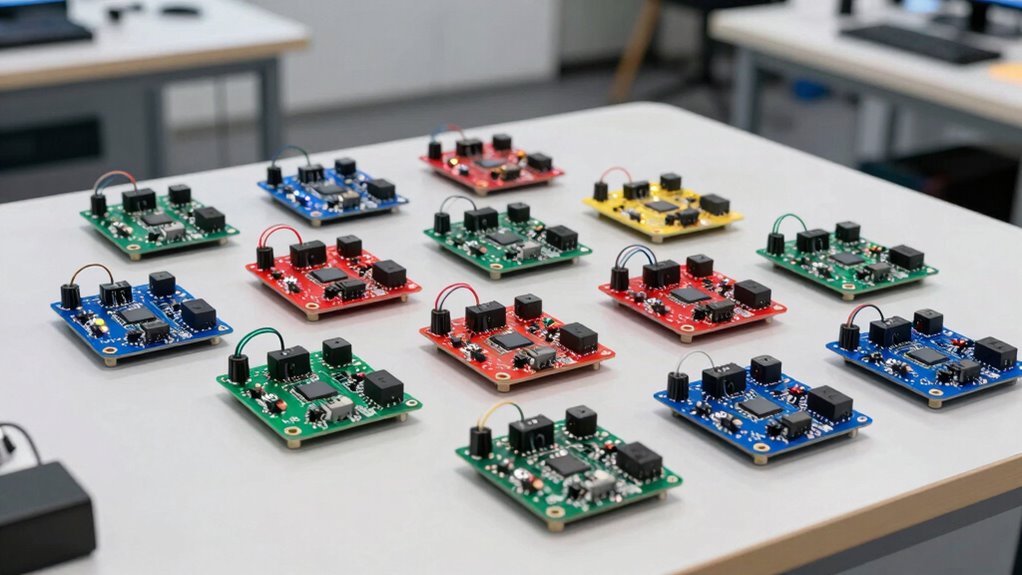

Starting with IoT sensor kits can be overwhelming due to the wide range of options and features. The GeeekPi Ultimate Sensor Kit for Arduino UNO R4 Minima stands out as the best overall, offering a comprehensive range of sensors suitable for most beginner projects. For those interested in STEM-focused learning, the ACEBOTT ESP32 Smart Home IoT Starter Kit provides excellent educational value, especially for younger users. Meanwhile, the ELEGOO ESP-32 Super Starter Kit offers a good balance of affordability and versatility. Keep in mind that tradeoffs often involve choosing between sensor variety, ease of use, and price. Continue reading for a detailed comparison that will help you pick the perfect kit for your needs.
Listen free for 30 days with Audible
Thousands of audiobooks and originals — cancel anytime.
Start your free trialAs an affiliate, we earn on qualifying purchases.
Key Takeaways
- The most versatile kits combine a wide array of sensors with beginner-friendly tutorials.
- Price often correlates with sensor variety; more sensors generally mean a higher cost.
- Pre-installed tutorials and support resources significantly ease the learning curve.
- Compatibility with popular platforms like Arduino and Python expands project possibilities.
- Some kits prioritize STEM education, making them ideal for young learners or classroom use.
| GeeekPi Ultimate Sensor Kit for Arduino UNO R4 Minima – Smart Farm & IoT Projects |  | Best for Smart Farm & Environmental Automation | Platform: Arduino UNO R4 Minima | Sensors Included: Rain Drop Sensor, Temperature and Humidity Sensor | Accessories: IR Remote Controller, Receiver, LEDs, Buttons, Buzzer | VIEW ON AMAZON | See Our Full Breakdown |
| ELECFREAKS microbit Smart Science IoT Kit Octopus Series Sensor (Without microbit) |  | Best for Cloud-Enabled Environmental Monitoring | Compatibility: Without microbit | Sensors Included: Ultrasonic, dust, light, water level | Connectivity: ESP12F WiFi, RTC, IIC interface | VIEW ON AMAZON | See Our Full Breakdown |
| SunFounder Ultimate Sensor Kit with Arduino Uno R4 Minima, 30+ Sensors, IoT & Educational Projects |  | Best for Wide-Ranging IoT and Educational Exploration | Microcontroller: Arduino Uno R4 Minima | Flash Memory: 256 KB | Processor Speed: 48 MHz | VIEW ON AMAZON | See Our Full Breakdown |
| ELEGOO ESP-32 Super Starter Kit with Tutorial, Compatible with Arduino IDE |  | Best for Advanced Beginners and Versatile IoT Projects | Microcontroller: ESP-32 Dual Core | Connectivity: Wi-Fi, Bluetooth 4.2 | Chipset: CP2102 | VIEW ON AMAZON | See Our Full Breakdown |
| Arduino Sensor Kit – Base [TPX00031] – Essential Sensors for Beginners | – Essential Sensors for Beginners” image=”https://m.media-amazon.com/images/I/51Vx+S-VgBL._AC_SY300_SX300_QL70_ML2_.jpg” link=”0″] | Best for Basic Learning and Entry-Level Projects | Number of Sensors: 10+ | Included Sensors: Temperature, Light, Motion, Humidity | Intended Audience: Beginners, Educators, Students, Hobbyists | VIEW ON AMAZON | See Our Full Breakdown |
| ACEBOTT ESP32 Smart Home IoT Starter Kit – STEM Educational Kit for Kids 12+ |  | Best for Young Learners Interested in Hands-On Electronics | Compatibility: Arduino IDE | Projects: 16 interactive home automation projects | Includes: Sensors, RFID, RGB lights, WiFi module | VIEW ON AMAZON | See Our Full Breakdown |
| ESP32 Electronics Kit for Beginners – STEM Learning Kit Compatible with Arduino IDE, Scratch, and Python |  | Best for Those Wanting a Deep Dive into Electronics and Coding | Board: ESP32 with WiFi & Bluetooth | Components: 96+ sensors, LEDs, motors, more | Tutorials: 40+ step-by-step lessons | VIEW ON AMAZON | See Our Full Breakdown |
| M5Stack M5GO IoT Starter Kit V2.7 with ESP32, 2.0″ Display, 6 Sensors, Wi-Fi, 16MB Flash, Microphone & Speaker |  | Best for Versatile IoT Prototyping with Rich Features | Microcontroller: ESP32 | Display: 2.0-inch HD IPS | Flash Memory: 16MB | VIEW ON AMAZON | See Our Full Breakdown |
| Arduino OPLA IoT Kit [AKX00026] – All-in-One Internet of Things Learning Platform for Makers, Developers & Hobbyists | – All-in-One Internet of Things Learning Platform for Makers, Developers & Hobbyists” image=”https://m.media-amazon.com/images/I/51m3ssWqClL._AC_SX300_SY300_QL70_ML2_.jpg” link=”0″] | Best for Arduino Enthusiasts and Cloud Integration Fans | Sensors Included: Temperature, humidity, motion, light, etc. | Communication Modules: Wi-Fi, Bluetooth, LoRa | Compatibility: Arduino Ecosystem | VIEW ON AMAZON | See Our Full Breakdown |
| 26-in-1 Sensor Modules Kit for ESP32 – Compatible with Arduino IDE, Scratch, Python |  | Best for All-in-One Versatile IoT Projects Without Soldering | Development Board: ESP32 Max V1.0 | Modules Included: Over 26 modules | Tutorials: 40+ videos | VIEW ON AMAZON | See Our Full Breakdown |
| SunFounder Elite Explorer Kit with Arduino Uno R4 WiFi, 300+ Components, IoT Projects, Tutorials for Beginners & Engineers |  | Best Overall for Versatile Learning | Board: Arduino Uno R4 WiFi | Components: 300+ | Projects: Over 50 | VIEW ON AMAZON | See Our Full Breakdown |
| KEYESTUDIO IoT ESP32 Smart Home Starter Kit for Arduino and Python |  | Best for Progressive Smart Home Projects | Development Board: ESP32 | Included Sensors: DHT11, PIR motion, gas sensor, RFID, RGB, LCD1602 | Power Supply: Requires 6x AA batteries (not included) | VIEW ON AMAZON | See Our Full Breakdown |
| LAFVIN AIoT Starter Kit with ESP32-S3 and Sensors for DIY Projects |  | Best for AI-Enabled IoT and STEM Learning | Microcontroller: ESP32-S3 | Modules Included: RGB LED, WS2812, DHT11, servo, relay, sensors | Features: AI voice control, MCP protocol, pre-compiled firmware | VIEW ON AMAZON | See Our Full Breakdown |
| Basic Starter Kit for ESP32 ESP-32S WiFi Development Board, Beginner Electronics Learning Kit with Sensors and Modules |  | Best for Entry-Level Learning with Step-by-Step Guidance | Microcontroller: ESP32 ESP-32S | Connectivity: WiFi | Compatibility: Arduino IDE | VIEW ON AMAZON | See Our Full Breakdown |
| GAR Monster Starter Kit for Arduino – Robotics & IoT Development, 5-Board Set with 25 Sensors & Tutorials |  | Best for Robotics and Versatile IoT Projects | Main Boards: Uno R3, Mega 2560, Nano V3, ESP32 WiFi+BT, ESP8266 NodeMCU | Sensors: RFID, Ultrasonic, RTC, Accelerometer, LCD, Relay, Servo, Stepper | Components: Over 65 parts | VIEW ON AMAZON | See Our Full Breakdown |
More Details on Our Top Picks
GeeekPi Ultimate Sensor Kit for Arduino UNO R4 Minima – Smart Farm & IoT Projects
This kit stands out for its focus on smart farm applications, combining essential environmental sensors with accessories that support automation projects. Compared with the SunFounder Ultimate Sensor Kit, it offers a more targeted set of sensors for environmental monitoring, making it ideal for agricultural projects. The included demo codes and tutorials lower the barrier for beginners, but some users may find the Arduino UNO R4 Minima platform somewhat limiting for more complex or expanding projects. The kit’s compatibility with Arduino programming makes it accessible, yet it requires basic coding knowledge to fully utilize its capabilities. If your goal is to create automated watering or climate control systems, this kit offers specific tools suited to those needs.Pros:- Suitable for beginners and experienced users alike
- Includes a variety of sensors and accessories for versatile projects
- Supports learning with demo codes, tutorials, and documentation
Cons:- Requires some basic Arduino programming knowledge
- Limited to compatible sensors and components included in the kit
Best for: Beginners or hobbyists interested in smart farming or environmental automation using Arduino UNO R4 Minima.
Not ideal for: Users wanting a broader IoT platform or more advanced sensors for diverse applications, as it’s tailored primarily to environmental monitoring.
- Platform:Arduino UNO R4 Minima
- Sensors Included:Rain Drop Sensor, Temperature and Humidity Sensor
- Accessories:IR Remote Controller, Receiver, LEDs, Buttons, Buzzer
- Use Cases:Smart farm automation, IoT projects, prototyping
Our verdict“This kit is perfect for those focused on smart farm projects or environmental automation with Arduino, especially beginners willing to learn the platform.”
ELECFREAKS microbit Smart Science IoT Kit Octopus Series Sensor (Without microbit)
This kit excels at integrating multiple sensors like ultrasonic, dust, light, and water level with cloud data capabilities, making it ideal for educational settings and basic environmental projects. Unlike the Arduino-based options, it relies on ESP12F WiFi modules for cloud connectivity, which enhances remote data access but adds complexity to setup—possibly challenging for complete newcomers. The graphical programming support simplifies learning, yet the absence of the microbit limits its immediate usability without additional hardware. It’s best suited for learners who want to explore IoT data transmission and environmental sensing in tandem with online platforms.Pros:- Supports cloud data transmission and online education platforms
- Includes a variety of sensors for environmental monitoring
- Compatible with graphical programming for easier learning
Cons:- Requires a microbit to operate, which is not included
- Complex setup may be difficult for absolute beginners
Best for: Students or educators seeking a cloud-connected IoT sensor kit for environmental projects, with some programming background.
Not ideal for: Beginners with no prior microcontroller experience or those who lack access to microbit hardware, as the microbit itself is not included.
- Compatibility:Without microbit
- Sensors Included:Ultrasonic, dust, light, water level
- Connectivity:ESP12F WiFi, RTC, IIC interface
- Additional Features:OLED, BME280 support, passive buzzer, earphone jack
Our verdict“Ideal for learners aiming to combine environmental sensing with cloud connectivity, provided they are comfortable with some setup complexity.”
SunFounder Ultimate Sensor Kit with Arduino Uno R4 Minima, 30+ Sensors, IoT & Educational Projects
This extensive kit offers over 30 sensors and modules, powered by the robust Arduino Uno R4 Minima, making it suitable for both beginners and seasoned hobbyists. Compared with the Arduino Sensor Kit Base, its large sensor variety opens up more complex project possibilities, but this can also be overwhelming for those new to electronics. The comprehensive tutorials and online support help bridge the gap for learners, yet the sheer number of components may lead to confusion without clear project focus. This kit is ideal for users eager to explore multiple IoT applications across different levels of difficulty.Pros:- Includes a large variety of sensors and modules
- Great for exploring diverse IoT applications
- Comprehensive tutorials and online resources
Cons:- Can be overwhelming for complete beginners
- Requires additional components for some advanced projects
Best for: Hobbyists or students ready to experiment with a wide array of sensors and IoT projects on Arduino Uno R4 Minima.
Not ideal for: Complete beginners without prior electronics experience or those seeking a simple, focused starter kit.
- Microcontroller:Arduino Uno R4 Minima
- Flash Memory:256 KB
- Processor Speed:48 MHz
- Number of Sensors:30+
- Power Input Range:6-24V
- RoHS Compliant:Yes
Our verdict“Best suited for learners wanting a broad platform for experimenting with many sensors and IoT projects on Arduino.”
ELEGOO ESP-32 Super Starter Kit with Tutorial, Compatible with Arduino IDE
The ESP-32’s dual-core architecture and built-in Wi-Fi and Bluetooth make this kit stand out for versatile IoT applications, especially for those interested in wireless connectivity. Unlike the Arduino-based kits, it offers over 200 components, supporting more complex and connected projects. The included tutorials facilitate learning, yet the large scale of the kit can be intimidating for complete beginners unfamiliar with electronics. Its compatibility with Arduino IDE simplifies programming, but some foundational electronics knowledge remains beneficial. This kit is well-suited to those ready to move beyond basic sensors and explore more sophisticated IoT solutions.Pros:- Includes over 200 parts for diverse projects
- Compatible with Arduino IDE for accessible programming
- Wi-Fi and Bluetooth connectivity enable advanced IoT applications
Cons:- Requires some basic electronics and programming knowledge
- Large kit may be overwhelming for absolute beginners
Best for: Beginners with some electronics experience seeking a powerful, Wi-Fi-enabled IoT starter kit with extensive components.
Not ideal for: Total novices or users who prefer a smaller, simpler kit, as it may be overwhelming and requires some prior knowledge.
- Microcontroller:ESP-32 Dual Core
- Connectivity:Wi-Fi, Bluetooth 4.2
- Chipset:CP2102
- Number of Components:200+
- Compatibility:Arduino IDE
Our verdict“Ideal for learners ready to advance into wireless IoT projects with a comprehensive and flexible kit.”
Arduino Sensor Kit – Base [TPX00031] – Essential Sensors for Beginners
– Essential Sensors for Beginners” image=”https://m.media-amazon.com/images/I/51Vx+S-VgBL._AC_SY300_SX300_QL70_ML2_.jpg” link=”0″]Best for Basic Learning and Entry-Level Projects
View on AmazonThis kit offers a straightforward collection of over 10 essential sensors, making it a practical starting point for complete beginners. Compared to the SunFounder 30+ Sensor Kit, it has fewer components, focusing on core sensors like temperature, light, motion, and humidity, which are enough for foundational projects. Its simplicity and clear instructions make it accessible, but the limited sensor variety restricts complexity and scope. The lack of a microcontroller included means users will need to provide their own, which could add to the initial setup. It’s a solid choice for those new to electronics seeking a manageable, entry-level kit.Pros:- Contains essential sensors suitable for many beginner projects
- Easy-to-follow instructions and resources included
- Cost-effective and straightforward for new learners
Cons:- Limited to basic sensors, not suitable for advanced projects
- Requires a separate microcontroller or development board
Best for: Beginners, students, or educators seeking a simple, easy-to-use sensor kit for basic environmental or home automation projects.
Not ideal for: Experienced hobbyists or those wanting to explore a wider range of sensors and more complex IoT projects without additional purchase.
- Number of Sensors:10+
- Included Sensors:Temperature, Light, Motion, Humidity
- Intended Audience:Beginners, Educators, Students, Hobbyists
- Applications:Environmental Monitoring, Home Automation, Robotics, IoT
Our verdict“Best for absolute beginners needing a simple, practical set of essential sensors to start their electronics journey.”
ACEBOTT ESP32 Smart Home IoT Starter Kit – STEM Educational Kit for Kids 12+
The ACEBOTT ESP32 Smart Home IoT Starter Kit shines as an educational resource designed specifically for teenagers eager to explore IoT and programming. Unlike more comprehensive kits like the ESP32 Electronics Kit for Beginners, this set emphasizes building 16 interactive home automation projects, making it ideal for fostering practical skills through guided tutorials in Scratch and Arduino. Its eco-friendly plywood construction and focus on STEM learning make it perfect for classroom or at-home projects. However, the need for external batteries and some assembly complexity may challenge younger users or those seeking a plug-and-play experience. Compared with larger kits, it offers a streamlined, project-focused approach, but at the expense of fewer raw components for experimentation.
Pros:- Designed specifically to teach electronics and coding through fun projects
- Includes comprehensive tutorials suitable for different skill levels
- Promotes hands-on hardware construction and problem-solving
Cons:- Batteries not included, requiring additional purchase
- Some assembly required which may be challenging for younger users
Best for: Teenagers and educators seeking an engaging, project-based introduction to IoT and programming
Not ideal for: Younger children or absolute beginners who need a more straightforward, all-in-one setup without assembly
- Compatibility:Arduino IDE
- Projects:16 interactive home automation projects
- Includes:Sensors, RFID, RGB lights, WiFi module
- Batteries required:6 AA batteries (not included)
- Materials:Environmentally friendly plywood
- Recommended age:12+
Our verdict“This kit is best suited for teenagers and educators looking for a project-based, educational IoT experience.”
ESP32 Electronics Kit for Beginners – STEM Learning Kit Compatible with Arduino IDE, Scratch, and Python
The ESP32 Electronics Kit for Beginners stands out for offering an extensive array of over 96 components and more than 40 tutorials, making it more suitable for learners who aspire to master a wide range of IoT and electronics skills. Unlike the M5Stack M5GO IoT Starter Kit, which provides a more integrated hardware experience, this kit emphasizes versatility with its support for multiple programming environments including Arduino, Scratch, and Python. While this makes it an excellent choice for detailed learning, it can be overwhelming for absolute novices due to setup complexity and the need for some prior understanding of electronics and programming. This kit offers a richer educational experience but demands more time and effort to assemble and explore.
Pros:- Includes a vast selection of components for diverse projects
- Supports multiple programming languages and platforms
- Ideal for in-depth STEM learning and experimentation
Cons:- Can be overwhelming for those with no prior electronics experience
- Assembly and setup may require patience and basic knowledge
Best for: Beginners with some basic electronics knowledge who want a comprehensive, multi-language platform for IoT projects
Not ideal for: Complete newcomers or younger kids seeking a straightforward, less complex starter kit
- Board:ESP32 with WiFi & Bluetooth
- Components:96+ sensors, LEDs, motors, more
- Tutorials:40+ step-by-step lessons
- Compatibility:Arduino IDE, Scratch, Python
- Learning Focus:Electronics, coding, IoT
Our verdict“This kit is perfect for motivated beginners ready to dive into detailed electronics and programming across multiple platforms.”
M5Stack M5GO IoT Starter Kit V2.7 with ESP32, 2.0″ Display, 6 Sensors, Wi-Fi, 16MB Flash, Microphone & Speaker
The M5Stack M5GO IoT Starter Kit V2.7 offers a robust package with a 2.0-inch display, six sensors, and support for multiple programming environments like MicroPython, Arduino, and .NET nanoFramework. Compared with the ESP32 Electronics Kit for Beginners, this model emphasizes ease of prototyping with its stacking modules and multimedia capabilities, making it suitable for more interactive projects. Its built-in microphone and speaker extend possibilities into voice-controlled or audio-related IoT systems. However, its setup can be complex for newcomers, and without detailed documentation, some users might find initial configuration challenging. Its modular design makes it excellent for expanding projects, but the learning curve is steeper for absolute beginners.
Pros:- Includes multiple sensors and multimedia components
- Supports multiple programming platforms for flexibility
- Expandable with stacking modules and LEGO compatibility
Cons:- Complex setup may be intimidating for beginners
- Limited detailed documentation in raw data
Best for: Intermediate hobbyists and STEM students seeking a flexible, expandable IoT platform
Not ideal for: Complete beginners or those preferring a simple, all-in-one starter kit with minimal setup
- Microcontroller:ESP32
- Display:2.0-inch HD IPS
- Flash Memory:16MB
- Sensor Units:6
- Wi-Fi:Yes
- Microphone:Yes
Our verdict“This kit suits users ready to experiment with advanced features and modular expansion in IoT projects.”
Arduino OPLA IoT Kit [AKX00026] – All-in-One Internet of Things Learning Platform for Makers, Developers & Hobbyists
– All-in-One Internet of Things Learning Platform for Makers, Developers & Hobbyists” image=”https://m.media-amazon.com/images/I/51m3ssWqClL._AC_SX300_SY300_QL70_ML2_.jpg” link=”0″]Best for Arduino Enthusiasts and Cloud Integration Fans
View on AmazonThe Arduino OPLA IoT Kit is a comprehensive platform tailored for those who want to integrate IoT sensors with cloud services like AWS or Blynk. Unlike the 26-in-1 Sensor Modules Kit for ESP32, which focuses on modular hardware learning, the OPLA Kit emphasizes connectivity, with a broad array of sensors and communication modules such as Wi-Fi, Bluetooth, and LoRa. Its extensive tutorials and compatibility with the Arduino ecosystem make it a solid choice for those interested in remote monitoring and cloud projects. However, it requires some familiarity with Arduino or electronics, and complex projects may need additional components or advanced programming skills. It’s best suited for users looking to develop scalable, cloud-connected IoT solutions.
Pros:- Wide variety of sensors and communication modules
- Seamless Arduino ecosystem integration
- Supports cloud platforms like AWS IoT and ThingSpeak
Cons:- Requires some prior electronics and programming knowledge
- Complex projects may need additional components
Best for: Hobbyists and developers wanting to connect sensors to cloud platforms and build scalable IoT projects
Not ideal for: Absolute beginners with no Arduino or electronics background seeking a very simple starter kit
- Sensors Included:Temperature, humidity, motion, light, etc.
- Communication Modules:Wi-Fi, Bluetooth, LoRa
- Compatibility:Arduino Ecosystem
- Connectivity Protocols:MQTT, HTTP
Our verdict“This kit is ideal for makers ready to connect IoT sensors to cloud services and build scalable systems.”
26-in-1 Sensor Modules Kit for ESP32 – Compatible with Arduino IDE, Scratch, Python
The 26-in-1 Sensor Modules Kit for ESP32 offers a comprehensive selection of modules, making it perfect for users who want to create diverse projects like weather stations or smart lights without soldering or breadboarding. Its support for multiple coding environments, including block-based, Arduino, and Python, makes it accessible for beginners and experienced users alike. Unlike the ACEBOTT STEM Kit, which focuses on education and guided projects, this kit provides the flexibility for freeform exploration. The main tradeoff is that it doesn’t include batteries or structural components, so initial setup and project assembly require additional supplies. Its extensive modules make it a versatile choice, but the variety may be overwhelming for newcomers.
Pros:- Includes over 26 modules for wide project variety
- Supports multiple programming languages and block coding
- No soldering or breadboarding required, stress-free setup
Cons:- Batteries and structural components are not included
- Initial module selection may seem overwhelming for beginners
Best for: Beginners and enthusiasts who want a flexible, all-in-one sensor kit for a variety of IoT projects without soldering
Not ideal for: Absolute novices or those seeking a ready-to-go kit with all components included for quick projects
- Development Board:ESP32 Max V1.0
- Modules Included:Over 26 modules
- Tutorials:40+ videos
- Connectivity:Wi-Fi & Bluetooth
- Soldering:Not required
Our verdict“This kit is excellent for learners who want a versatile, solderless way to explore IoT and sensors across multiple coding platforms.”
SunFounder Elite Explorer Kit with Arduino Uno R4 WiFi, 300+ Components, IoT Projects, Tutorials for Beginners & Engineers
This comprehensive kit stands out for its extensive collection of over 300 components and detailed tutorials, making it ideal for both beginners eager to explore a broad range of projects and more experienced users seeking flexibility. Compared with the simpler Arduino Sensor Kit, this set offers a wider variety of parts and advanced connectivity options like WiFi and Bluetooth, though the sheer number of components might overwhelm newcomers without prior electronics background. Its upgraded Arduino Uno R4 WiFi provides robust wireless capabilities, allowing users to experiment with complex IoT applications. However, the complexity can be a double-edged sword, as absolute beginners may find it daunting to start without guided focus. This kit makes the most sense for learners who want a deep dive into IoT development, including hobbyists and students ready for a challenge.
Pros:- Includes over 300 components, enabling diverse project experimentation
- Features upgraded Arduino Uno R4 WiFi with integrated wireless options
- Provides comprehensive tutorials and support for hands-on learning
Cons:- Overwhelming for complete beginners due to the large component set
- Requires some prior electronics knowledge for advanced projects
Best for: Beginners with some electronics familiarity seeking a broad, expandable IoT learning platform
Not ideal for: Absolute novices who prefer a straightforward, plug-and-play setup without extensive component management
- Board:Arduino Uno R4 WiFi
- Components:300+
- Projects:Over 50
- Compatibility:Arduino Uno R3, Nano
- RoHS:Compliant
- Connectivity:WiFi, Bluetooth
Our verdict“This kit is perfect for aspiring makers ready to explore a wide array of IoT projects with extensive resources.”
KEYESTUDIO IoT ESP32 Smart Home Starter Kit for Arduino and Python
Designed for learners eager to build practical smart home systems, this kit facilitates 13 progressive projects using the versatile ESP32 development board. Unlike the SunFounder Elite Explorer Kit, which targets a broad range of IoT experiments, this set zeroes in on home automation with sensor integration, motorized controls, and WiFi connectivity. Its support for both Arduino C++ and MicroPython appeals to educators and students looking to develop coding skills across platforms. A key advantage is the included sensors and modules tailored to smart home features, but the unassembled nature and the need for batteries add complexity for absolute beginners. Overall, this kit suits those focusing on specific IoT applications like home automation, especially if they want to learn multiple programming languages.
Pros:- Includes 13 progressive projects focused on smart home automation
- Supports dual programming languages: Arduino C++ and MicroPython
- Contains all necessary sensors and modules for realistic IoT applications
Cons:- Batteries are not included, requiring extra purchase
- Unassembled kit may challenge beginners without proper guidance
Best for: Learners interested in home automation and dual-language programming in Arduino C++ and MicroPython
Not ideal for: Complete beginners who prefer pre-assembled, ready-to-run kits or simple plug-and-play solutions
- Development Board:ESP32
- Included Sensors:DHT11, PIR motion, gas sensor, RFID, RGB, LCD1602
- Power Supply:Requires 6x AA batteries (not included)
- Build Type:Unassembled kit
- Learning Focus:Electronics, coding in Arduino C++ and MicroPython
Our verdict“This kit is well-suited for learners seeking to develop practical smart home IoT skills across multiple coding environments.”
LAFVIN AIoT Starter Kit with ESP32-S3 and Sensors for DIY Projects
This kit offers a compelling entry point for those interested in AI-powered IoT projects, featuring the ESP32-S3 microcontroller with voice control and a variety of modules like sensors, LEDs, and relays. Compared to the KEYESTUDIO Smart Home Kit, which emphasizes practical automation, the LAFVIN kit pushes into AI and extensibility, making it ideal for STEM educators and tech-savvy hobbyists. Its plug-and-play firmware and broad hardware support facilitate secondary development, but the setup process can be complex for absolute beginners, and detailed hardware specs are sparse. While not suited for those seeking a straightforward, beginner-only experience, it excels for users eager to explore AI integrations and more advanced IoT concepts.
Pros:- Includes a variety of hardware modules for multiple IoT applications
- Supports AI voice control with pre-compiled firmware
- Extensible architecture for advanced development
Cons:- Requires some technical knowledge for setup and secondary development
- Limited detailed hardware performance info
Best for: Beginners with some technical background interested in AI voice control and STEM projects
Not ideal for: Complete newcomers who want a simple, ready-to-use IoT kit without secondary development
- Microcontroller:ESP32-S3
- Modules Included:RGB LED, WS2812, DHT11, servo, relay, sensors
- Features:AI voice control, MCP protocol, pre-compiled firmware
- Applications:Smart home, IoT, STEM education, agriculture
Our verdict“This kit is best for beginners ready to delve into AI-driven IoT and STEM projects with a flexible, extensible platform.”
Basic Starter Kit for ESP32 ESP-32S WiFi Development Board, Beginner Electronics Learning Kit with Sensors and Modules
This beginner-friendly kit targets students and hobbyists new to microcontrollers, offering essential modules and guided tutorials to build foundational skills. Compared with the GAR Monster Kit, which caters to more advanced projects, this set simplifies entry into IoT with a focus on step-by-step instructions and core sensors. Its compatibility with Arduino IDE provides familiar programming tools, making it accessible for learners. However, the limited advanced features mean it may fall short for those seeking complex automation or robotics capabilities. It’s an excellent choice for those starting their IoT journey or teaching basic electronics and wireless communication fundamentals.
Pros:- Suitable for beginners with clear, step-by-step tutorials
- Includes essential sensors and modules for core IoT projects
- Compatible with Arduino IDE for flexible programming
Cons:- Requires some basic electronics knowledge for assembly
- Limited in advanced features for complex projects
Best for: Students and hobbyists new to electronics and IoT who prefer structured tutorials and easy Arduino IDE integration
Not ideal for: Experienced developers seeking a multi-purpose, high-end robotics or automation platform
- Microcontroller:ESP32 ESP-32S
- Connectivity:WiFi
- Compatibility:Arduino IDE
Our verdict“This kit offers a straightforward, guided approach to learning microcontroller and IoT fundamentals for beginners.”
GAR Monster Starter Kit for Arduino – Robotics & IoT Development, 5-Board Set with 25 Sensors & Tutorials
Designed for those seeking a comprehensive robotics and IoT development experience, the GAR Monster Kit includes five main boards and over 65 components. While the extensive sensor array and multiple main boards offer unmatched project diversity compared to the SunFounder Elite Explorer Kit, its complexity can be intimidating for complete beginners. The included tutorials and durable organizer provide excellent value, especially for hobbyists and educators aiming for long-term use. However, the broad scope means new users might face a steep learning curve without prior experience. This set is best suited for users who want a multi-faceted platform capable of evolving into complex robotics or automation projects.
Pros:- Includes a wide variety of sensors and modules for diverse projects
- Features five main boards for multi-faceted development
- Durable organizer and lifetime support add value
Cons:- Can be overwhelming for complete novices due to component volume
- Lacks specific beginner-focused project examples
Best for: Hobbyists, educators, and makers eager to develop robotics and multi-application IoT projects with extensive components
Not ideal for: Absolute beginners seeking a simple, low-setup introduction to IoT, due to the component volume and setup complexity
- Main Boards:Uno R3, Mega 2560, Nano V3, ESP32 WiFi+BT, ESP8266 NodeMCU
- Sensors:RFID, Ultrasonic, RTC, Accelerometer, LCD, Relay, Servo, Stepper
- Components:Over 65 parts
- Organizer Size:16″ x 12″
- Support:Lifetime replacement
Our verdict“This kit is ideal for motivated learners ready to tackle complex robotics and IoT projects with extensive hardware support.”

How We Picked
To determine the best beginner IoT sensor kits, I focused on factors that matter most to newcomers: ease of setup, sensor variety, build quality, and instructional support. Kits that offered comprehensive guides and straightforward assembly were prioritized, as these help reduce frustration for beginners. I also considered value for money, balancing features against price, and the flexibility of the platform—whether it’s compatible with Arduino, MicroPython, or other common IoT frameworks. Kits that excelled in these areas earned higher rankings, while those with limited support or overly complicated instructions were rated lower.Factors to Consider When Choosing Beginner Iot Sensor Kits
Choosing the right beginner IoT sensor kit involves more than just checking the number of sensors. Consider what you want to achieve—whether it’s learning coding, building smart home devices, or experimenting with robotics—and select a kit that aligns with those goals. Ease of use and support resources help accelerate your learning curve. Compatibility with familiar platforms like Arduino or Python ensures your projects can grow over time. Budget also plays a role, but investing in a well-rounded kit can save you time and frustration in the long run.Sensor Variety and Quality
Look for kits that include a diverse set of sensors such as temperature, humidity, motion, light, and sound. High-quality sensors tend to produce more reliable data, which is crucial for learning real-world applications. However, more sensors often come with a higher price tag, so balance your needs with your budget. Kits with modular sensors that can be easily swapped or upgraded are a plus for ongoing projects.
Ease of Assembly and Use
Beginners benefit from kits that offer clear instructions, tutorials, and plug-and-play components. Kits with pre-wired modules and comprehensive guides help minimize setup time and reduce the chance of errors. Conversely, overly complex assemblies or sparse documentation can turn off newcomers. Consider whether the kit includes access to online tutorials or community support, which can be invaluable when troubleshooting.
Platform Compatibility
Most beginner kits are designed for Arduino or ESP32 platforms, but some support multiple environments like MicroPython or Scratch. Compatibility determines your project scope and learning path. If you’re already familiar with a platform, choose a kit that integrates seamlessly. For those new to coding, kits with visual programming options or extensive tutorials make the learning process smoother.
Price and Value
While budget constraints matter, avoid choosing overly cheap kits that lack essential sensors or support. A higher upfront investment in a well-supported kit often translates into fewer frustrations and faster progress. Look for kits that offer a good mix of sensors and accessories without paying for unnecessary extras. Consider whether the kit includes tutorials, sample projects, or ongoing updates, which add to its overall value.
Long-term Growth Potential
Choose kits that allow for expansion and customization as your skills grow. Features like compatibility with other platforms, open-source firmware, and modular sensors enable you to upgrade or modify your projects over time. Kits locked into proprietary ecosystems can limit future possibilities. Think about your long-term goals and whether the kit’s ecosystem supports that growth.
Frequently Asked Questions
Can I use these kits without prior electronics experience?
Absolutely. Most beginner IoT sensor kits are designed with newcomers in mind, offering step-by-step tutorials, pre-wired components, and user-friendly interfaces. While some assembly and basic coding are involved, these kits aim to make the learning curve manageable. Investing time in reading the included guides or watching provided tutorials can significantly enhance your understanding and enjoyment of the projects.
Are these kits compatible with platforms other than Arduino?
Many of these kits support multiple platforms, including ESP32, MicroPython, and Scratch, broadening your project options. Compatibility depends on the specific kit, so it’s wise to check the product details. Kits built around open-source hardware generally offer more flexibility for integration with various programming environments, which is beneficial if you want to explore beyond basic projects.
How important is sensor accuracy in beginner kits?
For most beginner projects, high sensor accuracy isn’t the top priority; learning and experimentation come first. However, sensors that provide reasonably reliable data help reinforce correct concepts and build confidence. Extremely inaccurate sensors may lead to confusion or misinterpretation, so look for kits with decent reviews on sensor performance, especially if you plan to use the data for more than just basic experiments.
Should I prioritize sensors over platform features?
Both are important, but your choice should align with your goals. If your main interest is sensor data collection and analysis, prioritize sensor variety and quality. If you want to develop complex projects or integrate with smart home systems, platform features like Wi-Fi, Bluetooth, and programmability might matter more. Ideally, select a kit that balances both aspects to support your learning path.
What is the best way to get started with an IoT sensor kit?
The best approach is to start with the tutorials and sample projects included with your kit. Follow the step-by-step instructions carefully and take notes on what each sensor does. Experiment with small modifications to understand how changes affect your setup. Joining online communities or forums can also provide additional support and inspiration as you progress.
Conclusion
For beginners seeking an all-around solid start, the GeeekPi Ultimate Sensor Kit for Arduino UNO R4 Minima offers comprehensive sensor options and ease of use. If budget is a concern but you want to learn IoT fundamentals, the Basic Starter Kit for ESP32 provides good value with essential sensors. Those looking for a premium experience or advanced features should consider the M5Stack M5GO IoT Starter Kit V2.7, which combines versatility with a built-in display. For young learners or educators, the ACEBOTT ESP32 Smart Home IoT Starter Kit offers engaging, educational projects. Ultimately, your choice depends on your goals, budget, and preferred platform—pick the kit that best aligns with your learning path and project ambitions.
NFL season / tailgating Picks
team gear
As an affiliate, we earn on qualifying purchases.