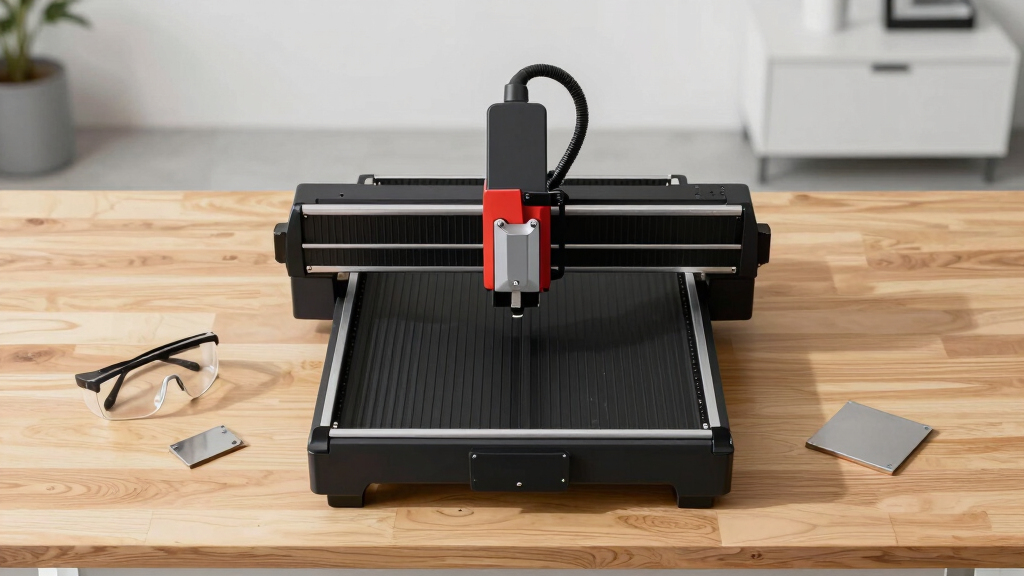

Choosing an enclosed laser engraver for an office workshop involves balancing safety, precision, and usability. The xTool S1 20W stands out as the best overall for its versatile features and user-friendly design. For those prioritizing power, the xTool S1 40W offers larger capacity and faster engraving. Beginners should consider models like the ACMER K1 for ease of use, while professionals might lean toward the Genmitsu L8 for its robust performance. The main tradeoffs involve balancing safety features with power, size, and complexity—more powerful units tend to be larger and more expensive, while simpler models may lack advanced features. Continue reading for a detailed breakdown of each option to find the best fit for your workshop needs.
Key Takeaways
- Power output varies significantly, impacting engraving speed and material compatibility.
- Enclosure features like ventilation and safety certifications are critical for office safety compliance.
- Size and work area differ, so consider your project scale when choosing a model.
- Ease of use and setup are key for office environments with multiple users or limited technical expertise.
- Higher-priced options generally offer more advanced features, but budget-friendly models can still deliver quality results.


More Details on Our Top Picks
xTool S1 20W Laser Engraver and Cutter Machine with Air Assist & Honeycomb, 23.93″ x 15.16″ Bed Size, Beginner-Friendly, Laser Engravering Machine for Wood and Metal, Acrylic, etc. – Basic Bundle
The xTool S1 20W stands out for its impressive power, large work bed, and advanced features like auto-focus and AutoPassthrough technology. Compared to the Creality Falcon A1 10W, it offers a broader workspace and faster engraving speeds, making it more suitable for bigger projects. Its enclosure design, combined with safety sensors and noise reduction, makes it a strong choice for workshop environments. The software, while initially quirky, is user-friendly after a brief learning curve, and the machine’s build quality—featuring a 3mm aerospace-grade aluminum frame—ensures durability. A notable tradeoff is its weight and size, requiring two people for unboxing and setup. The ability to swap laser modules adds flexibility, though accessories are sold separately. Ideal for hobbyists and small workshops needing large-scale engraving and cutting but less suited for those with limited space or lighter-duty needs.
Pros:- Spacious 23.93″ x 15.16″ bed for large projects
- Powerful 20W laser capable of cutting 10mm cherry wood in one pass
- Advanced safety features including Class 1 enclosure and flame sensors
- AutoPassthrough for extra-long projects
Cons:- Heavy and bulky, requiring two people for unboxing and setup
- Software has a learning curve and may feel quirky initially
- Accessories such as riser base and cylindrical attachments are sold separately
Best for: Small workshops or hobbyists who prioritize large work areas and versatile material handling
Not ideal for: Users with limited space or those seeking a lightweight, portable engraver
- Bed Size:23.93″ x 15.16″
- Laser Power:20W
- Material Compatibility:Wood, Metal, Acrylic, Leather
- Engraving Speed:up to 600mm/sec
- Safety Class:Class 1
- Frame Material:Aerospace-grade aluminum
- Weight:44 pounds
Bottom line: This laser engraver suits professionals and serious hobbyists needing a large, powerful, and safe machine for diverse materials.
Laser Engraving Machine for Beginners, Woxcker L2 Flex 5W Enclosure Pre-Assemble Laser Engraver 0.01mm High Precision for Coated Metal, Wood, Acrylic, Leather, Glass (Class 1 Output 5000mW)
The Woxcker L2 Flex 5W offers a highly precise and safe mini laser capable of detailed engravings on coated metals, wood, acrylic, and leather. Unlike the larger xTool S1, it’s extremely portable at just 3 pounds, making it ideal for small home workshops or hobbyists. Its enclosed design ensures safety and fume containment, which is a step above open-frame models. The software compatibility with LightBurn, LaserGRBL, and others, plus pre-tested parameters, makes it very accessible for newcomers. However, its small 150x200mm work area limits larger projects, and the power output, though sufficient for detailed engraving, isn’t suited for cutting thick materials. Its build quality is solid for its size, but it’s not designed for heavy-duty or large-scale production. This pick is perfect for those starting out or needing a compact, safe, and precise engraver for small projects.
Pros:- Ultra-fine 0.01mm engraving precision
- Compact, lightweight, and portable design
- Enclosed safety chamber with smoke and fume containment
- Compatible with multiple software platforms
Cons:- Limited 150x200mm work area not suitable for large projects
- Power output of 5W limits cutting capabilities, especially for thicker materials
- Small size may restrict the scope of complex or large engravings
Best for: Beginners, hobbyists, or small business owners needing a compact and safe engraver
Not ideal for: Users requiring large work areas or capable of cutting thick or large materials
- Laser Power:5W
- Work Area:150mm x 200mm
- Material Compatibility:Metal, Wood, Acrylic, Leather, Glass
- Safety:Class 1 enclosure
- Software Support:LightBurn, LaserGRBL, CutLabX
- Weight:3 lbs
Bottom line: Ideal for beginners and hobbyists seeking a safe, precise, and portable engraver for small-scale projects.
Genmitsu L8 Laser Engraver, 20W (20000mW) Laser Cutter Built-in Acrylic Enclosure with Vent, Air Assist Pump, Honeycomb, Camera, All-in-one Plug and Play Engraving Machine, Safety Class 1
The Genmitsu L8 20W laser engraver excels in high-speed operation and powerful cutting, surpassing many desktop models in speed—up to 40,000mm/min—thanks to its advanced laser tech and sturdy build. Compared to the xTool S1 20W, it offers faster engraving and cutting speeds, especially on thicker materials like 12mm pine or 8mm acrylic. Its built-in enclosure and safety features, including fault detection and emergency stop, make it suitable for dedicated workshops. The integrated camera aids precise project alignment, and the plug-and-play setup reduces initial hassle. However, it’s heavier and bulkier, requiring more space and handling effort. Its focus is on high productivity, but it’s less flexible for very small or intricate projects. This machine is ideal for users who need speed and power for professional or heavy hobby applications.
Pros:- Remarkably fast engraving and cutting speeds
- Powerful 20W laser capable of cutting thick materials
- Built-in camera for project positioning
- Enclosed design with safety and smoke filtration
Cons:- Heavier and larger, less portable
- More expensive than lower-powered or open-frame units
- Limited for very detailed or small projects due to size
Best for: Workshop users and professionals needing fast, high-power engraving and cutting
Not ideal for: Users with limited space or those primarily doing detailed, small-scale work
- Laser Power:20W
- Max Speed:up to 40,000mm/min
- Material Compatibility:Wood, Metal, Acrylic
- Enclosure:Acrylic with Vent
- Safety Features:Fault detection, emergency stop
- Camera:Integrated
- Frame Material:Acrylic enclosure
Bottom line: Best suited for users demanding high throughput and power for larger or tougher materials, with less emphasis on small intricate designs.
xTool S1 40W Laser Cutter and Laser Engraver for Tumblers, 23.93″ x 15.16″ Bed Size, 600mm/s Speed, Laser Engraving Machine, Laser Engraver for Wood and Metal, Acrylic, Big Project – Rotary Bundle
The xTool S1 40W offers a significant power upgrade over the 20W model, with 40W laser output capable of cutting 18mm cherry wood and engraving metals with ease. It shares the large bed size and fast 600mm/s engraving speed with the 20W version, but adds the rotary bundle, making it ideal for cylindrical objects like tumblers and mugs. Its advanced safety features, including a Class 1 enclosure, flame sensors, and emergency stop, make it suitable for professional workshops. The machine’s durability, thanks to an aerospace-grade aluminum frame, and the extensive testing (over 71,800 hours) ensure long-term reliability. The software compatibility and automated features make it accessible for both hobbyists and professionals. The main tradeoff is its size and weight, requiring adequate workspace. This model is perfect for users who need high power and versatility, especially for cylindrical objects and larger projects.
Pros:- Double the laser power for demanding cutting and engraving
- Large 23.93″ x 15.16″ bed for big projects
- Rotary bundle for cylindrical items
- Fast 600mm/s engraving speed
Cons:- Heavy and sizeable, requiring a dedicated space
- Accessories like rotary tools are sold separately
- Higher cost compared to lower-powered models
Best for: Professionals and serious hobbyists working on larger or cylindrical projects requiring high power
Not ideal for: Limited-space users or those focused solely on small, detailed engravings
- Laser Power:40W
- Bed Size:23.93″ x 15.16″
- Max Speed:600mm/sec
- Material Compatibility:Wood, Metal, Acrylic
- Rotary Tool:Included in bundle
- Safety:Class 1 enclosure, flame sensors
- Frame Material:Aerospace-grade aluminum
Bottom line: This laser is best for users needing high power, speed, and rotary capabilities for diverse and larger-scale projects.
CREALITY FALCON A1 10W Laser Engraver, 80W Enclosed Laser Cutter and Engraver Machine with Air Assist, Smart Camera Positioning, 600mm/s Speed, Smart Material Recognition, Ideal for Wood & Metal
The Creality Falcon A1 10W offers a good balance of power, safety, and ease of use, making it a strong contender for users seeking an enclosed, ready-to-go machine. Unlike the xTool S1 20W or 40W models, it provides a more compact footprint with an integrated enclosure and smart camera for quick setup and precise alignment. Its pre-set parameters, along with the Falcon Design Space Software, simplify starting new projects without extensive calibration. The safety features, including auto-lock doors and auto shutoff, make it suitable for environments with pets or children. Its engraving speed of 600mm/sec is comparable to higher-end models, though its 10W laser limits cutting thick materials, especially metals. This machine is well-suited for small workshops or hobbyists who prioritize convenience and safety over maximum power. Ideal for those wanting a ready-to-use, enclosed laser with good safety features and moderate power.
Pros:- Enclosed design with HD smart camera for easy setup
- Pre-set parameters for various materials
- Fast 600mm/s engraving and cutting speeds
- Auto-lock doors and safety features
Cons:- Limited 10W laser power restricts cutting thickness, especially for metals
- Not suitable for large or highly detailed projects
- Surface coating required when engraving acrylic
Best for: Small workshops, hobbyists, or educational environments needing a safe, enclosed, and easy-to-use laser
Not ideal for: Users requiring heavy-duty cutting or working with highly reflective metals
- Laser Power:10W
- Bed Size:23.93″ x 15.16″
- Speed:600mm/sec
- Material Compatibility:Wood, Metal, Acrylic
- Safety Features:Enclosure, auto-lock doors
- Camera:HD smart camera
- Material Recognition:Supported
Bottom line: A great choice for users seeking a safe, enclosed, and plug-and-play laser for small-scale and moderate projects.
ACMER Laser Engraver Machine, K1 Desktop 12000mW Compact Laser Engraving Machine, 150×150mm Work Area, 0.08mm Fine Engraving Spot, Laser Cutter for Wood, Plywood, Acrylic, DIY Crafts & Small Business
This compact, fully enclosed laser engraver stands out for its portability and safety features, making it ideal for hobbyists or small business owners who want a clean, safe workspace. Compared to larger, open-frame models like the Crafit Laser Enclosure, the K1’s enclosed body and built-in fan significantly reduce fumes and odors, allowing for indoor use without a dedicated ventilation system. Its 0.08mm laser spot ensures fine, detailed engravings, perfect for personalized gifts or small batch production, though it’s limited to a 150×150mm work area, which may restrict larger projects. The multiple power options (3.5W, 7W, 12W) provide flexibility in material compatibility. The lightweight design (2.4kg) and support for macOS, Windows, and Linux make it accessible for makers of all skill levels. However, the small work area and modest power output mean it’s less suited for larger or industrial-scale tasks. This pick makes the most sense for hobbyists or small-scale entrepreneurs focused on detailed, safe, and indoor-friendly engraving.
Pros:- Safe Class 1 enclosure with internal fan reduces fumes and odors
- Highly portable at only 2.4kg, easy to move and set up
- Supports multiple OS including macOS, Windows, and Linux
Cons:- Limited work area of 150×150mm restricts larger projects
- Lower power output (up to 12W) limits cutting depth and speed
Best for: Hobbyists, craft show vendors, or small home-based businesses needing a compact, safe laser engraver for detailed work.
Not ideal for: Producers of larger signage or industrial components due to its limited 150×150mm work area and lower power options.
- Laser Power:up to 12W
- Work Area:150×150mm
- Laser Spot Size:0.08mm
- Weight:2.4kg
- Compatibility:macOS, Windows, Linux
- Material Support:wood, acrylic, leather, paper
Bottom line: This machine is best for hobbyists and small artisans who prioritize safety, portability, and fine detail over large-scale production.
BlazeX M3 10W Laser Engraver Machine, 0.01mm Ultra-precision Laser Cutter and Engraver Machine for Wood Metal Glass Leather, Beginner-Friendly, with Enclosure Honeycomb Engraving Materials, Class 1
The BlazeX M3 offers exceptional precision with a 0.01mm accuracy and a 10W laser, making it well-suited for detailed engraving on over 200 materials, including metals and glass. Unlike the ACMER K1, which is more hobby-oriented, the BlazeX’s bundled accessories—such as the honeycomb bed and multiple engraving materials—support more professional-looking results right out of the box. Its enclosed, Class 1 safety rating ensures safe indoor operation, while the integrated smart sensors and auto-shutdown features promote safety for new users. The broad material compatibility and optional accessories like rotary rollers expand creative possibilities, making it an excellent choice for small workshop or craft studio use. The main tradeoff is its slightly higher price and the smaller 110×110mm engraving area, which may limit larger projects. This machine makes the most sense for beginners and small-scale creators seeking high detail and versatility.
Pros:- Ultra-fine 0.01mm engraving precision
- Class 1 safety rating with automatic shutoff features
- Includes comprehensive starter kit with materials and honeycomb bed
Cons:- Limited work area of 110×110mm for larger projects
- Higher price point compared to basic models like the ACMER K1
Best for: Beginners, hobbyists, and small business owners needing precise engraving on diverse materials with safety features.
Not ideal for: Large-scale production or projects requiring bigger work areas, due to the limited 110×110mm size.
- Laser Power:10W
- Work Area:110×110mm
- Laser Accuracy:0.01mm
- Material Compatibility:metal, glass, wood, leather, coated metal
- Safety:Class 1 with auto-shutdown
- Included Accessories:honeycomb bed, materials, enclosure
Bottom line: This engraver is ideal for beginners and small creators who want professional detail with a safety-conscious design.
ATOMSTACK P1 Dual Laser Engraver, 5W Diode, 1.2W Infrared Laser, Laser Cutter, Enclosed Laser Engraving Machine, Beginners, Hobbyists, Stainless Steel, Black Acrylic, Unibody Laser, 2-in-1 Laser
The ATOMSTACK P1 combines a 5W diode laser with a dual-laser setup and a fully enclosed design that makes it safer and more accessible for beginners. Its 110×110mm work area is comparable to the BlazeX M3 but with a focus on ease of use, including automatic safety features like tilt shutdown and enclosure detection. The plug-and-play setup along with the compatible app on Android, iOS, Windows, and macOS simplify operation for newcomers. It supports a variety of materials, including wood, leather, coated metals, and dark acrylic, making it versatile for small projects like coasters or pet tags. The main tradeoff is its limited work size and moderate laser power, which restricts cutting depth and large-scale projects. Still, it offers excellent safety and user-friendly features. This pick is perfect for hobbyists or newcomers looking for a safe, easy-to-use laser engraver for small creative projects.
Pros:- Fully enclosed, Class 1 safety design with auto-shutdown
- Simple plug-and-play setup with cross-platform app support
- Supports a wide range of materials including dark acrylic and coated metals
Cons:- Limited 110×110mm work area restricts larger projects
- Moderate 5W laser power limits cutting depth and speed
Best for: Beginner hobbyists or small-scale creators seeking a safe, easy, and versatile laser engraver for personal projects.
Not ideal for: Producers needing larger work areas or more powerful cutting capabilities for bigger tasks.
- Laser Power:5W diode
- Work Area:110×110mm
- Safety Class:Class 1
- Material Support:wood, leather, coated metal, dark acrylic
- Connectivity:Android, iOS, Windows, macOS
- Features:auto-shutdown, enclosure detection
Bottom line: This engraver is suitable for entry-level users who prioritize safety, ease of use, and small creative projects.
Crafit Laser Engraver Enclosure Cabinet with Exhaust, Laser Engraving Table with Ventilation Fan, Heavy Duty Laser Cutter Protective Cover Tent with Eye Protection, Insulates against Noise Fumes Odors
The Crafit Laser Enclosure Cabinet provides a sturdy, spacious solution for professional or frequent hobbyist use, with a large interior (W24.8″xD27.1″xH12.6″) that fits most laser engravers and cutters. It excels in creating a safe, clean environment, thanks to its high-efficiency 20W ventilation fan and flexible exhaust pipe, which effectively removes fumes and odors—more effective than smaller portable solutions like the ACMER or BlazeX enclosures. The multi-sided semi-transparent panels give a broad view of the engraving process while protecting eyes from harmful rays, a feature that surpasses typical open enclosures. Its foldable side panel and additional storage make it versatile for workshop setups, especially when paired with a separate laser itself. Price-wise, it’s more expensive than smaller enclosures but offers larger capacity and better air quality control, making it suitable for continuous, professional use. This unit is ideal for workshops and professionals needing a large, safe, and well-ventilated environment for frequent engraving tasks.
Pros:- Large interior space fits most laser engravers and cutters
- High-performance 20W ventilation fan for effective fume extraction
- Multi-sided semi-transparent panels for broad visibility and safety
Cons:- Higher cost and larger footprint compared to small enclosures
- Requires assembly and permanent placement, less portable
Best for: Professional workshops or serious hobbyists who operate larger laser machines and need a comprehensive, safe enclosure and ventilation system.
Not ideal for: Casual hobbyists or those with limited space, as its size and cost may be excessive for small-scale projects.
- Interior Dimensions:W24.8″xD27.1″xH12.6″
- Ventilation Power:20W
- Material:Heavy-duty metal and heat-resistant wood
- Features:foldable side panel, storage rack, eye protection
- Safety:multi-sided semi-transparent panels
- Assembly:Included hardware and instructions
Bottom line: This enclosure is best for established workshops and users needing a large, safe, and well-ventilated environment for frequent laser engraving tasks.

How We Picked
To evaluate these enclosed laser engravers, I focused on key factors that matter most for office workshop use: safety features, engraving performance, ease of operation, build quality, and value for money. Safety was paramount, so models with comprehensive enclosures, ventilation, and certifications ranked higher. Performance considerations included laser power, precision, and material versatility, ensuring each machine could handle typical workshop tasks. Usability factors like setup complexity, user interface, and maintenance requirements influenced the rankings, favoring models suitable for office environments with varying technical skills. Cost was also a factor, balancing features against affordability to identify options that provide the best overall value for different user needs.Factors to Consider When Choosing Enclosed Laser Engraver For Office Workshop
Selecting the right enclosed laser engraver for your office workshop requires understanding several critical factors. Beyond basic features, it’s important to consider safety, material compatibility, and ease of use. Proper enclosure features can protect users and meet workplace safety standards, especially in shared environments. Additionally, the size of the work area determines the scope of projects you can undertake. Budget considerations also play a role, as more powerful machines tend to be more expensive but offer faster, more versatile engraving. Being aware of these tradeoffs helps ensure you choose a model that aligns with your needs and workspace constraints.Safety and Certification
In an office workshop, safety cannot be overstated. Look for models with enclosed designs that contain fumes, dust, and laser emissions. Certifications like Class 1 laser safety standards or CE marking indicate the machine meets safety regulations. Ventilation systems are also vital to expel fumes, especially when working with plastics or metals. While higher safety features often increase initial costs, they reduce risk and ensure compliance with workplace safety policies. Skipping thorough safety measures can lead to hazards, so prioritize models with comprehensive enclosures and safety certifications.
Laser Power and Material Compatibility
Laser power directly influences engraving speed and the range of materials you can process. Lower wattage units (around 5-10W) are suitable for delicate tasks on wood, acrylic, and leather, making them ideal for hobbyists or small projects. Higher wattage models (20W and above) can cut thicker materials and work faster, better suited for professional or production environments. However, more powerful lasers typically require larger enclosures and can generate more fumes, demanding better ventilation. Matching laser power to your project scope ensures efficiency without overpaying for unnecessary power.
Size and Work Area
The footprint of your machine should match your available workspace and project size. Compact models fit well in small offices but may limit project dimensions. Larger work areas enable more complex and bigger projects but come with higher costs and space requirements. Consider future needs: investing in a slightly larger machine can offer flexibility as your skills grow. Balance your current workspace constraints with your project ambitions to avoid purchasing a machine that’s either too small or unnecessarily large.
Ease of Use and Maintenance
For office environments, intuitive controls and straightforward setup are key. Look for models with user-friendly interfaces, clear instructions, and minimal calibration requirements. Maintenance features like self-cleaning lenses or easy-access components can save time and reduce downtime. Automated features such as autofocus or material recognition streamline workflows and reduce errors, especially for less experienced users. Overly complex machines may slow productivity or cause frustration, so weigh ease of use heavily if your team has diverse skill levels.
Budget and Total Cost of Ownership
Initial price is only part of the story—consider the total cost, including consumables, maintenance, and potential upgrades. Budget-friendly models can deliver solid results but might lack advanced safety features or power. Investing in a higher-quality, more capable machine can increase upfront costs but reduce long-term expenses and improve reliability. Remember to account for ongoing costs like replacement lenses or filters. A well-chosen machine balances initial affordability with durability and low operating costs, providing better value over time.
Frequently Asked Questions
Can I use an enclosed laser engraver in a shared office space?
Yes, enclosed laser engravers are designed to contain fumes, dust, and laser emissions, making them suitable for shared environments. However, it’s essential to ensure the machine has proper ventilation and safety certifications to meet your workplace safety standards. Installing additional exhaust systems or air purifiers can further improve air quality. Always follow manufacturer guidelines and local regulations regarding laser safety and ventilation to prevent health hazards. Proper enclosure use minimizes risks, but regular maintenance and safety checks remain important.
What materials can I engrave or cut with these machines?
Most enclosed laser engravers can handle a variety of materials, including wood, acrylic, leather, paper, and certain plastics. Higher-powered models may also cut through thicker materials like plywood or thin metals when equipped with suitable lenses or attachments. Always verify the manufacturer’s material compatibility list before starting projects to avoid damaging the laser or unsafe operation. Keep in mind that some materials, such as PVC or vinyl, produce toxic fumes and should be avoided or used with adequate ventilation. Selecting the right machine for your typical materials ensures safety and quality results.
How difficult is it to set up and start using an enclosed laser engraver?
Setup difficulty varies between models, with most modern units designed for straightforward installation. Entry-level models often feature pre-assembled components, requiring only basic calibration and software installation. More advanced machines may need initial alignment or connection to a computer, but manufacturers generally provide detailed instructions. Once set up, operation involves designing or importing files and selecting settings, which can be intuitive for beginners with some practice. Investing in a machine with user-friendly software and good customer support can significantly reduce the learning curve.
What maintenance is required to keep an enclosed laser engraver running smoothly?
Routine maintenance includes cleaning the laser lens and mirrors, checking for dust buildup in the enclosure, and ensuring ventilation systems operate correctly. Replacing filters and lenses periodically helps maintain engraving quality. Some models feature self-cleaning mechanisms or easy-access parts that simplify upkeep. Regular software updates and calibration checks also prevent performance issues. Proper maintenance extends the lifespan of the laser and preserves safety features, making it worthwhile to follow the manufacturer’s recommended procedures diligently.
Is the higher price of premium models justified for small office workshops?
Premium models often offer faster engraving speeds, more precise results, and enhanced safety features, which can justify their higher cost if your projects demand high accuracy or volume. For small workshops with occasional use, budget-friendly options may suffice, providing good results at a lower price point. However, investing in a higher-end unit can reduce downtime, improve safety, and expand your capabilities, especially if you plan to scale operations. The decision depends on your specific needs, project scope, and long-term plans, but for consistent, professional results, higher-quality machines often prove more cost-effective over time.
Conclusion
For those just starting or with limited space, the ACMER K1 offers an easy-to-use, budget-friendly choice. The xTool S1 20W is the best overall for its balance of safety, versatility, and performance, making it ideal for most office workshops. Professionals needing larger projects and faster processing should consider the xTool S1 40W for its power and larger work area. If safety and compliance are top priorities, models with certified enclosures like the Genmitsu L8 excel. Ultimately, selecting the right model depends on your project size, safety needs, and budget—match your choice to your workshop goals for the best results.