A NAS device offers a centralized solution for data storage, backup, and media streaming at home or in small offices. The best options balance performance, ease of use, and expandability, but they often involve tradeoffs between cost and features. The Synology DiskStation DS225+ stands out for its balance of power and affordability, while the Ugreen NAS DXP6800 provides premium features for demanding users. Budget buyers may prefer simple 1-bay models like the Buffalo LinkStation 710, but they’ll sacrifice expandability. Keep reading for a detailed breakdown of the top NAS devices for 2026 and which one might be right for you.
Key Takeaways
- Multi-bay NAS options generally offer better expandability but come at a higher cost and complexity.
- Diskless models provide flexibility but require additional investment in drives, impacting initial setup costs.
- High-end models with multi-gigabit Ethernet and advanced CPUs are ideal for demanding workloads or media editing.
- Ease of use and initial setup can vary widely; beginner-friendly options often cut corners on advanced features.
- The best NAS device depends heavily on the intended use: media streaming, backups, or business applications.




More Details on Our Top Picks
BUFFALO LinkStation 710 8TB 1-Bay NAS Network Attached Storage with HDD Hard Drives Included NAS Storage that Works as Home Cloud or Network Storage Device for Home
This BUFFALO LinkStation 710 excels with up to 7x faster performance than older models like the LS 200, thanks to enhanced hardware and cloud features. Its compatibility with MacOS 26 and Windows, plus 24/7 US support, makes setup straightforward for home users seeking reliable, secure storage. Compared with the DS223j, it offers better speed and local backup options, but it comes at a slightly higher price and with bulkier hardware. The included HDD and straightforward network setup make it ideal for families wanting a centralized backup with easy access. The device prioritizes data security with SSL encryption and closed system design, minimizing vulnerabilities. However, it lacks some advanced features like multi-user management or RAID options. Overall, this model suits those seeking hassle-free, fast home storage that integrates easily with existing devices.
Pros:- Fast performance with up to 7x speed improvement over older models
- Secure data transfer with SSL encryption and closed system design
- Easy to set up with detailed US-based support
Cons:- Limited to a single drive bay, restricting expandability
- No advanced RAID or multi-user management features
Best for: Home users who prioritize fast backups, secure data sharing, and simple setup without advanced RAID needs.
Not ideal for: Power users requiring multi-drive RAID configurations or extensive media server features, as it’s limited to a single bay and basic backup options.
- Total Capacity:8TB
- Drive Bays:1
- Compatibility:Windows, MacOS 26
- Performance:Up to 7x faster than LS 200
- Support:24/7 US-based
- Encryption:SSL
Bottom line: This NAS is best suited for home users seeking speedy, secure, and straightforward storage solutions.
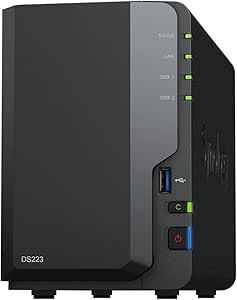
Synology 2-Bay DiskStation DS223j (Diskless)
The Synology DS223j offers a compelling balance of affordability and features, making it ideal for small offices or tech-savvy home users. Its multi-platform access and comprehensive backup options surpass the simpler BUFFALO LS 200, especially with Synology’s intuitive DiskStation Manager interface. While it doesn’t match the performance of the LinkStation 710, it provides reliable data protection and easy sharing, with the added benefit of a 2-year warranty and support community. Its diskless design allows for flexible capacity expansion, but this means additional setup time and investment for drives. The device is perfect for users wanting a private cloud, media sharing, and surveillance integration without high upfront costs. Its main tradeoff is lower raw speed compared to high-performance NAS models, but this is balanced by its user-friendly management and robust security.
Pros:- Affordable private cloud with multi-platform access
- Intuitive DiskStation Manager simplifies management
- Flexible capacity with diskless design
Cons:- Lower data transfer speeds compared to higher-end NAS units
- Requires purchasing drives separately for setup
Best for: Small business owners or advanced home users seeking a flexible, secure, and cost-effective private cloud solution.
Not ideal for: Users who need high-speed data transfers or extensive media server features, as the DS223j is optimized for security and sharing over raw performance.
- Number of Bays:2
- Support:Multi-platform
- Warranty:2 years
- Design:Diskless
- Encryption:SSL
- Ideal Use:Home/Small Office
Bottom line: Ideal for those wanting a secure, expandable, and easy-to-manage private cloud without high cost or complexity.
Synology 2-Bay NAS DS223 (Diskless)
The Synology DS223 stands out for its versatility, combining reliable data storage with surveillance monitoring capabilities, making it suitable for small offices or home security. Its solid performance and multi-platform sharing outperform the BUFFALO LS 200 for demanding file collaboration. The diskless setup allows custom capacity scaling and future upgrades, but initial costs include drives. Its user interface is straightforward, and the 2-year warranty adds peace of mind. Compared to the DS225+ or the LS 700, it offers less raw speed but excels in surveillance and multi-use flexibility. This NAS attracts users who want a multi-functional device capable of handling backups, media, and security monitoring in one package. The main drawback is slower transfer speeds compared to high-end enterprise NAS solutions, but it strikes a good balance for small-scale needs.
Pros:- Combines data storage with surveillance capabilities
- Multi-platform sharing and easy management
- Expandable with diskless design
Cons:- Limited to 2 drive bays, restricting large storage expansion
- Slower data transfer speeds compared to premium NAS models
Best for: Small business or home users needing reliable storage plus optional security camera integration.
Not ideal for: Those seeking high-performance media encoding or multi-user enterprise features, as it is primarily geared toward basic storage and surveillance.
- Number of Bays:2
- Support:Multi-platform
- Warranty:2 years
- Design:Diskless
- Supported Features:Surveillance, Backup
- Ideal Use:Home Security & Data Storage
Bottom line: Perfect for users who want a flexible storage system with added surveillance features in a compact form.
Synology 2-Bay DiskStation DS225+ (Diskless)
The Synology DS225+ is tailored for demanding users who need high throughput, supporting up to 282/217 MB/s sequential read/write speeds. Its robust hardware and software features make it suitable for media professionals or small offices managing large files. Compared with the DS223, it offers faster data transfers and more advanced data management options, but at a higher price point. Its 40 TB maximum capacity and 3-year warranty appeal to users planning long-term storage growth. While it lacks built-in media server or surveillance tools, its strength lies in stable, fast data handling. This NAS is best for those prioritizing speed and capacity, willing to invest in enterprise-grade performance, but it may be overkill for casual or home users with lighter needs.
Pros:- Supports up to 40TB capacity
- High sequential read/write speeds for large file transfers
- 3-year warranty for long-term reliability
Cons:- No built-in media or surveillance features
- Higher cost compared to basic NAS options
Best for: Content creators or small teams requiring high-speed, reliable data transfer and extensive storage capacity.
Not ideal for: Home users or those with basic backup needs, as it focuses on speed and capacity over simple plug-and-play features.
- Supported Capacity:Up to 40TB
- Speed:Up to 282/217 MB/s
- Warranty:3 years
- Support:Multi-Platform
- Design:Diskless
- Use Case:Media Production, Data Intensive Tasks
Bottom line: Ideal for users who need fast, high-capacity storage for professional workflows and can invest in performance-oriented NAS hardware.
UGREEN NAS DXP4800 Plus 4-Bay Desktop NAS, Intel Pentium Gold 8505 5-Core CPU, 8GB DDR5 RAM, Built-in 128G SSD, 1 * 10GbE, 1 * 2.5GbE, 2 * M.2 NVMe Slots, 4K HDMI, Network Attached Storage (Diskless)
This NAS stands out for its powerful Intel Pentium Gold 8505 CPU and 8GB DDR5 RAM, providing smooth multitasking for small offices and multimedia tasks. Unlike the Synology DS220+ which is more limited in hardware expansion, the DXP4800 Plus supports Docker, virtual machines, and RAID configurations for flexible data management. Its 10GbE port delivers lightning-fast transfer speeds, ideal for large backups or media streaming. However, the system’s complexity can be daunting for beginners, and hard drives are not included, adding to initial costs. Compared to the DS220+ that offers simpler setup, this model requires some familiarity with network configurations but rewards with higher performance and expansion options.
Pros:- Supports Docker and virtual machines for versatile deployment
- Includes 10GbE port for ultra-fast data transfer
- Supports RAID and multiple RAID options for data redundancy
- Built-in 128GB SSD for fast caching and system operation
Cons:- Requires some technical knowledge for setup and management
- Hard drives are sold separately, increasing overall cost
- Size and weight may be less suitable for small desks or limited space
Best for: Small business owners or power users needing high-speed transfers, virtualization, and extensive storage capacity.
Not ideal for: Users seeking a plug-and-play solution with minimal setup, like home users or novices unfamiliar with network systems.
- Processor:Intel Pentium Gold 8505 5-Core
- RAM:8GB DDR5
- Network Ports:1 x 10GbE, 1 x 2.5GbE
- Storage Capacity:Supports up to 144TB with drives
- Built-in SSD:128GB
- Video Output:4K HDMI
- Drive Bays:4 (diskless)
- Size:Hard Drive Size 128 TB
Bottom line: Ideal for tech-savvy users and small offices seeking a high-performance, expandable NAS with advanced features.
Portable NAS, M.2 NVMe & SD Card Slots, Up to 8TB Capacity (Diskless), One-Click Backup, Wi-Fi 6 Support, LCD Display & App Control, Dual 3200mAh Batteries for Outdoor Use
The StationPC Portable NAS excels in portability, featuring dual 3200mAh batteries and Wi-Fi 6 support, making it perfect for photographers, vloggers, and outdoor enthusiasts. Its M.2 NVMe slots and SD card reader enable quick offloading of large media files, surpassing traditional external drives in speed and convenience. The intuitive app and LCD display simplify management on the go, and the rugged aluminum enclosure ensures durability. However, its capacity maxes out at 8TB without the dock, and performance may be limited compared to full-sized NAS units like the DXP4800 Plus for sustained data transfers. Unlike the Synology DS124, which is more stationary and better suited for home or office, this device is tailored for fieldwork and quick access outside traditional setups.
Pros:- Supports Wi-Fi 6 and NFC quick setup
- Built-in LCD display for real-time status monitoring
- Dual batteries provide hours of operation without power outlet
- Supports SD cards and M.2 NVMe for fast media offload
Cons:- Maximum capacity limited to 8TB without dock expansion
- Performance may be affected by battery and wireless conditions
- More expensive than traditional external drives for similar capacity
Best for: Photographers, videographers, and outdoor content creators needing portable, quick, and secure storage.
Not ideal for: Users requiring large-scale storage or consistent high-speed network access in a fixed location.
- Capacity:Supports up to 8TB (expandable to 16TB with dock)
- Batteries:Dual 3200mAh, replaceable
- Connectivity:Wi-Fi 6, NFC, App control
- Media Slots:M.2 NVMe, SD Card
- Video Output:4K HDMI
- Size:6″L x 3.6″W x 1″Th
Bottom line: Perfect for mobile professionals who need fast, durable storage with offline capability during outdoor shoots.
Synology 1-Bay DiskStation DS124 (Diskless)
The Synology DS124 offers a straightforward, single-bay NAS experience with excellent software stability and ease of use. Its Synology DiskStation Manager OS provides intuitive file sharing, backup, and surveillance features, making it suitable for users looking for reliable, hassle-free data management. Compared with the UGREEN DXP2800, which offers more hardware expansion, the DS124 is more compact and easier to set up, ideal for basic home use or small offices. Nevertheless, its single drive bay limits redundancy options, and it lacks the hardware prowess of multi-bay or more advanced models like the DXP6800. The DS124 is perfect for those prioritizing simplicity and software robustness over raw hardware performance.
Pros:- Simple, user-friendly DSM interface
- Reliable data protection and backup options
- Compact and space-efficient design
- Excellent ecosystem for multimedia and surveillance
Cons:- Limited to a single drive, no redundancy or RAID options
- Less hardware flexibility compared to multi-bay NAS
- No HDMI output or advanced multimedia features
Best for: Home users or small offices needing reliable, simple, and secure data storage with minimal setup.
Not ideal for: Power users requiring RAID, multiple drives, or virtualization capabilities.
- Drive Bays:1 (Diskless)
- OS:Synology DSM
- Warranty:2 years
- Form Factor:Desktop
- Network Ports:1 x Gigabit Ethernet
- Size:Compact
Bottom line: Best suited for users seeking a reliable, easy-to-manage NAS for small-scale data storage and sharing.
UGREEN NAS DXP2800 2-Bay Desktop All-Round Ideal for Content Creators and Enthusiasts, Intel N100 Quad-core CPU, 8GB DDR5 RAM, 2.5GbE, 2X M.2 NVMe Slots, 4K HDMI, Network Attached Storage (Diskless)
The DXP2800 offers strong hardware with its Intel N100 quad-core CPU and 8GB DDR5 RAM, making it a capable choice for media storage and streaming. Its 2.5GbE port surpasses traditional Gigabit Ethernet, providing faster local network speeds compared to the DS223j or DS225+ models. The dual M.2 NVMe slots enable quick media access and caching, while the 4K HDMI output supports direct media viewing. However, the 2-bay design limits RAID redundancy options, and since drives are not included, initial costs can add up. Compared to the Synology DS223j, which is more affordable but less powerful, the DXP2800 caters to users who need higher performance and multimedia features but are comfortable with initial setup.
Pros:- Powerful quad-core CPU and 8GB DDR5 RAM
- Supports 2 x M.2 NVMe drives for caching
- Supports 4K HDMI output for media viewing
- Fast 2.5GbE network port
Cons:- Limited to two drive bays, no RAID 5 support
- Hard drives are sold separately, increasing setup cost
- No built-in backup or cloud features
Best for: Content creators, enthusiasts, and small teams needing reliable, fast storage with multimedia output.
Not ideal for: Users needing large capacity or extensive drive redundancy—this model is more suited for moderate storage needs.
- Processor:Intel N100 Quad-core
- RAM:8GB DDR5
- Network Port:2.5GbE
- Drive Bays:2 (diskless)
- Media Output:4K HDMI
- Media Slots:2 x M.2 NVMe
Bottom line: Great for content creators wanting a compact, high-performance NAS that handles media well and offers quick local network speeds.
UGREEN NAS DH4300 Plus 4-Bay Desktop NASync, Support Capacity 128TB (Diskless), Remote Access, AI Photo Album, Beginner Friendly, 8GB LPDDR4X RAM, 2.5GbE, 4K HDMI, Network Attached Storage (Diskless)
The DH4300 Plus is tailored for users new to NAS with its user-friendly interface and beginner-friendly features. Its hardware, including 8GB LPDDR4X RAM and a 4K HDMI port, supports multimedia streaming and easy setup for home media or personal backup. The built-in AI photo album and remote access make it stand out from basic models like the DS124, providing smart organization without extra effort. However, its maximum capacity of 128TB is less than the larger models, and it lacks advanced virtualization or multi-user permissions found in higher-end units. Compared to the DS124, it offers more multimedia features but with a smaller overall capacity.
Pros:- Beginner-friendly setup and interface
- Supports remote access and AI photo organization
- 4K HDMI output for media streaming
- Support for up to 128TB storage
Cons:- Limited to 128TB capacity, less scalable for large data needs
- No virtual machine support, less suitable for advanced users
- Requires drives purchased separately
Best for: Home users and beginners wanting an easy, all-in-one NAS for media, photos, and basic backups.
Not ideal for: Power users or small businesses requiring extensive storage, RAID redundancy, or virtualization support.
- Capacity:Supports up to 128TB
- RAM:8GB LPDDR4X
- Network:2.5GbE
- Drive Bays:4 (diskless)
- Output:4K HDMI
- Features:AI photo album, remote access
Bottom line: Excellent choice for home users and newcomers seeking simple, multimedia-rich NAS with smart organization features.
UGREEN NAS DXP6800 Pro 6-Bay Desktop NAS, Intel i5 1235u 10-Core CPU, 8GB DDR5 RAM, Built-in 128G SSD for System, 2X 10GbE, 2XM.2 NVMe Slots, 8K HDMI, 2XTBT4, Network Attached Storage (Diskless)
The UGREEN DXP6800 Pro stands out for its enterprise-grade features, including a 12th Gen Intel Core i5 processor and dual 10GbE ports that deliver transfer speeds up to 2500MB/s, making it well-suited for demanding business environments. Compared with the BUFFALO LinkStation 210, which emphasizes simple home backup, the DXP6800 offers much more raw power and scalability, but this comes with a higher cost and complexity. Its massive storage capacity of up to 208TB and support for multiple RAID levels make it ideal for large data needs, while the built-in 128G SSD and DDR5 RAM enhance overall responsiveness. The all-in-one app consolidates management, but the setup process is more involved—less suitable for beginners. The extensive hardware options, including 8K HDMI and Thunderbolt 4, make it versatile for multimedia and professional workflows. However, its size and enterprise focus mean it’s less practical for small home offices or casual users. Tradeoffs include higher cost, complexity, and power consumption, but for those needing serious performance and capacity, this model delivers.
Pros:- Exceptional processing performance with 12th Gen Intel Core i5 CPU
- Dual 10GbE ports for lightning-fast network speeds
- Enormous storage capacity up to 208TB supporting multiple RAID levels
- Rich multimedia features including 8K HDMI and Thunderbolt 4
Cons:- High cost and complexity may overwhelm casual users
- Large physical footprint limits placement flexibility
- Requires technical knowledge for optimal setup and management
Best for: Large businesses or media professionals requiring high-speed data transfer, extensive storage, and advanced hardware features.
Not ideal for: Home users or small offices with simple backup needs, who will find this model too complex and expensive.
- Processor:Intel 12th Gen i5 1235u 10-Core
- RAM:8GB DDR5
- Storage Capacity:Up to 208TB
- Network Ports:2x 10GbE
- SSD Included:128GB
- Video Output:8K HDMI
Bottom line: This NAS is best suited for tech-savvy professionals or large enterprises needing top-tier performance and capacity.
BUFFALO LinkStation 210 4TB 1-Bay NAS Network Attached Storage with HDD Hard Drives Included
The BUFFALO LinkStation 210 offers a straightforward, plug-and-play NAS experience with a focus on simple file sharing and backup for home users. Compared with the UGREEN DXP6800 Pro, which emphasizes high performance and enterprise features, the LinkStation 210 prioritizes ease of use and affordability, making it accessible for those less technically inclined. It comes with a pre-installed 4TB HDD, ideal for basic data storage and quick setup without additional hardware purchases. Its streamlined design and simplified management utility are perfect for families or small households that want to centralize photos, videos, and documents. The device supports secure file sharing with individual folder permissions, but it lacks advanced features like multiple drive bays, RAID configurations, or high-speed connectivity—limiting scalability and speed. Its single drive design also makes it more vulnerable to drive failure without RAID redundancy. This model is a good fit for users seeking reliable, basic network storage without the complexity or cost of more advanced systems.
Pros:- Easy setup with included HDD and simple management interface
- Affordable price point for basic home backup
- Supports secure sharing and local network access
- Compact and unobtrusive design
Cons:- Limited scalability with only 4TB capacity and single drive bay
- Lacks advanced features like RAID or high-speed ports
- Potential data vulnerability due to no RAID redundancy
Best for: Home users or small families needing affordable, easy-to-use centralized storage for everyday backups.
Not ideal for: Power users or small businesses that require higher capacity, faster data transfer, or redundancy features.
- Storage Capacity:4TB
- Drive Bays:1
- Included Drives:HDD
- Connectivity:Ethernet
- Compatible OS:Windows, macOS
- Support:24/7 US-based support
Bottom line: This NAS is ideal for budget-conscious households seeking reliable, straightforward file sharing and backup solutions.

How We Picked
Our evaluation focused on key factors that influence real-world usability and value. Performance metrics like CPU speed, RAM capacity, and network interfaces were primary considerations, as they determine how well a NAS can handle multiple users or heavy workloads. Build quality and software ecosystem were also critical, favoring brands with intuitive interfaces and reliable firmware updates. Cost-effectiveness was assessed by comparing features against price, ensuring each model offers a clear value proposition. We ranked products based on a balanced view of these factors, prioritizing models that deliver dependable performance for their target user base while avoiding overly complex or underpowered options.Factors to Consider When Choosing NAS Device
Choosing the right NAS device involves more than just selecting the most powerful hardware. You need to consider your storage needs, network environment, and future expansion plans. Understanding these factors helps avoid common pitfalls like underestimating capacity or overpaying for features you’ll never use. This guide highlights the most important considerations to keep in mind for a satisfying purchase.Capacity and Scalability
Deciding how much storage you need now and in the future is key. Multi-bay NAS units provide the flexibility to expand by adding drives or replacing existing ones with larger capacity disks. However, they tend to be more expensive and complex to set up. For light use or immediate needs, a single-bay model might suffice, but it limits future growth. Always consider your growth plans and whether the device’s maximum capacity aligns with them to avoid costly upgrades down the line.
Performance and Hardware
The CPU and RAM are the backbone of a NAS’s performance. For media streaming, backups, or multiple simultaneous users, higher-end CPUs (like Intel or AMD) and at least 4GB of RAM are recommended. Diskless models offer flexibility but rely on your drive choice, which can impact overall speed. For demanding tasks such as 4K video editing or virtualization, investing in a device with multi-gigabit Ethernet and a powerful processor becomes worthwhile, even if it increases initial costs.
Ease of Use and Software Ecosystem
An intuitive interface and reliable firmware updates make setup and ongoing management smoother, especially for less tech-savvy users. Brands like Synology excel here with their user-friendly DSM software, which simplifies tasks like backups, media management, and remote access. Less polished interfaces or limited app ecosystems can lead to frustration or increased maintenance. Consider your comfort level with technical setup when choosing between more complex enterprise-grade NAS and simpler models.
Connectivity and Expandability
Multiple network ports, especially 2.5GbE or 10GbE, can significantly boost data transfer speeds, ideal for media professionals or small offices. USB and M.2 slots provide options for connecting additional storage or caching drives. Some models also support HDMI output for direct media streaming. Think about your current network infrastructure and future needs—upgrading to multi-gigabit Ethernet or adding expansion cards can be worthwhile investments for performance-focused users.
Price and Total Cost of Ownership
While initial purchase price is straightforward, remember that larger capacities and advanced features often mean higher ongoing costs—additional drives, energy consumption, and maintenance. Budget models can be cost-effective for basic backups or media streaming, but they might lack expandability or speed. Higher-end models are more expensive upfront but can offer better longevity and performance, especially if your needs grow. Balance your budget against your expected use to find the best long-term value.
Frequently Asked Questions
Do I need a multi-bay NAS or will a single-bay suffice?
The choice depends on your storage needs and future plans. A single-bay NAS is straightforward and less expensive, suitable for simple backups or media streaming. However, it offers no redundancy or easy expansion. Multi-bay NAS units support RAID configurations, providing data protection and increased capacity, but they cost more and are more complex to set up. If you anticipate your storage needs will grow or require high availability, investing in a multi-bay model makes more sense.
Is a diskless NAS a good choice for beginners?
Diskless NAS devices are flexible and can be tailored to your specific storage requirements, which makes them appealing for experienced users. For beginners, they can seem daunting because you need to purchase drives separately and set up the RAID or storage configurations. If you’re comfortable with hardware and want to customize your setup, a diskless model offers great value. Otherwise, choosing a pre-filled model with drives included might reduce setup complexity and improve peace of mind.
How important is network speed for NAS performance?
Network speed directly impacts how quickly you can access and transfer files, especially with multiple users or large media files. Gigabit Ethernet is standard but can become a bottleneck for high-demand tasks like 4K streaming or large backups. Devices with 2.5GbE or 10GbE ports significantly reduce transfer times but require compatible network infrastructure. Consider your current and planned network setup when evaluating NAS models, as investing in higher-speed ports can future-proof your system and improve overall usability.
Should I prioritize hardware specs or software features?
Both matter, but the importance depends on your intended use. Powerful hardware ensures smooth operation under heavy loads, while a robust software ecosystem simplifies management and extends functionality. For example, a faster CPU and more RAM are critical for media editing or virtualization, but a user-friendly interface and app ecosystem are more important for casual users or beginners. Balance your needs by choosing a device that offers sufficient hardware power with an intuitive software experience.
When should I upgrade my NAS device?
Upgrading becomes necessary when your current device no longer supports your storage needs, experiences performance bottlenecks, or lacks compatibility with new technology standards like multi-gigabit Ethernet. If you find yourself frequently running out of space, or backups are taking too long, it’s time to consider a new model. Also, if your device’s software is no longer supported or security updates stop, upgrading ensures continued data safety and performance. Planning upgrades around these signs can prevent data loss and downtime.
Conclusion
For general home use or small offices with modest needs, the Buffalo LinkStation 710 offers simplicity and affordability. Those seeking a balance of features and price should consider the Synology DS225+, which excels in ease of use and expandability. Power users or content creators who demand top-tier performance will find the UGREEN DXP6800 compelling for its high-end hardware and extensive connectivity. Beginners or those with limited technical skill should opt for models with intuitive interfaces, while enterprise users should look at higher-end, scalable solutions. Your ideal choice hinges on your current needs and future growth plans.