📊 Full opportunity report: Vocal-strain load tracking for working singers on IdeaNavigator AI — validation score, market gap, and execution plan.

Get business pricing on office and shipping supplies
- Business-only prices and quantity discounts
- Tax-exempt purchasing
- Multiple users, one account, clear invoices
TL;DR
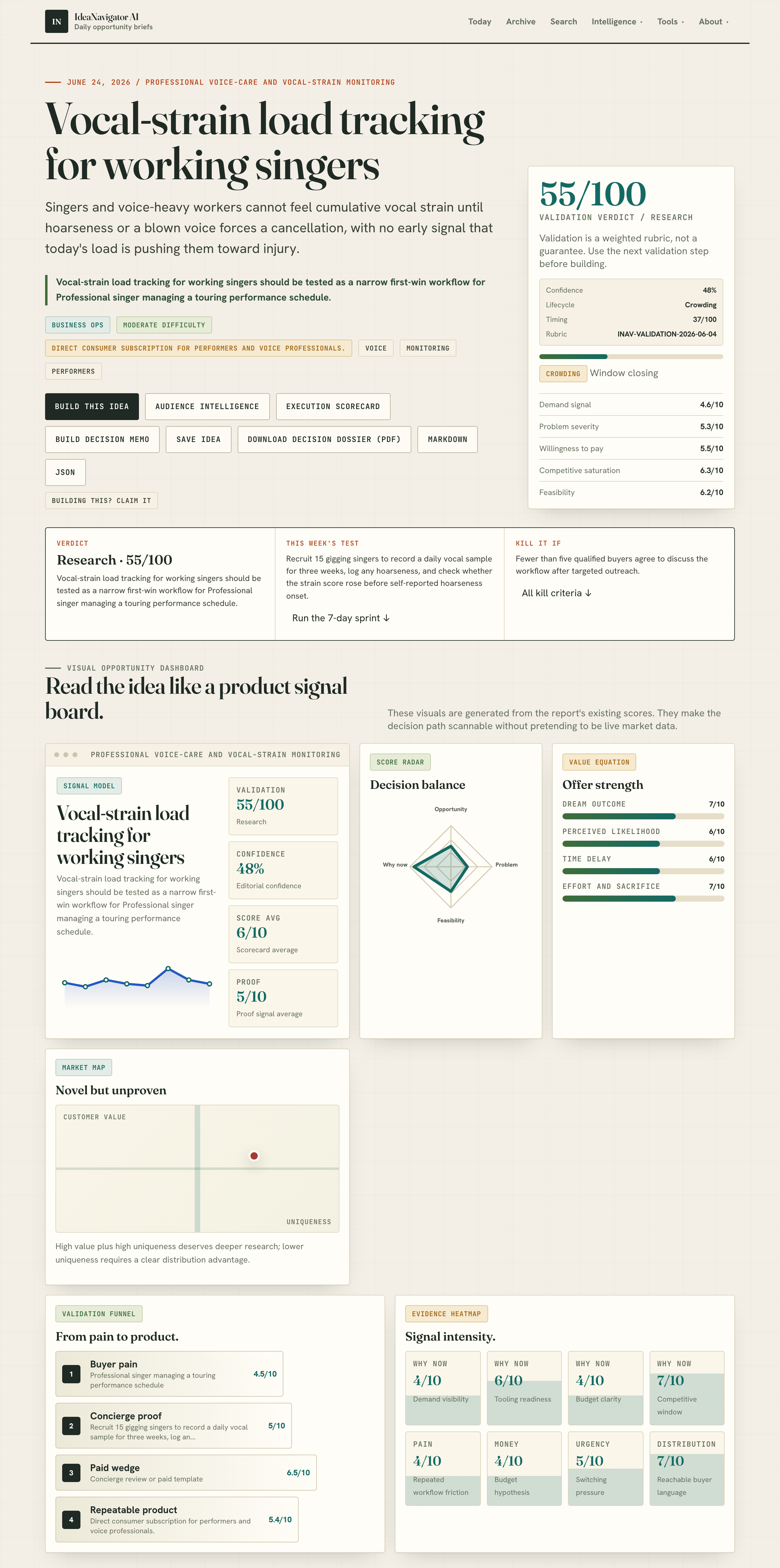
Researchers are testing a vocal strain tracking app for touring singers, which analyzes vocal samples post-performance to detect early signs of strain. The goal is to prevent voice injuries and improve singer health management. Validation is ongoing with a small group of gigging performers.
A new vocal strain tracking app prototype is being tested with professional touring singers to detect early signs of vocal fatigue and prevent injuries, marking a potential advance in voice health management for performers.
The app, developed as a minimal viable product (MVP), allows singers to record a short vocal sample after each performance. It then analyzes the sample to score cumulative vocal strain against the singer’s personal baseline, flagging tone shifts that have historically preceded hoarseness or vocal injury. This process aims to provide early warnings to performers, enabling them to adjust their schedules or warm-up routines accordingly.
The initiative responds to the challenge that singers often cannot feel the onset of vocal strain until it manifests as hoarseness or voice loss, which can lead to cancellations or injury. By leveraging on-device audio analysis, the app offers a self-managed solution suited for gig-economy performers who typically lack immediate access to vocal coaches during touring schedules.
Currently, the project is in the validation phase, with plans to recruit 15 gigging singers to record daily vocal samples over three weeks. Participants will log any episodes of hoarseness, and researchers will assess whether the app’s strain scores rise before self-reported vocal issues, aiming to establish its predictive accuracy.
Potential Impact on Vocal Health Management
This development could significantly improve how professional singers manage their vocal health, reducing injury risk and performance cancellations. Early detection of vocal strain may lead to more proactive self-care, especially for performers managing demanding touring schedules without regular access to voice specialists.
By providing real-time, personalized feedback, the app could shift the paradigm from reactive treatment to preventive care, benefiting both performers’ careers and the broader voice-care industry. If validated, this technology might become a standard tool for voice professionals and touring artists.
vocal strain monitoring app for singers
As an affiliate, we earn on qualifying purchases.
As an affiliate, we earn on qualifying purchases.
Advances in On-Device Voice Analysis for Singers
Recent technological improvements in audio analysis enable smartphones to assess vocal characteristics after performances. This approach aligns with the increasing trend of gig workers managing their own schedules and health without direct oversight from specialists. The concept builds on prior research into vocal fatigue detection but applies it specifically to the needs of touring singers, who face cumulative vocal load challenges.
Historically, vocal injury prevention relied on subjective feedback or periodic check-ups with voice coaches. The new app aims to offer continuous, immediate insights, representing a shift toward personalized, data-driven voice care. The pilot study reflects a broader interest in leveraging mobile health tools to support professional voice users.
“This technology could enable singers to identify early signs of strain before they become serious issues, potentially reducing injury and improving performance longevity.”
— an anonymous researcher
Validation Results and Reliability of Strain Scores
It is not yet confirmed whether the app’s vocal strain scores reliably predict impending hoarseness or injury. The validation study is ongoing, and results are expected after the three-week testing period. The accuracy and practical usefulness of the tool remain to be established.
Next Steps in App Validation and Development
Following the current pilot, researchers plan to analyze the collected data to determine the correlation between strain scores and vocal issues. If successful, they will refine the app’s algorithms and consider broader testing with more performers. Future development may include integrating warm-up suggestions and personalized training modules based on individual vocal patterns.
Key Questions
How does the app analyze vocal strain?
The app records a short vocal sample after each performance and uses on-device audio analysis to score vocal characteristics, comparing them to the singer’s baseline to detect shifts indicating strain.
Can this app prevent vocal injuries?
While it cannot guarantee prevention, early detection of vocal strain may help performers adjust their routines to reduce injury risk. Validation results are still pending.
Who can use this app?
The current focus is on professional singers managing touring schedules, but the technology could potentially be adapted for voice professionals and serious amateur performers.
Is the app available now?
No, the app is currently in the testing phase with a small group of performers. Broader availability will depend on validation outcomes and further development.
What are the limitations of this technology?
Its accuracy in predicting vocal injury is still under investigation, and individual differences in vocal physiology may affect results. The app is intended as a supplementary tool, not a replacement for professional voice care.
Source: IdeaNavigator AI
Fall Picks
fall essentials
As an affiliate, we earn on qualifying purchases.