
📊 Full opportunity report: Using Video Tech To Assess Young Athletes’ Form on IdeaNavigator AI — validation score, market gap, and execution plan.

Get business pricing on office and shipping supplies
- Business-only prices and quantity discounts
- Tax-exempt purchasing
- Multiple users, one account, clear invoices
TL;DR
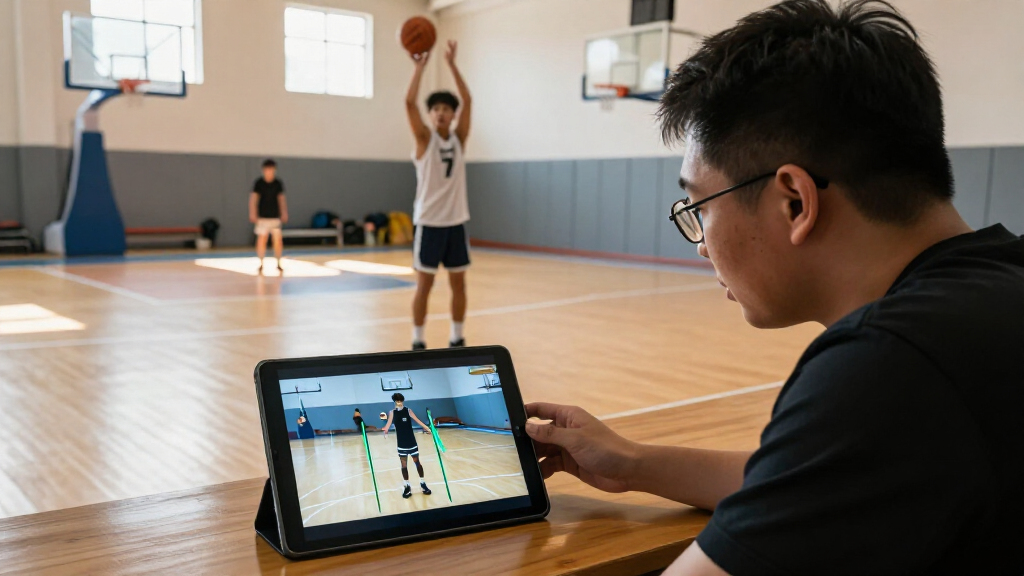
IdeaNavigator AI has outlined a product concept that would use phone video to compare young athletes’ movements with reference mechanics and suggest a drill. The proposal recommends testing baseball hitting with certified coaches reviewing grades for 100 children; it does not report that an app or pilot is already operating.
IdeaNavigator AI has proposed testing a phone-based video app that compares young athletes’ movements with reference mechanics and recommends a targeted drill, with a baseball-hitting pilot involving 100 children suggested as the first test. According to the proposal, certified coaches would check the app’s assessments. The document describes a product opportunity, not a launched service or completed study.
According to IdeaNavigator AI’s proposal, the workflow is aimed at parents of young athletes practicing without a private coach. A user would film a swing, throw or stride; the app would estimate the athlete’s pose, compare the movement with a reference profile, grade selected checkpoints and offer one drill focused on the largest identified gap. Examples of checkpoints in the proposal include hip rotation, release angle and stride.
IdeaNavigator AI frames the product around the cost and availability of individualized instruction. The proposal cites private coaching at $75 to $150 per session and says young athletes may repeat movements without immediate feedback. It provides no independent data on coaching prices, how often children practice, or how common undetected technique issues are.
The proposal suggests a family subscription organized by sport, with a separate tier for coaches or teams. For initial validation, IdeaNavigator AI recommends limiting the product to baseball hitting and having certified coaches compare their evaluations with the app’s grades across 100 children. The proposal does not identify results, participating coaches, a schedule or a product company.
A Coach Check Before Wider Use
IdeaNavigator AI presents automated movement feedback as a possible lower-cost supplement to coaching for families without regular one-to-one instruction. The proposal suggests that if a phone-based system can reliably flag a limited set of technique points, it could help parents and athletes review practice between lessons. Its proposed one-drill-per-session format is intended to turn video analysis into a specific next step rather than a set of technical measurements.
The proposed coach audit is a key part of the plan. A grade may not reflect whether a movement is appropriate for an individual child, sport or stage of development. Comparing app grades with certified coaches’ assessments could test agreement on selected checkpoints, but agreement alone would not establish that the advice improves performance or reduces injury risk. IdeaNavigator AI’s description reports no evidence on either outcome.
The proposal does not explain whether the app could work with ordinary phone footage, whether its reference mechanics would suit young athletes rather than professionals, or how it would communicate uncertainty. Those issues would affect how families interpret video grading—as a practice aid or as a substitute for individualized coaching.
Products Worth Considering

Logitech MX Master 4 Ergonomic Wireless Mouse with Haptic Feedback, Graphite

Canon SELPHY CP1500 Compact Photo Printer Bundle with Two KP-108IN Ink and Paper Sets

Dell UltraSharp U4025QW 40-Inch Curved 5K2K WUHD LED Monitor
As an affiliate, we earn on qualifying purchases.
From Phone Pose Estimates to Practice
IdeaNavigator AI’s “why now” rationale is that pose-estimation models can run on phones with accuracy it considers sufficient to compare a child’s mechanics with reference motion profiles. The proposal presents that capability as a reason a free tier of form feedback may be feasible. It names no model, accuracy measurement, testing conditions or technical results, so this remains the proposal’s rationale rather than a reported finding for this particular app.
The proposed comparison is against pro-derived reference mechanics, but IdeaNavigator AI does not explain how those profiles would be selected, adjusted for age and physical development, or validated across differences in body size and experience. The proposal also does not specify which baseball-hitting checkpoints would be included beyond examples such as hip rotation and stride. It recommends beginning with one sport and one skill, with coach review before any wider use.
Pilot Results and Accuracy Unknown
IdeaNavigator AI describes no operating app or completed pilot. Its proposal names no developer, launch date or participating coaches, and reports no testing with children. The proposed audit of grades across 100 young baseball players is a recommendation, not a result.
The proposal also leaves technical and safety details unspecified. It reports no figures for grading accuracy, consistency across phone angles or lighting, or performance across ages and skill levels. It does not say how video of minors would be protected, whether families could delete recordings, or how the app would distinguish a correctable technique issue from normal variation. The document does not identify a market survey supporting its suggested coaching price range.
Until those questions are addressed, the proposal’s expectations that the concept could make feedback accessible through a free tier or help prevent injury remain unverified, rather than established benefits.
Coach Review Is the Proposed Test
IdeaNavigator AI proposes a baseball-hitting pilot with 100 children, in which certified coaches would assess the same mechanics and compare their judgments with the app’s grades. The proposed test could assess whether the system’s selected checkpoints align with coach assessments in the group. The proposal gives no start date or information about who would conduct the pilot.
To evaluate the concept, a test would need to report how participants were selected, how coaches reached their assessments, and how disagreements were handled. Results on reliability across repeated recordings and different athletes could clarify whether grades can be reproduced in ordinary practice conditions. Separate evidence would be needed to assess whether recommended drills change technique over time or affect injury risk. IdeaNavigator AI provides no further milestone or launch announcement.
Source: IdeaNavigator AI
Key Questions
Is a youth form-grading app already available?
IdeaNavigator AI’s proposal does not identify a launched app. It describes a product concept and a possible pilot, with no developer or release date specified.
How would the proposed app assess an athlete?
Under the workflow described by IdeaNavigator AI, a user would film a movement, and the app would compare estimated body positions with reference mechanics. It would then grade selected checkpoints and suggest one drill aimed at the largest gap.
What does the proposed pilot involve?
IdeaNavigator AI recommends starting with baseball hitting and asking certified coaches to compare their evaluations with the app’s grades across 100 children. This is a suggested test, not a reported completed study.
Has the app been shown to reduce injuries or improve performance?
No such outcomes are reported in IdeaNavigator AI’s proposal. It discusses potential feedback and injury-related concerns, but provides no results showing that the app improves performance or reduces injury risk.
Source: IdeaNavigator AI