
TL;DR

Get business pricing on office and shipping supplies
- Business-only prices and quantity discounts
- Tax-exempt purchasing
- Multiple users, one account, clear invoices
Siemens announced a new industrial AI initiative, including the Industrial Foundation Model and a partnership with NVIDIA to create an AI-powered manufacturing platform. This marks a shift toward physical-world AI, emphasizing domain expertise and proprietary data.
Siemens has announced a comprehensive industrial AI strategy at CES 2026, including the development of the Industrial Foundation Model (IFM) and a strategic partnership with NVIDIA to build an Industrial AI Operating System. This initiative aims to embed AI deeply into manufacturing processes, from design to supply chains, marking a significant shift towards physical-world AI applications.
The Industrial Foundation Model (IFM) is designed to process and contextualize 3D models, 2D drawings, and industrial data, enabling optimized engineering and automation. Siemens first announced this model at Hannover Messe 2025, emphasizing its focus on domain-specific AI rather than general-purpose language models.
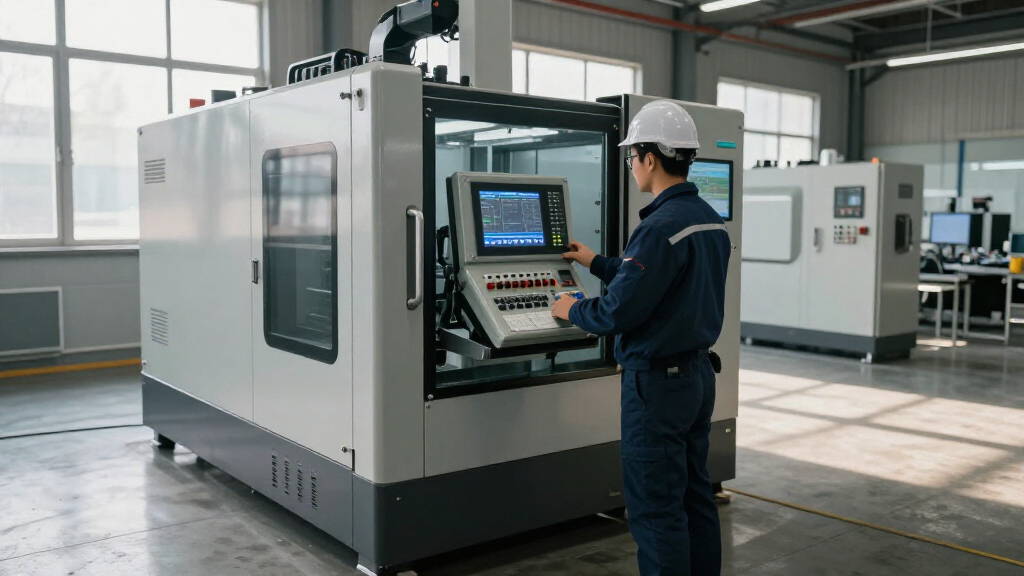
The partnership with NVIDIA aims to develop an Industrial AI Operating System that accelerates simulation, supports physics-based AI models, and enables real-time digital twin optimization. Siemens plans to launch a fully AI-driven, adaptive manufacturing site at its Erlangen factory in 2026, which will serve as a blueprint for global deployment.
Key features include GPU-accelerated simulation, generative digital twins, and industrial copilots across the entire value chain. Early examples include PepsiCo’s use of digital twin simulation for facility upgrades and nine industrial copilots planned for deployment.
Why Siemens’ Industrial AI Push Matters for Manufacturing
This development signifies a major shift in industrial AI, emphasizing physical-world applications over chat-based AI. Siemens’ focus on proprietary data, domain expertise, and long-standing customer relationships positions it to potentially lead the next wave of manufacturing innovation. If successful, this could significantly improve factory efficiency, reduce costs, and accelerate digital transformation in industrial sectors worldwide.As an affiliate, we earn on qualifying purchases.
The Evolution of Industrial AI and Siemens’ Strategic Position
While AI has been widely associated with chatbots and language models, Siemens’ approach centers on physical-world AI applications, such as simulation and digital twins, tailored for manufacturing. The company’s announcement builds on its long history of industrial automation and its recent investments in AI-specific models and partnerships. The initiative reflects broader industry trends, with competitors like Palantir and Qualcomm also moving into adjacent industrial AI markets, but Siemens’ domain expertise and proprietary data give it a competitive edge.
The company’s strategy was first outlined at Hannover Messe 2025 and now expanded at CES 2026, signaling a clear commitment to integrating AI into core manufacturing processes. The emphasis on GPU acceleration, real-time optimization, and autonomous factories aligns with industry demands for smarter, more efficient production systems.
“Industrial AI is no longer a feature; it’s a force that will reshape the next century.”
— Roland Busch, Siemens CEO
Unconfirmed Details About Implementation and Performance
Specific hardware configurations, deployment timelines beyond 2026, and validated performance metrics for the new AI platform have not yet been disclosed. The success of the fully AI-driven factory in Erlangen remains to be demonstrated, and third-party validation of the platform’s effectiveness is still pending.
Additionally, the reliance on NVIDIA’s infrastructure raises questions about technological sovereignty, especially for European buyers concerned about dependency on American silicon and software.
Next Steps for Siemens’ Industrial AI Strategy
Siemens plans to deploy the first fully AI-driven factory in Erlangen in 2026, serving as a showcase for the technology. The company will also introduce Digital Twin Composer and expand its industrial copilots across various sectors. Monitoring performance metrics, customer adoption, and third-party validation will be key indicators of the platform’s success in the coming years.
Further announcements regarding hardware specifications, scalability, and case study results are expected as the deployment progresses.
Key Questions
What is the Industrial Foundation Model (IFM)?
The IFM is Siemens’ AI model designed to process and understand 3D models, 2D drawings, and industrial data, aimed at optimizing engineering and automation in manufacturing.
How does Siemens’ partnership with NVIDIA enhance its AI capabilities?
NVIDIA provides GPU-accelerated simulation, physics-based AI models, and the underlying infrastructure, enabling Siemens to develop real-time digital twins and generative simulation for manufacturing.
When will the fully AI-driven factory at Erlangen be operational?
Siemens aims to launch the factory in 2026, serving as a blueprint for global deployment of AI-powered manufacturing sites.
What are the potential risks of Siemens’ approach?
Dependence on NVIDIA’s infrastructure and hardware, as well as the lack of validated performance data, pose potential risks. Additionally, geopolitical concerns about technology sovereignty could impact adoption.
Why is Siemens focusing on physical-world AI instead of chatbots?
Siemens believes that the most valuable AI applications in manufacturing are in automation, simulation, and digital twins, where domain expertise and proprietary data provide a competitive advantage.
Source: ThorstenMeyerAI.com
Fall Picks
fall essentials
As an affiliate, we earn on qualifying purchases.