
Synthetic biology is a powerful field that lets you engineer living organisms to serve industry needs. By using gene editing tools like CRISPR, you can modify DNA to optimize biological functions, create new pathways, and produce valuable products more efficiently. This approach allows you to turn microbes into tiny factories for medicines, biofuels, or pollutants cleanup. Exploring this exciting domain will reveal how science is shaping future industries in innovative ways.
Key Takeaways
- Synthetic biology combines biology, engineering, and computer science to design customized organisms for industrial applications.
- Gene editing tools like CRISPR enable precise modifications of DNA to optimize organism functions.
- Manipulating metabolic pathways allows microbes to produce pharmaceuticals, biofuels, and biodegradable plastics efficiently.
- Advances in technology accelerate the development of engineered organisms, making industrial processes more sustainable and cost-effective.
- Applications include creating organisms that break down pollutants, synthesize valuable compounds, and perform new biological functions.
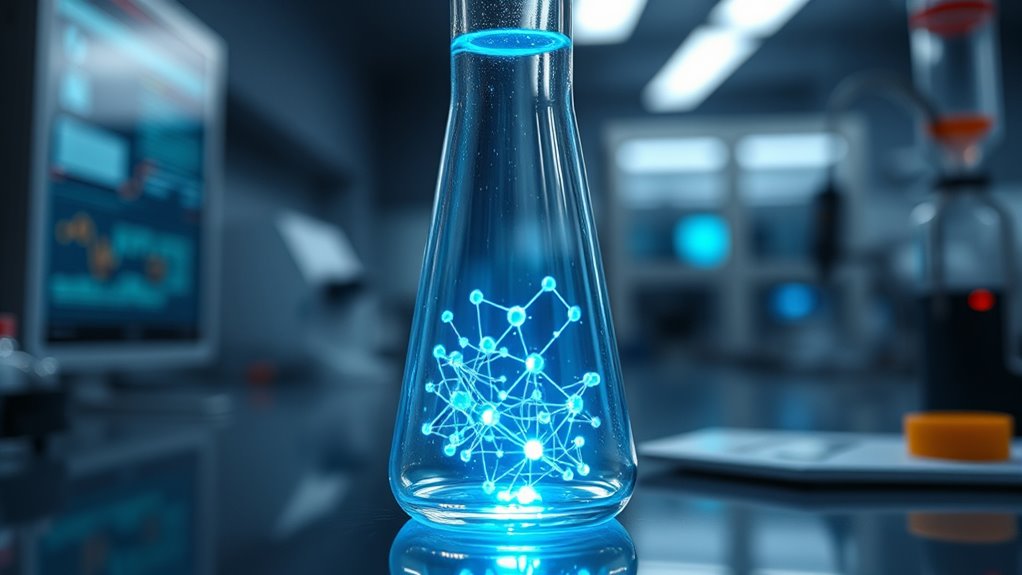
Have you ever wondered how scientists can design and build new biological parts or systems? It’s a fascinating process that combines biology, engineering, and computer science to create customized organisms capable of performing specific tasks. Central to this effort is gene editing, a powerful tool that allows precise modifications of an organism’s DNA. By targeting specific genes, scientists can alter or insert genetic sequences, effectively rewiring the organism’s biological functions. This precision enables the development of microbes that produce pharmaceuticals, biofuels, or biodegradable plastics, making industries more sustainable and efficient.
Gene editing is the backbone of synthetic biology because it provides the means to reprogram living cells. For example, scientists can disable certain genes to prevent unwanted byproducts or activate others to enhance production pathways. When it comes to metabolic pathways—the series of chemical reactions within a cell—these can be optimized to increase the yield of desired products. By understanding and manipulating metabolic pathways, you can redirect the flow of biochemical reactions to produce more of a specific compound or to create entirely new ones. This capacity to engineer cellular processes is like rewiring a complex circuit board, allowing you to design organisms that serve specific industrial purposes.
Gene editing reprograms cells, optimizing pathways to produce desired products or create new compounds efficiently.
Imagine being able to customize bacteria or yeast to synthesize medicines more cheaply, or to break down pollutants more efficiently. That’s exactly what synthetic biology makes possible. With gene editing, you can introduce or remove genes that influence metabolic pathways, effectively creating microscopic factories optimized for your needs. This process involves mapping out the entire network of reactions in a cell, identifying bottlenecks, and then editing the genome to streamline these pathways. As a result, you can markedly boost the production of valuable compounds, reduce waste, or enable organisms to perform entirely new functions.
The beauty of this approach lies in its versatility. You don’t need to start from scratch; instead, you can modify existing organisms to fit your industrial goals. Advances in gene editing techniques, like CRISPR-Cas9, make these modifications faster, cheaper, and more precise than ever before. This opens up a world of possibilities where biological systems are no longer just studied but actively engineered for societal benefit. By harnessing the power of gene editing and metabolic pathway manipulation, you’re turning living organisms into sustainable, efficient tools that could revolutionize industries from healthcare to environmental management. Additionally, integrating AI-powered tools in the process can further optimize design and functionality, accelerating breakthroughs in synthetic biology.
Frequently Asked Questions
What Are the Ethical Concerns Surrounding Synthetic Biology?
You should consider the ethical concerns surrounding synthetic biology, especially genetic privacy and moral responsibility. As you develop and use engineered organisms, you might risk exposing sensitive genetic information or creating unintended consequences. You’re responsible for ensuring safety and ethical standards, so you must weigh the potential benefits against risks. Balancing innovation with respect for privacy and moral accountability is vital to avoid harm and maintain public trust.
How Does Synthetic Biology Impact Environmental Sustainability?
You’ll find that synthetic biology can positively impact environmental sustainability by enabling eco-friendly innovations and effective bioremediation strategies. These advancements help clean up pollutants, reduce reliance on harmful chemicals, and create sustainable resources. By harnessing engineered organisms, you can promote a healthier environment, lower carbon footprints, and support conservation efforts. However, it’s essential to carefully manage these technologies to prevent unintended ecological consequences.
What Are the Potential Risks of Synthetic Organisms Escaping Containment?
If synthetic organisms escape containment, you risk containment breaches that could lead to significant ecological impacts. These organisms might outcompete natural species, disrupt local ecosystems, or introduce new genes that spread unpredictably. You need strict safety measures and monitoring to prevent such breaches. Failing to do so could cause irreversible environmental damage, harming biodiversity and challenging ecological balance, making it essential to prioritize containment and risk management strategies.
How Is Synthetic Biology Regulated Globally?
You might be surprised to learn that over 50 countries now have some form of regulation for synthetic biology. International policies and biosecurity standards guide how you can develop and use engineered organisms. These regulations aim to prevent risks like accidental release or misuse. By adhering to these standards, you help guarantee that synthetic biology advances safely and responsibly across borders, protecting ecosystems and public health.
What Are Future Applications of Synthetic Biology in Medicine?
You’ll see synthetic biology revolutionize medicine through personalized therapies tailored to your genetic makeup, offering more effective and targeted treatments. Biosynthetic organs could become available, reducing transplant rejection risks and addressing organ shortages. In the future, you might receive custom-designed medicines or lab-grown tissues, improving health outcomes. These advancements promise a new era of precision medicine, making treatments more accessible and efficient for everyone.
Conclusion
As you explore synthetic biology, you realize it’s transforming industries by designing life itself. Many believe this approach could revolutionize medicine, agriculture, and energy, but some worry about unintended consequences. While scientists have made incredible progress, the debate over safety and ethics continues. Ultimately, you see that understanding and responsibly harnessing this technology could open incredible potential, but it’s essential to proceed with caution. The future of life engineering depends on balancing innovation with ethical awareness.