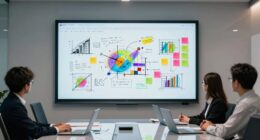
Spatial computing and mixed reality applications let you interact with digital content seamlessly by blending physical and virtual environments. You use intuitive gestures to manipulate digital objects, making the experience more natural and immersive. These technologies create detailed environment maps that anchor virtual elements accurately in your real world. As you explore further, you’ll discover how this integration is shaping new ways to work, learn, and enjoy entertainment with more engaging, realistic interactions.
Key Takeaways
- Spatial computing blends physical and digital environments to create immersive mixed reality experiences.
- Gesture recognition enables natural, intuitive control of virtual objects without traditional devices.
- Spatial mapping constructs detailed 3D models for accurate digital interaction within real-world spaces.
- Applications include design visualization, training simulations, gaming, and virtual collaboration.
- Future developments focus on hands-free interfaces and enhanced realism, expanding practical uses across industries.
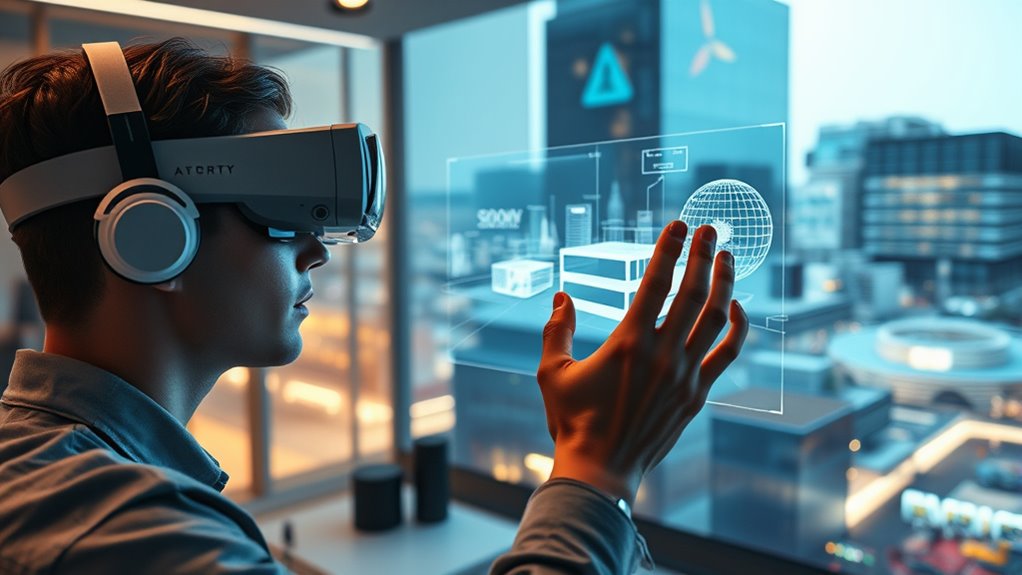
Spatial computing is transforming how we interact with digital environments by seamlessly blending the physical and virtual worlds. When you step into a mixed reality space, you’re no longer just a passive observer; you’re an active participant. This technology allows you to manipulate digital objects naturally, using gestures and movements that feel intuitive. Gesture recognition plays a pivotal role here, enabling your hand movements to translate directly into commands within the virtual space. Instead of clicking a mouse or tapping a screen, you can pinch, point, or swipe with your hands, making interactions more fluid and immersive. This natural form of communication reduces barriers and makes the experience more engaging, especially in applications like design, training, or gaming.
Spatial computing merges physical and virtual worlds, enabling intuitive, gesture-based interactions that make digital experiences more immersive and natural.
Behind the scenes, spatial mapping is what makes all this possible. It involves creating a detailed 3D model of your physical environment, so digital elements can interact accurately with real-world objects. When you move around or change your position, the system updates this spatial map in real time, maintaining a consistent and believable integration of virtual content. For example, if you’re designing a room layout in mixed reality, spatial mapping ensures furniture appears anchored correctly on the floor and walls, regardless of your viewpoint. This precise understanding of space allows for realistic interactions, where digital objects respond to your gestures as if they’re part of the physical environment.
As you explore mixed reality applications, you’ll notice that spatial mapping and gesture recognition work together seamlessly. When you reach out to grab a virtual object, the system uses gesture recognition to interpret your hand movement, while spatial mapping ensures the object is correctly positioned in your environment. This synergy creates a sense of presence and agency, making digital interactions feel natural rather than mechanical. Whether you’re controlling a virtual interface, manipulating 3D models, or traversing through a digital landscape, these technologies give you a sense of control and immersion that traditional interfaces can’t match.
In practical terms, this means you don’t need controllers or complicated setups to engage with mixed reality. Your hands become the interface, and the environment around you becomes a dynamic canvas. As spatial computing advances, expect more precise gesture recognition and more detailed spatial maps, which will only enhance how effortlessly you can interact with digital content. This convergence of technologies is redefining how you work, learn, and play, making digital experiences more intuitive, immersive, and integrated into your real world. Additionally, high refresh rates in projectors and displays can further improve the fluidity and responsiveness of visual interactions, creating a more seamless mixed reality experience.
Frequently Asked Questions
How Do Spatial Computing Devices Handle Privacy Concerns?
Spatial computing devices handle privacy concerns by prioritizing data security and ensuring user consent. You’re prompted to approve data collection before devices gather any information, giving you control over what’s shared. Manufacturers implement encryption and secure storage to protect your data from unauthorized access. By actively managing permissions and staying informed about privacy policies, you help safeguard your personal information while enjoying the benefits of these advanced technologies.
What Are the Costs Associated With Developing Mixed Reality Applications?
You’ll find that developing mixed reality apps isn’t cheap—surprise! The development costs can skyrocket with complex software needs, while hardware expenses add another hefty chunk. You might think it’s just coding, but you’ll also spend on high-end devices, sensors, and ongoing updates. Ironically, what seems like a futuristic project requires a serious investment, making it clear that creating immersive experiences isn’t just about imagination—it’s about money, too.
How Accessible Are Spatial Computing Technologies for Small Businesses?
You’ll find that spatial computing technologies are becoming more accessible for small businesses, despite some affordability barriers. As costs decrease and more user-friendly solutions emerge, small business adoption grows. You can now leverage mixed reality tools to enhance customer experiences or streamline operations without huge investments. While initial expenses might still pose challenges, evolving technologies and increased competition are making spatial computing more attainable for small businesses like yours.
What Are the Limitations of Current Mixed Reality Hardware?
Current mixed reality hardware faces several limitations. You’ll notice hardware constraints like limited field of view and battery life, which can hinder your experience. User comfort is also a concern, as bulky headsets may cause fatigue or discomfort during extended use. These issues restrict how effectively you can use mixed reality devices, especially for long sessions or complex tasks, making it necessary for manufacturers to improve both hardware design and ergonomics.
How Does Spatial Computing Influence User Experience Design?
Spatial computing profoundly shapes your user experience by emphasizing effortless engagement. You’ll find gesture interaction more intuitive, allowing natural navigation and manipulation. Environmental mapping creates immersive, accurate surroundings, making interactions seamless and realistic. This technology encourages designers to develop dynamic, user-centric designs that prioritize ease, efficiency, and engagement. As a result, your experience becomes more personalized, practical, and profound, transforming how you connect with digital environments in ways that feel remarkably real.
Conclusion
As you explore spatial computing and mixed reality, it’s clear these technologies are transforming how you interact with digital and physical worlds. They open up endless possibilities for innovation, collaboration, and immersive experiences. Isn’t it exciting to think about what you could create or achieve with such powerful tools at your fingertips? Embracing these advances pushes you toward a future where boundaries between real and virtual fade, revealing new opportunities you might never have imagined.