
To secure your team’s network, focus on key router features like VLANs, VPNs, and firewalls. VLANs help you segment traffic and limit device communication, enhancing security and reducing congestion. VPNs encrypt remote connections, protecting sensitive data beyond your local network. Firewalls act as gatekeepers, monitoring and filtering traffic to block threats. Properly managing these features lets you create a safer, more efficient environment—if you want to learn how to optimize each, keep exploring.

Get business pricing on office and shipping supplies
- Business-only prices and quantity discounts
- Tax-exempt purchasing
- Multiple users, one account, clear invoices
Key Takeaways
- VLANs improve security and traffic management by isolating and controlling device communication within the network.
- VPNs secure remote access through encryption, ensuring data confidentiality for remote team members.
- Firewalls act as a critical defense layer, monitoring and filtering traffic to prevent unauthorized access and threats.
- Proper router feature management, including access control and network segmentation, enhances organizational security.
- Combining VLANs, VPNs, and firewalls creates layered security to protect sensitive data and prevent breaches.
As an affiliate, we earn on qualifying purchases.
Understanding Why Router Features Matter for Network Security
Router features are essential components of network security because they directly control data flow and access points within your network. By implementing network segmentation, you limit which devices can communicate, reducing the risk of spreading threats. Access control features allow you to set permissions, ensuring only authorized users can reach sensitive data or systems. These capabilities help prevent unauthorized access and contain potential breaches. Effective routers can prioritize traffic, block malicious activity, and enforce security policies at the network perimeter. With robust router features, you create a layered defense that enhances your overall security posture. Additionally, integrating features like Free Floating can help optimize your network layout for better flexibility and security management. Understanding how these router features work together enables you to manage your network more effectively, protecting your data and maintaining safe, reliable operations.
How VLANs Help Segregate and Manage Network Traffic
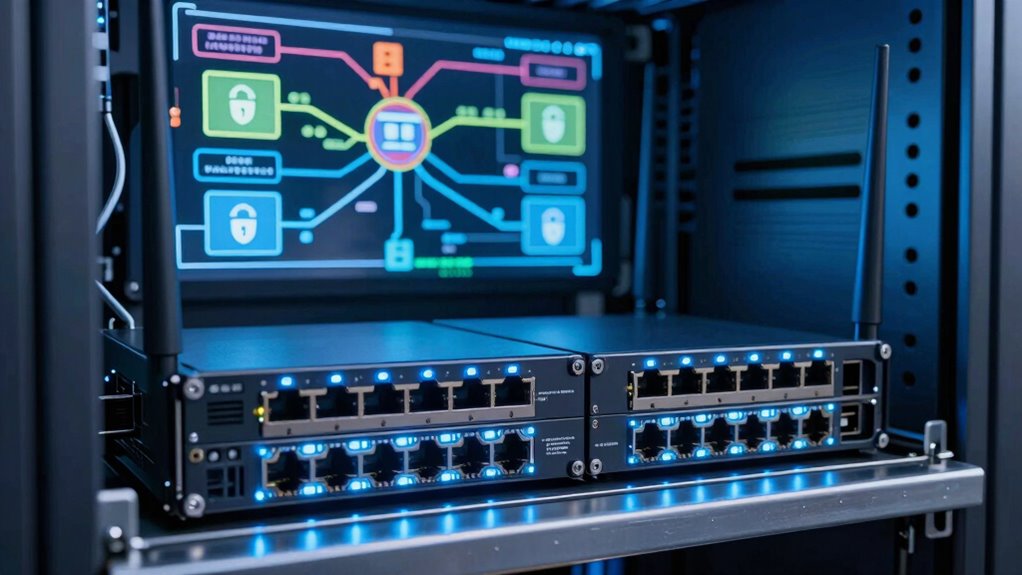
Virtual LANs (VLANs) are a powerful tool for segregating and managing network traffic, allowing you to logically divide your network into separate segments regardless of physical layout. This enhances network segmentation, making it easier to control who accesses specific resources. Additionally, VLANs enable traffic prioritization, ensuring critical data gets precedence over less urgent traffic. Here’s how they help:
VLANs improve security, performance, and management by logically segmenting and prioritizing network traffic.
- Control Access: Limit device communication within their designated VLANs, boosting security.
- Optimize Performance: Reduce congestion by isolating high-traffic devices.
- Simplify Management: Centralize control over network segments without rewiring physical infrastructure.
- Enhance Security: VLANs help prevent unauthorized access and contain potential threats within specific segments by using network segmentation techniques. Furthermore, understanding the differences between concepts like Twin Flame vs Soul Tie can deepen your awareness of relational energies and their influence on network interactions. An understanding of network segmentation can contribute to more effective security strategies and efficient traffic management, especially when combined with firewall policies to control data flow.
Securing Remote Access With VPNS: What Your Team Needs to Know
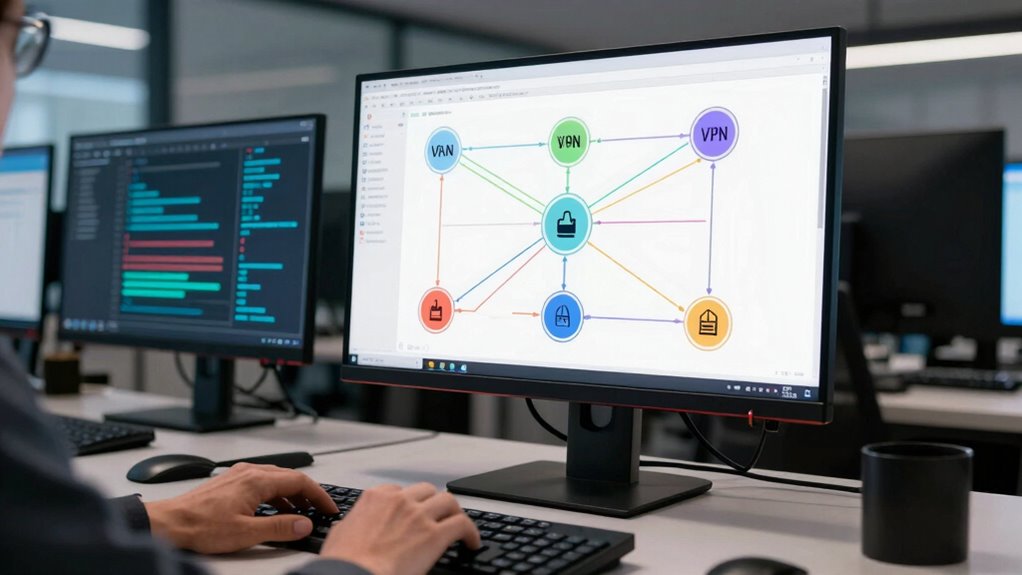
When your team needs to access company resources remotely, securing that connection is crucial to protect sensitive data and prevent unauthorized access. VPNs play a critical role in this by encrypting your remote access, making it difficult for hackers to intercept information. Choosing the right VPN protocols, such as OpenVPN or IKEv2/IPsec, ensures a balance of security and speed. These protocols establish a secure tunnel between your device and your company’s network, safeguarding login credentials and data transfers. It’s imperative to enforce strong authentication methods and keep VPN software updated to prevent vulnerabilities. Additionally, understanding sauna safety tips can help you recognize the importance of proper protocols to prevent overheating and ensure a safe environment. Being aware of encryption methods helps to understand how data is protected during transmission, which is vital for maintaining security. Implementing proper firewall configurations further enhances your network’s defenses against unauthorized access. Properly configuring your network devices with VLANs can segment traffic and reduce potential attack surfaces. Understanding these key features and best practices for VPNs allows your team to maintain reliable, secure remote access while preserving your network’s integrity.
How Firewalls Protect Your Network From Cyber Threats
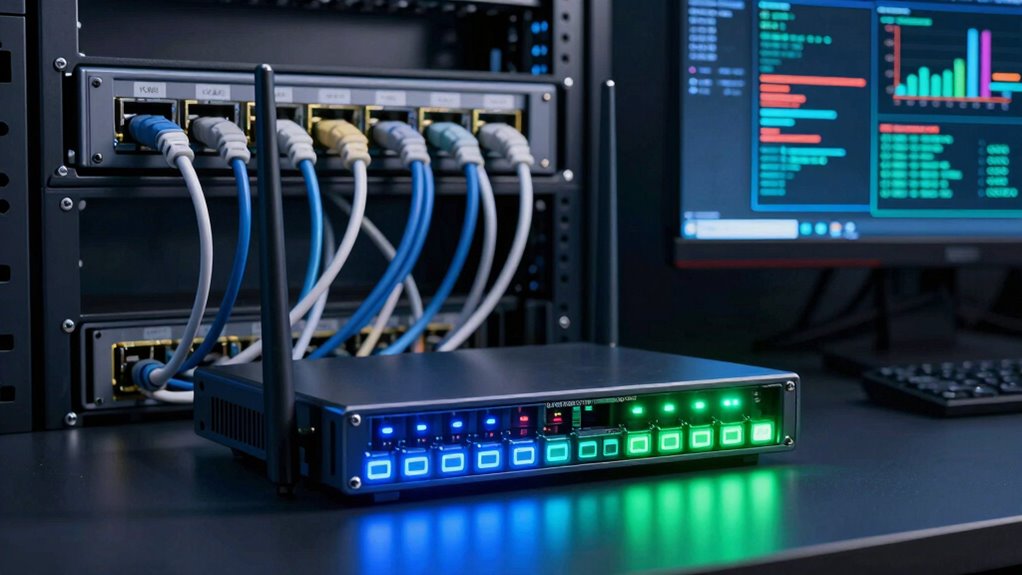
Firewalls act as the first line of defense in protecting your network from cyber threats. They monitor incoming and outgoing traffic, blocking malicious activity before it reaches your systems. Here’s how they keep you safe:
- Intrusion detection: Firewalls identify suspicious patterns and alert you to potential breaches, stopping attackers early.
- Malware mitigation: They filter out malware-laden traffic, preventing harmful files from infecting your devices.
- Access control: Firewalls enforce rules about who can access your network, reducing unauthorized entry points.
- Side-channel attack prevention: Firewalls can also help detect and block side-channel attacks, which exploit indirect information leaks to compromise data security.
Choosing and Managing Router Features for Your Organization’s Needs
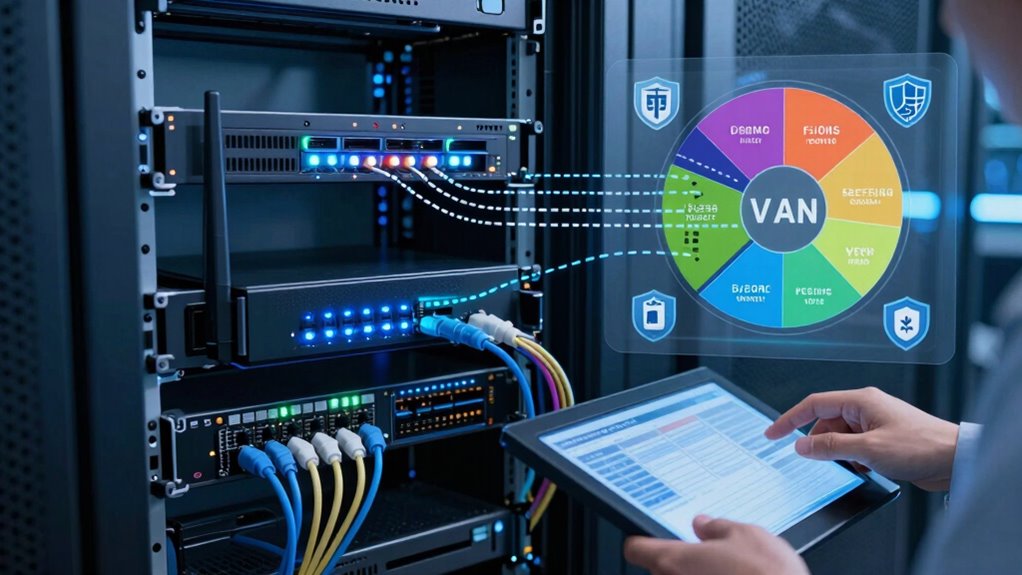
Selecting the right router features is essential for meeting your organization’s specific network needs, as it determines how effectively your infrastructure performs and stays secure. Focus on features like network segmentation and access control to isolate sensitive data and restrict unauthorized access. Properly managing these features guarantees your team can collaborate securely without risking data breaches. Incorporating cryptid mysteries into your security strategy can also help identify potential vulnerabilities before they become threats. Understanding network segmentation helps create isolated environments that contain potential breaches, further strengthening your security posture. Additionally, paying attention to firewall capabilities ensures you can enforce policies that protect against external threats while allowing legitimate traffic.
Frequently Asked Questions
How Do Router Features Impact Overall Network Performance?
Router features directly impact your network performance by reducing network latency and improving bandwidth management. When your router efficiently handles data traffic, it minimizes delays, ensuring smoother communication. Features like Quality of Service (QoS) prioritize critical applications, preventing congestion. This means your team experiences faster internet speeds, fewer disruptions, and better overall productivity. Properly optimized routers make a noticeable difference, especially when multiple users or high-demand applications are involved.
Can VLANS Improve Network Scalability for Growing Teams?
Yes, VLANs can improve network scalability for growing teams by enabling VLAN segmentation and network isolation. You can efficiently separate different departments or project groups, reducing congestion and enhancing security. As your organization expands, VLANs make it easier to add new users and devices without overhauling your entire network. This flexibility guarantees your network remains manageable, secure, and scalable, supporting your team’s growth seamlessly.
What Are the Common Pitfalls in Configuring VPNS?
You might encounter pitfalls in configuring VPNs if you neglect proper encryption protocols and user authentication. Weak encryption can expose sensitive data, while poor authentication methods might allow unauthorized access. Always choose robust encryption options like AES and confirm multi-factor authentication is in place. Failing to regularly update credentials and review security settings can leave your VPN vulnerable. Double-check your configurations to maintain a secure, reliable connection for your team.
How Often Should Firewall Rules Be Reviewed and Updated?
You should review and update your firewall rules regularly, ideally every three to six months. Conducting firewall audits helps identify outdated or overly broad rules, enabling rule refinement for better security and performance. Regular reviews ensure your firewall adapts to evolving threats and network changes. Staying proactive with these updates minimizes vulnerabilities, keeps your network secure, and maintains peak operation, preventing potential breaches or disruptions caused by outdated rules.
Do All Routers Support Advanced Security Features?
Think of routers as the gatekeepers in a digital castle. Not all support advanced security features like remote access controls and quality prioritization, which are essential for protecting your team’s assets. While some routers offer these capabilities, others focus on basic connectivity. You need to check the specifications before selecting a device, ensuring it can handle your security needs and prioritize quality, especially for remote access scenarios.
Conclusion
Prioritize practical, powerful, and protective router features to bolster your network’s security and streamline your team’s tasks. VLANs, VPNs, and firewalls form the foundation for a fortified, flexible, and friction-free digital environment. By understanding and managing these key features, you’ll boost your bandwidth, banish breaches, and build a balanced, bulletproof network. Don’t delay—deliberately deploy the devices and details that deliver the decisive difference in your organization’s digital defense.
Fall Picks
fall essentials
As an affiliate, we earn on qualifying purchases.