

As a startup, you can tap into the growing field of autonomous vehicles by developing advanced sensor fusion technology, which combines inputs from cameras, lidar, radar, and ultrasonic sensors for safer navigation. While regulatory hurdles and technical challenges exist, focusing on innovation, building reliable solutions, and working closely with regulators can position you as a leader in this evolving industry. Exploring these opportunities in depth can reveal how to turn autonomous tech into impactful transportation.
Key Takeaways
- Developing advanced sensor fusion systems offers startups a competitive edge in autonomous vehicle safety and reliability.
- Collaborating with regulators early can streamline approval processes and position startups as industry leaders.
- Innovating in diverse weather and urban environments addresses key challenges and expands market opportunities.
- Building scalable, compliant solutions allows startups to accelerate deployment and commercialization of autonomous vehicles.
- Engaging in strategic partnerships and research enhances technological capabilities and accelerates industry impact.
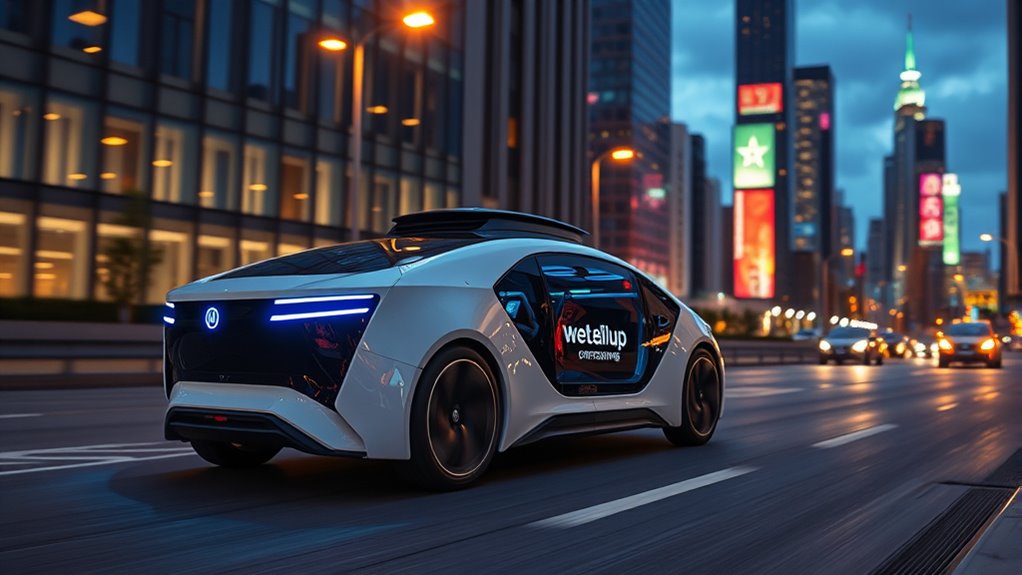
Have you ever wondered how self-driving cars steer busy streets with minimal human input? It all comes down to a sophisticated process called sensor fusion. This technology combines data from multiple sensors—like cameras, lidar, radar, and ultrasonic sensors—to create a comprehensive view of the vehicle’s surroundings. By integrating these inputs in real-time, autonomous systems can accurately identify objects, predict movements, and make safe driving decisions. Sensor fusion isn’t just about gathering information; it’s about synthesizing it into a reliable, cohesive picture that guides the vehicle smoothly through complex environments. For startups, developing advanced sensor fusion algorithms represents a significant opportunity, but it also comes with challenges. One of the biggest hurdles is ensuring the robustness and accuracy of these systems across diverse weather conditions and urban landscapes. Achieving this level of reliability requires heavy investment in research, hardware, and testing. Additionally, the choice of sensor technology, such as the type of lidar or radar used, directly impacts the effectiveness of sensor fusion systems.
Alongside technological challenges, regulatory hurdles pose another significant obstacle for startups aiming to deploy autonomous vehicles. Governments and regulatory bodies around the world are still developing frameworks to govern self-driving cars. These regulations cover safety standards, liability, data privacy, and testing protocols, and they vary widely from one region to another. For a startup, steering this patchwork of rules can be daunting. You might develop a cutting-edge sensor fusion system or an innovative autonomous driving platform, but until the legal landscape becomes clearer and more standardized, scaling your solution remains difficult. Regulatory approval processes can be lengthy and unpredictable, requiring startups to dedicate significant resources to compliance and legal consultation.
Despite these challenges, the opportunity is immense. The promise of autonomous vehicles includes increased safety, reduced traffic congestion, and expanded mobility for those unable to drive. By focusing on refining sensor fusion technologies, you can contribute to safer, more reliable autonomous systems. Simultaneously, engaging with regulators and shaping policies can position your startup as a leader in this evolving industry. Many successful startups have managed to work closely with policymakers, influencing regulations that support innovation while maintaining safety standards. In essence, while sensor fusion and regulatory hurdles are substantial, they also define the frontier of autonomous vehicle development. For you, the key is to innovate smartly, collaborate strategically, and stay adaptable as technology and laws continue to evolve. This approach can help turn your autonomous vehicle ideas into reality and make a meaningful impact on transportation’s future.

AUTONOMOUS VEHICLE ENGINEERING AND INTELLIGENT MOBILITY SYSTEMS: Self driving technologies sensor fusion and adaptive transportation networks
As an affiliate, we earn on qualifying purchases.
As an affiliate, we earn on qualifying purchases.
Frequently Asked Questions
What Are the Biggest Regulatory Hurdles for Startups in Autonomous Vehicle Development?
You face significant regulatory hurdles in autonomous vehicle development, mainly around ensuring regulatory compliance and steering legal challenges. Authorities impose strict safety standards and testing requirements, making it difficult to get approvals quickly. You must stay updated on evolving regulations, work closely with regulators, and demonstrate your vehicle’s safety and reliability. Overcoming these hurdles requires strategic planning and persistent effort to align your startup’s innovations with legal and regulatory expectations.
How Can Startups Ensure Cybersecurity in Autonomous Vehicle Systems?
Your startup can secure autonomous vehicle systems by implementing rigorous cybersecurity protocols and prioritizing data privacy. Think of cybersecurity as an impenetrable fortress protecting your tech. Regularly update software, conduct vulnerability testing, and encrypt sensitive data to stay ahead of cyber threats. Educate your team on best practices, and ensure compliance with data privacy laws. Staying proactive keeps your autonomous vehicle systems safe and trusted by users.
What Are the Key Partnerships Necessary for Autonomous Vehicle Startups?
You should focus on building strategic partnerships with technology providers, automotive manufacturers, and regulatory bodies through effective partnership models. Collaboration strategies that foster open communication and shared goals are essential. By forming alliances with hardware suppliers, software developers, and industry experts, you can leverage expertise, accelerate innovation, and navigate regulatory challenges more efficiently, ultimately strengthening your autonomous vehicle startup’s position in the competitive market.
How Do Autonomous Vehicle Startups Address Ethical Concerns and Public Trust?
You build public acceptance and trust by openly addressing ethical concerns through transparent communication and developing robust ethical frameworks. You engage with communities, regulators, and stakeholders to demonstrate your commitment to safety and morality. By prioritizing ethical standards and continuously improving your autonomous vehicle technology, you foster confidence among users and the public, ultimately helping your startup gain credibility and widespread acceptance in this evolving industry.
What Funding Sources Are Most Accessible for Autonomous Vehicle Startups?
You can access funding for your autonomous vehicle startup mainly through venture capital firms, which are enthusiastic to invest in innovative tech. Additionally, government grants are available to support research and development, especially when your project aligns with public safety and transportation goals. By targeting these sources, you increase your chances of securing the necessary capital to innovate and scale your autonomous vehicle solutions effectively.
Conclusion
As you navigate the future of autonomous vehicles, remember that startups hold the key to innovation, much like the Wright brothers revolutionized flight. Your ideas can drive change, turning the road into a digital highway of opportunity. Don’t let this chance slip through your fingers like a fleeting telegram—embrace the challenge, and steer toward a smarter, safer transportation era. The road ahead is yours to shape, so buckle up and get ready to lead.