🔍 Read the full analysis: A Week Of US Tech Outages: What Banks, Airlines, Email, And The NSA Experienced on ThorstenMeyerAI.com

Get business pricing on office and shipping supplies
- Business-only prices and quantity discounts
- Tax-exempt purchasing
- Multiple users, one account, clear invoices
TL;DR
Six outages affected major US technology and infrastructure services from November 12 to 17, including Microsoft 365, air travel, JPMorgan Chase, United Airlines, Apple and the NSA. The organizations have cited separate technical issues, maintenance or system changes, and officials say they have no evidence the incidents were related or caused by an attack. Most investigations remain incomplete.
Six outages disrupted email, flights, banking, airline operations, Apple services and an NSA network across the United States between November 12 and 17, but officials say they have no evidence the incidents were connected or caused by an attack. The organizations have described different causes, including a software defect, network problems, a software bug, an internal update and scheduled maintenance; investigations are still underway.
The incidents affected services used by millions of customers and organizations, as well as systems supporting air travel and government operations. Microsoft 365 email was unavailable to many business users for 23 hours and 50 minutes, from 16:20 UTC November 12 until 16:10 UTC November 13, according to Microsoft’s final status information. The disruption also affected services that rely on Microsoft accounts and infrastructure, including some Teams calendars and SharePoint functions.
On November 13, the Federal Aviation Administration stopped departures at US airports for about four hours and 23 minutes. The FAA said data flooded its legacy Flight Information Technology network during router work at two remote sites. The agency reported about 12,462 flights affected that day, including 9,082 cancellations by major airlines; that count does not mean every disruption resulted directly from the ground stop. JPMorgan Chase customers later reported stalled transactions, while United Airlines said a technology issue prevented it from sending pilots final aircraft weight information.
Apple said an internal update was behind problems affecting iCloud and the App Store. The NSA’s classified internal network also went down; Director of National Intelligence Jay Clayton attributed that outage to scheduled routine maintenance and security patching. As of the source report’s November 18 cutoff, Microsoft was the only organization to have published a technical account, and it described its findings as preliminary.
Failures Across Essential Services
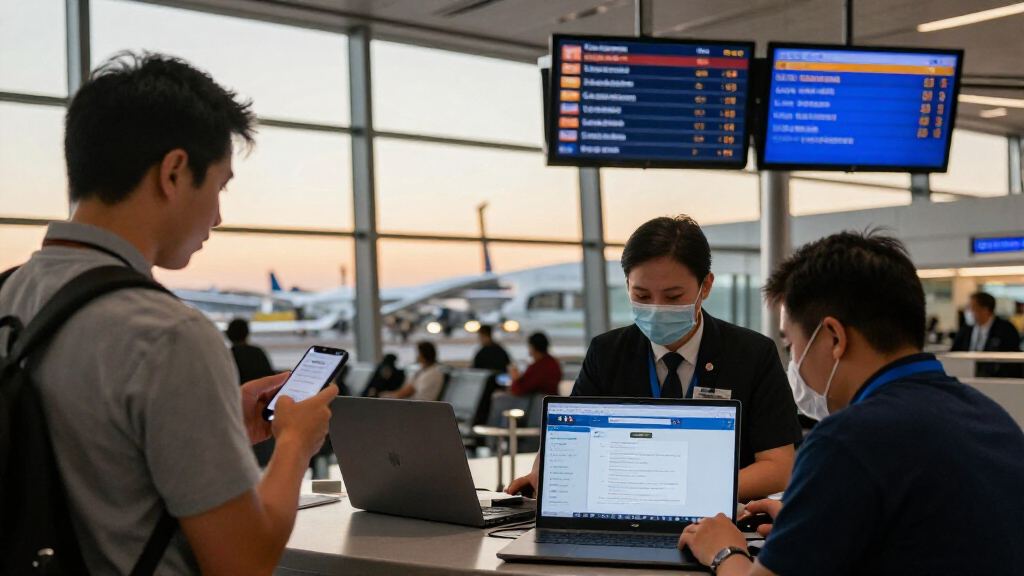
The incidents show how technical disruptions can spread beyond the system where they start. A mail outage can interrupt calendars and collaboration; a problem in an aviation network can delay departures across the country; and a failure in an airline’s weight-and-balance process can prevent a flight from receiving information needed before takeoff. These are different systems, but each supports services people and organizations depend on.
The accounts available so far point to changes and dependencies as practical risks: software fixes, network equipment work, updates and security patches can interact with older systems or concentrate demand on the remaining working capacity. That is a takeaway from the incidents, not evidence that they share a cause. For businesses, the week underscores the value of fallback communications and payment methods, and of knowing which vendors or internal systems are single points of failure. For individuals, a backup way to pay and offline access to necessary information can help during service interruptions.
Products Worth Considering

Dell UltraSharp U2424H 24-Inch FHD Monitor

Vari Ergo Electric Standing Desk, 54×26, Light Wood/White

Apple MacBook Neo 13-inch Laptop with A18 Pro Chip, 8GB Memory, 512GB SSD, Liquid Retina Display, and Touch ID – Blush
As an affiliate, we earn on qualifying purchases.
A Week of Separate Disruptions
The incidents unfolded over several days, beginning with Microsoft 365 on Thursday, November 12. Microsoft’s November 15 preliminary report said a latent defect introduced with a software change whose deployment began in July made Windows servers unresponsive under certain load conditions. It also cited a failover from an alternative network gateway to a primary gateway and a separate loss of about 14% of gateway server capacity. Microsoft said the resulting traffic shift caused failures to cascade across servers, with more than 80% unresponsive at the worst point.
The FAA’s initial account pointed to data flooding its network at a rate of 1,000 connection attempts every four to five seconds. Its investigation identified a radar site in Amarillo, Texas, and a radio site in El Dorado, Arkansas, where contractor L3Harris had been working. Later reports in the week involved JPMorgan Chase, United Airlines, Apple and the NSA. Their public descriptions were shorter: a software bug in on-premise hardware systems, a technology issue, an internal update and routine maintenance, respectively. Those descriptions do not provide the same level of technical detail as Microsoft’s preliminary report.
Secretary of State Marco Rubio rejected claims that the events indicated a systemic attack, while Clayton said many institutions were patching systems after newly discovered vulnerabilities. Clayton’s comments about patching were his general explanation for the broader environment; he specifically tied scheduled patching to the NSA outage, not to a confirmed cause for the other incidents.
““We have zero evidence whatsoever, we have no indication, no evidence, and no reason to believe at all that any of these incidents are related to each other.””
— Marco Rubio, US secretary of state
Investigations Still Incomplete
No public evidence currently links the six outages, but that is not the same as a final determination. Rubio’s remarks reflected the evidence available when he spoke, and the source report said only Microsoft had published a technical account by November 18. Microsoft’s account was preliminary, with a final report expected November 20.
Several organizations have provided only brief descriptions of their causes. The public accounts do not establish the precise technical sequence behind the JPMorgan Chase, United or Apple incidents, or provide a complete account of the NSA network outage. The FAA’s initial findings also do not settle every question about the work at the two sites or the role of the contractor. It remains unclear whether subsequent investigations will revise any organization’s initial explanation or identify additional contributing factors.
Final Reports and Recovery Findings
Microsoft’s final post-incident report was due November 20, according to its preliminary account. Further findings from the FAA and the other affected organizations could clarify what failed, how long recovery took and what safeguards they plan to change. Until those accounts are published, the incidents should be treated as separate disruptions with causes described by the organizations, not as a confirmed coordinated event.
Businesses and public agencies can use the incidents to review how they manage changes to shared systems, how they monitor capacity during network or software work, and what alternatives remain available when a key provider fails. Those are operational lessons, not proof that any single precaution would have prevented the outages. The next firm step for readers is to watch for final investigative updates and any concrete remediation plans from the affected organizations.
Key Questions
Were the six outages caused by a coordinated cyberattack?
Officials said they had no evidence that the incidents were related or caused by an attack as of November 18. Investigations were not all complete, so this reflects the evidence reported at that time.
Which services were affected?
The reported disruptions affected Microsoft 365 email, US airport departures, JPMorgan Chase transactions, United Airlines flight operations, Apple’s iCloud and App Store, and the NSA’s internal network.
What caused the Microsoft 365 outage?
Microsoft’s preliminary report cited a latent software defect, a network gateway failover and reduced server capacity. It said the traffic shift contributed to cascading server failures. A final report was due November 20.
What did the FAA say caused the ground stop?
The FAA said data flooded its legacy network during work involving two remote sites, destabilizing the equipment. Its initial investigation identified a radar site in Amarillo, Texas, and a radio site in El Dorado, Arkansas.
Are the causes of all six outages known?
No. Organizations gave initial explanations, but most had not published detailed technical reports by the November 18 cutoff. The full causes and any additional contributing factors remain unclear.
Source: ThorstenMeyerAI.com