

To set up remote-friendly processes, focus on creating clear digital onboarding programs using videos and interactive modules, so new hires feel welcomed and informed from anywhere. Choose and establish guidelines for collaboration tools like project management platforms and video calls to keep everyone connected. Automate routine tasks for efficiency and gather feedback regularly to improve workflows. By implementing these strategies, you’ll build a cohesive, productive remote team—and if you keep going, you’ll discover how to optimize these processes even further.
Key Takeaways
- Develop comprehensive digital onboarding programs with engaging videos, interactive modules, and virtual meet-and-greets.
- Select and enforce clear guidelines for collaboration tools to ensure seamless communication and document sharing.
- Automate routine tasks like onboarding follow-ups, updates, and reminders to increase efficiency.
- Regularly review and refine remote workflows based on team feedback to maintain effectiveness and engagement.
- Foster a culture of transparency, trust, and flexibility to support remote team cohesion and productivity.
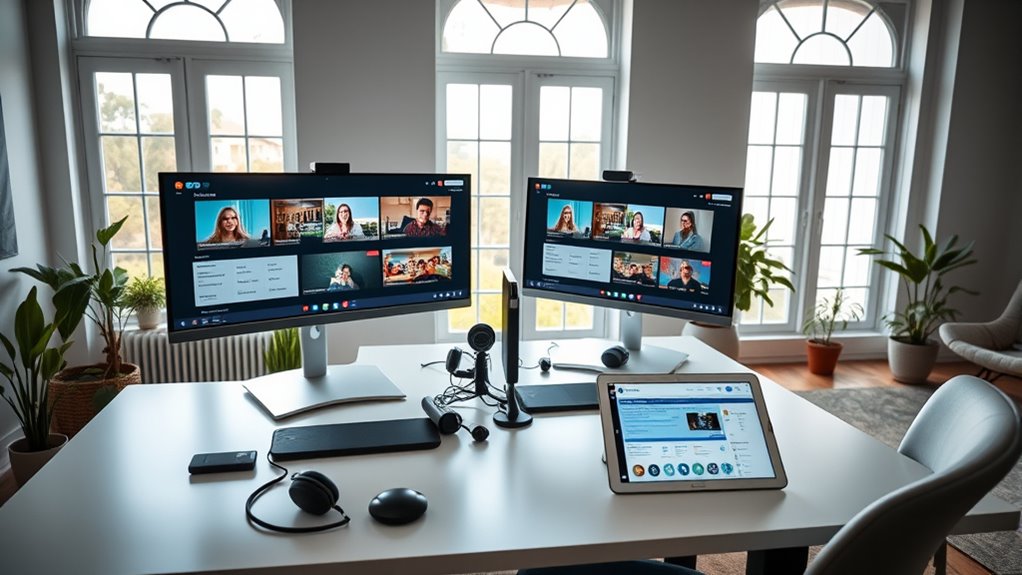
Creating remote-friendly processes is essential for maintaining productivity and collaboration across distributed teams. When you design systems that work seamlessly online, you empower your team to stay engaged, efficient, and aligned regardless of physical location. A key element in this setup is establishing a strong virtual onboarding process. Instead of traditional in-person orientations, you can create detailed digital onboarding programs that introduce new hires to your company’s culture, tools, and expectations in a structured way. This guarantees new team members get up to speed quickly, feel welcomed, and understand how to navigate your digital workspace. Incorporate videos, interactive modules, and virtual meet-and-greets to make onboarding engaging and accessible from anywhere. Clear documentation and checklists also help new employees refer back to essential information without delay, reducing confusion and onboarding time.
Effective remote onboarding accelerates integration through digital tools, engaging content, and clear documentation for a seamless new hire experience
Another indispensable aspect is fostering effective digital collaboration. You need to choose the right tools—such as project management software, instant messaging platforms, and video conferencing apps—that suit your team’s workflow. Once in place, establish clear guidelines on how and when to use each tool to avoid confusion or overlapping communications. Encourage open channels of communication and regular check-ins to keep everyone connected and informed. Use virtual collaboration best practices like shared calendars, real-time document editing, and asynchronous updates to accommodate different time zones and work styles. This not only streamlines your processes but also builds a culture of transparency and trust. Additionally, understanding the importance of proper gear shifting on a gravel bike can serve as a reminder that smooth transitions and adjustments—whether in cycling or remote workflows—are key to maintaining momentum and efficiency.
Automation plays a critical role in setting up remote-friendly workflows. Automate routine tasks like onboarding follow-ups, status updates, and reminders, freeing up time for your team to focus on more strategic activities. Integrate your tools to create a cohesive digital ecosystem where information flows smoothly, reducing the need for manual data entry or repetitive tasks. Be proactive in gathering feedback from your team about these processes. Regularly review and adjust your virtual onboarding and collaboration strategies to address pain points or evolving needs. This flexibility ensures your remote setup remains efficient and engaging over time.
Ultimately, creating effective remote-friendly processes is about making your team’s work simpler, clearer, and more connected. When you prioritize well-structured virtual onboarding and seamless digital collaboration, you foster a motivated, cohesive, and productive remote workforce. This approach not only enhances day-to-day operations but also builds a resilient foundation that scales with your organization’s growth. By continuously refining these processes, you stay ahead of the challenges remote work presents and create an environment where everyone can thrive, no matter where they’re located.
Frequently Asked Questions
How Do I Handle Time Zone Differences Effectively?
To handle time zone differences effectively, prioritize scheduling flexibility and stay timezone aware. Use shared calendars and tools that show teammates’ local times to avoid confusion. Schedule meetings at overlapping hours and consider rotating meeting times to accommodate everyone fairly. Communicate clearly about availability and deadlines, and be patient with delays caused by differing time zones. These practices help maintain productivity and foster team cohesion across borders.
What Tools Ensure Seamless Remote Team Communication?
You can guarantee seamless remote team communication by using collaborative platforms like Slack or Microsoft Teams, which keep everyone connected. Incorporate real-time chat features to facilitate quick, clear exchanges and reduce misunderstandings. These tools allow you to organize conversations, share files instantly, and maintain ongoing dialogue, ensuring your team stays aligned and productive regardless of time zones. Regularly update and train your team on these tools to maximize their effectiveness.
How Can I Track Productivity Without Micromanaging?
You can track productivity effectively by focusing on performance metrics and ensuring goal alignment. Regularly review key performance indicators relevant to each team member’s tasks, and set clear, achievable goals that align with overall company objectives. Encourage transparent communication and provide feedback, so you stay informed about progress without micromanaging. This approach allows you to measure results, foster accountability, and support your team’s growth remotely.
How Do I Maintain Team Morale Remotely?
You can keep team morale high by fostering a vibrant virtual community. Start virtual coffee chats to build genuine connections and make everyone feel seen. Celebrate wins with recognition programs that shine a spotlight on achievements, big or small. Keep communication open and authentic, like a steady heartbeat. When you show appreciation and create spaces for casual interaction, you cultivate a resilient, motivated team that feels connected no matter the distance.
What Security Measures Are Crucial for Remote Workflows?
You need to prioritize cybersecurity protocols and data encryption to secure remote workflows. Implement strong password policies, use multi-factor authentication, and regularly update software. Encrypt sensitive data both in transit and at rest to prevent unauthorized access. Guarantee your team is trained on security best practices, and monitor network activity for suspicious behavior. These measures help protect your business from cyber threats and keep remote operations safe and reliable.
Conclusion
By implementing remote-friendly processes, you make collaboration smoother and boost productivity. Did you know that 77% of remote workers report increased work satisfaction? Embracing flexible workflows not only keeps your team engaged but also enhances overall efficiency. So, take these steps to create a more adaptable environment—you’ll see better results and happier team members in no time. Start today, and watch your remote operations thrive!