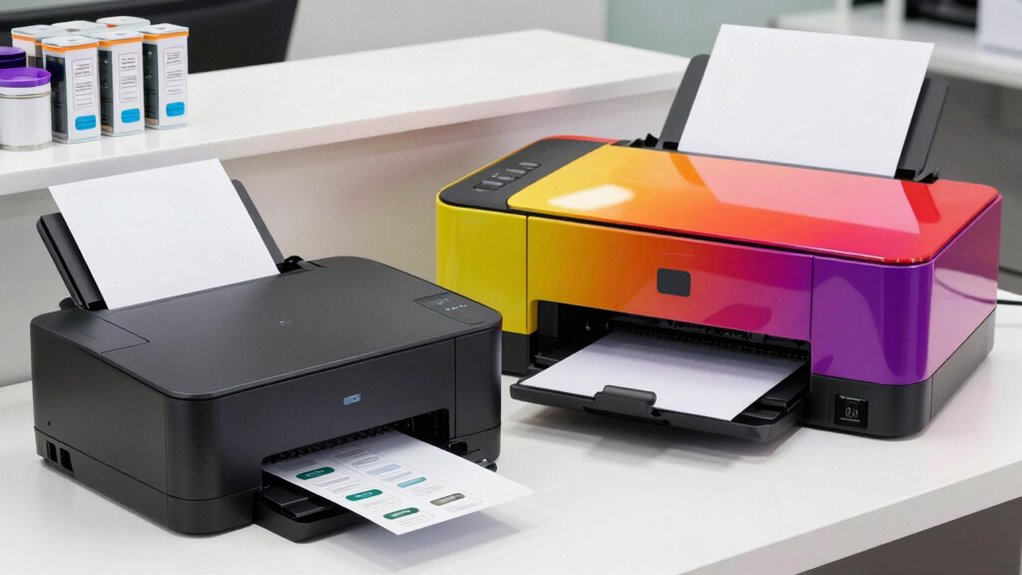

For most businesses, thermal label printers are the better choice due to their low ongoing costs, reliability, and durability. They don’t need ink or toner, operate faster, and produce high-quality, long-lasting labels suitable for shipping, healthcare, or demanding environments. Inkjet printers are ideal for vibrant, detailed images but are more expensive to maintain and less durable. If you want a cost-effective, hassle-free solution, thermal printers often prove to be the smarter option—exploring further reveals why.
Key Takeaways
- Thermal printers are typically the better choice for high-volume, durable labeling due to lower operating costs and faster speeds.
- Inkjet printers excel in vibrant, detailed labels, suitable for short runs and customized, colorful designs.
- Thermal printers require less maintenance, produce less waste, and are more environmentally friendly for business use.
- Inkjet printers offer superior color accuracy but have higher ongoing costs and more frequent maintenance needs.
- Overall, thermal printers usually win for business applications demanding speed, durability, and cost-efficiency.
What Are Thermal and Ink Label Printers? An Overview

Have you ever wondered how labels are printed quickly and efficiently? Thermal and ink label printers are designed for this purpose, each offering unique advantages. Thermal printers use heat to transfer ink onto labels, providing fast, clean results with minimal maintenance. They excel in high-volume environments, especially where durability and precision matter. Ink label printers, on the other hand, rely on liquid ink cartridges and offer excellent label customization options, including vibrant colors and detailed images. Compatibility is key—thermal printers work best with heat-sensitive labels, while ink printers handle a broader range of materials. Understanding these differences helps you choose the right printer for your needs, ensuring smooth operations and high-quality labels every time.
How Do Thermal and Ink Label Printers Work? Key Technologies Explained
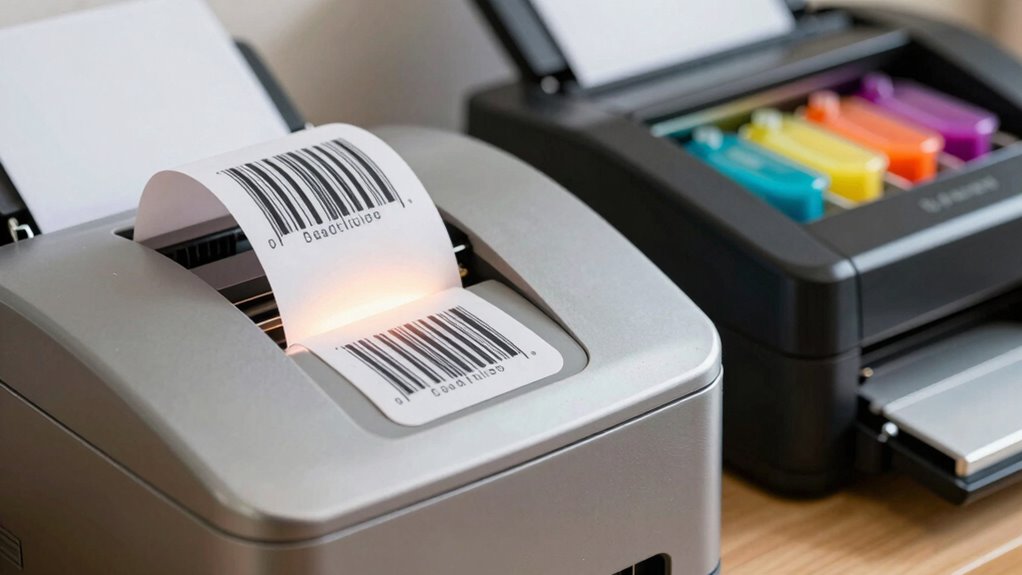
Understanding how thermal and ink label printers work helps you choose the right technology for your needs. Thermal printers use heat to produce images, while ink printers rely on liquid ink or toner. The key technological differences determine their speed, durability, and suitable applications. Additionally, digital content formats play a role in how these printers are integrated into various workflows. For example, color accuracy can influence the vibrancy and clarity of printed labels, especially in high-quality branding or detailed graphics.
Printing Mechanisms Overview
Thermal and ink label printers operate through fundamentally different mechanisms, each utilizing unique technologies to produce printed labels. Thermal printers use heat-sensitive media; when heated by tiny elements, the paper reacts by changing color, creating the image. They typically offer limited color options, focusing on black and monochrome prints, but excel in fast print speeds suitable for high-volume tasks. Ink label printers, on the other hand, rely on liquid ink applied through nozzles onto the label surface. This allows for vibrant color options and detailed images, though printing can be slower and more costly. The choice between these technologies depends on your needs: thermal printers prioritize speed and simplicity, while ink printers emphasize color richness and detail. Understanding these mechanisms helps you select the right printer for your business.
Thermal vs Ink Process
Thermal and ink label printers operate through distinct processes that determine their performance and suitability for different applications. Thermal printers use heat to activate special coatings or transfer ink from a ribbon onto the label. Direct thermal printers produce images by heating coated paper, offering quick, maintenance-free printing but limited color options. Inkjet printers, on the other hand, spray tiny droplets of liquid ink onto labels, allowing for vibrant color options and detailed graphics. While inkjet printers provide more color variety, they tend to have a higher environmental impact due to ink cartridges and energy use. Thermal printers are more eco-friendly as they lack ink cartridges and generally consume less power. Your choice depends on the importance of color, print durability, and environmental considerations. Incorporating eco-friendly natural pools and sustainable backyard features can also reflect your commitment to environmentally conscious choices.
Key Technological Differences
To grasp how thermal and ink label printers differ, it’s essential to examine the core technologies they employ. Thermal printers use heat-sensitive ribbons or direct heat to produce images, resulting in fast print speeds and simple maintenance. They typically have lower color accuracy but excel in durability and speed, making them ideal for high-volume labeling. Inkjet printers, on the other hand, spray tiny droplets of liquid ink onto labels, offering superior color accuracy and detailed images. While they can produce vibrant labels, their print speeds are generally slower, and they require more maintenance due to ink drying and clogging issues. Understanding these technological differences helps you choose the right printer based on your needs for speed, color quality, and durability.
Which Label Printer Is More Cost-Effective for Your Business?
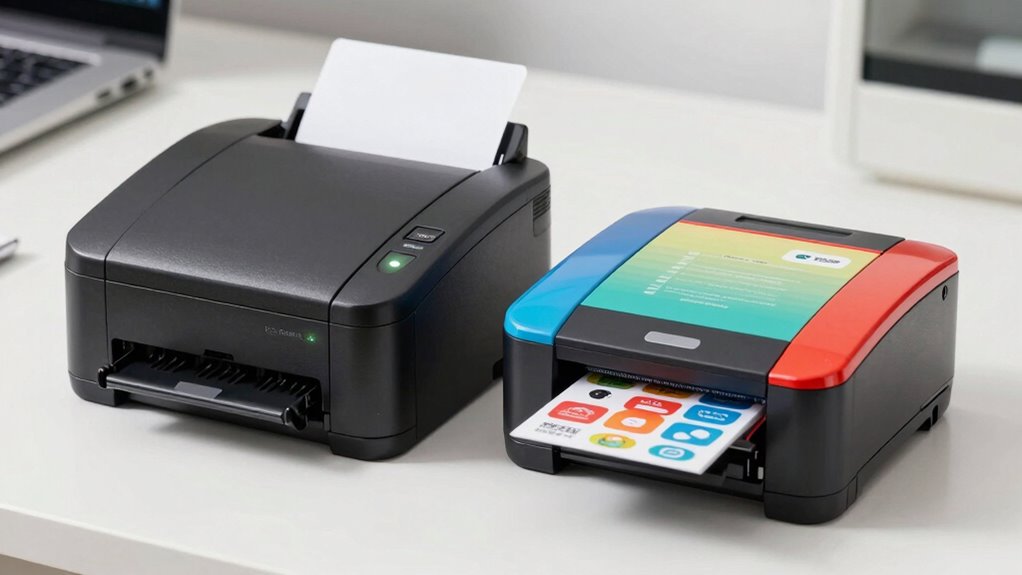
When choosing a label printer for your business, cost-effectiveness plays a crucial role in your decision-making process. Thermal printers often have lower ongoing costs because they don’t require ink or toner, making them cheaper to operate over time. Ink printers might have higher initial investment and maintenance costs but can offer greater label customization options, which could be worth the extra expense if you need detailed or colorful labels. Consider printer portability too—compact, portable thermal models can save you money if you need labels on the go or in small spaces. Additionally, understanding mental wellbeing can improve overall decision-making and stress management during your equipment selection process. Selecting a printer with user-friendly features can reduce frustration and streamline your workflow, saving time and reducing stress. For example, model durability and ease of maintenance are important factors that can affect long-term operational costs. Ultimately, thermal printers tend to be more cost-effective for high-volume, simple labels, while ink printers might be better for low-volume, highly customized labels. Your choice depends on your specific business needs and budget.
How Do Label Quality and Durability Compare Between Thermal and Ink?
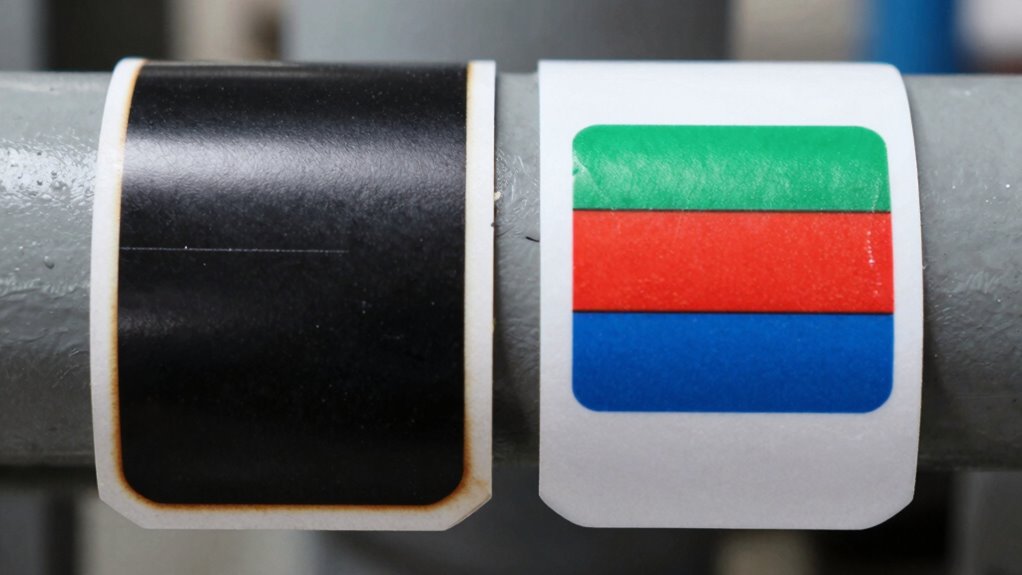
You’ll find that thermal labels often produce sharper, clearer prints, especially for barcodes and text. Ink labels can offer good quality but may fade or smudge over time, especially with handling. When it comes to resistance to wear and tear, thermal labels generally hold up better in harsh environments. Additionally, thermal printing reduces the need for ink supplies, making it a more cost-effective option in the long run. Moreover, thermal labels are less susceptible to cable failures caused by environmental factors, ensuring consistent performance. The durability of thermal labels also contributes to maintaining professional appearance over extended periods. Because thermal printing is often faster and more reliable, it can help streamline business operations, especially in high-volume settings. Incorporating label durability considerations can further optimize the choice for various business needs.
Print Clarity and Sharpness
Ever wondered how the print quality and durability of labels compare between thermal and inkjet printers? When it comes to print clarity and sharpness, thermal printers excel in consistency, producing uniform images with clear edges. They maintain high print consistency over long runs, ensuring each label looks the same. Inkjet printers, however, offer better color accuracy, allowing you to produce vibrant, detailed images with a wide color spectrum. But, inkjet labels may sometimes lack the sharpness and uniformity of thermal prints, especially on certain materials. If your priority is crisp, precise text and barcode readability, thermal printers usually deliver better results. Conversely, for colorful, detailed designs, inkjet printers provide the flexibility needed for high-quality, visually appealing labels.
Resistance to Wear and Tear
Thermal and inkjet labels differ markedly in their resistance to wear and tear, impacting their durability over time. Thermal labels, especially when tested through durability testing, generally resist fading, moisture, and abrasion better because they use heat-sensitive paper or resin coatings. Inkjet labels, however, rely on ink adhesion, which can degrade with exposure to water, chemicals, or friction. Material compatibility plays a significant role; thermal labels work best with compatible surfaces like paper or certain plastics. In contrast, inkjet labels require specific inks and substrates for durability. If your labels need to withstand harsh environments, thermal labels often provide a longer-lasting solution, making them the better choice for applications demanding resistance to wear and tear. Proper selection of label types can also influence product longevity, especially in demanding conditions.
Which Printer Is Easier to Use and Maintain? User-Friendliness Tips
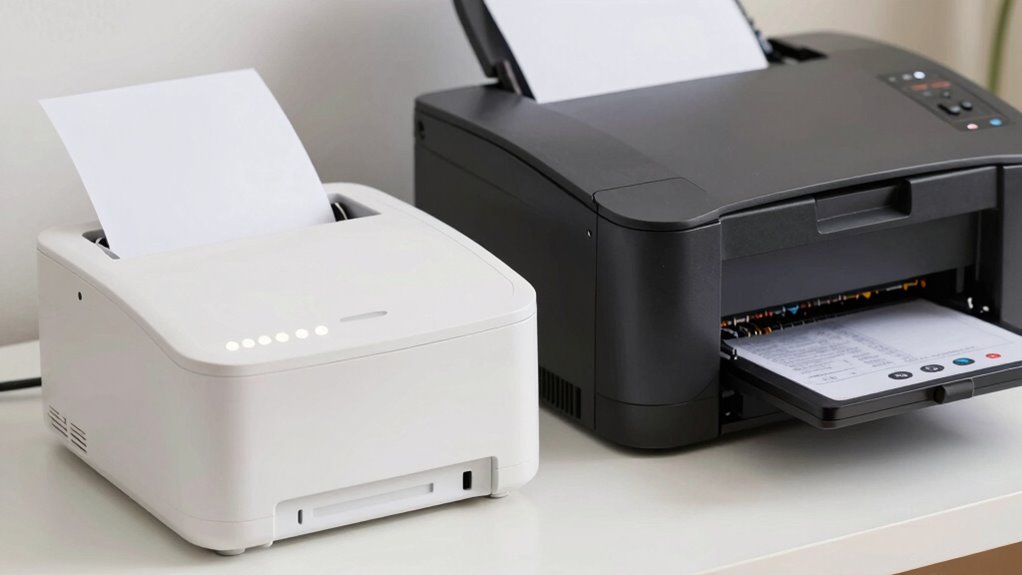
When choosing between thermal and ink label printers, ease of use and maintenance are key factors to contemplate. The user interface plays a significant role—you’ll want a printer with simple controls and clear instructions to minimize setup time. Thermal printers often feature straightforward designs with fewer moving parts, making them easier to operate and troubleshoot. Thermal printers also tend to have simple maintenance routines, involving only occasional cleaning to prevent dust buildup. Ink label printers may have more complex controls and require more frequent cleaning, especially around print heads and ink cartridges. Maintenance routines for thermal printers are generally minimal, involving occasional cleaning to prevent dust buildup. Because thermal printers typically have fewer components that wear out, they often offer greater durability and longer service life. With ink printers, you’ll need to regularly replace ink cartridges and clean print heads to keep quality high. Additionally, understanding consumer/lifestyle topics related to printer choices can help you make more informed decisions that align with your overall business ethics and sustainability goals. Choosing a user-friendly printer can also reduce the learning curve for new staff, ensuring smoother operations. Furthermore, advancements in printer technology continue to improve ease of use and maintenance, making modern models more accessible to businesses of all sizes.
When Should You Use Thermal vs. Ink Label Printers? Industry and Application Insights
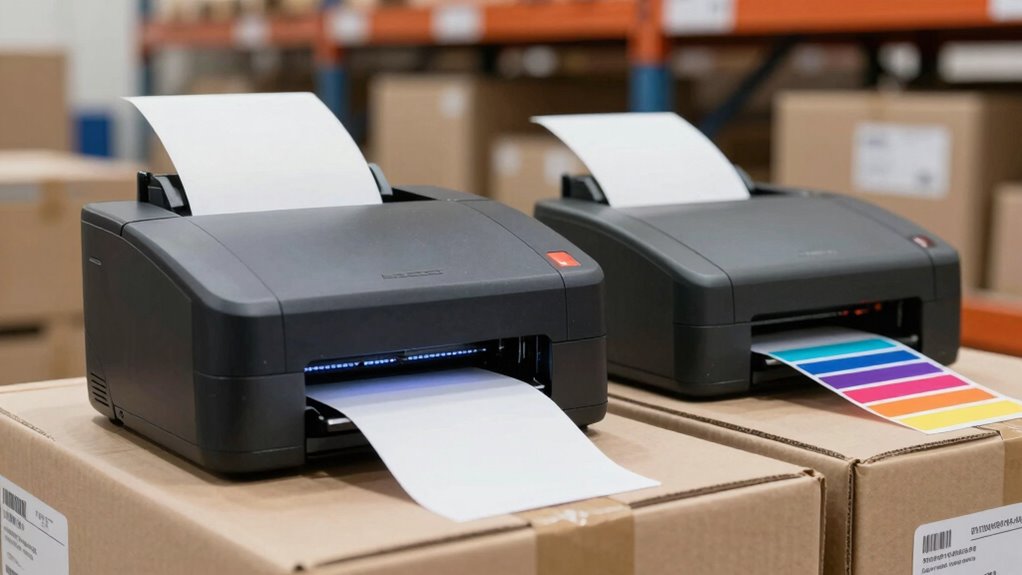
Choosing the right label printer depends heavily on your specific industry needs and the types of labels you require. Market trends show that thermal printers are favored for high-volume, durability-focused applications like shipping labels, retail tags, and healthcare identifiers, where quick production and longevity matter. Ink printers, on the other hand, excel for short runs, vibrant graphics, and custom labels, often used in food packaging or promotional items. Consider environmental impact too; thermal printers produce less waste since they don’t use ink cartridges, aligning with eco-conscious practices. If your priority is sustainability and efficiency in large-scale labeling, thermal printers are usually the better choice. Additionally, understanding the benefits of different printing technologies can help you make an informed decision. If you need flexibility and colorful designs, ink printers might be more suitable. Your decision should align with industry demands and environmental considerations, especially as businesses increasingly prioritize burnout prevention and work-life harmony in their operations.
Why Do Thermal Label Printers Often Outperform Ink? The Business Advantages
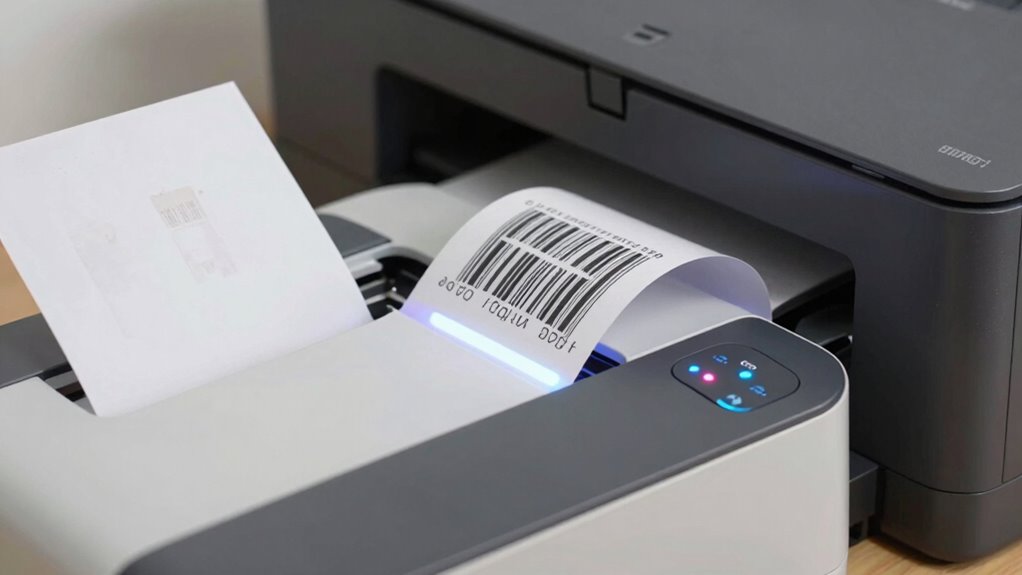
Because of their streamlined design and fewer moving parts, thermal label printers often outperform ink printers in business settings by offering faster, more reliable operation. They require less maintenance and reduce downtime, which boosts productivity. Thermal printers also excel in cost efficiency; they eliminate the need for ink, toner, and cartridges, saving money over time. Additionally, they have a lower environmental impact since they produce less waste and use fewer consumables. Their durability and simplicity make them ideal for high-volume printing environments, reducing the need for frequent replacements or repairs. The lack of moving parts in thermal printers contributes significantly to their longevity and dependable performance. Proper operation techniques and adherence to safety precautions can further enhance their longevity and ensure safe usage. Regular cleaning and maintenance of thermal print heads can prevent common issues and extend the life of the device. Employing proper handling procedures can also prevent damage during operations. This combination of efficiency, reliability, and eco-friendliness helps businesses cut costs and minimize their carbon footprint, making thermal label printers a smart choice for many operational needs.
How to Choose the Right Label Printer for Your Business Needs
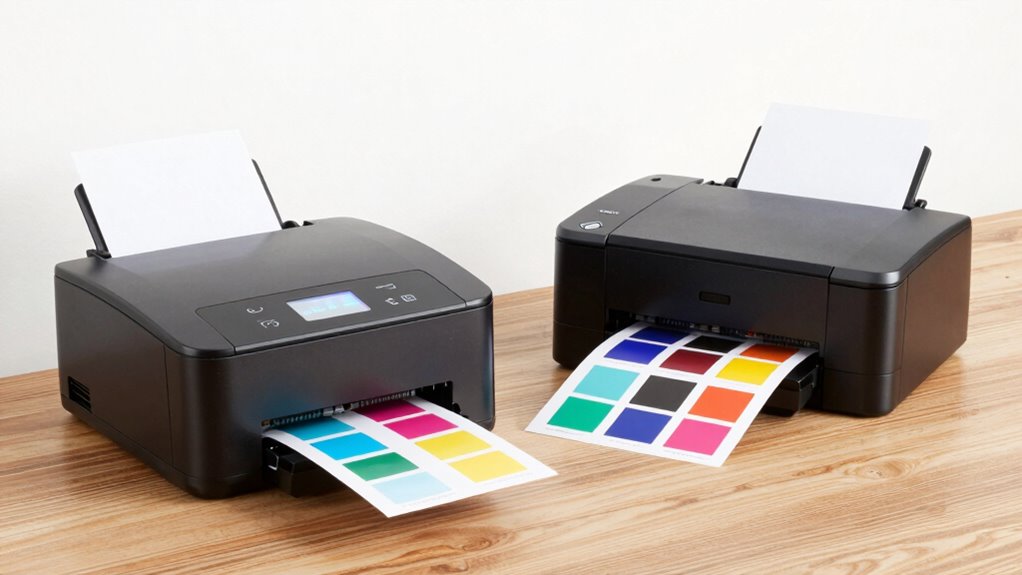
Selecting the right label printer for your business begins with understanding your specific printing needs and workflow demands. Consider how often you’ll print labels and the types of materials you’ll use, as this impacts your choice between thermal and ink printers. A thermal printer generally requires less maintenance and offers faster operation, making it ideal for high-volume environments. In contrast, ink printers may need more frequent label printer maintenance, especially for ink cartridge replacements, and often have a higher cost comparison over time. Think about your budget, label quality, and durability requirements. If you need long-lasting labels without frequent upkeep, thermal printing is usually the better choice. Additionally, understanding the horsepower of electric dirt bikes can help you appreciate the importance of choosing equipment that matches your operational power needs. Ultimately, matching your business volume and label specifications will help you select the most efficient, cost-effective printer.
Frequently Asked Questions
Are Thermal or Ink Label Printers Better for Outdoor Use?
For outdoor use, thermal label printers are better because they handle weather-resistant label materials like synthetic or laminated paper. These printers don’t rely on ink, so they’re less affected by moisture or sunlight. Plus, their reliable printer connectivity options guarantee you can easily print labels on-site. Thermal printers deliver durable, high-quality labels suited for outdoor conditions, making them the ideal choice for your labeling needs outside.
How Long Do Thermal and Ink Labels Typically Last?
Thermal labels typically last 6 months to a year outdoors, thanks to their durability against weather and UV exposure, while ink labels may last only 1 to 2 years depending on ink quality and printer maintenance. Indoor labels usually last longer. To maximize label lifespan, you should regularly maintain your printer, use high-quality labels, and store labels properly. This guarantees your labels stay clear and legible longer.
Can Thermal and Ink Printers Handle Custom Label Sizes?
Yes, thermal and ink printers can handle custom label sizes, but their flexibility varies. Thermal printers often excel with custom label flexibility due to straightforward printer calibration, allowing precise adjustments. Inkjet printers may need more calibration and sometimes require software for custom sizes. You should check your printer’s specifications and calibration options to guarantee it can accommodate your specific label dimensions accurately.
What Environmental Factors Affect Label Printer Performance?
You’ll notice that environmental factors like label material and ambient temperature directly impact your label printer’s performance. Hot or cold environments can cause labels to peel or smudge, while certain label materials may not adhere well in humid conditions. To keep your printer running smoothly, choose the right label material for your environment and maintain consistent ambient temperatures. It’s a simple coincidence that these factors often determine your printing success.
Are There Eco-Friendly Options for Thermal and Ink Label Printing?
Yes, eco-friendly options exist for both thermal and ink label printing. You can choose printers that use sustainable materials, reducing environmental impact. For ink-based printers, look for models that utilize eco-friendly inks, which are less toxic and more sustainable. These choices help lower your business’s carbon footprint, support environmental responsibility, and align with eco-conscious values. Switching to these options makes your labeling process more sustainable without sacrificing quality.
Conclusion
So, after all this, you might think choosing between thermal and ink label printers is a simple matter. But don’t be fooled—sometimes the “best” choice isn’t the most obvious one. Whether you prefer the sleek efficiency of thermal or the colorful flexibility of ink, remember that your decision says a lot about your business’s future. Irony aside, pick what aligns best with your needs—because, in the end, that’s what truly counts.