

To build supply chain resilience amid 2024 disruptions, you should prioritize proactive inventory management and diversify your suppliers. Maintaining buffer stock helps you stay operational during delays or shortages, while spreading your supplier base reduces vulnerability to regional issues. Regularly evaluating and strengthening your supplier relationships ensures flexibility, and using real-time tracking keeps risks in check. Staying ahead means adopting these strategies now—continue and discover how to enhance your supply chain’s robustness further.
Key Takeaways
- Diversifying suppliers across regions reduces vulnerability to geopolitical, natural, or economic disruptions affecting the supply chain.
- Maintaining strategic buffer stock ensures operational continuity amid unexpected delays or shortages.
- Real-time inventory tracking technology enables proactive response to supply chain vulnerabilities.
- Building strong, transparent relationships with multiple suppliers enhances flexibility and rapid problem resolution.
- Continuous risk assessment and demand forecasting strengthen supply chain resilience against future disruptions.
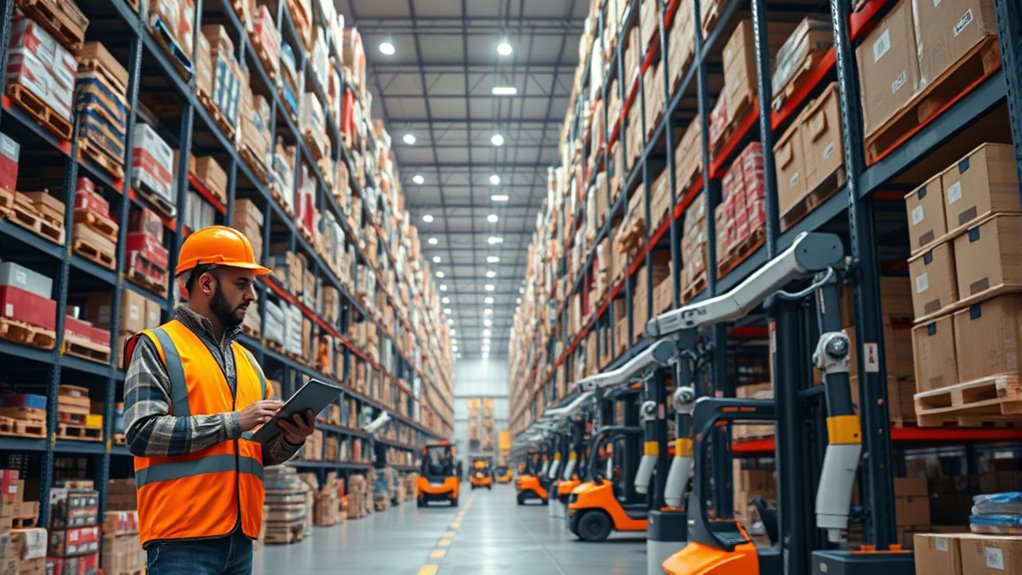
Have you ever wondered how companies bounce back quickly from disruptions? It’s often due to their effective use of inventory management and supplier diversification. When disruptions hit, those who stay resilient don’t panic; instead, they rely on solid strategies that keep their supply chains running smoothly. Inventory management is a key piece of this puzzle. Companies that keep a close eye on their inventory levels, implement just-in-case stock policies, and utilize real-time tracking are better prepared to handle sudden shortages or delays. Instead of relying solely on just-in-time inventory, which can leave you vulnerable during disruptions, maintaining buffer stock allows for a cushion that keeps production going while issues are resolved. It’s about balancing costs with risk mitigation to guarantee you don’t run out of critical components or products at essential moments.
Effective inventory management with buffer stock and real-time tracking ensures supply chain resilience during disruptions.
Alongside inventory management, supplier diversification plays a fundamental role. Relying on a single supplier or a limited supplier base exposes your supply chain to significant risks. When one supplier faces a disruption—be it due to geopolitical issues, natural disasters, or economic instability—you’re left scrambling. Diversifying your supplier network means you spread that risk across multiple vendors, ideally in different regions. This way, if one supplier encounters a problem, others can step in to fill the gap, ensuring your operations continue with minimal interruption. It also encourages competitive pricing and better terms, which can be advantageous during crises. Building relationships with multiple suppliers isn’t just about risk; it’s also about creating a more flexible, adaptable supply chain.
Implementing these practices requires foresight and proactive planning. You need to regularly assess your inventory levels, forecast demand accurately, and maintain transparent communication with your suppliers. Technology plays a fundamental role here—using supply chain management software can help you monitor inventory in real time and identify potential vulnerabilities before they turn into full-blown disruptions. Similarly, establishing partnerships with a diverse set of suppliers requires ongoing relationship management and a clear understanding of their capacities and risks. Additionally, understanding the contrast ratio of your projectors can greatly enhance your home cinema experience by ensuring the images are vivid and detailed in various lighting conditions.
In 2024, disruptions continue to remind us that a resilient supply chain isn’t built overnight. It’s the result of disciplined inventory management and strategic supplier diversification. By staying proactive and adaptive, you can guarantee your supply chain withstands shocks, keeps your operations running smoothly, and positions your company for long-term success. Resilience isn’t just about bouncing back; it’s about staying ahead in a constantly changing environment.

EUHOMY Commercial Ice Maker Machine, 100lbs/24H Stainless Steel Under Counter ice Machine with 33lbs Ice Storage Capacity, Freestanding Ice Maker.
HIGH CAPACITY & FAST ICE MAKING – Designed for heavy-duty usage, this commercial ice maker produces up to...
As an affiliate, we earn on qualifying purchases.
Frequently Asked Questions
How Can Small Businesses Improve Supply Chain Resilience Effectively?
You can improve your supply chain resilience by focusing on inventory management and supplier diversification. Keep safety stock to handle disruptions and regularly review stock levels. Don’t rely on a single supplier—diversify your sources to avoid shortages. Building strong relationships with multiple suppliers helps you quickly adapt to issues. These strategies help ensure your business stays operational during disruptions and maintains customer satisfaction.
What Are Emerging Technologies Shaping Future Supply Chain Resilience?
Imagine a future where your supply chain becomes virtually unstoppable. AI integration and digital twins are leading the charge, transforming how you predict and respond to disruptions. By harnessing AI, you gain real-time insights, while digital twins let you simulate scenarios before they happen. This technology empowers you to adapt swiftly, ensuring resilience. Embrace these innovations now, and stay ahead in an unpredictable world.
How Do Geopolitical Tensions Impact Global Supply Chain Strategies?
Geopolitical tensions critically impact your global supply chain strategies by increasing uncertainties. You need to stay alert to trade sanctions that can suddenly restrict imports or exports, disrupting your operations. Diplomatic negotiations become essential, as they can ease tensions and open new pathways. To stay resilient, diversify suppliers, monitor political developments closely, and build flexible logistics plans that adapt quickly to changing geopolitical landscapes.
What Role Does Sustainability Play in Strengthening Supply Chain Resilience?
You should know that 78% of consumers prefer brands committed to sustainability, showing its importance. Sustainability bolsters supply chain resilience by emphasizing sustainable sourcing and green logistics, which reduce risks and environmental impact. By integrating eco-friendly practices, you create a more adaptable, resilient supply chain that can better weather disruptions, meet consumer expectations, and foster long-term growth. Embracing sustainability isn’t just ethical — it’s a strategic advantage in today’s volatile global market.
How Can Companies Measure the Success of Their Resilience Initiatives?
You can measure your resilience initiatives by tracking resilience metrics like recovery time, supply chain flexibility, and risk exposure reduction. Setting clear performance benchmarks helps you evaluate progress and identify areas for improvement. Regularly analyze your data to see how quickly your supply chain responds to disruptions and whether strategies are effective. This ongoing assessment guarantees you stay resilient, adapt proactively, and strengthen your supply chain against future disruptions.
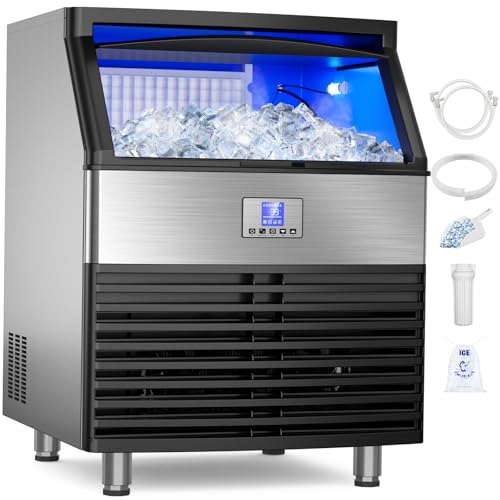
Commercial Ice Maker Machine 450LBS/24H, Under Counter Ice Machine, Upgrade Compressor 120LBS Storage Bin, Stainless Freestanding Commercial Ice Maker for Home Bar Cafe Office
Efficient Ice Produce: Commercial Ice Maker 450 LBS/24H can easily meet your daily ice cube needs. Commercial ice...
As an affiliate, we earn on qualifying purchases.
Conclusion
By learning from 2024 disruptions, you can build a more resilient supply chain. For example, imagine diversifying suppliers to avoid a single point of failure, just like Company X did during the recent crisis. When they faced port closures, their backup suppliers kept operations running smoothly. Stay proactive, adapt quickly, and regularly review your strategies. This way, you’ll turn challenges into opportunities, ensuring your supply chain remains strong no matter what comes your way.
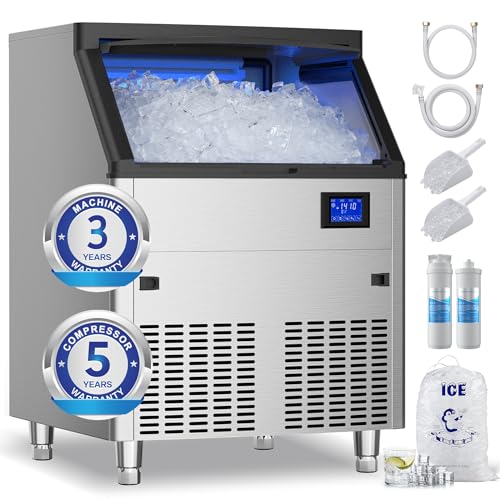
Coolake Commercial Ice Maker Machine 320lbs/24H with 120lbs Storage, Stainless Steel Under Counter Freestanding Ice Maker, Water Filter Reduce Scale up to 99% for Home Bar Restaurant, ETL Approval
Commercial Ice Machine with Impressive Speed: The undercounter ice maker provides unsurpassed performance, high-capacity ice production of up...
As an affiliate, we earn on qualifying purchases.
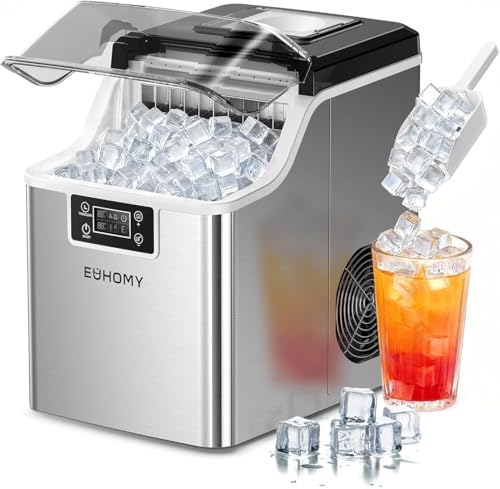
EUHOMY Ice Cube Maker Machine Countertop, 2 Ways to Add Water, 45Lbs/Day 24 Pcs Ready in 13 Mins, Self-Cleaning Portable Compact, with Ice Scoop & Basket, Perfect for Home/Kitchen/Office/Bar
2 Ways to Add Water and Bottle Not Included: The countertop ice maker machine holds up to 3.2...
As an affiliate, we earn on qualifying purchases.