

The key placement rule for digital signage is ensuring it’s positioned where your audience naturally gathers and can see it clearly from the right angles. If your signage is blocked or too far from foot traffic, it won’t grab attention or make an impact. Proper sightline, visibility, and strategic location are essential for success. Keep these factors in mind, and you’ll discover how ideal placement can make or break your digital signage’s effectiveness.

Get business pricing on office and shipping supplies
- Business-only prices and quantity discounts
- Tax-exempt purchasing
- Multiple users, one account, clear invoices
Key Takeaways
- Proper placement at eye level ensures signage captures immediate viewer attention and improves message retention.
- Positioning signs in high foot traffic areas increases visibility and engagement opportunities.
- Avoid obstructions and sightline blockages to ensure clear, unobstructed views from key angles.
- Consider environmental lighting to prevent glare or reflections that hinder readability.
- Strategic placement near converging pedestrian paths or entrances maximizes interaction and impact.
digital signage display for high foot traffic areas
As an affiliate, we earn on qualifying purchases.
As an affiliate, we earn on qualifying purchases.
Why Placement Is Critical for Digital Signage Success

Placement is one of the most important factors determining the success of your digital signage. When you position your screens thoughtfully, you reinforce brand consistency, making your message more memorable. Proper placement guarantees your content reaches the right audience at the right time, enhancing audience targeting. If your screens are strategically located, viewers are more likely to notice and engage with your message, increasing its impact. Additionally, understanding audience habits can help you choose the most effective locations to boost engagement. By paying attention to content visibility, you ensure your digital signage is placed where it will be seen and appreciated. Poor placement can lead to ignored displays or mixed messages that dilute your brand’s identity. Effective placement strategies can significantly improve viewer engagement and overall campaign success. Recognizing the importance of visual hierarchy ensures your signage captures attention quickly and directs viewers effortlessly to your key messages. When you combine strategic placement with a deep understanding of content relevance, you can maximize visibility, strengthen brand recognition, and deliver content that truly resonates with your viewers.
How to Choose the Best Locations for Your Signage

Choosing the best locations for your digital signage involves understanding where your target audience naturally spends their time and what environments influence their attention. Look for spots with high foot traffic and areas where people pause or gather. Guarantee your signage has strong color contrast so it stands out, even from a distance or in varying lighting conditions. Content relevance is equally vital; your message should resonate with the environment and audience, making it more likely to engage viewers. Avoid placing signs in cluttered or overly busy areas that dilute focus. Instead, select locations that naturally draw attention and complement your content. By combining strategic placement with visually distinct signage and relevant messaging, you maximize your signage’s impact and effectiveness. Incorporating visual contrast techniques is essential for ensuring your signage remains noticeable in different lighting and environmental conditions. Additionally, understanding audience behavior can help you identify prime spots where viewers are more receptive to your message. Recognizing the importance of environmental factors can also guide you in choosing optimal locations that enhance visibility and engagement, especially when considering herbal traditions that emphasize the significance of natural surroundings to promote well-being. Incorporating insights from industry transformations can further inform your placement strategy, ensuring your signage adapts to evolving environments and audience expectations.
Maximizing Visibility With Sightlines and Traffic Flow

To maximize visibility, you need to optimize sightline angles so your signage is easily seen from key vantage points. Managing pedestrian traffic ensures your signs aren’t blocked or overlooked during busy moments. By focusing on these elements, you can considerably boost your signage’s effectiveness and engagement. Additionally, incorporating weatherproof tool storage solutions can protect signage components from environmental damage, ensuring consistent performance. Staying informed about the latest wall art trends can also help you select signage that seamlessly integrates with your overall aesthetic. Gaining an understanding of architectural details can inspire more cohesive and appealing signage placements, making your display more engaging and memorable. Paying attention to the finishes and surfaces of your signage can further enhance its durability and visual appeal over time.
Optimize Sightline Angles
| Sightline Angle | Impact on Visibility | Recommended Practice |
|---|---|---|
| Direct view | Highest clarity | Place signage at eye level |
| Slight tilt | Reduces glare | Tilt screens toward traffic flow |
| Obstructed view | Diminished readability | Avoid obstacles in sightlines. Ensuring clear sightlines not only enhances visibility but also promotes visitor safety, making your signage more effective. Properly managing visual hierarchy can further improve message comprehension and overall impact. A well-considered location ensures your signage captures attention and remains unobstructed from key vantage points. Paying attention to traffic flow can help guide viewers naturally toward your message. Additionally, understanding the importance of sightline angles can have a significant impact on how well your signage is perceived by viewers. |
Manage Pedestrian Traffic
Effective management of pedestrian traffic is essential for maximizing the visibility of your digital signage. By guiding foot traffic with clear pathways and strategic placements, you guarantee your screens stay in viewers’ sightlines. Incorporate interactive content to engage passersby and encourage interaction, increasing dwell time. Use audience targeting to tailor content based on the flow of pedestrians, making messages more relevant and compelling. Position signs where traffic naturally converges or slows, such as entrances, exits, or key intersections, to optimize visibility. Monitoring traffic patterns allows you to adjust placements dynamically, reducing congestion and assure your signage remains prominent. Additionally, understanding traffic flow management principles can help you design more effective signage placements, ensuring your messages reach the right audience at the right time. Recognizing how pedestrian movement influences visibility can further enhance your placement strategies. When pedestrian flow is managed effectively, your digital signage becomes a powerful tool for capturing attention and driving engagement, especially when combined with sightline optimization. Incorporating insights from the Gold IRA markets can also provide strategic perspectives on positioning for maximum impact. A thorough understanding of dog breeds can help tailor content strategies to specific audience demographics, enhancing overall effectiveness.
Common Placement Mistakes That Hurt Engagement
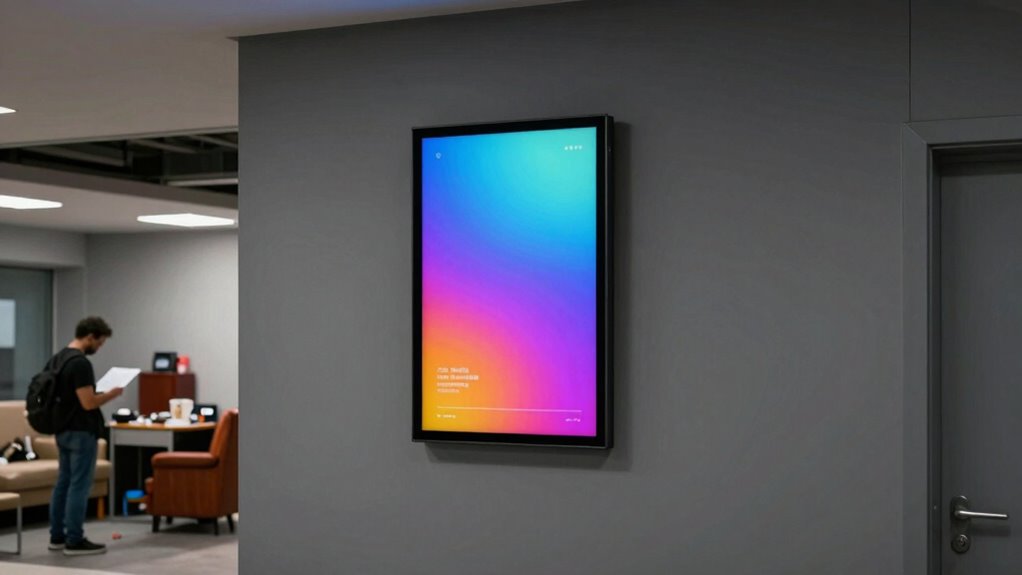
Many businesses overlook the importance of strategic placement, which can substantially diminish a digital signage campaign’s impact. One common mistake is ignoring color contrast, making text hard to read against the background. If the colors clash or lack sufficient contrast, viewers will quickly lose interest. Additionally, font size matters; using fonts that are too small or too large can hinder readability. Small fonts force viewers to strain or get too close, while oversized fonts may seem overwhelming or out of place. Proper placement paired with high contrast and appropriately sized fonts guarantees your message catches attention effortlessly. When these elements are neglected, your signage risks blending into the background or being overlooked entirely, reducing engagement and defeating your marketing goals.
How to Test and Improve Your Digital Signage Placement

To improve your digital signage placement, start by testing eye-level positions that catch attention easily. Next, choose strategic locations where your audience naturally gathers, ensuring high visibility. Don’t forget to evaluate lighting conditions to make sure your content remains clear and impactful.
Eye Level Placement
Placing your digital signage at eye level can considerably boost viewer engagement, but it’s essential to test and refine this placement to maximize its impact. When positioned correctly, your message becomes more noticeable and easier to read. Use high color contrast to make your content stand out, and select a font size large enough to be read from a distance. Imagine this setup:
| Viewer Perspective | Signage Design |
|---|---|
| Eye level | Bright colors, bold font size |
| Slightly above | Muted colors, smaller font size |
| Below eye level | Less noticeable, poor contrast |
| Head-on view | Clear, legible, striking visuals |
Adjust based on testing, ensuring your signage captures attention effortlessly.
Strategic Location Selection
Choosing the right location for your digital signage is crucial, but even the most strategically placed displays need testing and refinement to maximize their effectiveness. To do this, monitor how your audience interacts with the signage and gather feedback on content timing. Regular testing helps guarantee your content remains relevant and engaging, reinforcing brand consistency across different locations. Adjust placement based on foot traffic patterns and audience flow to optimize visibility and impact. Track performance metrics like dwell time and engagement levels to identify areas for improvement. Remember, a well-chosen location combined with ongoing testing and content adjustments creates a seamless experience that captures attention and reinforces your brand message. This strategic approach ensures your digital signage works harder for your business.
Visibility and Lighting
Once you’ve selected promising locations for your digital signage, ensuring ideal visibility becomes the next step in maximizing impact. You need to assess how color contrast between your display and its surroundings affects readability, especially from different angles and distances. Bright or poorly contrasting displays can blend into the environment, reducing effectiveness. Ambient lighting also plays a vital role; too much light can wash out the screen, while insufficient lighting makes it hard to see. Test your signage during various times of day to identify glare or reflections and adjust brightness accordingly. Consider using screens with adjustable brightness and contrast settings. By optimizing color contrast and managing ambient lighting, you’ll guarantee your message remains clear and eye-catching, engaging viewers effectively.
Final Tips for Ongoing Signage Optimization

To keep your digital signage effective over time, regular optimization is essential. This means reviewing your content personalization and audience targeting strategies frequently. Adjust messaging based on viewer data to boost engagement and relevance. Use analytics to identify which content resonates most and refine it accordingly.
Here’s a quick guide:
| Tip | Action | Result |
|---|---|---|
| Update Content | Refresh visuals and messages regularly | Keeps content fresh and engaging |
| Analyze Data | Track viewer interactions | Improves targeting strategies |
| Test Variations | Try different content formats | Finds what works best |
| Personalize Content | Tailor messages to audience segments | Enhances relevance and impact |
Continuous tweaks guarantee your signage remains effective and aligned with your audience’s evolving needs.
Frequently Asked Questions
How Does Lighting Affect Digital Signage Visibility?
Lighting conditions directly impact your digital signage’s visibility, as poor lighting can make screens hard to see, while ideal lighting enhances their brightness and clarity. Your viewer perception depends on how well the signage stands out against its environment; bright, well-lit areas improve readability, whereas glare or shadows diminish it. By controlling ambient light and positioning screens strategically, you guarantee your message remains clear and engaging for your audience.
What Are Cost Considerations for Different Placement Options?
You should conduct a cost analysis when choosing digital signage placement, as expenses vary considerably. Wall-mounted options are often cheaper upfront, but they may require additional wiring or structural support, impacting your budget considerations. Free-standing displays offer flexibility but can be pricier due to larger stands or enclosures. Balancing installation costs and ongoing maintenance helps guarantee your investment aligns with your overall marketing budget and maximizes return.
How Do Seasonal Changes Impact Signage Effectiveness?
Seasonal changes totally transform your signage game, making or breaking audience engagement. You’ll want to make bold seasonal adjustments—think vibrant summer themes or cozy winter visuals—to catch eyes and stay relevant. Ignoring these shifts risks your message getting lost in the seasonal shuffle. By adapting your digital signage to the season, you maximize impact and keep your audience engaged year-round, proving that timely updates are key to marketing success.
Can Digital Signage Be Effectively Placed Outdoors?
Yes, you can effectively place digital signage outdoors by using durable, weather-resistant screens. Incorporate interactive displays to engage passersby and customize content based on the time of day or audience. This approach attracts attention and boosts engagement. Make certain your signage is visible in sunlight, and update content regularly to stay relevant. Proper placement and adaptive content ensure outdoor digital signage performs well and captures your audience’s interest.
How Do Local Regulations Influence Signage Placement?
Local regulations substantially influence where you can place digital signage. Zoning restrictions determine which areas permit outdoor advertising, while advertising permits are necessary to display signage legally. You must comply with these rules to avoid fines or removal. Before installation, check local ordinances and obtain the required permits. This guarantees your digital signage operates effectively and legally, maximizing visibility without risking penalties or conflicts with city regulations.
Conclusion
Remember, your digital signage is the lighthouse guiding customers through a sea of options. When placed thoughtfully, it catches eyes and sparks engagement like a beacon in the night. But a misplaced sign is like a lighthouse lost in fog—powerless and unseen. Keep testing, tweaking, and refining your placement to make certain your message always shines bright and guides your audience straight to you. After all, the right spot can turn viewers into loyal customers.
Fall Picks
fall essentials
As an affiliate, we earn on qualifying purchases.