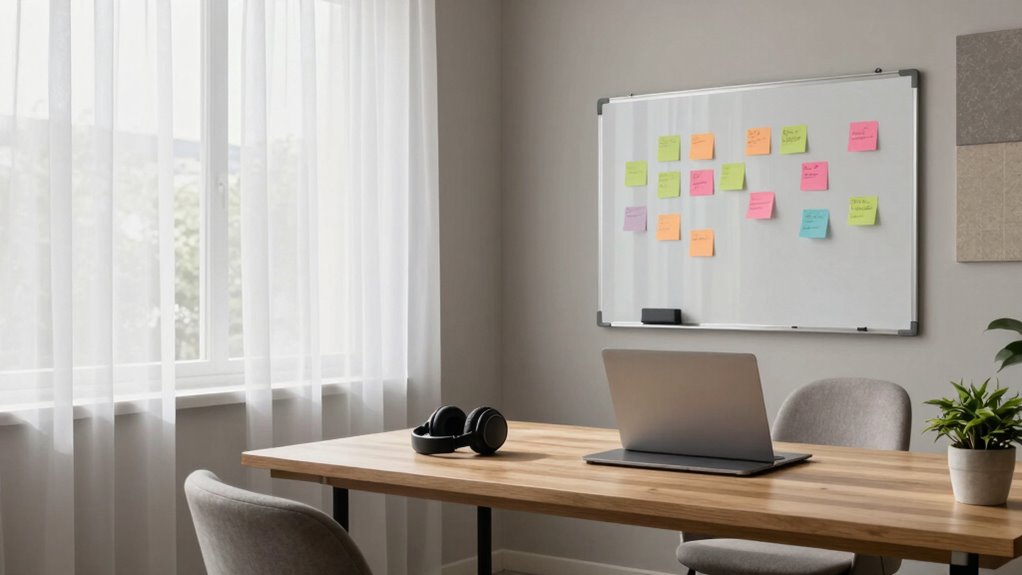

To build effective noise reduction habits without overcomplicating things, start by placing your workspace away from noisy areas and using noise-canceling headphones or earplugs. Politely remind colleagues to keep voices down and schedule deep focus tasks during quieter times. Incorporate simple sound-absorbing items like desk mats or fabric panels. Consistently applying these small changes can make a big difference, and if you keep going, you’ll discover even more practical tips to improve your workspace environment.

Get business pricing on office and shipping supplies
- Business-only prices and quantity discounts
- Tax-exempt purchasing
- Multiple users, one account, clear invoices
Key Takeaways
- Incorporate simple tools like noise-canceling headphones or earplugs for immediate noise relief.
- Rearrange your workspace to stay away from noisy areas and high-traffic zones.
- Establish quiet times or designated zones for focused work to minimize disturbances.
- Use background ambient sounds or soft music to mask sudden noise disruptions.
- Communicate politely with colleagues about maintaining a quieter environment when needed.

In busy office environments, noise can be a major distraction that hampers productivity and focus. It’s easy to get overwhelmed when constant chatter, ringing phones, and keyboard clatter fill the space. But you don’t need elaborate setups or expensive equipment to build effective office noise reduction habits. Instead, simple soundproofing techniques and personal noise control strategies can make a real difference.
Start by identifying the main sources of noise around you. Once you know what’s bothering you most, you can tailor your approach. For example, if conversations nearby are loud, consider using noise-canceling headphones or earplugs. These tools are inexpensive but highly effective at blocking out distracting sounds. They’re especially useful if you need to concentrate on detailed work or participate in virtual meetings without background noise interference.
Another simple soundproofing technique involves rearranging your workspace. Position your desk away from high-traffic areas like printers or communal spaces where noise tends to be loudest. If you have a cubicle or partition, add fabric panels or sound-absorbing materials to dampen sound waves. Even small modifications, like placing a thick desk mat or a fabric-covered divider, can absorb sound and help create a quieter zone around you. Remember, personal noise control isn’t just about blocking noise; it’s also about creating an environment that minimizes external disturbances. Incorporating soundproofing methods can significantly enhance the effectiveness of these adjustments. Staying aware of sound absorption techniques helps you make better choices for your workspace. Additionally, applying acoustic treatments can further improve the overall sound environment.
You can also adopt habits that promote a quieter environment overall. For instance, politely remind colleagues to keep conversations at a moderate volume or use designated quiet zones for focused work. When possible, schedule tasks that require deep concentration during quieter times of the day. Additionally, if your workspace allows, consider using background white noise or ambient music—these can mask distracting sounds and improve your ability to focus. Just make sure the volume isn’t high enough to become a distraction itself. Incorporating sound masking techniques can also help to create a more consistent auditory environment, reducing sudden noise disruptions.
Finally, don’t underestimate the power of consistency. Building soundproofing habits, like always wearing headphones when working on tasks that demand focus, can help reinforce your personal noise control. Over time, these small adjustments add up, creating a more manageable acoustic environment. Effective office noise reduction strategies often involve a combination of personal habits and workspace modifications. You don’t have to overhaul your entire office; simple, deliberate steps can significantly reduce noise and boost your productivity. In the end, managing office noise isn’t about silence but about controlling what you can, so you stay focused and work efficiently.
noise-canceling headphones for office
As an affiliate, we earn on qualifying purchases.
As an affiliate, we earn on qualifying purchases.
Frequently Asked Questions
How Effective Are Noise-Canceling Headphones in Open Office Environments?
Noise-canceling headphones are quite effective in open office environments, helping you block out distractions. However, for a more thorough approach, consider adding soundproof barriers or acoustic panels around your workspace. These solutions reduce overall noise levels, complementing your headphones. Together, they create a quieter, more focused environment, making it easier to concentrate without overcomplicating your office noise reduction habits.
What Are Quick Tips to Reduce Noise Without Disrupting Colleagues?
Think of your workspace as a quiet pond. To keep the ripples from disturbing your colleagues, use soundproofing strategies like strategic placement of acoustic panels, which act as gentle stones dampening noise. Opt for simple acoustic panel options that blend into your environment without fuss. You can also use soft furnishings and maintain low voices. These quick tips help create a peaceful atmosphere without disrupting anyone else.
Can Plants Actually Help in Noise Absorption at Work?
Yes, plants can help with noise absorption at work. By strategically placing plants around your workspace, especially in areas with hard surfaces, you enhance sound absorption and dampen noise. Opt for taller, fuller plants or those with thick leaves to maximize sound absorption. Proper plant placement creates a natural barrier, reducing ambient noise and making your office environment quieter and more comfortable without overcomplicating your noise reduction efforts.
How Do I Politely Ask Colleagues to Lower Their Noise?
You can politely ask colleagues to lower their noise by approaching them with friendly, respectful communication. Start with a simple compliment or acknowledgment, then gently mention how the noise affects your focus. Use noise etiquette by saying, “Would you mind keeping it down a bit? I’d really appreciate your help.” This creates a positive atmosphere, encouraging cooperation without sounding confrontational, making it easier to maintain a harmonious workspace.
Are There Specific Times When Office Noise Is Typically Worse?
Peak hours, usually mid-morning and late afternoon, tend to be noisier as more colleagues are active. To manage this, you can plan quieter tasks during these times or use quiet zones, which are designated areas for focused work. By being aware of these busy periods and utilizing quiet zones, you can better control your environment without overcomplicating your noise reduction habits.
Conclusion
Building office noise reduction habits doesn’t have to be complicated. Start small, like using headphones or creating quiet zones, and gradually incorporate more strategies. Did you know that noise distraction costs US businesses over $600 billion annually? By developing simple habits, you can boost your focus and productivity while saving money. Just a few mindful changes can make your workspace calmer and more efficient—so why not start today?
Fall Picks
fall essentials
As an affiliate, we earn on qualifying purchases.