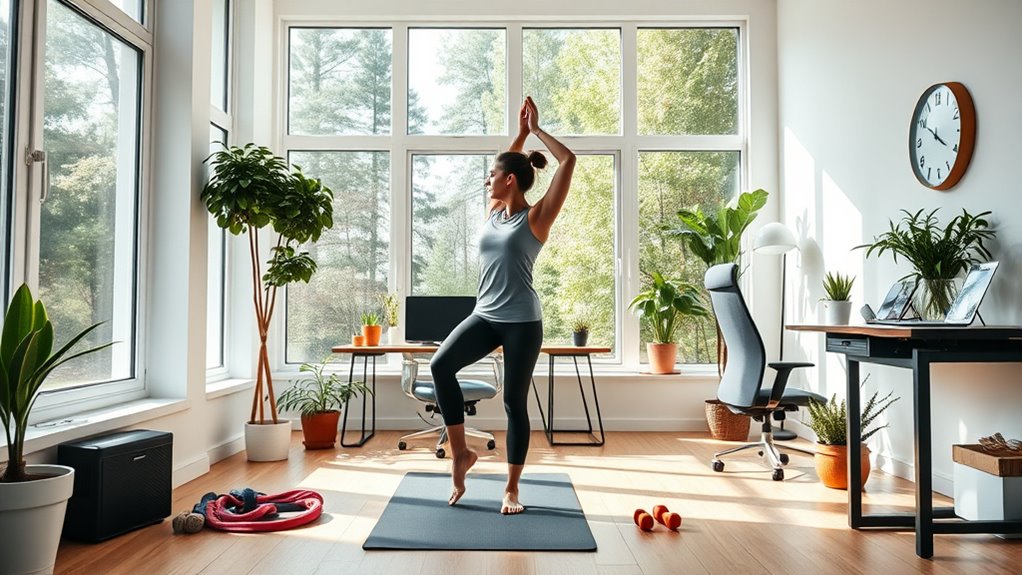

To stay comfortable and healthy while working remotely, incorporate movement and stretching every 30 to 60 minutes. Simple activities like neck rolls, shoulder shrugs, hamstring stretches, and gentle twists can counteract the effects of prolonged sitting. Adjust your workspace to support good posture, and set reminders to stand or walk around. Consistently practicing these tips helps reduce stiffness and fatigue—continue exploring for more effective routines you can easily integrate into your day.

Get business pricing on office and shipping supplies
- Business-only prices and quantity discounts
- Tax-exempt purchasing
- Multiple users, one account, clear invoices
Key Takeaways
- Schedule regular breaks every 30-60 minutes to stand, stretch, or walk around to promote circulation and reduce stiffness.
- Incorporate ergonomic stretches like neck rolls, shoulder shrugs, and hamstring stretches into daily routines.
- Set reminders for quick movements such as squats or reaching overhead to maintain muscle flexibility and blood flow.
- Optimize your workspace for proper posture with a supportive chair, monitor at eye level, and feet flat on the floor.
- Practice posture checks and small movements consistently to prevent musculoskeletal discomfort during remote work.
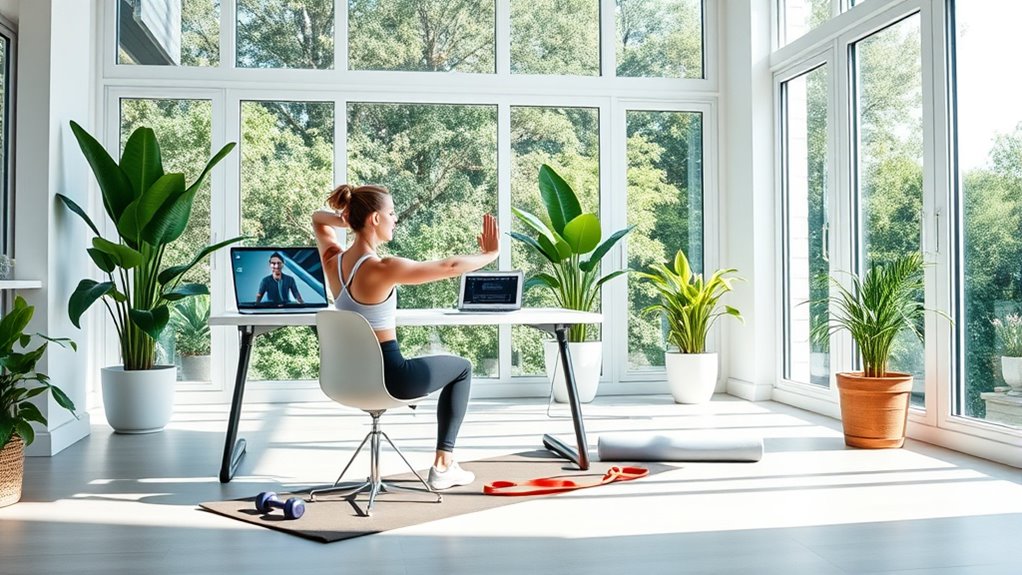
Working remotely offers flexibility, but it can also lead to prolonged periods of sitting and limited physical activity. If you’re not careful, this can cause discomfort, stiffness, and even long-term health issues. That’s why integrating simple movement routines into your day is crucial. One effective way to start is by incorporating ergonomic stretches into your routine. These stretches are designed to counteract the negative effects of sitting and help reduce muscle tension. For example, neck rolls and shoulder shrugs can alleviate built-up tension in your upper back and neck, especially after hours at your desk. Stretching your hamstrings and hip flexors can also improve flexibility and prevent tightness that often develops from sitting too long.
In addition to stretching, focusing on posture correction is essential. Many remote workers unknowingly adopt poor postures that can lead to strain and discomfort. To avoid this, ensure your workspace is ergonomically set up: your monitor should be at eye level, your feet flat on the floor, and your back supported by a chair that promotes good spinal alignment. When sitting, keep your shoulders relaxed and avoid slouching. Regularly check in with your posture throughout the day, and take small breaks to adjust your position. These efforts help prevent musculoskeletal issues and promote better circulation. Incorporating air quality awareness can also contribute to overall comfort and health during your workday.
To reinforce good habits, set reminders to stand, stretch, or move every 30 to 60 minutes. Simple activities like walking around your home, doing a few squats, or reaching overhead can make a big difference. These quick movements help stimulate blood flow and reduce stiffness. Additionally, incorporating ergonomic stretches during these breaks can enhance your posture correction efforts. For example, chest openers and seated spinal twists can realign your spine and open up tight muscles. Over time, these habits become second nature, making your workday more comfortable and less fatiguing.
ergonomic office chair with lumbar support
As an affiliate, we earn on qualifying purchases.
As an affiliate, we earn on qualifying purchases.
Frequently Asked Questions
How Can I Stay Motivated to Exercise Regularly at Home?
To stay motivated to exercise regularly at home, try using motivation techniques like setting clear goals and rewarding yourself for progress. Find accountability partners, whether friends or family, to keep you committed and motivated. Schedule your workouts like appointments, and track your achievements. Remember, consistency is key—so keep reminding yourself of the benefits, and don’t be too hard on yourself if you miss a session.
What Are Quick Stretches to Prevent Stiffness During Work Breaks?
Think of your body like a machine that needs regular oiling. During work breaks, do quick desk stretches like reaching overhead or twisting gently, and shoulder rolls to release tension. These small movements prevent stiffness and boost circulation. I once started doing shoulder rolls every hour, and my neck pain vanished. Incorporate these simple exercises into your routine to keep your body flexible and energized throughout the day.
How Do I Set up an Ergonomic Workspace for Better Movement?
You set up an ergonomic workspace by focusing on desk ergonomics and chair adjustments. Start by ensuring your monitor is at eye level to prevent neck strain. Adjust your chair so your feet rest flat on the floor and your knees are at a 90-degree angle. Keep your wrists straight while typing and use a supportive chair that promotes good posture, encouraging movement and reducing stiffness throughout your workday.
Are There Exercises Suitable for Small Apartment Spaces?
Yes, you can do effective exercises in small apartment spaces. Try compact cardio moves like jumping jacks, high knees, or burpees that don’t require much room. Incorporate bodyweight routines such as squats, lunges, push-ups, and planks to strengthen muscles without equipment. These exercises are perfect for limited space, helping you stay active and energized throughout your workday without needing a large area.
How Can I Track My Progress Without Gym Equipment?
Think of your progress as planting a garden—you’ll want to watch it grow. You can track your progress without gym equipment by using fitness journaling and body measurement tracking. Record your daily workouts, note how your strength or endurance improves, and measure key areas like waist or arms with a tape. This visual record helps you see progress over time, motivating you to keep pushing forward.
Conclusion
Staying active as a remote worker boosts your health and productivity. Did you know that just 30 minutes of movement daily can reduce stress and improve focus? Incorporate simple stretches or quick walks into your day to break up long periods of sitting. Remember, making movement a priority isn’t just good for your body—it’s essential for your mental well-being too. Stay active, stay healthy, and watch your work and life improve.
Columbus Day / Indigenous Peoples' Day Picks
long weekend sales
As an affiliate, we earn on qualifying purchases.